Tech & Wearables

9 Best Heart Rate Monitors of 2026: Which Actually Keep a Steady Connection

Find a heart rate monitor that pairs reliably, tracks accurately, and lasts beyond the first few months of training.

Heart rate monitors promise precise data, but many lose connection mid-workout or stop working entirely within months. It's the most common frustration across every price bracket.

This guide focuses on monitors that balance accuracy with day-to-day reliability. Whether you need a chest strap for interval sessions or a comfortable armband for daily runs, the picks here prioritize consistent performance.

The real trade-off is between chest-strap precision and armband convenience, with some models offering deep running metrics that lock you into a specific watch ecosystem.

#1

Garmin HRM 600

Top Pick
Garmin HRM 600

Garmin watch owners

Our Score 9.2/10
Check Price

Worth Noting

  • Signal loss can interrupt a workout when the strap dries or shifts during intense movement.
  • Sensor pod is difficult to detach from the strap for charging or replacement.
Sensor Type
Chest strap (ECG)
Battery Life
2 months (rechargeable)
Connectivity
Bluetooth, ANT+
Compatibility
Garmin watches, others
Read the full review

The Garmin HRM 600 streams stride length, vertical oscillation, and ground contact time directly to compatible Garmin watches — metrics that the top pick Polar H10 cannot provide. This makes it the go-to chest strap for runners who want to analyze form without extra foot pods or armbands. The slimmer HRM-Fit clip-on offers similar data, but the HRM 600’s traditional strap is preferred for stable contact during high-speed intervals.

This strap suits Garmin ecosystem users who already own a Forerunner, Fenix, or Edge device and want to access advanced running dynamics. The sensor pod snaps onto the strap, but detaching it for charging requires a firm grip and can feel awkward — worth noting for those who recharge weekly rather than monthly. Connectivity dropouts during workouts have also been noted, particularly when the strap is dry or loose, so consistent moisture and fit are needed for reliable data.

Battery life stretches up to two months between charges, reducing the hassle of frequent recharging. The pod stores swim data for later sync, and the strap is washable. However, for buyers outside the Garmin ecosystem, the premium cost and limited app support make the Polar H10 a more flexible choice.

Tip: Moisten the strap contacts and adjust the fit snugly before each run to minimize signal drops. For charging, press the pod edges evenly while twisting – avoid yanking.

Bottom line: For Garmin runners who prioritize form analysis, the HRM 600 delivers unique data, but the occasional connectivity hiccup and stiff pod release mean it’s not a set-and-forget device.
#2

COROS Heart Rate Monitor

COROS Heart Rate Monitor

COROS watch owners

Our Score 8.6/10
Check Price

Worth Noting

  • No on-device display means you must pair with a watch or phone to see your heart rate
  • Bluetooth-only connectivity (no ANT+) and occasional pairing drops can frustrate multi-device users
Sensor Type
Optical armband
Battery Life
38 hours (rechargeable)
Connectivity
Bluetooth only
Compatibility
COROS, most Bluetooth apps
Read the full review

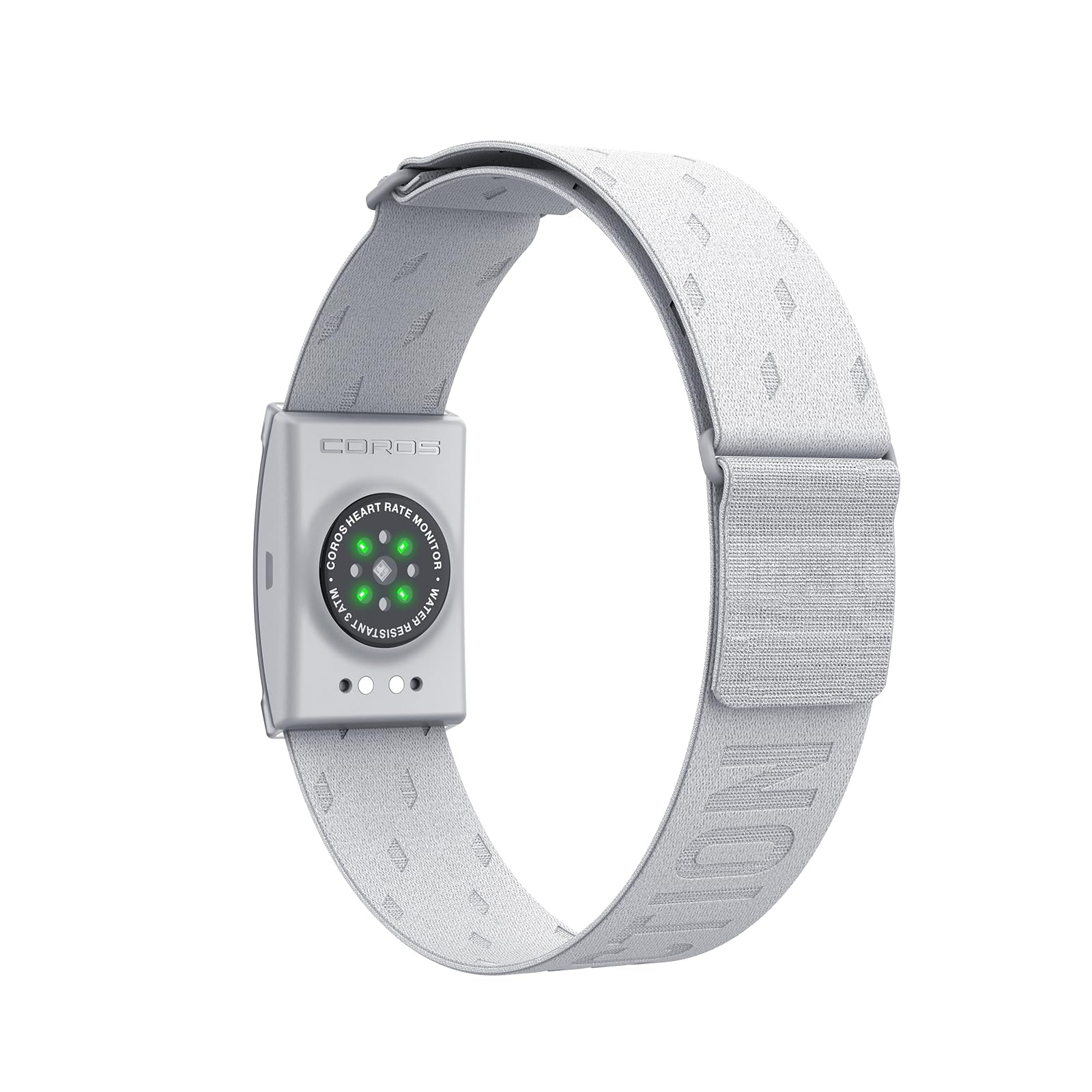
The COROS Heart Rate Monitor prioritizes comfort above all else — the soft armband stays put without digging in, and the 38-hour rechargeable battery means you can wear it daily for weeks before needing a charge. Unlike chest straps that can shift or chafe, this optical sensor is easy to forget you're wearing, making it a strong fit for long runs and all-day tracking.

This monitor is best for runners already invested in the COROS ecosystem who want a comfortable alternative to chest straps. The optical sensor delivers heart rate data comparable to straps during steady-state efforts, but it relies solely on Bluetooth (no ANT+ support) and some users experience occasional pairing hiccups — a tradeoff worth considering if you use older gym equipment or multi-device setups that depend on ANT+.

Battery life is a standout: a full charge takes about two hours and supports roughly 38 hours of use, and the auto-wear detection turns the monitor on and off as you put it on or remove it, saving power. Accuracy holds up well for most training scenarios, though the lack of on-device display means you'll need a paired watch or phone to see your heart rate in real time.

Tip: The auto-wear detection activates only when the armband contacts skin — store it without skin contact to avoid accidental wake-ups.

Bottom line: For COROS users who value comfort and long battery life over universal connectivity, this armband delivers consistent heart rate data with minimal daily friction.

#3

Polar FT4 HR Monitor

Polar FT4 HR Monitor

Beginners

Our Score 8.6/10
Check Price

Worth Noting

  • No Bluetooth or ANT+ connectivity limits pairing to older gym equipment only.
  • Premium pricing places it above many smartwatches that offer heart rate plus additional features.
Sensor Type
Chest strap (watch combo)
Battery Life
Replaceable watch battery
Connectivity
GymLink only
Compatibility
Polar equipment
Read the full review

The Polar FT4 delivers exactly what its name suggests: a no-fuss heart rate monitor that pairs a clear watch display with a comfortable chest strap. Setup is immediate, and the Smart Calorie feature uses personal data to give readings that hold up well against lab-grade gear during steady-state workouts. The catch is that this $300+ watch communicates only via GymLink (for compatible gym equipment) and has no Bluetooth or ANT+ — meaning it cannot pair with modern smartphones, tablets, or apps. That limitation, alongside a price that undercuts few alternatives, makes this a niche pick for buyers who actively want to avoid smartphone dependence and value straightforward operation above all else.

Bottom line: Best for buyers who want a dedicated watch-and-strap system without smartphone tethering, and who are comfortable paying a premium for simplicity over smartwatch versatility.

#4

Garmin HRM-Fit

Garmin HRM-Fit

Women

Our Score 8.6/10
Check Price

Worth Noting

  • Skin irritation or chafing may occur during longer runs
  • High price for a niche product with limited strap compatibility
Sensor Type
Clip-on (ECG)
Battery Life
1 year (replaceable)
Connectivity
Bluetooth, ANT+
Compatibility
Garmin watches
Read the full review

The Garmin HRM-Fit clips directly onto sports bras, offering a stable alternative to chest straps for women who find those uncomfortable. It pairs easily with Garmin watches and delivers accurate heart rate data across various activities. The premium price and reports of skin irritation or chafing on long runs limit its appeal to those who can tolerate the potential discomfort and are willing to pay for a niche design.

Bottom line: Best suited for women who prefer a sports bra-mounted HRM and can accept the possibility of skin sensitivity, this clip-on design works well within that specific use case.

#5

Wahoo TRACKR HRM

Wahoo TRACKR HRM

Zwift cyclists

Our Score 8.6/10
Check Price

Worth Noting

  • Some units may fail to charge or stop working after a few months
  • Connectivity may drop mid-workout
Sensor Type
Chest strap (ECG)
Battery Life
100+ hours (rechargeable)
Connectivity
Bluetooth, ANT+
Compatibility
Zwift, Wahoo, others
Read the full review

The TRACKR delivers accurate heart rate data and pairs smoothly with Zwift and other Wahoo apps. Its rechargeable battery lasts over 100 hours, and the built-in LEDs give real-time feedback on heart rate detection and connection status. However, some units may stop charging after a few months, and connectivity drops during workouts have been noted. This makes it a good fit for Zwift users who value the LED features and rechargeable convenience, but a riskier choice for those who need a no-hassle daily HRM.

Bottom line: For Zwift riders who want visible LED feedback and a rechargeable strap, the TRACKR performs well — but only if you can accept the possibility of early hardware issues or dropped connections.

#6

Polar H10 Chest Strap

Polar H10 Chest Strap

Runners, cyclists

Our Score 8.4/10
Check Price

Worth Noting

  • Battery life can drain faster than the advertised 400 hours in some units.
Sensor Type
Chest strap (ECG)
Battery Life
400 hours (replaceable)
Connectivity
Bluetooth, ANT+, 5 kHz
Compatibility
All major devices
Read the full review

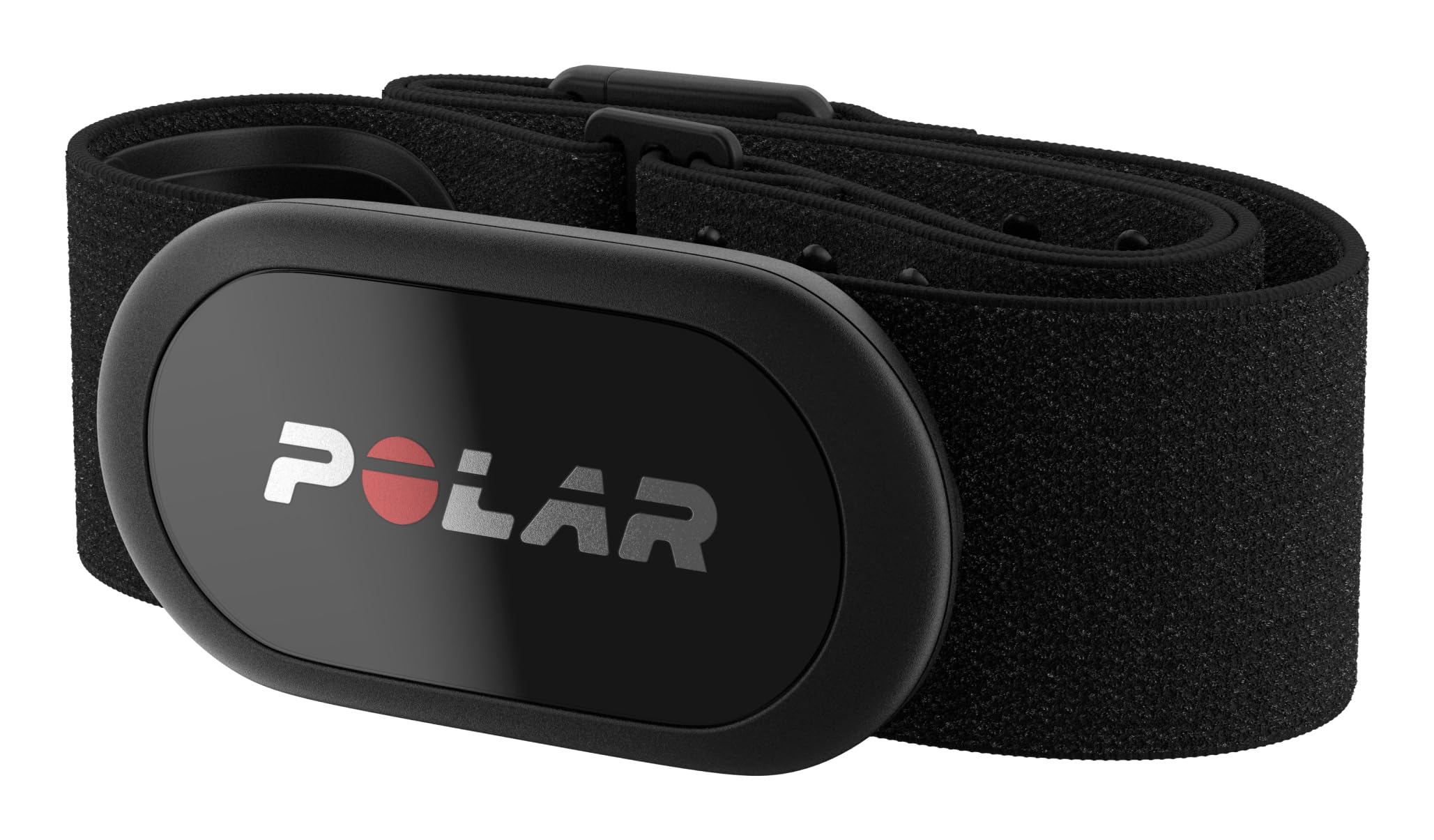
The Polar H10 captures heart rate using ECG-level sensors, delivering data that matches clinical-grade accuracy. It pairs with watches, bike computers, gym equipment, and smartphone apps via Bluetooth, ANT+, and 5 kHz — no ecosystem lock-in.

Internal storage holds multiple hours of workout data, so a phone or watch isn't required during sessions. The strap is fully waterproof to 30m and uses a replaceable CR2025 battery rated for 400 hours.

Setup takes seconds: moisten the electrodes, snap on the pod, and go. The soft strap stays in place during high-intensity movement and remains comfortable over multi-hour sessions.

This monitor suits runners, cyclists, and athletes who train with multiple devices and need consistent heart rate data across platforms. Be aware that connectivity drops can occur in some environments, and occasional re-pairing may be needed. Unit longevity has been noted to vary — some users have experienced sensor failure earlier than expected.

Tip: Keep a spare CR2025 battery in your gym bag — swapping it takes seconds and avoids mid-workout shutdown.

Bottom line: If you value accuracy and universal device pairing over zero-maintenance operation, the Polar H10 delivers where it counts — occasional connection management is part of the deal.

#7

COOSPO H6 Chest Strap

COOSPO H6 Chest Strap

Budget Peloton

Our Score 8.4/10
Check Price

Worth Noting

  • Pairing and connection drops can interrupt workouts for those relying on consistent data.
  • Long-term durability is uncertain; the strap or sensor may show wear within a few months.
Sensor Type
Chest strap (ECG)
Battery Life
300 hours (replaceable)
Connectivity
Bluetooth, ANT+
Compatibility
Peloton, Garmin, others
Read the full review

At under $30, this chest strap offers Bluetooth and ANT+ connectivity that pairs with Peloton, Garmin, and most training apps. Heart rate readings are accurate during steady-state exercise, and setup is straightforward. The tradeoff comes in long-term reliability: pairing can be inconsistent, and some units may stop working within months or show durability issues. This is a fine choice for someone who needs a low-cost stopgap or a spare for indoor cycling, but not a monitor you'd trust for daily training over a year.

Bottom line: This strap works as a low-cost stopgap or backup for Peloton or indoor cycling when budget is the only concern, but it is not built for consistent daily use or multi-year ownership.

#8

Scosche Rhythm+ 2.0

Scosche Rhythm+ 2.0

Peloton users

Our Score 8.2/10
Check Price

Worth Noting

  • In some units, the optical sensor may lag or produce spikes during high-intensity intervals or arm-heavy movements.
  • Battery performance can degrade after months of regular charging, with some units requiring more frequent top-ups than the advertised 24 hours.
  • A minority of units have stopped functioning entirely after a few months of use, making long-term durability a question mark for heavy users.
Sensor Type
Optical armband
Battery Life
24 hours (rechargeable)
Connectivity
Bluetooth, ANT+
Compatibility
Peloton, Garmin, many apps
Read the full review

The Rhythm+ 2.0 puts heart rate monitoring on your forearm instead of your chest, using an optical sensor that connects via Bluetooth and ANT+. That dual connectivity makes it a straightforward pairing option for Peloton bikes, Garmin watches, and most fitness apps — no proprietary ecosystem lock-in. The IP68 waterproof rating means it survives sweat, rain, and submersion without issue.

This armband is best suited for Peloton users who find chest straps uncomfortable or for athletes who need dual-protocol connectivity without wearing a strap. The optical sensor provides heart rate data that closely matches chest straps during steady-state cardio, but during high-intensity intervals or activities with arm movement (like rowing or kettlebell swings), accuracy can show occasional lag or spikes. The trade-off is a more comfortable all-day wear — you'll barely notice it's there until the battery runs low after roughly 24 hours of use.

Setup is simple: charge the unit, strap it two finger-widths above the elbow, and pair with your device. The armband stays secure during runs and rides, and the single-button control handles start/stop or Bluetooth pairing. For users who switch between gym equipment and outdoor training, the dual-protocol support eliminates adapters.

Tip: Test the sensor placement during a few workouts before relying on it for intervals; a snug fit above the elbow improves accuracy during arm motion.

Bottom line: If you prioritize armband comfort and dual-protocol connectivity over chest-strap precision and long-term certainty, the Rhythm+ 2.0 is a capable training companion — just keep an eye on unit consistency.

#9

Powr Labs Chest Strap

Powr Labs Chest Strap

Budget athletes

Our Score 8.0/10
Check Price

Worth Noting

  • Battery life can vary between units; some may arrive depleted or drain sooner than stated
  • Strap clip may detach during use after extended wear
Sensor Type
Chest strap (ECG)
Battery Life
400+ hours (replaceable)
Connectivity
Bluetooth, ANT+
Compatibility
Garmin, Peloton, others
Read the full review

The Powr Labs strap delivers both Bluetooth and ANT+ connectivity at a budget-friendly price point, undercutting most competitors while maintaining broad compatibility with Garmin, Peloton, Wahoo, and similar devices. The fabric strap is notably comfortable for long sessions, reducing chafing compared to stiffer alternatives.

This strap suits budget-minded athletes who want a dual-mode heart rate monitor for gym or home use, or as a backup unit. However, battery life can be inconsistent across units – some arrive with depleted batteries or deplete faster than expected – and the strap clip may detach after extended wear. These limitations make it less dependable for daily training where reliability is critical.

Tip: Check the battery installation immediately and carry a spare CR2032 to avoid unexpected dropouts during workouts.

Bottom line: Buy this if you need a low-cost backup or occasional-use heart rate monitor with dual-mode connectivity and can accept the possibility of battery or clip quirks.

How to Choose

Sensor Type: Chest Strap vs. Armband

Chest straps use ECG electrodes that measure electrical signals directly from the heart, giving the most precise readings during steady and interval workouts. Optical armbands rely on LEDs and photodiodes to detect blood flow through the skin, which can lag during rapid heart rate changes or intense movement.

Armbands are more comfortable for long wear and don't feel restrictive, but they can produce occasional spikes or dropouts during high-intensity intervals. Choose a chest strap if you need beat-by-beat accuracy for structured training; pick an armband if comfort and convenience matter more.

Connectivity Options

Bluetooth is the universal standard for pairing with phones, tablets, and most fitness apps. ANT+ is a separate protocol favoured by bike computers, older Garmin watches, and gym equipment. A monitor that supports both gives you the widest device compatibility.

Some budget monitors offer only Bluetooth, which works fine for Peloton and phone apps, but limits use with ANT+ devices. If you own a cycling computer or an older watch, dual connectivity is a must. Also note that 5 kHz is an older Polar-only frequency used by some gym machines.

Battery Life and Type

Replaceable coin cells (CR2025, CR2032) last 300-400 hours and can be swapped in seconds when they die. Rechargeable lithium batteries are convenient but typically offer 24-100 hours per charge and degrade over time, often requiring replacement within a year.

A replaceable battery is better for long-term use because you don't need to throw away the whole sensor when the battery wears out. Rechargeable units are fine for users who charge weekly and don't mind eventual replacement.

Accuracy and Real-World Reliability

Chest straps generally deliver the most consistent data, but they rely on good skin contact and moisture to work properly. Optical armbands can be thrown off by arm movement, tattoos, or poor fit, leading to occasional gaps or false highs.

Every monitor in this guide has been reviewed by hundreds or thousands of users, and the most common real-world complaint is not accuracy but intermittent connectivity and early failure. Look for models with a track record of stable pairing and durable hardware.

Compatibility With Your Devices

Not all Bluetooth HRMs work with every app. Garmin watches often pair best with ANT+ or Garmin-specific straps, while Peloton bikes work fine with Bluetooth chest straps and armbands. Zwift supports both Bluetooth and ANT+, but some monitors have known pairing glitches.

Check the monitor's official compatibility list before buying, especially if you use a platform like Wahoo SYSTM, TrainerRoad, or Apple Fitness+. A monitor that works with your existing gear saves hours of frustration.

Frequently Asked Questions