Tech & Wearables

10 Best Chest Band Heart Rate Monitor of 2026: Steady Accuracy, Swim-Ready

Struggling with chest strap connectivity or short lifespan? This guide helps athletes choose accurate, durable HRMs that perform during runs, rides, and swims.

Chest strap heart rate monitors remain the gold standard for accuracy, but many suffer from repeated connectivity drops and early sensor failure. The problem isn't the technology -- it's that the right model for your training depends on how you use it.

Whether you need simultaneous connections to a watch and bike computer, internal memory for pool laps, or just a simple strap that doesn't drain its battery in weeks, each design comes with specific trade-offs. The best strap for a Zwift racer isn't the same as the best one for a marathon runner.

This guide walks through the key differences -- from battery types to water resistance -- so you can pick the chest strap that actually matches your routine, not just your brand preference.

#1

Garmin HRM 600

Top Pick
Garmin HRM 600

Competitive runners, Garmin users

Our Score 9.2/10
Check Price

Worth Noting

  • Premium pricing may not deliver clear value for buyers who don't fully use the running dynamics features.
  • Bluetooth and ANT+ connectivity can drop intermittently during workouts, requiring occasional re-pairing.
Battery
Rechargeable, 2 months claimed
Connectivity
Bluetooth + ANT+
Strap Comfort
Machine washable, two sizes
Extra Features
Running dynamics, HRV
Read the full review

Unlike Garmin's standard chest strap, the HRM 600 tracks stride length, vertical oscillation, and ground contact time — data that feeds directly into Garmin watches for post-run analysis. Its rechargeable battery lasts up to two months, eliminating the need for coin-cell swaps.

This strap suits Garmin watch owners who want to improve running form, competitive runners tracking those metrics, and swimmers who need HR storage underwater. The sensor pod is difficult to remove from the strap, risking damage when detaching for washing or charging — so plan to wash the strap with the pod attached.

For Garmin users, the HRM 600's running dynamics are a differentiator not available from the industry standard chest strap. However, for cross-platform accuracy and dual Bluetooth connections, the top pick remains a strong alternative.

Tip: Wash the strap with the sensor pod still attached to avoid damaging the clip mechanism.

Bottom line: The Garmin HRM 600 is a specialized tool for Garmin runners who want form metrics and rechargeable convenience, but the pod removal hassle and connectivity quirks make it a focused choice rather than a universal recommendation.

#2

Garmin HRM 200

Garmin HRM 200

Garmin users, swimmers

Our Score 8.6/10
Check Price

Worth Noting

  • Strap sizing may be too short for larger chests
  • Connectivity with non-Garmin devices can be intermittent, so it works best within Garmin's ecosystem.
Battery
CR2032 replaceable, 1 year claimed
Connectivity
Bluetooth + ANT+
Strap Comfort
Machine washable, two sizes
Extra Features
HRV support, no dynamics
Read the full review

The Garmin HRM 200 locks into the Garmin ecosystem with instant pairing to watches and bike computers, delivering consistent heart rate data without the extra step of manual syncing. Its replaceable CR2032 battery and 3 ATM water resistance make it a practical choice for runners, cyclists, and swimmers who want basic HR tracking without paying for running dynamics or rechargeable batteries.

This strap is best suited for Garmin device owners who need accurate HR readings during runs, rides, and pool sessions and don't require the advanced metrics of the HRM 600 or the broader third-party connectivity of the Polar H10. The two strap sizes (XS-S and M-XL) aim to fit most users, but individuals with larger chests may find the strap too short for a comfortable fit. Connectivity with non-Garmin apps and devices can be less predictable than within Garmin's own network.

The soft, machine-washable strap holds position during high-intensity movement and has drawn praise for its chafe-free design. Users who pair it with a Garmin watch report that the HR data matches the ECG accuracy of pricier chest straps. Battery life is claimed at up to a year, which aligns with typical user experience for a CR2032-powered monitor.

Tip: Choose the M-XL size if you have a larger chest, and confirm a snug fit before your first workout.

Bottom line: If you own a Garmin watch or computer and want a dependable chest strap for heart rate tracking in training and swimming without extra features, this is a cost-effective fit.

#3

Wahoo TRACKR

Wahoo TRACKR

Cyclists, Zwift users

Our Score 8.6/10
Check Price

Worth Noting

  • Charging issues may develop, potentially rendering the unit unusable
  • Strap length may be insufficient for broader chests, causing discomfort during workouts
Battery
Rechargeable, 200h claimed
Connectivity
Bluetooth + ANT+
Strap Comfort
Soft secure fit, one size
Extra Features
LED status indicators
Read the full review

The Wahoo TRACKR delivers accurate heart rate readings and a rechargeable battery that lasts weeks, making it a convenient option for indoor training on Zwift. Pairing is effortless with major apps. However, unlike the Polar H10's established accuracy and construction, this unit has shown potential for charging-related failures within months of use. The strap may also feel short for broader chests. These durability and fit concerns prevent it from being a reliable long-term companion, though for focused Zwift sessions it performs well when it works.

Bottom line: Best for Zwift cyclists who prioritize rechargeable convenience and have a smaller chest, provided they are comfortable with possible early unit replacement.

#4

Polar H10

Polar H10

Serious athletes, swimmers

Our Score 8.4/10
Check Price

Worth Noting

  • Battery life varies between units; some drain faster than the 400-hour claim
  • Pairing can require multiple attempts and signal drops have been noted with certain devices
Battery
CR2025 replaceable, 400h claimed
Connectivity
Bluetooth + ANT+ + 5kHz, dual Bluetooth
Strap Comfort
Pro strap with silicone dots
Extra Features
Internal memory, 1 workout
Read the full review

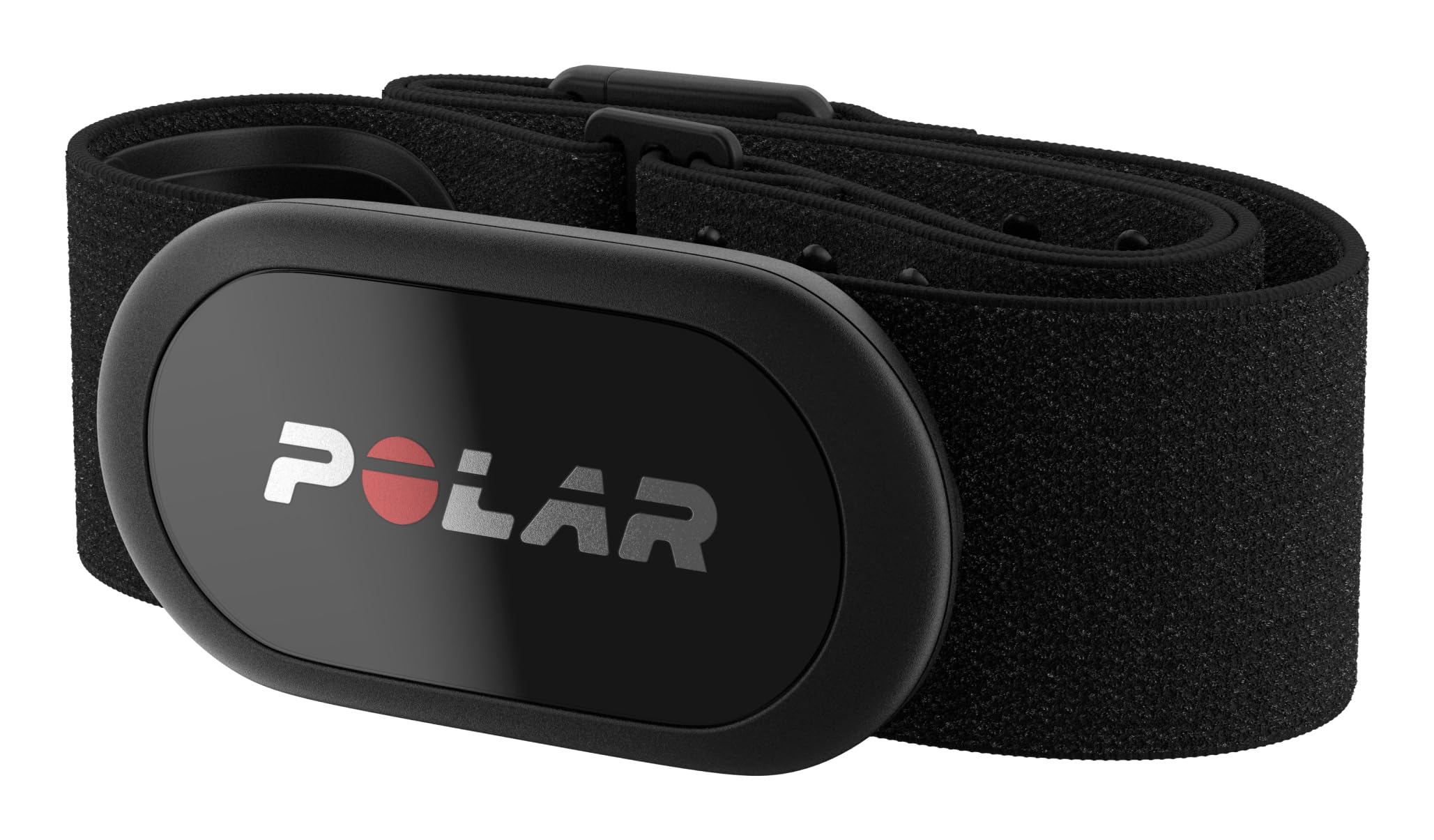
The Polar H10 sets the benchmark for heart rate and HRV accuracy, using a medical-grade ECG sensor that captures every beat without the delay common in optical wrist monitors. Its dual Bluetooth and ANT+ radios allow simultaneous connections to a watch, bike computer, and phone — a rare capability for chest straps. Internal storage saves one workout when you leave your phone behind, making untethered pool sessions or track intervals straightforward.

The simultaneous multi-device support is a genuine advantage for triathletes and cyclists who want HR data on both their Garmin head unit and Zwift tablet without re-pairing. A compatible CR2025 battery powers roughly 400 hours of use, and the sealed pod is fully waterproof for swimming and open-water training.

This strap is built for athletes who need precise HR and HRV data day after day — particularly swimmers, triathletes, and anyone training across multiple platforms. A small number of units have been reported to lose function within the first year, so checking warranty terms is advisable. It is not for budget-conscious buyers or those seeking a maintenance-free device: the Pro strap requires periodic washing to maintain grip, and the battery needs replacement every few months.

The included Pro strap uses silicone dots to stay in place during intense movement and is comfortable for long sessions. The IPX8 waterproofing means you can swim laps, race in the rain, or rinse it under the tap without concern.

Tip: If pairing issues arise, remove the battery for 10 seconds to reset the sensor before re-pairing.

Bottom line: For athletes who demand the most precise heart rate and HRV data across multiple devices and accept occasional unit variance, the Polar H10 remains the most capable chest strap available.

#5

CooSpo H6

CooSpo H6

Occasional use, Peloton

Our Score 8.4/10
Check Price

Worth Noting

  • Pairing can be inconsistent; some units may not connect initially
  • Long-term durability is a concern; occasional units may stop reporting after a few months
Battery
CR2032 replaceable, 300h claimed
Connectivity
Bluetooth + ANT+
Strap Comfort
Soft cloth strap, large hook
Extra Features
None
Read the full review

At this price point, the CooSpo H6 delivers dual-mode Bluetooth and ANT+ connectivity plus a soft strap that stays comfortable during extended wear. Heart rate readings track closely with those from pricier monitors and even medical devices, making it a capable performer for the occasional session. The tradeoff is longevity: some units may lose the ability to pair or stop reporting after a few months of use. Peloton riders find it connects easily, but for daily training the inconsistency makes it better as a backup strap than a primary tool.

Bottom line: If you need an inexpensive backup chest strap or only train occasionally, the H6 offers accurate readings and comfort for a low price. For regular daily use, a more consistent option is worth the extra cost.

#6

GEOID HS500

GEOID HS500

Budget users

Our Score 8.4/10
Check Price

Worth Noting

  • Heart rate accuracy can be off during rapid changes
  • Some units may lose signal or become unresponsive after a few months of use
Battery
CR2032 replaceable, 800h claimed
Connectivity
Bluetooth + ANT+
Strap Comfort
Adjustable elastic band
Extra Features
LED indicator
Read the full review

The GEOID HS500 delivers quick pairing, a flashing LED that confirms heart rate detection, and a solid build for the price — making it a practical choice for budget-conscious runners and cyclists. The adjustable elastic strap and IP67 sweatproofing handle regular training without issues. Where it falls short is consistency: some units report heart rate that can spike or drop unexpectedly, and a portion of sensors lose signal mid-session. This makes the HS500 better suited for casual workouts where occasional data hiccups won't derail tracking, rather than interval training or precise zone monitoring.

Bottom line: Worth considering as an inexpensive backup strap or for casual users who prioritize quick setup and LED feedback over consistent accuracy.

#7

Polar H9

Polar H9

Polar fans, general fitness

Our Score 8.2/10
Check Price

Worth Noting

  • Battery life may drain faster than expected in some units
  • Pairing can be intermittent, particularly with non-Polar devices
  • Some units may stop functioning after a few months of use
Battery
CR2025 replaceable, 400h claimed
Connectivity
Bluetooth + ANT+
Strap Comfort
Soft strap, no Pro
Extra Features
None
Read the full review

Polar's gold-standard HR sensor sits inside a waterproof strap that costs less than the top pick. The H9 uses the same ECG-based accuracy as the H10, making it a straightforward upgrade from wrist-based monitors for anyone focused on precise heart rate data during exercise. The soft strap is comfortable for long sessions, and it pairs via Bluetooth and ANT+.

This model suits Polar ecosystem users who want proven accuracy without paying for extra features like internal memory or the premium Pro strap. It's a cost-effective entry point, but pairing can be intermittent – especially with third-party devices – and battery life may run shorter than the 400-hour claim in some cases. Those quirks are manageable if you're not relying on the monitor for every session or if you stick with Polar-branded apps.

Tip: If pairing issues arise, try unpairing and reconnecting from your device's Bluetooth settings before replacing the battery.

Bottom line: For Polar users seeking accurate HR without paying for advanced features, the H9 is a sensible choice – provided connectivity and battery quirks don't disrupt your routine.

#8

CooSpo H808S

CooSpo H808S

Fitness beginners

Our Score 8.2/10
Check Price

Worth Noting

  • Some units may stop transmitting after a few months of use
  • Battery life can be noticeably shorter than the 300-hour claim, requiring more frequent replacements
Battery
CR2032 replaceable, 300h claimed
Connectivity
Bluetooth + ANT+
Strap Comfort
Soft adjustable with LED
Extra Features
LED indicator
Read the full review

The CooSpo H808S delivers sharp heart rate readings for its price, pairing quickly with Peloton, Zwift, and Garmin, making it a capable budget option. The soft strap and IP67 sweat resistance add to its appeal for short gym sessions. However, some units may stop working within months, and the battery life can fall short of the claimed 300 hours, so it suits users who need a spare or a starter strap rather than a long-term daily driver.

Bottom line: A sensible pick for occasional training or as a backup, but not a reliable companion for daily wear over many months.

#9

Powr Labs HRM

Powr Labs HRM

Budget-conscious runners

Our Score 8.0/10
Check Price

Worth Noting

  • Sensor may stop working after a few months of regular use for some units.
Battery
CR2032 replaceable, 400h claimed
Connectivity
Bluetooth + ANT+
Strap Comfort
Soft seamless fabric, adjustable
Extra Features
None
Read the full review

The Powr Labs HRM combines a soft, chafe-free fabric strap with steady Bluetooth and ANT+ connectivity at a budget-friendly price. Heart rate readings are consistent during steady-state cardio, and the IPX67 sweatproofing handles heavy sweating. The strap adjusts from 24 to 61 inches, fitting most body types, and the sensor pod stays securely in place.

This unit suits newcomers to chest HRMs and gym-goers who want accurate tracking without investing in a premium monitor. The CR2032 battery is user-replaceable, but lifespan can vary — some units arrive with a depleted battery or drain faster than the 400-hour claim. For those willing to check the battery upon arrival, the comfort and connectivity offer strong value.

Compared to ultra-budget alternatives, the Powr Labs offers a more comfortable strap and fewer pairing headaches, making it a better choice for regular use. It doesn't include internal memory or dual simultaneous Bluetooth connections like the top pick, but for the price, it covers the essentials. Dual-mode connectivity (Bluetooth + ANT+) ensures compatibility with most devices, from Peloton to Garmin watches.

Tip: Upon arrival, check the battery and replace with a fresh CR2032 to ensure full lifespan.

Bottom line: For budget-focused shoppers who prioritize comfort and easy pairing over advanced metrics and internal memory, the Powr Labs HRM offers a solid entry point despite occasional battery quirks.

#10

Magene H64

Magene H64

Emergency backup

Our Score 8.0/10
Check Price

Worth Noting

  • Battery life can fall well short of the 1000-hour claim, requiring frequent CR2032 replacements
  • Some sensors may stop transmitting after a few months of regular use
Battery
CR2032 replaceable, 1000h claimed
Connectivity
Bluetooth + ANT+
Strap Comfort
Adjustable basic design
Extra Features
None
Read the full review

The Magene H64 is the most affordable dual-mode chest strap you can buy, and for short, casual sessions it provides basic heart rate data without fuss. The cloth strap is comfortable enough for a quick workout, and pairing with apps via Bluetooth or ANT+ is straightforward. However, the battery life falls far short of the 1000-hour claim – expect to replace the CR2032 more often than anticipated. Additionally, some units may stop transmitting after a few months of use, and accuracy can be erratic at times. This is a disposable backup for someone who rarely needs a heart rate monitor, not a tool for consistent training.

Bottom line: This works as an emergency backup for occasional use, but it is not suited for anyone who needs consistent heart rate data over many months.

How to Choose

Connectivity Options

Most chest straps offer Bluetooth and ANT+. Bluetooth works with phones and smartwatches; ANT+ is preferred for gym equipment and cycling computers. Models with simultaneous dual Bluetooth let you stream to a watch and a bike computer at the same time -- a must for triathletes who run and ride with different devices.

If you use Zwift or a Peloton treadmill, check that the strap supports the specific Bluetooth protocol your app expects. Some budget straps drop connections when the battery is low, even if the battery is not dead.

Battery Type and Life

Replaceable coin cells (CR2032/CR2025) are the standard. They last 300-400 hours on average, but actual life depends on usage frequency and storage temperature. Rechargeable batteries (like in the Garmin HRM 600) save on coin-cell replacements but introduce a new failure point: the battery can degrade and become non-replaceable.

Claimed battery life is often optimistic. Expect 60-80% of the advertised hours in real-world use, especially if you train daily or leave the strap paired while idle.

Water Resistance Rating

IPX7 or IP67 means sweatproof and rain-safe, but not for swimming. If you lap swim, look for a strap with a 3 ATM (30m) rating or fully waterproof design like the Polar H10 (IPX8). Note that water resistance degrades over time; rinsing the strap after each swim helps prolong it.

For pool use, internal memory is critical -- Bluetooth does not transmit through water. The strap records HR data and syncs once you're out.

Strap Comfort and Fit

The strap material and adjustability determine long-session comfort. Silicone-dot straps (Polar Pro) stay put without slipping, while soft fabric straps (Powr Labs) are less abrasive on bare skin. A detachable sensor module makes washing the strap easier and prevents sweat corrosion from damaging the electronics.

If you have a larger chest, check the maximum strap length -- some budget models max out at 40 inches, which can be too tight.

Extra Features That Matter

Running dynamics (stride length, vertical oscillation, ground contact time) are exclusive to Garmin's HRM 600 and higher models. These metrics help runners improve form but require a compatible Garmin watch. Internal memory (Polar H10) is useful for swimmers and runners who don't want to carry a phone. HRV support is standard on most modern straps but rarely advertised.

LED status indicators are a nice touch for confirming the strap is powered and detecting heart rate, but they drain the battery slightly faster.

Frequently Asked Questions