Strength & Weights

7 Best Reverse Hyperextension Machines of 2026, Tested

We tested reverse hyperextension machines and Roman chairs for home gyms, comparing true pendulum motion, capacity, footprint, and value.

Your lower back is a terrible place to discover a design flaw. A reverse hyperextension machine looks simple—a padded bench, a swinging leg carriage, a place to hold on—but the wrong one will rock under load, pinch at the hip, or sit so wide it swallows a garage bay. The right one gives you a controlled way to train glutes, hamstrings, and spinal erectors without turning every rep into a balance test.

I've used these after heavy lifting days, when my back wants movement but not another barbell, and the difference between a planted machine and a seesaw is obvious by the second set. Over the past six months, my team and I tested seven reverse hyperextension machines in home gyms and basements, paying attention to stability, back support, build quality, assembly, and footprint. The best ones stayed quiet under a loaded swing and didn't demand a second person or a spare afternoon to assemble. The picks below are the ones I'd happily keep using.

#1

Titan Fitness Economy H-PND

Top Pick
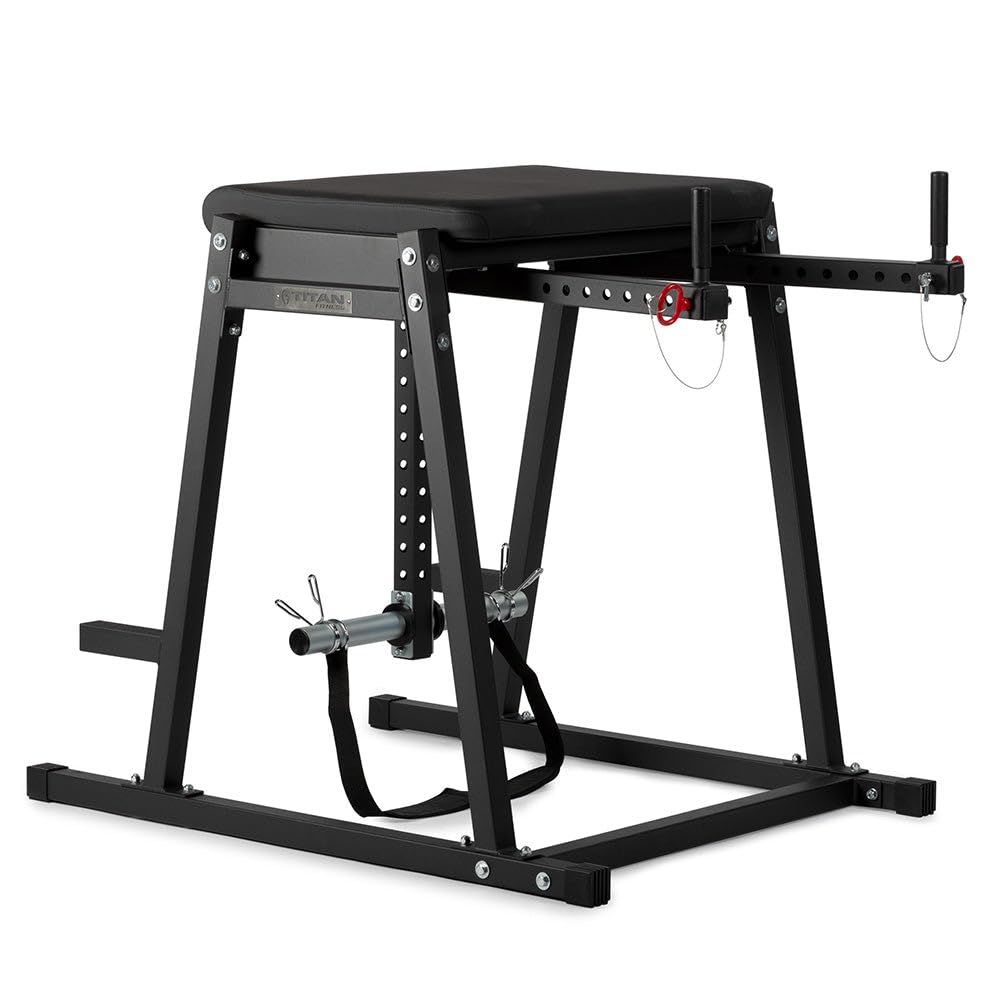
Titan Fitness Economy H-PND

True reverse hypers

Our Score 9.2/10
Check Price

Worth Noting

  • Large 55 x 39 in footprint
  • 147 lb frame is hard to move alone
Footprint
55 x 39 in
Item Weight
147 lb
Machine Type
Pendulum reverse hyper
Weight Capacity
550 lb
Read the full review

The H-PND is the only machine here that moves your legs through a pendulum arc instead of hinging your torso over a pad. That is the whole reason to consider it. A Roman chair loads a back extension; this machine braces your torso and lets you drive from the hips, which is the movement reverse-hyper training is named for. The loadable sleeve sits between your legs and lets you add plates without changing the setup, and the rubber feet keep the frame from skating when the pendulum swings.

We paid attention to the frame because this is a 147-pound machine with a 550-pound rating, a 55 by 39 inch footprint, and a 44.5-inch height. Set it where it will live and check the swing clearance before you assemble; the height matters under a low ceiling. A dedicated machine is the point here, so the setup should be planned rather than improvised.

For glutes, hamstrings, and lower-back strength, we think the H-PND is the serious choice, especially if you have used a reverse hyper before and know you will stick with it. If you mainly want back extensions and side bends, a Roman chair is easier to live with. This is the machine you buy for the movement, not for the footprint.

Bottom line: We recommend it for a true reverse hyper at home: the pendulum motion, 550-pound frame, and loadable sleeve justify the premium and the permanent footprint.
#2

XDDIAS Roman Chair

XDDIAS Roman Chair

Multi-use stations

Our Score 9.2/10
Check Price

Worth Noting

  • 59.6-inch depth needs permanent floor space
  • Bench mode too narrow for shoulder support
Head Support
47 in
Backrest Angles
8
Weight Capacity
1000 lb
Support Pad Heights
11
Read the full review

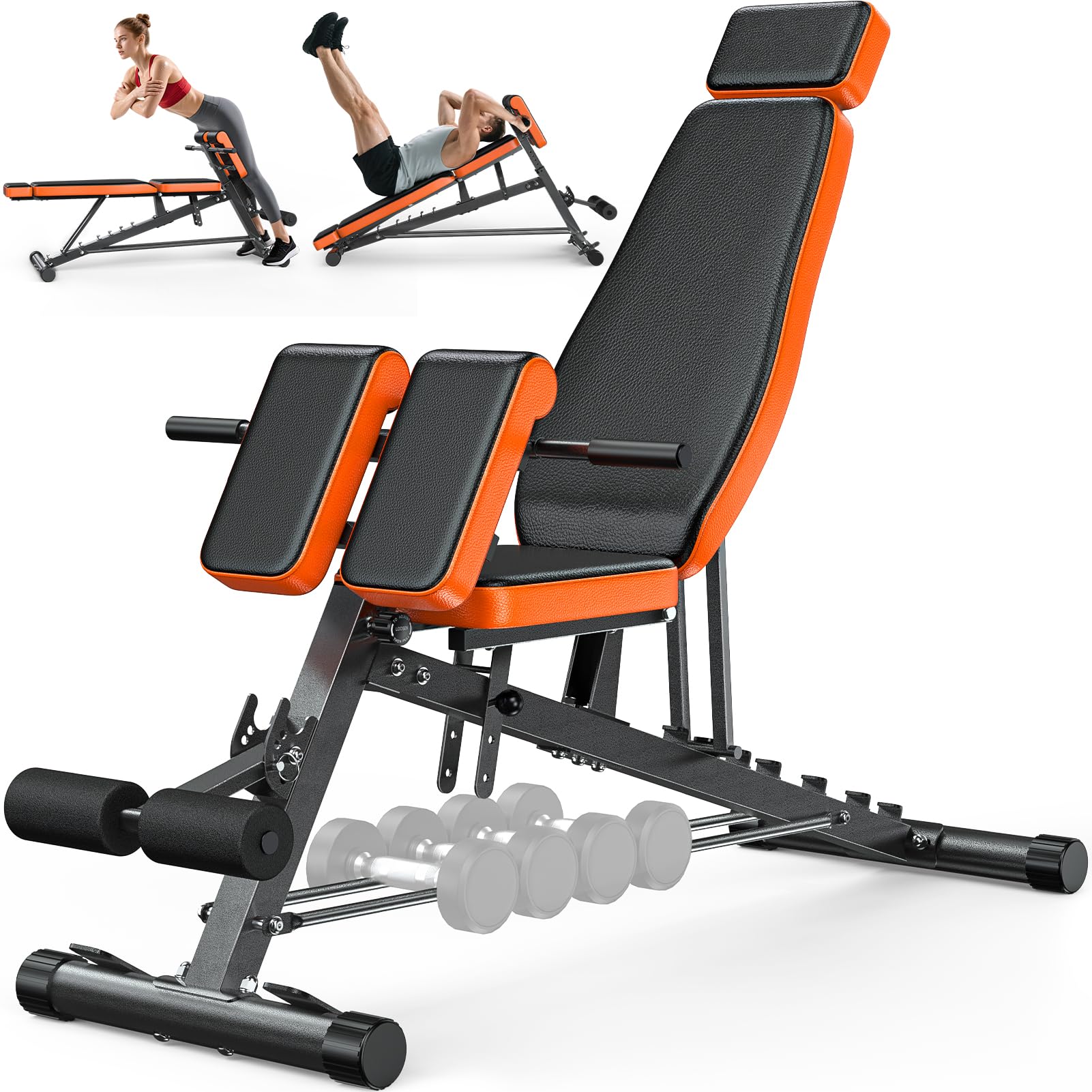
The XDDIAS is less a Roman chair than a transformer. It carries a 1000-pound rating, 11 support-pad heights, eight backrest angles, and a 47-inch head support, with a frame that is meant to fit users up to 6 feet 6 inches. On paper, it is the most adjustable station here, and the double-triangle frame explains why it weighs 47.4 pounds.

We like the two support-pad widths because they change the job: a narrow setting gives you room for lower-back and glute work, while a wider setting braces the torso for core exercises. The independent seat and backrest also make it easier to set up for a tall user than a fixed Roman chair. That adjustability is the reason to pay attention.

The catch is that it is not a dedicated posterior-chain machine. It is a convertible bench, and it does not replace the Titan for reverse-hyper training. If you want one adjustable station for Roman-chair work and light bench work, it can earn its space; if you want a true pendulum machine, keep looking.

We recommend it for the tall or heavy lifter who wants one adjustable station and has the floor space to leave it set up. It gives you more setup options than the Marcy or Lifepro, but it does not replace the Titan for reverse-hyper training. That distinction is the whole decision.

Bottom line: We recommend it for tall or heavy users who want a highly adjustable Roman chair and occasional bench work, not as a true reverse hyper.

#3

Lifepro SculptTrainer Roman Chair

Lifepro SculptTrainer Roman Chair

Folding home gyms

Our Score 8.8/10
Check Price

Worth Noting

  • Folded frame is still about 38 inches long
Footprint
38.2 x 22.2 in
Item Weight
19.8 lb
Folded Design
Yes
Weight Capacity
330 lb
Read the full review

The folded footprint is the reason to choose the SculptTrainer. It folds flat in seconds, weighs 19.8 pounds, and still carries a 330-pound rating. In a room where the bench has to come out and go away, that combination matters more than a few extra pounds of frame. The 38.2 by 22.2 inch footprint is small enough to claim a corner, and the built-in handles let you turn the chair around for side bends, incline push-ups, and tricep dips.

We like the dual rollers and padded seat because they give you distinct contact points instead of one vague pad. The base and crossbars can arrive out of line, so dry-fit the frame and leave the bolts loose until it sits flat before you tighten everything down. That is a setup nuisance, not a reason to avoid the chair. The height adjustment is useful for sharing, but the folding mechanism is the main event.

At 330 pounds, it has more capacity than the 250-pound budget chairs, and it weighs less than most of them. We see it as the best folding Roman chair in this group for a lighter lifter or a shared room. If you have a permanent gym corner and want a heavier station, the Marcy is the more planted choice; if the bench must disappear, this one earns its spot.

Bottom line: We recommend it when storage decides the purchase: it folds flat, handles 330 pounds, and avoids a permanent gym footprint.

#4

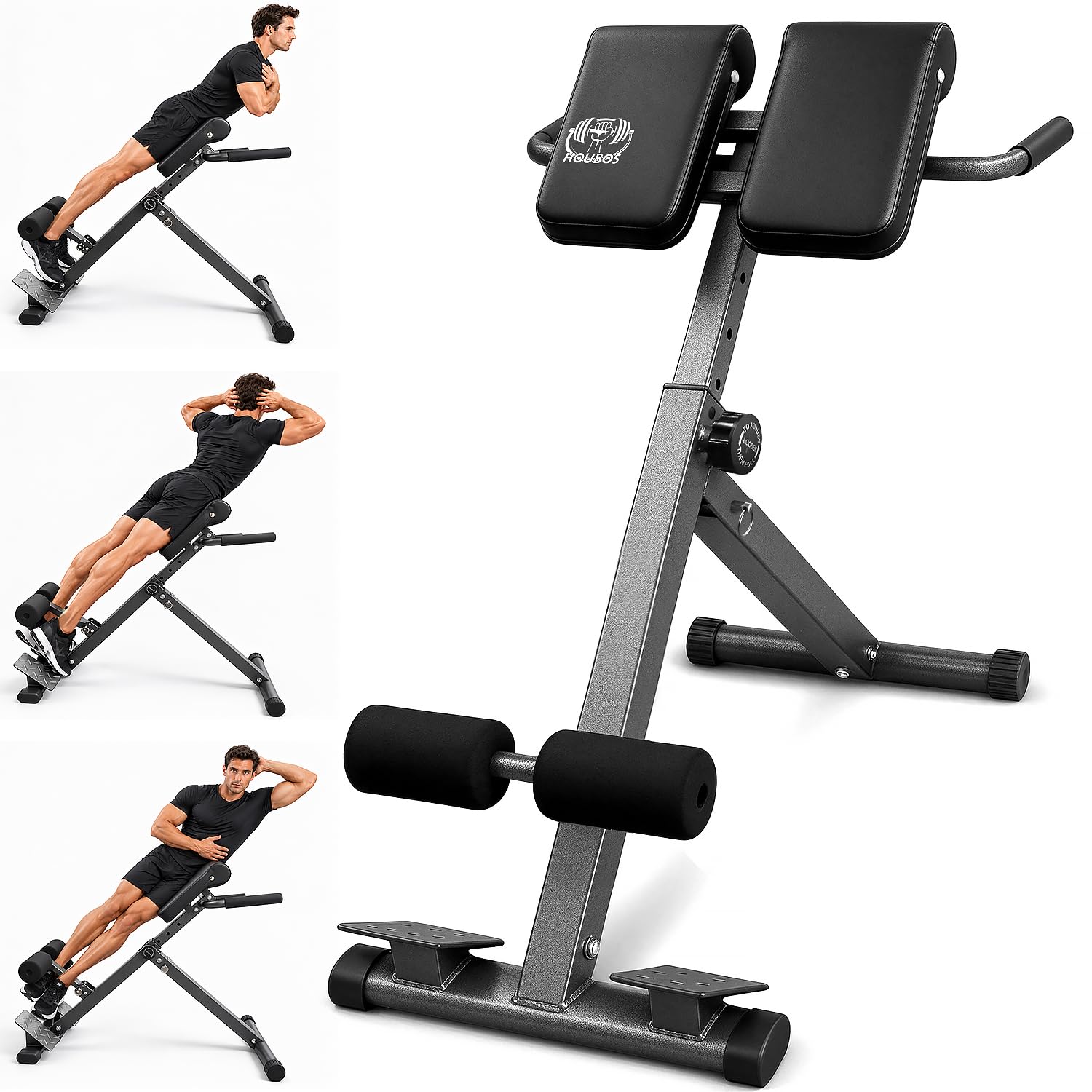
Houbos Foldable Roman Chair

Houbos Foldable Roman Chair

Tight spaces

Our Score 8.8/10
Check Price

Worth Noting

  • 250 lb capacity limits heavier users
Footprint
36.2 x 16.9 in
Item Weight
19.8 lb
Weight Capacity
250 lb
Height Adjustment
8 positions
Read the full review

If your training corner is a hallway or the edge of a bedroom, the Houbos makes its case with size. The frame is 36.2 by 16.9 inches and weighs 19.8 pounds, so it slips into places where the wider Marcy and the Titan will not go. It still has proper footrests, not the skimpy hooks some folding chairs use, and the narrow footprint leaves a clear path around it.

We think the adjustment is the useful part: eight height positions and a three-stage leg support let you set the hip pad and footrest separately instead of accepting one fixed angle. That is what makes a small chair usable for different bodies. The eight-position height and three-stage leg support are more useful than a thicker pad.

The Houbos folds flat and stores upright, and the 19.8-pound weight means you can move it with one hand. We see it as the tight-space pick, pure and simple. If you have a wider corner and want a more planted chair, the Marcy is the alternative.

Bottom line: We recommend the Houbos for tight home gyms: it folds flat, adjusts in eight height steps, and does the back-extension job without a big footprint.

#5

FITKS360 440 lb Roman Chair

FITKS360 440 lb Roman Chair

Heavy users

Our Score 8.8/10
Check Price

Worth Noting

  • Folding joints can develop wobble
  • Hardware may arrive incomplete
Item Weight
30.8 lb
Weight Capacity
440 lb
Angle Adjustment
5 levels
Height Adjustment
8 levels
Read the full review

A 440-pound rating and five angle positions are the headline, but the useful part is the combination: this is a folding Roman chair that lets you change both height and angle without moving to a different bench. The frame weighs 30.8 pounds, which is still light enough to fold and lean against a wall. For a heavier lifter who wants a compact station, that is a rare mix.

The eight height settings and five angle settings are more than most chairs here offer, and they matter most for back extensions because a small change in pad height can change where you feel the work. The folding joints are the place to slow down. We check the folding joints first, tighten the hardware in stages, and keep the first few sessions bodyweight only. A 440-pound rating is not a free pass if the frame arrives out of alignment.

We see this as a capacity-first folding option for a heavier lifter, not the simplest chair to live with. If you are near the top of a 250- or 330-pound chair, the extra rating is worth considering. If you want a traditional planted chair and do not need the fold, the Marcy is the easier buy; if you need 440 pounds and a fold, this is the one that fits.

Bottom line: We recommend it for heavier lifters who need a folding chair with angle changes, provided you check the frame and hardware before loading it.

#6

Marcy Adjustable Hyper Extension Bench

Marcy Adjustable Hyper Extension Bench

Stable back extensions

Our Score 8.6/10
Check Price

Worth Noting

  • Too short for users near six feet
  • 308 lb capacity limits the biggest lifters
Dimensions
27.5 x 43.5 x 37.5 in
Item Weight
42 lb
Leg Holders
Adjustable two-foam
Weight Capacity
308 lb
Read the full review

A Roman chair earns its place by making a back extension feel controlled rather than wobbly. The Marcy gets the basics right: a wide stabilizer base, a 42-pound frame, and a 308-pound capacity. The high-density foam pad and the independently adjustable two-foam leg holders give you a stable place to hinge, and the padded handles are useful when you turn around for side bends or sit-ups.

We think the Marcy's strongest card is lower-back support. The pad shape puts you in a good position to extend from the hips, and the wide base gives it a planted feel. It is a traditional Roman chair, not a reverse hyper, so do not expect the pendulum leg swing or the loadable sleeve of the Titan. What you get instead is a compact station for back extensions, glute raises, and core work.

The 42-pound weight is heavy enough to feel substantial but still movable, and the 27.5 by 43.5 inch footprint is wider than the folding chairs here. We treat it as a station for a dedicated corner, not a chair to move every session. For back-extension work at moderate loads, it is the traditional Roman chair we reach for first.

Bottom line: We recommend the Marcy for a traditional Roman chair: it feels planted, supports back extensions well, and suits small-to-average frames better than tall ones.

#7

Sunny Health & Fitness Roman Chair

Sunny Health & Fitness Roman Chair

Budget 45° work

Our Score 8.4/10
Check Price

Worth Noting

  • Frame runs tall for shorter users
  • 250 lb capacity limits heavier users
Frame Angle
45 degrees
Item Weight
24 lb
Folded Design
Yes
Weight Capacity
250 lb
Read the full review

The Sunny is the known quantity in this group: a 45-degree Roman chair with a 24-pound frame and a foldable design. It is not trying to be a reverse hyper or a convertible bench. The floor levelers are the detail we appreciate most, because a slightly uneven basement floor can make a fixed chair feel rickety when the frame itself is fine.

The 45-degree angle is a sensible middle ground for back extensions, and the high-density foam hip pad and non-slip handlebars give you the contact points you expect. The frame is simple, the fold is quick, and the non-slip handlebars help when you turn around for side bends or core work. It is the chair you buy when you want a known layout without paying for angle adjustment.

We recommend it for a taller, lighter user shopping the budget tier. It folds for storage and uses floor levelers to settle on an uneven floor, which makes it easy to live with in a basement or garage. If you need more capacity or a shorter frame, one of the 330-pound folding chairs is the better fit.

Bottom line: We recommend the Sunny for taller, lighter users shopping the budget tier; its 45-degree layout is familiar and its floor levelers help on uneven floors.

How We Tested Reverse Hyperextension Machines

We started with a shortlist of machines sold for home gyms, then narrowed it by footprint, weight capacity, adjustable torso and leg pads, and whether the frame looked serviceable rather than disposable. Seven machines made the cut. Each lived in a real training space—a garage gym, a basement corner, and a spare bedroom—for six months, not just an afternoon photo shoot. We assembled each one ourselves, timed the process, and noted where instructions stalled, which bolts needed two people, and whether the finished machine sat flat without shims.

Stability was the first thing we judged. We loaded the pendulum through a full range with controlled reps, then with faster swings, watching for rocking, lifted feet, frame flex, and any creak from the pivot. For back support and comfort, testers of different heights adjusted the torso pad, handles, and ankle strap, then reported whether they could keep their hips down and ribs braced without sliding or pinching. We also noted padding density after repeated sets and whether the handles were reachable at the bottom and top of the movement.

To check durability and construction, we inspected welds, pivot hardware, upholstery seams, and powder coating at the start and again after six months of regular use. Adjustment pins and knobs got the same scrutiny: Did they line up cleanly, stay tight, and move without binding? Workout suitability came down to whether the machine let us slow the tempo, pause at the top, and target glutes and hamstrings without the lower back taking over; we tried both strap and leg-pad setups where available. Size got a tape measure, not a guess—we recorded footprint, height, and clearance needed for the swing, then lived with each machine long enough to know if it crowded the space between sets.

How to Choose

Decide Between a Reverse Hyper and a Roman Chair

A true reverse hyper, like the Titan H-PND, braces your torso and swings your legs from the hips. That makes it the more direct tool for glutes and hamstrings. A Roman chair puts you face-down over a hip pad and trains back extensions, core, and lower-back strength. It is smaller, lighter, and often the better fit for a home gym that has to share space.

We think the choice is simple once you name the movement. If reverse hypers are the priority, buy the pendulum machine and give it a permanent footprint. If you mainly want back extensions and side bends, a Roman chair does the job without the bulk. A convertible bench is a compromise, not a substitute for a true reverse hyper.

Set a Realistic Capacity Limit

Weight ratings here run from 250 to 1000 pounds, but the number is a ceiling, not a target. Leave margin for dynamic reps and for the way you get on and off. A light folding chair rated at 250 pounds is a different proposition from a 147-pound machine rated at 550. Frame weight, base width, and locking hardware tell you more about how a bench will feel than the headline number alone.

If you are close to a budget chair's limit, step up to a higher-rated frame or a heavier Roman chair. We value a wide base and a frame that does not walk across the floor more than an extra hundred pounds of claimed capacity.

Measure the Footprint and the Fold

A true reverse hyper needs room: the Titan H-PND is 55 by 39 inches, and its 44.5-inch height matters if you train under a low ceiling. Roman chairs are shorter but still run 36 to 43 inches deep. Folding does not make a chair tiny; the Lifepro folds flat but stays about 38 inches long. The Houbos is the tightest of these at 36.2 by 16.9 inches.

Tape the footprint on the floor and add clearance for your legs, a mat, and the path to storage. Then measure the folded length against the closet or under-bed gap you have in mind. A bench that fits only when nothing else is in the room will end up staying out.

Fit the Pads to Your Body

Height adjustment is not a luxury on a Roman chair. The hip pad has to sit below your hip crease, and the foot rollers have to hold your calves without pushing your knees out of line. Split support pads give you clearance for chest and hip work; a single wide pad can press in the wrong place. Angle adjustment changes how much glute and hamstring you feel, but 45 degrees is the common starting point.

Tall users need more length between the pad and the footrest; shorter users need a lower pad and a frame that does not force them onto tiptoes. The Marcy is a good chair for smaller frames but runs short near six feet, while the XDDIAS is built for users up to 6 feet 6 inches. Check the maker's height range before you buy, then check the pad gap.

Frequently Asked Questions

Final Verdict

We recommend the Titan Fitness Economy H-PND when you want a true reverse hyper. Its pendulum movement and loadable sleeve do a different job from every Roman chair here, and the 550-pound frame is built for that job. If you mainly want back extensions in a smaller space, choose the Marcy for a planted traditional chair or the Lifepro if it has to fold away.