Strength & Weights

9 Best Power Racks with Lat Pull Downs 2026: Stability and Value You Can Rely On

Find a power rack with lat pulldown that stays stable under heavy cable work, from budget to premium. The right choice depends on your training load and space.

A power rack with a lat pulldown seems like a perfect home gym solution, but many budget models wobble during cable exercises or bind after a few sessions. The trade-off between price and stability is real.

The key is matching the rack to your training load. Light to moderate use can get away with a budget-friendly cage. But if you plan to stack plates on the cable, you need thicker steel and smoother pulleys.

This guide focuses on the models that deliver on the promise: solid construction, smooth cables, and attachments that actually get used. No hype, just the specs that matter.

#1

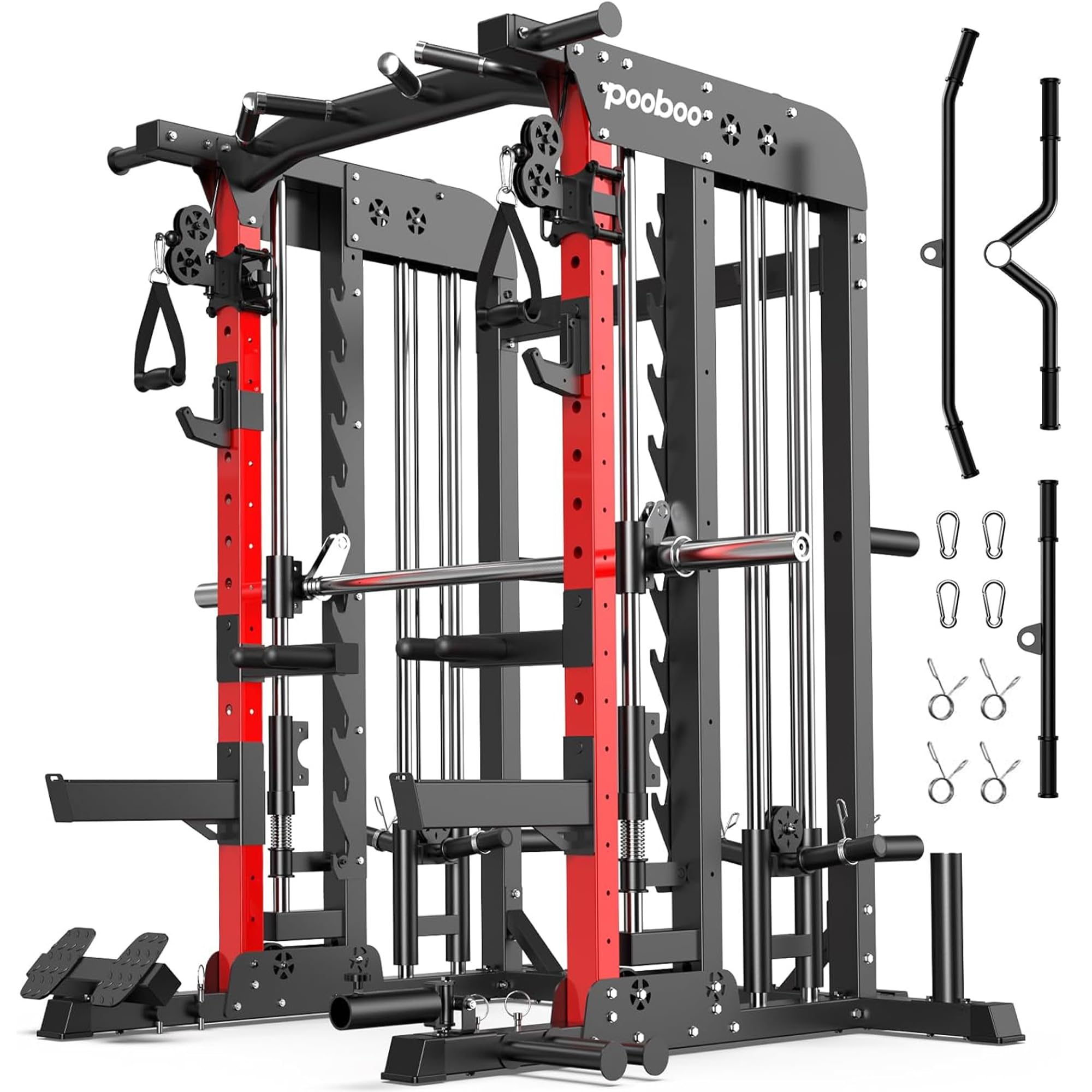
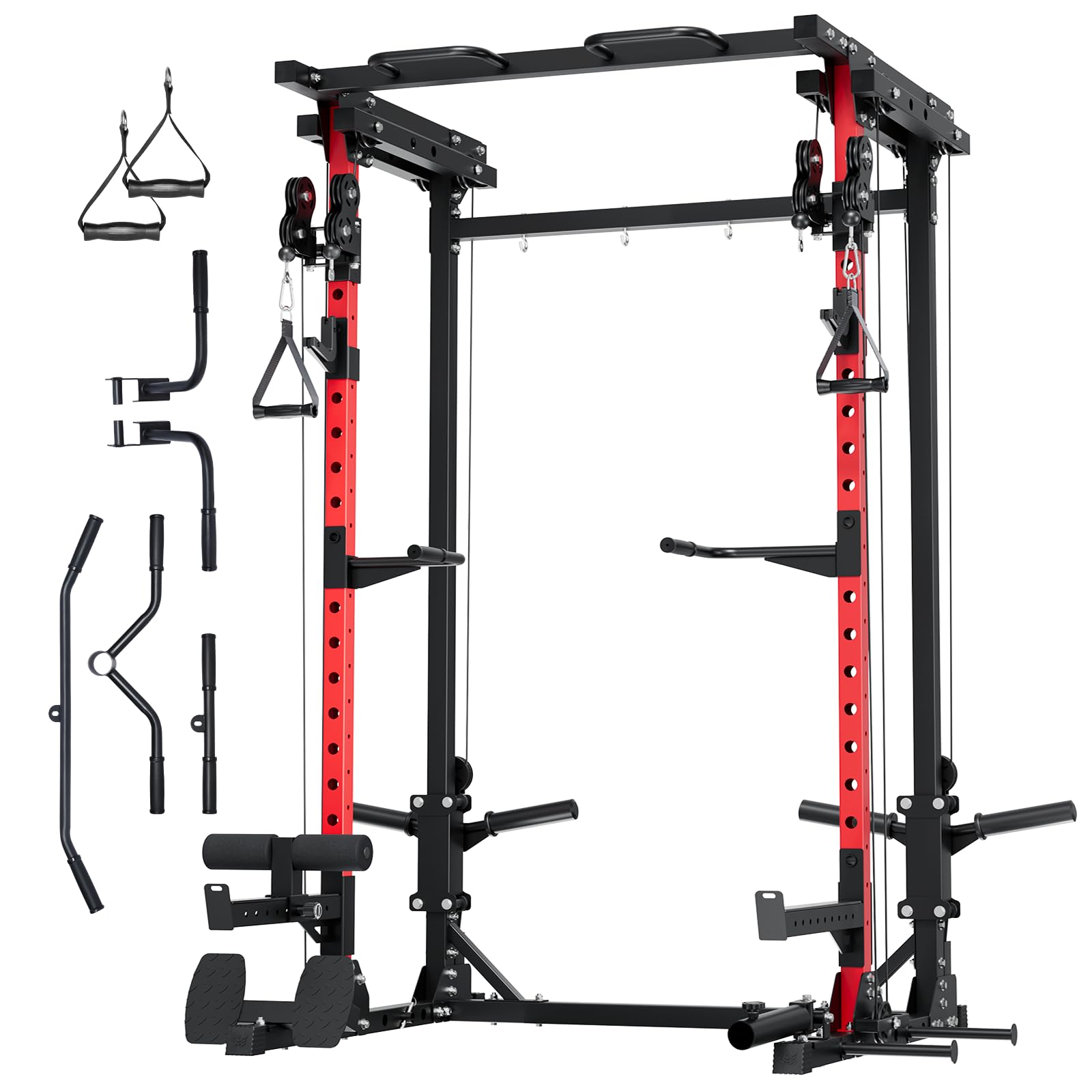
pooboo P43 Power Cage

Top Pick
pooboo P43 Power Cage

Serious home gym

Our Score 9.8/10
Check Price

Worth Noting

  • Assembly requires several hours of focused effort; a helper and clear instructions are essential.
  • Premium price may exceed the budget of buyers looking to spend under $700.
Footprint
63x43x83 in
Stability
Exceptional, 100% positive
Attachments
20+ including lat pulldown
Pulley Ratio
1:1 single
Read the full review

The pooboo P43 combines a heavy-duty steel frame with a smooth 1:1 cable system that handles pulldowns, rows, and crossovers without wobble or noise. Its 20+ attachments — including lat pulldown bar, dip bars, and landmine — let you run a full training program from one station, saving floor space and equipment swaps.

This cage is built for lifters who want commercial-grade durability in a home gym and are willing to spend premium money to get it. The assembly process takes 1–3 hours and requires patience, so plan a weekend morning with a helper. The 2,000-lb static capacity and 1,000-lb cable rating support heavy squatting and pulldown work without flexing.

Tip: Set aside a few hours and have a second person help with alignment during assembly; the process goes smoother with two sets of hands.

Bottom line: For lifters who want a single machine that handles squat, cable, and pulldown work with commercial-grade feel, the P43 is a strong candidate — provided you have the budget and patience for assembly.
#2

MAJOR FITNESS Drone3

MAJOR FITNESS Drone3

Tech-savvy lifters

Our Score 9.6/10
Check Price

Worth Noting

  • Some included attachments feel budget and may benefit from aftermarket upgrades.
  • Pulley noise can be noticeable in quieter home gym environments.
Footprint
70x46x85 in
Stability
Solid construction
Attachments
Pull-up bar, T-bar, J-hooks
Pulley Ratio
Switchable 2:1 / 1:1
Read the full review

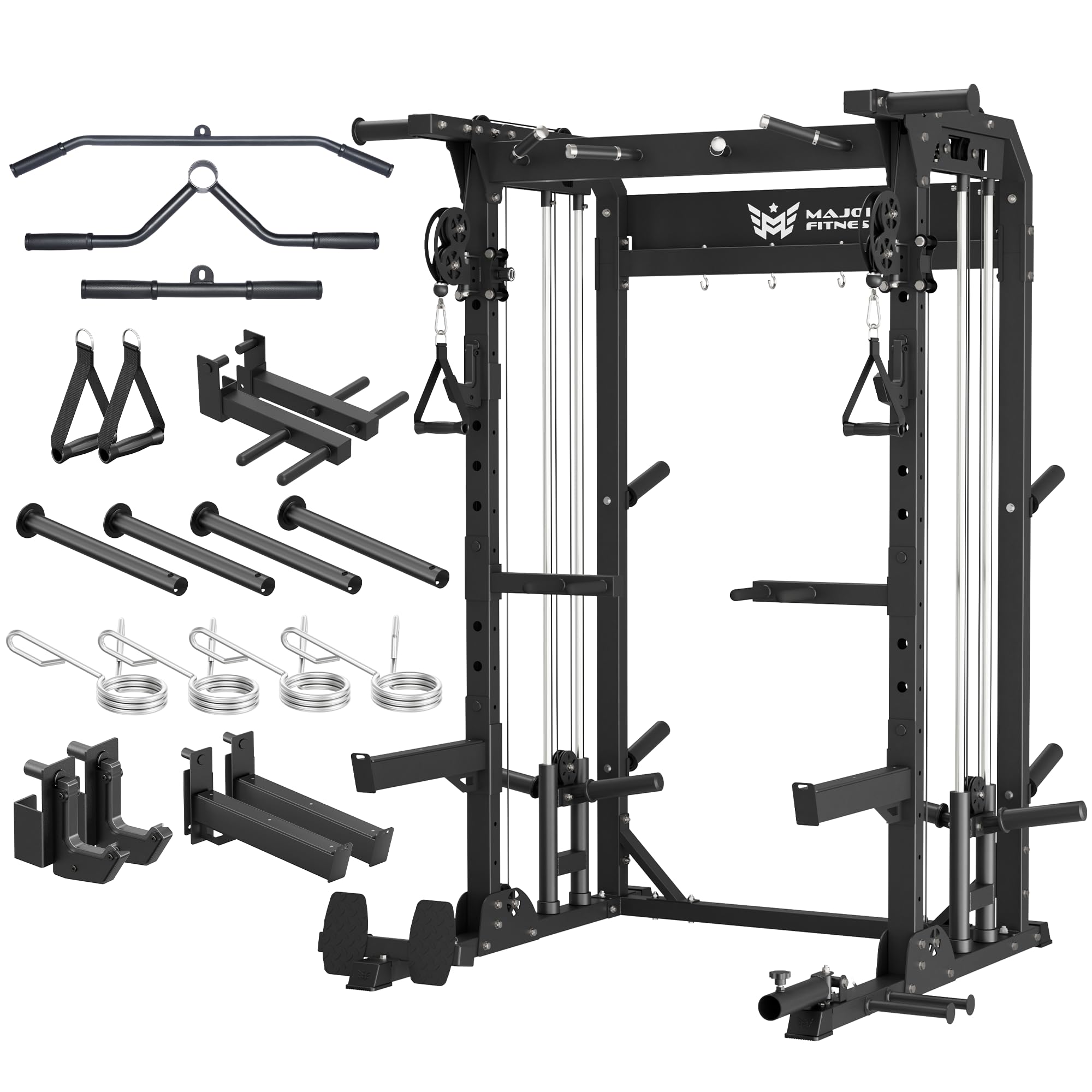
The Drone3's adjustable pulley ratio gives you two machines in one: a 2:1 setting for high-rep cable work and a 1:1 for direct strength pulls. The frame feels solid under load, and the linear bearings keep movement smooth across the switch. It's a smart option for lifters who want to experiment with different training styles without buying a second cable station.

This rack suits tech-savvy lifters who value ratio flexibility and a high static capacity without paying premium prices. However, some attachments lack the heft of aftermarket gear, and the pulley system can produce more noise than silent-focused competitors. If you're optimizing for a quiet space or expect plush accessories out of the box, the top pick's smoother operation and proven build may be a better fit.

Tip: Applying silicone lubricant to the pulley bearings can reduce noise if it becomes an issue.

Bottom line: For lifters who want ratio flexibility over a proven track record, the Drone3 delivers a unique setup that few competitors match at this price.

#3

MAJOR FITNESS F22

MAJOR FITNESS F22

Balanced training

Our Score 9.2/10
Check Price

Worth Noting

  • 2:1 pulley ratio reduces direct weight feel for precise isolation exercises.
Footprint
69x56x83 in
Stability
Rock-solid frame
Attachments
Lat pulldown, dip bars, landmine
Pulley Ratio
2:1 independent dual
Read the full review

The F22 offers rock-solid stability and smooth dual pulleys, making cable exercises like lat pulldowns and crossovers feel fluid without the premium price tag.

Best suited for home gym owners who want full cable crossover functionality and don't need extreme weight capacity. The 14-gauge steel frame is adequate for most routines, though very heavy powerlifters may prefer thicker steel.

Bottom line: For home gym owners who prioritize stability and cable functionality over extreme capacity, the F22 is a reliable mid-range choice.

#4

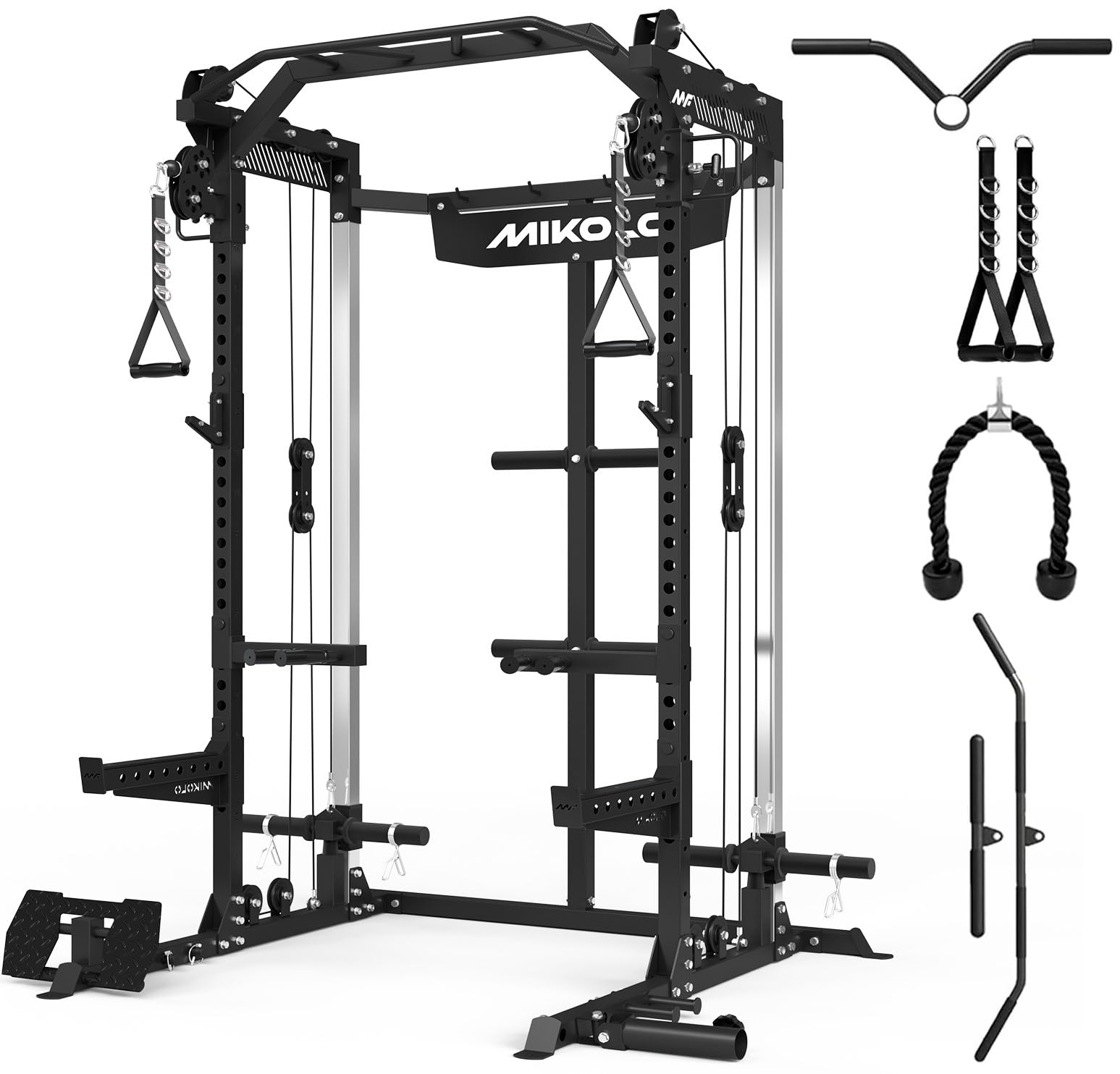
Mikolo HR06 Power Cage

Mikolo HR06 Power Cage

Compact cable crossover

Our Score 9.2/10
Check Price

Worth Noting

  • Assembly can take 2.5–3 hours and requires careful attention to detail.
Footprint
53x46x86 in
Stability
Good, minor binding reports
Attachments
Lat pulldown, dip bars, T-bar
Pulley Ratio
1:1 independent dual
Read the full review

With the smallest footprint among free-standing racks that offer true 1:1 independent pulleys, the Mikolo HR06 uses aluminum pulleys for smooth cable work. The half-rack design limits interior depth for heavy squats, and occasional pulley binding can occur during side-to-side movements. This setup suits home gym owners who prioritize cable crossover functionality over deep squatting inside the cage.

f4a1 Tip: Set aside a full afternoon for assembly — having a second person helps align bolts.

Bottom line: If you need a compact rack with independent pulleys and don't plan to squat heavy inside the cage, the HR06 delivers where others compromise.

#5

Sportsroyals Power Cage

Sportsroyals Power Cage

Budget beginners

Our Score 9.0/10
Check Price

Worth Noting

  • Can wobble during heavy cable work or dips
  • Assembly instructions may lack clarity for a small number of users
Footprint
56x62x83 in
Stability
Wobbles during heavy use
Attachments
Lat pulldown, dip bars, landmine
Pulley Ratio
1:1 single
Read the full review

For under $400, this rack delivers a lat pulldown station, dip bars, landmine, and plate storage — a complete starter setup that covers most exercises without needing separate machines.

The tradeoff is stability: during heavy cable pulls or dips, the frame can wobble. This matters little for casual training or lighter weights, but those planning to push the cable system over 150 lbs will find it distracting.

Tip: Placing the rack on a rubber mat or bolting to a platform can reduce wobble during cable work.

Bottom line: A budget-friendly all-in-one for beginners or casual gym users who want a lat pulldown without spending more; just keep loads moderate.

#6

ARMAC Power Cage

ARMAC Power Cage

Mid-range buyers

Our Score 9.0/10
Check Price

Worth Noting

  • Some units have missing or damaged hardware upon delivery
Footprint
54x47x84 in
Stability
Sturdy, few issues
Attachments
Lat pulldown, dip bars, landmine
Pulley Ratio
1:1 single
Read the full review

The ARMAC Power Cage delivers a solid frame and smooth cable pulleys for lat pulldown and other exercises, with a full set of attachments included. The tradeoff: some units arrive with missing or damaged hardware, so the buying experience can be less seamless than the F22 or Drone3 options in this price bracket.

Bottom line: Best for lifters who want a stable, full-featured cage and are willing to check all hardware on arrival rather than risk delays.

#7

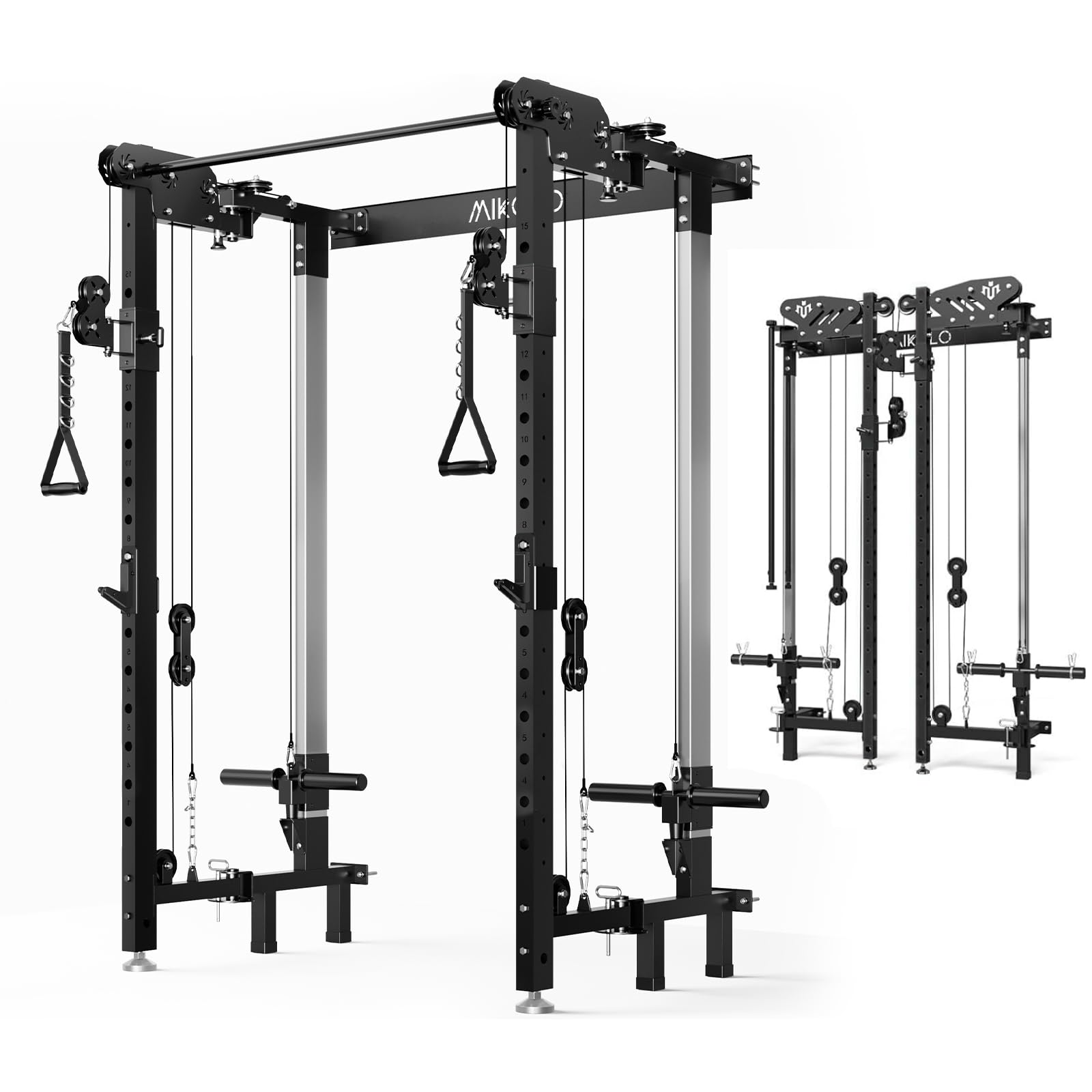
Mikolo Folding Squat Rack

Mikolo Folding Squat Rack

Space-constrained

Our Score 8.8/10
Check Price

Worth Noting

  • Cable pulleys can feel stiff or uneven, particularly with light or unbalanced loads.
  • Mounting to wall studs must be carefully measured; not all garage framing accommodates the required spacing.
Footprint
30x68x86 in open
Stability
Stable when wall-mounted
Attachments
Pull-up bar, J-hooks, handles
Pulley Ratio
1:1 independent dual
Read the full review

The Mikolo WR00 folds to roughly the size of a floor mat when not in use, yet still includes a lat pulldown and cable crossover — a rare combination for space-constrained setups. Wall mounting frees up floor space entirely, but requires precise stud alignment for safe attachment. Cable smoothness is less refined than free-standing racks; the pulleys can feel uneven, especially with unbalanced weight. This trade-off makes the WR00 a practical fit for renters or multi-use garages where stowability matters more than premium pulley feel.

Tip: Before buying, confirm your wall studs are spaced 16 inches on center — non-standard spacing will require additional hardware or a plywood backer.

Bottom line: Best suited for apartment or garage lifters who need their rack to disappear after workouts and can accept that cable feel takes a back seat to foldability.

#8

GarveeLife Power Cage

GarveeLife Power Cage

Risk-tolerant buyers

Our Score 8.8/10
Check Price

Worth Noting

  • Missing pulley wheels or wrong parts can delay assembly
Footprint
Stability
Limited reviews, seems stable
Attachments
20+ including lat pulldown
Pulley Ratio
2:1 (reported)
Read the full review

This power cage delivers good build quality and sturdy construction for its price point, with a 2:1 pulley ratio that provides smooth cable movements. However, occasional missing parts and less refined attachments mean assembly may require extra effort, and the limited user feedback makes long-term durability harder to gauge than more established options.

Bottom line: Best suited for risk-tolerant buyers who prioritize a low price and 2:1 pulley ratio and are willing to deal with potential part shortages.

#9

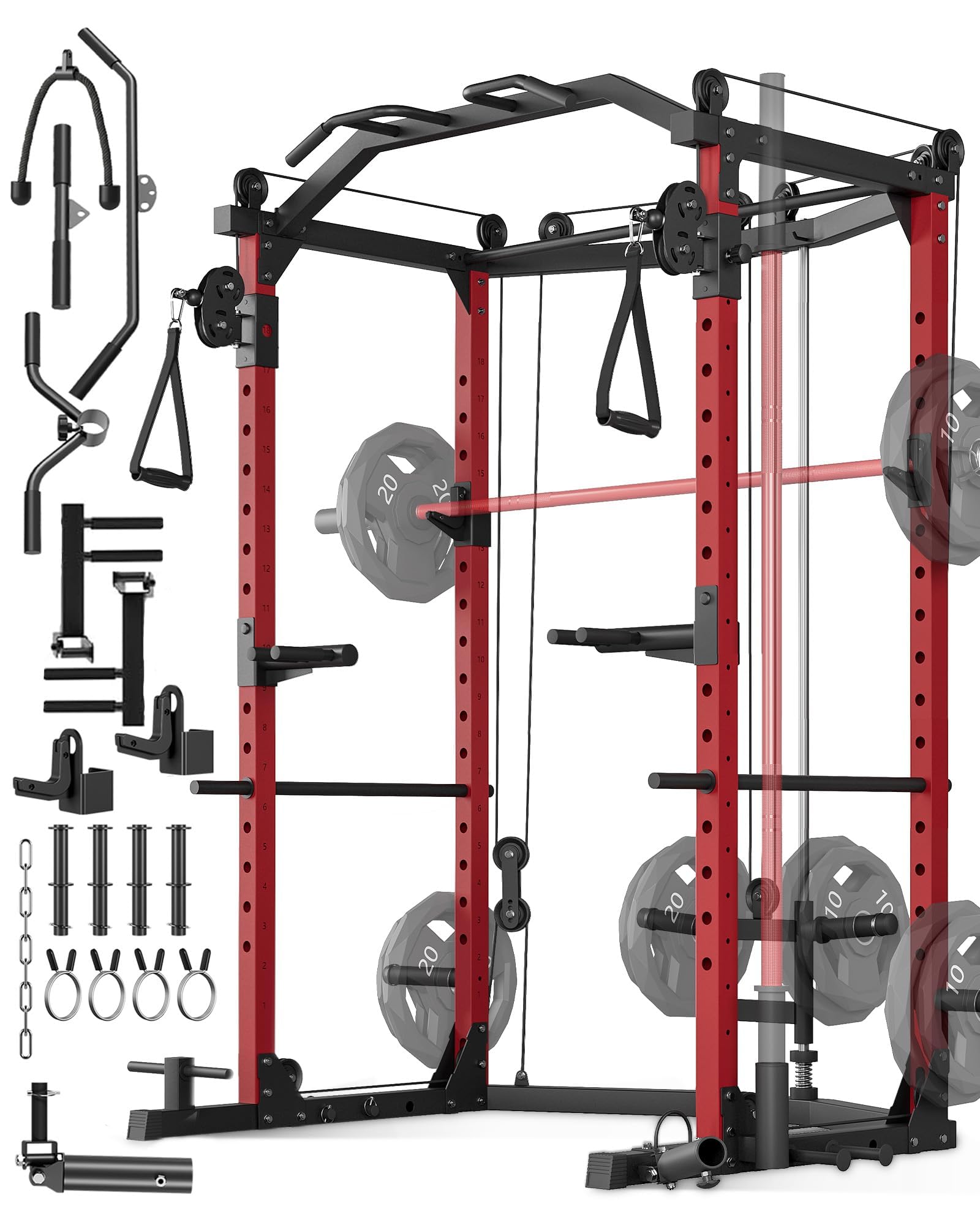
Mikolo HR05-B Power Cage

Mikolo HR05-B Power Cage

Budget half-rack

Our Score 8.8/10
Check Price

Worth Noting

  • Pulley can bind and frame may shift during use
Footprint
53x46x86 in
Stability
Frame shift, bent parts
Attachments
Safety arms, dip bars, J-hooks
Pulley Ratio
1:1 independent dual
Read the full review

The Mikolo HR05-B keeps costs low by pairing independent dual pulleys with a half-rack frame, making it an entry-level option for cable work on a tight budget. However, the pulley system can bind during use, the frame may shift under heavier loads, and some units arrive missing hardware — issues largely absent on the similar-priced HR06. Buyers willing to accept these compromises and prioritize price over smooth operation will find functional value here.

Bottom line: Only consider the HR05-B if your budget won't stretch to the HR06 and you can work around occasional pulley hesitation and frame movement.

How to Choose

Weight Capacity

Static weight capacity tells you how much the uprights can hold during squats and bench press. A higher number means thicker steel and less frame flex. For most home gym users, 1,500 lbs is a safe floor. If you plan to drop heavy squats, look for 2,000 lbs or more.

But static capacity doesn't tell the whole story for cable work. A rack can support 2,000 lbs statically yet wobble sideways during lat pulldowns because the cable tower isn't braced well. Check user comments about side-to-side stability under load.

Pulley Ratio

A 1:1 ratio means the weight you load is exactly what you feel at the handle. This gives a direct, heavy feel preferred for strength movements like lat pulldowns and rows. A 2:1 ratio halves the felt weight but doubles the cable travel, making it smoother for endurance work and cable crossovers where you want a longer range of motion.

The trade-off: 2:1 ratios can feel 'light' for strength work, and 1:1 systems may require more weight plates to get the same resistance. Some new racks offer switchable ratios, letting you choose per exercise.

Stability

Stability during cable exercises is often the first thing to go on budget racks. A lightweight frame without cross-bracing will rock or tip when you pull the handle to the side. Pay attention to the base width and whether the lat pulldown tower is bolted to the main cage or just attached with small brackets.

For heavy cable work, a rack that can be bolted to the floor or has a large footprint is noticeably more stable. Foldable wall-mounted racks gain stability from wall anchors, but require proper stud placement.

Included Attachments

The number of attachments can be misleading. Many budget racks advertise '30+ attachments' but include plastic handles and thin bars that feel cheap. Focus on the quality of the lat pulldown bar, dip bars, and the cable attachments. Aluminum or steel pulleys with sealed bearings last longer and stay quieter.

Check if the attachments are standard sizes (e.g., 1-inch diameter handles) so you can replace them later. Some budget brands use proprietary hardware that can't be swapped.

Footprint and Assembly

Measure your space before buying. Full-size cages need at least 6x6 feet of floor room to use comfortably. Half-racks or wall-mounted folding models can cut that footprint in half. Assembly time ranges from 1 to 4 hours; plan for two people when routing cables.

Some racks come with pre-assembled cable systems that save time. Others require threading pulleys and cables through tight paths, which can be frustrating. Look for assembly videos or clear manuals before committing.

Frequently Asked Questions