Strength & Weights

11 Best Squat Racks of 2026: Power Cages That Stay Stable Under Load

Choosing the wrong squat rack means wobble and risk. This guide helps you find a stable, safe power cage or stand that matches your lifting level and budget.

A squat stand that claims a 550-lb capacity might look like a bargain until you rerack unevenly and the whole thing tips. Instability is the most common complaint in this category, and it's a real safety concern. The truth is that many budget stands blow past their actual limits long before the sticker says so.

Jumping from a $70 stand to a $150 power cage doesn't just add steel — it adds structural integrity, proper safety bars, and a frame that won't wobble during pull-ups. That price difference is the single biggest factor separating a safe setup from a risky one.

This guide focuses on models that deliver that real-world stability, whether you need a full power cage for heavy squats or a compact stand for light work. The right rack for you depends on your lifting load, your space, and your tolerance for wobble.

#1

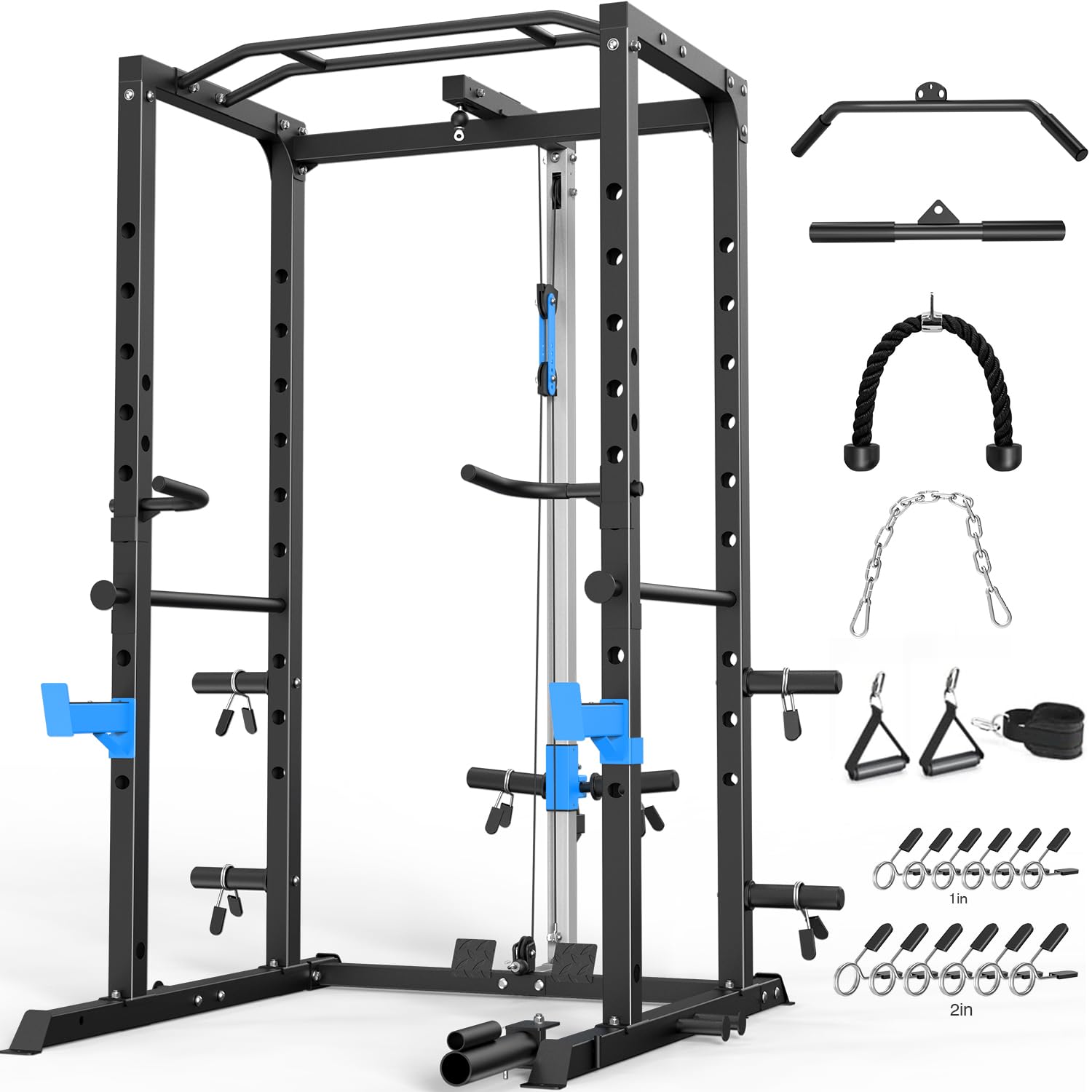
Sunny Power Zone

Top Pick
Sunny Power Zone

Home gym use

Our Score 9.4/10
Check Price

Worth Noting

  • Under heavy loads (300+ lbs) the cage can sway, especially during pull-ups or dynamic squats
  • Glossy paint wears on barbell contact points; non-standard hole size limits attachments to Sunny brand
Frame
14-16 ga
Safety
J-hooks, safety catches, pull-up bar
Capacity
1000 lbs
Footprint
50x65x83 in
Read the full review

The Sunny Power Zone feels more substantial than its mid-range price suggests. The 1000-lb capacity and 134-lb frame give it a planted presence during squats and bench press, though under heavy loads above 300 lbs the unit can sway - more noticeable during pull-ups or dynamic movements. Assembly is a straightforward 30-60 minute process with clear markings.

This cage suits home gym users who prioritize stability and capacity without jumping to premium pricing. The proprietary hole spacing means third-party attachments won't fit - you'll need Sunny's own lat pulldown or accessories. The glossy paint can also rub off where the barbell contacts the J-hooks, a cosmetic annoyance rather than a functional one.

Bottom line: If you want a solid, well-finished power cage that won't strain your budget, the Sunny Power Zone is the one to buy – just plan on using its own accessories.
#2

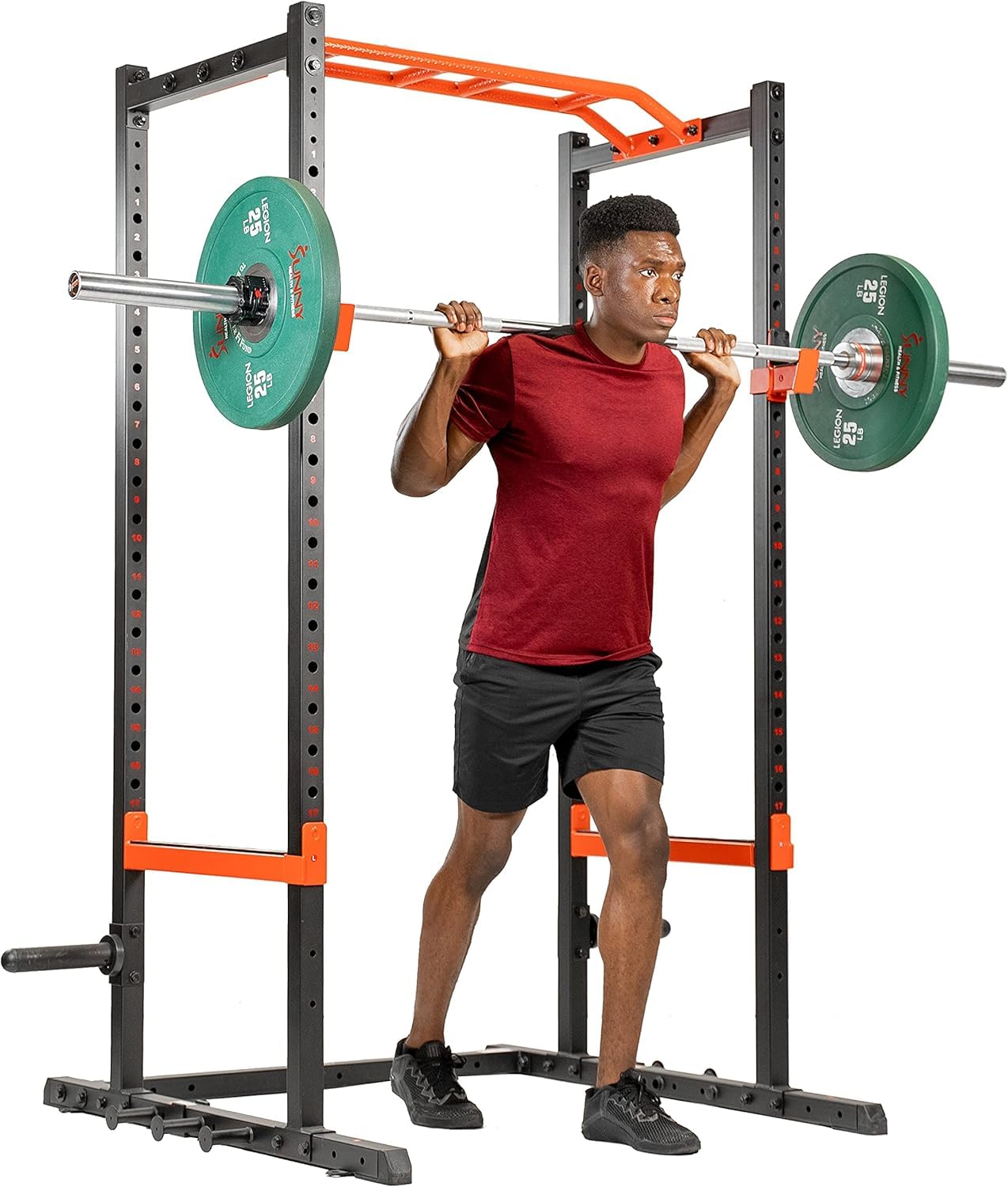
MAJOR FITNESS F22

MAJOR FITNESS F22

Serious lifters

Our Score 9.2/10
Check Price

Worth Noting

  • Premium price limits accessibility for budget-focused buyers
Frame
2x3 in 14-ga
Safety
J-hooks, safety bars
Capacity
1600 lbs
Footprint
69x56x83 in
Read the full review

The F22's dual pulley system operates smoothly with a 2:1 ratio, making lat pulldowns and rows feel as fluid as a commercial cable machine — a feature missing from standard power racks in this class.

This rack suits lifters who want a single station for squats, bench, pull-ups, and cable work. The 1600 lb static capacity and minimal sway under 400+ lbs accommodate heavy training, but the 83-inch height and premium price call for enough ceiling clearance and budget.

Tip: Set aside 2-3 hours for assembly; the included instructions are clear.

Bottom line: For home gym owners who want both a power rack and a functional trainer in one package, the F22 delivers commercial-grade performance at a premium price.

#3

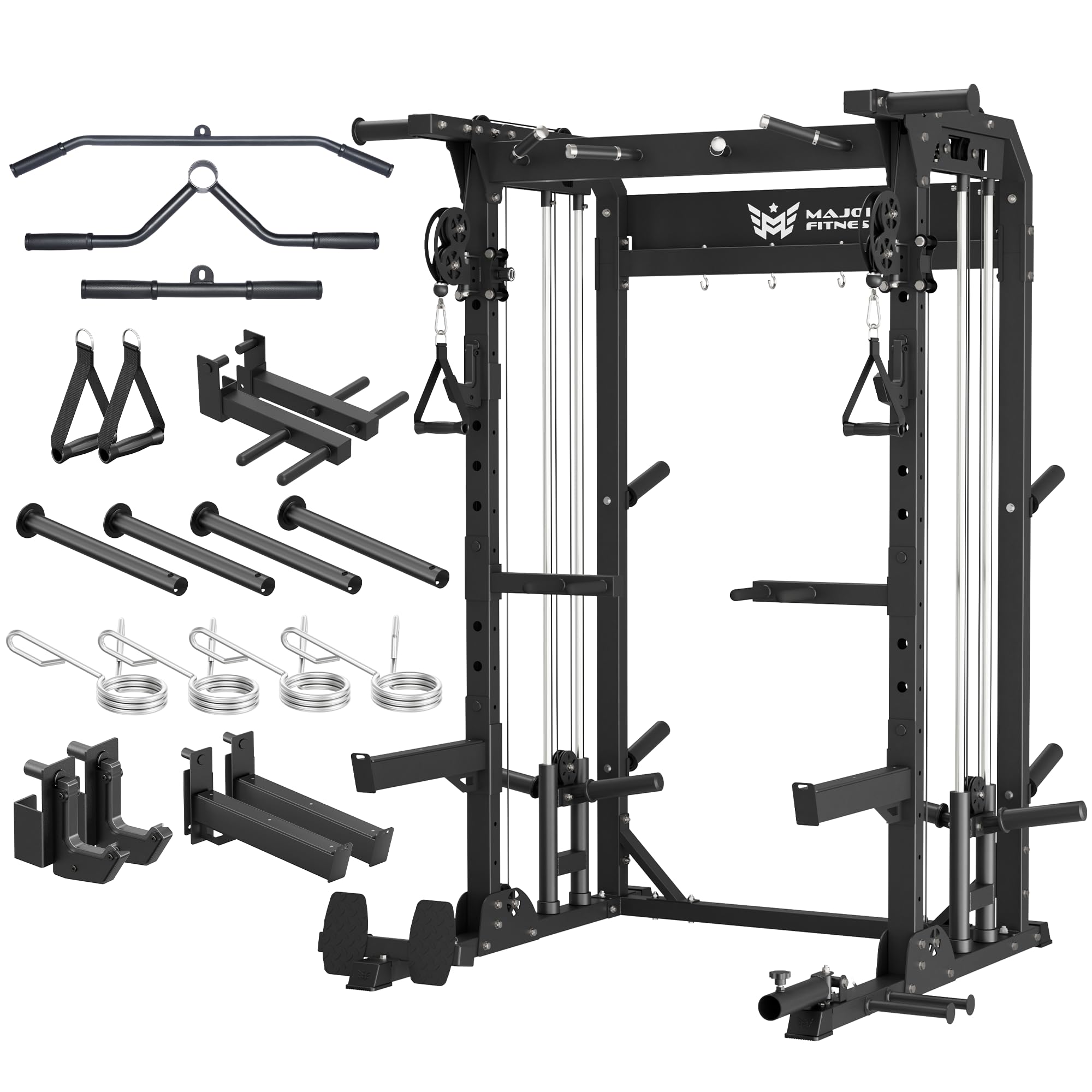
FLYBIRD SR1

FLYBIRD SR1

Home gym users

Our Score 9.2/10
Check Price

Worth Noting

  • In some cases, the width cannot narrow enough for a standard 6' barbell to sit properly.
  • A single report of a safety arm deforming under a 200 lb drop from 4 inches warrants a thorough inspection on arrival.
Frame
2x2 commercial steel
Safety
22 settings, 16.7-in arms, landmine
Capacity
950 lbs
Footprint
42x51x83 in
Read the full review

The FLYBIRD SR1 delivers 22 safety settings and 16.7-inch spotter arms at a mid-range price, giving solo lifters a solid safety net. The adjustable width accommodates both 6' and 7' bars, though a few units cannot close tight enough for a standard 6' bar to sit properly. One isolated report of a safety arm yielding under a 200 lb drop from 4 inches suggests checking unit quality on arrival. This rack suits home gym users who want spotter arms and a landmine without a full cage, and who use 7' barbells or can verify fit with a 6' bar.

Tip: Measure your barbell sleeves to ensure the rack width can close enough; run a light test of the safety arms before heavy use.

Bottom line: For lifters using 7' barbells who want spotter arms and landmine without the footprint of a full cage, the SR1 offers good value — just confirm fit and inspect the safety arms.

#4

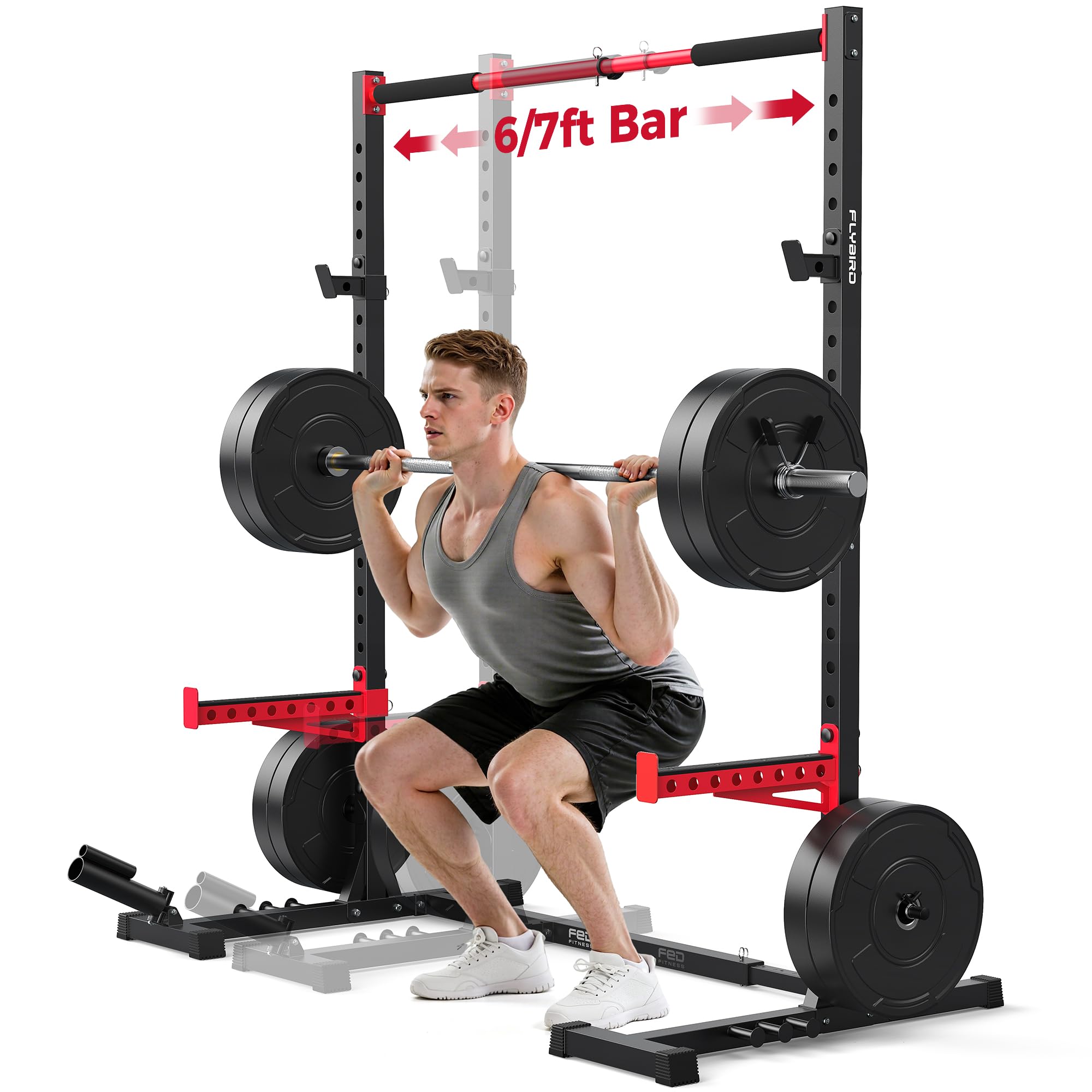
ULTRA FUEGO Power Cage

ULTRA FUEGO Power Cage

Home gym users

Our Score 9.2/10
Check Price

Worth Noting

  • Stability can be an issue during pull-ups and dips unless the cage is bolted down or weighted.
Frame
50x50mm, 1.5mm
Safety
J-hooks
Capacity
1000 lbs
Footprint
63x47x83 in
Read the full review

ULTRA FUEGO Power Cage delivers a complete training package with cable pulley, dip bars, landmine, and J-hooks for a mid-range price — a practical option for home gyms. Stability during pull-ups and dips can be lacking without bolting the frame down or adding weight to plate holders. This setup works well for lifters who plan to anchor the cage, but those wanting out-of-box stability may need to look elsewhere.

Bottom line: Best suited for home gym owners who plan to anchor the cage and want a complete functional trainer on a budget.

#5

CAP Power Rack

CAP Power Rack

Budget home gym

Our Score 9.0/10
Check Price

Worth Noting

  • Stability can feel shaky under heavy loads or dynamic movements, especially near the 500-lb capacity.
  • Occasional quality control issues such as missing hardware or minor weld flaws in some units.
Frame
11-12 gauge
Safety
J-hooks, safety catches
Capacity
500 lbs
Footprint
46x50x85 in
Read the full review

The CAP Power Rack delivers a full cage experience at a price that undercuts most competitors, trading some stability and capacity for affordability. For lifters staying under 300 lbs, it provides J-hooks, safety catches, a pull-up bar, and weight storage in a footprint that fits garages and basements. Its stability can feel shaky near the 500-lb limit or during dynamic movements like kipping pull-ups, so it suits controlled moderate lifting rather than heavy powerlifting or crossfit.

Tip: To reduce wobble, bolt the rack to the floor or add weight plates to the base crossbars.

Bottom line: For beginner lifters on a tight budget who prioritize affordability over maximum stability, the CAP Power Rack delivers the essentials without breaking the bank.

#6

Sportsroyals Power Rack

Sportsroyals Power Rack

Home gym enthusiasts

Our Score 9.0/10
Check Price

Worth Noting

  • The cage can feel wobbly during pull-ups or dips unless bolted down or weighted.
  • Assembly takes 2–3 hours and instructions may require rework for some steps.
Frame
50x50mm, 1.5mm
Safety
J-hooks, safety bars
Capacity
1200 lbs
Footprint
56x62x83 in
Read the full review

The Sportsroyals Power Rack delivers a full cable crossover system alongside a sturdy 1200-lb capacity cage at a price that undercuts dedicated functional trainers. It suits home gym enthusiasts who want both cage and pulley without spending twice as much, provided they are willing to bolt the rack to the floor or add plate storage for stability. Assembly runs 2–3 hours due to dense instructions.

Tip: Bolt the feet to the floor or load the plate pegs with weight to eliminate wobble during pull-ups.

Bottom line: A smart buy for lifters who want cable functionality on a budget and are ready to anchor the frame.

#7

CANPA Squat Stand

CANPA Squat Stand

Home gym users

Our Score 9.0/10
Check Price

Worth Noting

  • Height may be too short for tall users over 6 feet, limiting overhead press clearance.
Frame
2x2 square tube
Safety
safety spotters
Capacity
600 lbs
Footprint
Read the full review

This CANPA squat stand delivers surprising stability for a budget model under $110, with adjustable width and built-in plate storage that add convenience. Best suited for home gym users under 6 feet who want an affordable stand for bench and squat without needing a full cage. The 57-inch max height limits overhead clearance for taller lifters, and the open design means you rely on the included spotter arms for bench press safety. Assembly takes about 30 minutes with clear instructions, and the 600-lb capacity handles most home gym loads.

Tip: Use the included spotter arms when benching alone to catch failed reps.

Bottom line: This stand is a smart choice for lifters under 6 feet who prioritize stability and storage over a full cage's enclosure.

#8

CANPA Power Rack

CANPA Power Rack

Small home gyms

Our Score 9.0/10
Check Price

Worth Noting

  • The cage interior is under 40 inches wide, restricting squat stance for broad-shouldered lifters.
Frame
Alloy steel
Safety
adjustable J-hooks
Capacity
800 lbs
Footprint
43x41x86 in
Read the full review

The most compact full power cage on the list, ideal for tight spaces with a pull-up bar and weight storage. However, the cage interior is under 40 inches wide, which can feel restrictive for wide-stance squats, and stability holds up best for controlled lifts under 300 lbs.

Bottom line: This cage suits apartment or basement gyms where floor space is limited and you use moderate weights with controlled movements.

#9

K KiNGKANG Rack

K KiNGKANG Rack

Light use only

Our Score 9.0/10
Check Price

Worth Noting

  • Noticeable movement under load during squats or bench press; can feel unsteady.
Frame
Alloy steel
Safety
Capacity
690 lbs
Footprint
Read the full review

This stand's 13 height positions and 6 width settings provide plenty of flexibility for bodyweight exercises or light barbell work, and the price is inviting. However, the frame can sway under load, and occasional manufacturing defects like missing holes have been noted — not a concern if you stay well under 200 lbs and check the unit on arrival.

Bottom line: Best for beginners in a compact space who keep weights light; skip it if you plan to squat over 200 lbs.

#10

BangTong&Li Squat Rack

BangTong&Li Squat Rack

Bench press focus

Our Score 8.8/10
Check Price

Worth Noting

  • Crossbar obstructs foot movement during squats and reracking, limiting squat use.
Frame
2x2 square tube
Safety
safety spotters
Capacity
550 lbs
Footprint
Read the full review

This squat rack offers a stable H-base and easy assembly at a budget-friendly price. The crossbar, however, blocks foot placement during squats and reracking, and the narrow width restricts stance. It works well for bench press but is not ideal for comfortable squatting.

Bottom line: Best suited for users who bench press primarily and occasionally squat with a narrow stance at moderate weights.

#11

K KiNGKANG Adj. Rack

K KiNGKANG Adj. Rack

Light use

Our Score 8.8/10
Check Price

Worth Noting

  • Advertised capacity of 690 lbs contradicts the manual's 265 lb limit
Frame
Carbon steel
Safety
Capacity
690 lbs claimed
Footprint
Read the full review

Good adjustability and trap bar storage make this stand convenient for family use. However, the advertised 690 lb capacity is misleading – the manual states a 265 lb limit. This stand is only safe for loads under 200 lbs, making it a poor choice for serious lifting.

Bottom line: Suitable only for light training under 200 lbs or for users who accept the manual's rating.

How to Choose

Weight Capacity

Weight capacity is the first number you'll see, but it's often misleading. Budget squat stands advertise 500+ lbs, yet they wobble or tip under half that load because the base is too narrow or the steel too thin. A real-world capacity is typically 60-70% of the advertised number for stands, while full power cages come much closer to their rating.

Match the rated capacity to your heaviest lift (including the barbell) plus a safety margin of 100-200 lbs. If you squat 250 lbs, a 500-lb cage is fine, but a 500-lb stand is not — the difference is structural support.

Frame Gauge and Material

Thicker steel reduces wobble. Cages built from 11- to 14-gauge steel (lower number = thicker) are noticeably more rigid than those using 16-gauge or unspecified alloy steel. The cross-section shape also matters: 2x3-inch or 2x2-inch square tubing resists twisting better than round or thinner-walled tubes.

If you plan to do pull-ups or dynamic movements, a heavier frame (120+ lbs in total weight) will stay planted without bolting down. Lightweight cages under 100 lbs almost always require anchoring for stability.

Safety Features

Safety bars or spotter arms are non-negotiable for solo training. Look for adjustable J-hooks and bars that can catch a failed rep at the right height — at least one pair of spotters that sit just below your squat depth. Some racks include pin-style safeties that are stronger than strap-style for dropped barbells.

Also check the pull-up bar design: a multi-grip or angled bar adds versatility, but a straight knurled bar is better for strict pull-ups. Ensure the pull-up bar is securely attached and not just a thin tube.

Footprint and Interior Width

Interior width (the space between the uprights) determines whether you can squat with a wide stance. Narrow cages under 40 inches can feel cramped for broad-shouldered lifters. Most standard 7-foot barbells need at least 42 inches of inside clearance to rerack comfortably.

The overall footprint matters for your available floor space. A compact cage (around 43x40 inches) fits in a basement or garage corner, but may not accommodate accessories like a lat pulldown. Measure your ceiling height too: most cages need 83-86 inches of clearance for pull-ups.

Included Attachments

Attachments like a landmine, dip bars, or a pulley system turn a basic rack into a full home gym. A landmine allows for rows and presses, while dip bars add upper-body work. Pulley systems (cable crossovers) add lat pulldowns, tricep pushdowns, and more — but they often introduce wobble if the rack isn't bolted down.

Consider which attachments you'll actually use. A rack with many extras may cost more, but if you only need a spotter arms and a pull-up bar, a simpler rack saves money and avoids stability compromises.

Frequently Asked Questions