Strength & Weights

13 Best Ab Bench of 2026: Fit, Stability, and Value for Your Home Gym

Which ab benches actually support your height and decline crunches without wobbling? This guide helps you pick the right bench for your size, budget, and core training goals.

Finding an ab bench that doesn't wobble or leave your feet dangling is harder than it looks. Many sub-$150 benches look identical online but reveal their compromises – short backrests, unstable frames – the first time you try a decline crunch. The real challenge isn't budget; it's matching the bench's dimensions to your height and knowing where to accept trade-offs.

This guide cuts through the marketing by focusing on what actually matters: backrest length, stability under load, and whether the decline angle is steep enough for effective ab work. Whether you need a budget-friendly option for small spaces or a commercial-grade bench for heavy training, the recommendations here center on real-world fit and durability.

#1

REP AB-3000 FID Bench

Top Pick
REP AB-3000 FID Bench

Serious lifters

Our Score 9.6/10
Check Price

Worth Noting

  • At 112 lbs, repositioning requires effort
  • Side-to-side movement may occur on incline settings; for decline work this is less of a concern.
Decline
Yes
Backrest Length
Weight Capacity
1000 lbs
Read the full review

The AB-3000’s 112-pound steel frame and 1000-lb weight capacity give it a rock-solid feel during decline crunches and heavy dumbbell work. Its weight makes it a permanent fixture — not a bench you’ll reposition between sets. Some side-to-side movement may occur on incline settings, but on a flat or decline surface it stays planted. Best for lifters with a dedicated home gym space who prioritize stability over portability.

Tip: Place the bench on a rubber mat to prevent sliding on smooth floors and to dampen any slight wobble.

Bottom line: For serious home gym owners who want a bench that feels like a commercial gym and plan to use decline for ab work, the AB-3000 delivers unmatched stability — just don’t expect to move it around.
#2

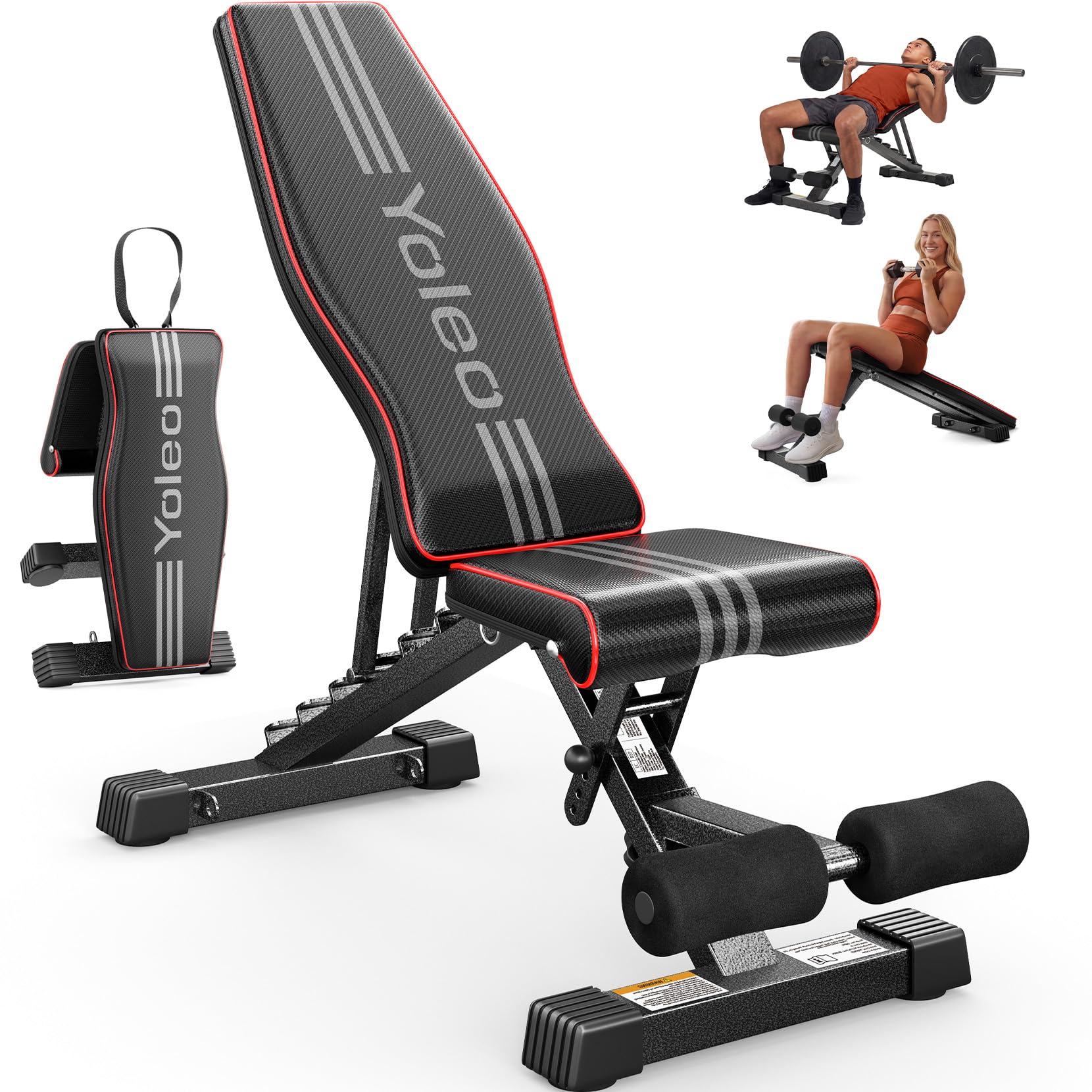
YOLEO Adjustable Bench

YOLEO Adjustable Bench

Budget, small spaces

Our Score 9.2/10
Check Price

Worth Noting

  • Short backrest and narrow seat limit comfort for taller users and broader frames
Decline
Yes
Backrest Length
28 in
Weight Capacity
827 lbs
Read the full review

The YOLEO bench stands out for its near-zero assembly and compact foldability, making it an ideal budget option for apartment dwellers. Unlike the top pick's longer backrest, the YOLEO trades length for portability – the 28-inch backrest and 13-inch seat suit users under 6' who prioritize storage over full-body reach. For decline ab work, the bench offers stable support at 827 lbs capacity, but the narrow backrest may feel restricting for broader shoulders. Taller users or those seeking a full-length decline will need a longer bench.

Bottom line: An outstanding value for lighter ab workouts in small spaces – but only if your height and shoulder width fit within its compact dimensions.

#3

Bowflex 5.1S Bench

Bowflex 5.1S Bench

Space-saving stowable

Our Score 9.2/10
Check Price

Worth Noting

  • The fixed seat position leaves a gap that can affect body alignment during decline exercises.
  • Seat pad padding feels thin
Decline
Yes
Backrest Length
Weight Capacity
600 lbs
Read the full review

The Bowflex 5.1S lifts and stores upright, reclaiming floor space in seconds — a rare feature among decline-capable benches. Its heavy-duty steel frame and six back positions cover flat, incline, and decline exercises without the permanent footprint of a fixed bench.

This bench suits home gym owners who value a tidy space and are willing to accept some compromises. The seat does not adjust independently, leaving a gap that can shift your form during decline crunches. The seat pad also feels firm and thin for longer sessions, though the back pad is adequately cushioned. For users who plan to do decline sit-ups in a compact area and don't need a rock-solid platform for heavy lifts, this is a practical fit.

Tip: Placing a folded towel over the seat gap can help maintain alignment during decline sit-ups.

Bottom line: Best for home gym owners who prioritize space-saving over absolute stability and need a bench that disappears after use.

#4

NICEPEOPLE Adjustable Bench

NICEPEOPLE Adjustable Bench

Ultra-budget

Our Score 9.2/10
Check Price

Worth Noting

  • Frame may feel unsteady during decline movements, particularly for users over 6' or 200 lbs
Decline
Backrest Length
29.3 in
Weight Capacity
660 lbs
Read the full review

This bench delivers solid value for light dumbbell work and decline crunches, with easy assembly and a compact fold that stores upright. Stability may be an issue during declines, especially for taller or heavier users, and the backrest is short. Best for budget buyers under 6' who prioritize space over stability.

Bottom line: A functional budget option for lighter ab routines in cramped spaces, but those over 6' or wanting to lift heavier should pass.

#5

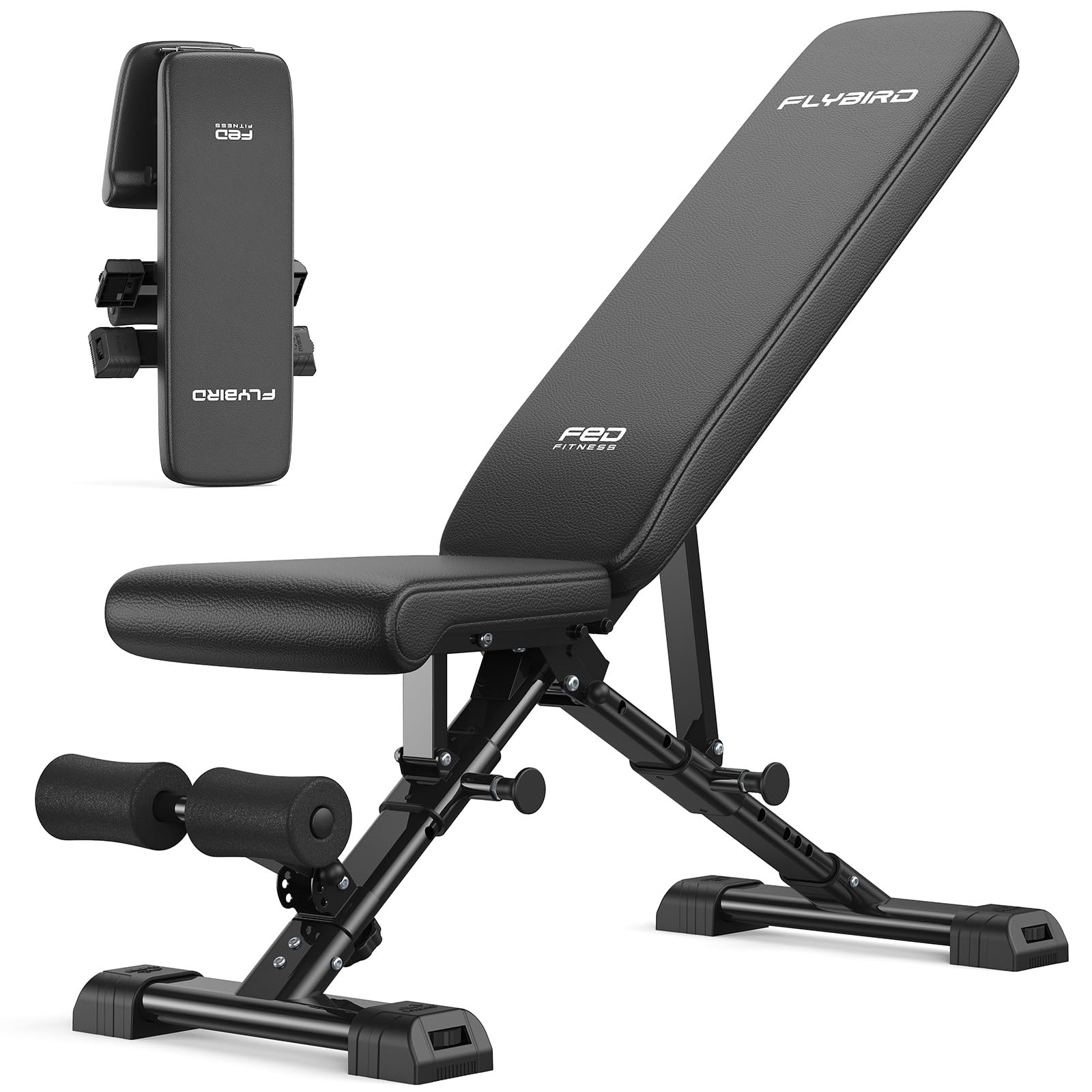
FLYBIRD WB5 Adjustable Bench

FLYBIRD WB5 Adjustable Bench

Home gym versatility

Our Score 9.0/10
Check Price

Worth Noting

  • Frame can wobble side-to-side under heavy loads or explosive movements
  • Seat height too tall for shorter users, causing feet to dangle
Decline
-30°
Backrest Length
30 in
Weight Capacity
800 lbs
Read the full review

The FLYBIRD WB5 hits a sweet spot for home gyms that need a decline option for ab work: the 30-inch backrest accommodates taller users (up to about 6 feet) and the -30° angle allows deep decline sit-ups and crunches. With 800 lbs of capacity, it handles dumbbell presses and leg raises without creaking — a practical upgrade from budget foam-padded boards.

Under demanding movements like heavy dumbbell presses or aggressive decline sit-ups, the frame can exhibit some side-to-side wobble. The seat height (about 18 inches) also causes shorter users’ feet to dangle during exercises — a common trade-off at this price point. For moderate weights and users under 6 feet, the stability is sufficient; for maximal loads or very precise lifts, a heavier base would be preferable.

This bench suits home gyms with limited floor space (it folds upright) and lifters who want one piece of equipment for incline, flat, decline, and upright presses. Because of the seat height, it works best for users between 5’4” and 6’. Beginners and intermediate lifters will appreciate the adjustability and range of motion without needing a dedicated ab board.

Tip: Placing the bench on a rubber mat reduces sliding and dampens minor wobble on smooth floors.

Bottom line: Best for budget-minded home gyms that need a compact fold and full decline range for ab work — as long as you aren't pushing heavy weights or are under 5’4”.

#6

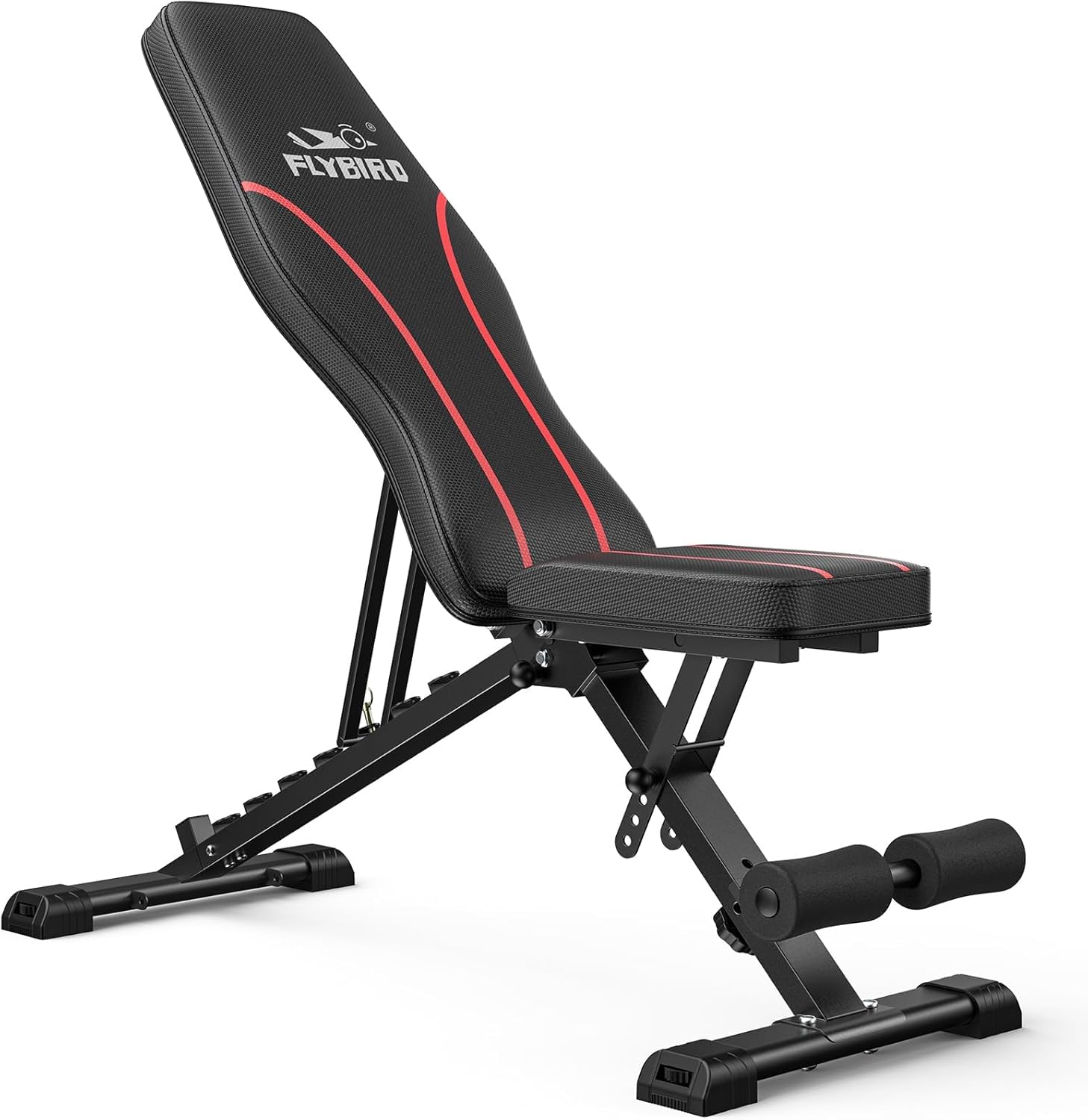
FLYBIRD WB2 Adjustable Bench

FLYBIRD WB2 Adjustable Bench

IPF standard height

Our Score 9.0/10
Check Price

Worth Noting

  • Stability concerns during use
Decline
Yes
Backrest Length
Weight Capacity
660 lbs
Read the full review

This bench delivers the IPF standard seat height and a lighter, foldable build that tucks away easily. Build quality is solid for the price, and assembly is almost nonexistent. However, the frame can feel unsteady during decline sit-ups, and the short backrest makes it a poor fit for anyone over 5'9". It serves best as a compact, budget-friendly option for home gym beginners who keep workouts light and don't need high stability.

Bottom line: A decent option for home gym beginners under 5'9" who prioritize a compact, lightweight bench for light dumbbell work and decline sit-ups, but those seeking higher stability or longer backrest should consider the WB5.

#7

Marcy SB-4606 Slant Board

Marcy SB-4606 Slant Board

Dedicated crunch station

Our Score 9.0/10
Check Price

Worth Noting

  • Limited to four fixed positions, which may not suit those wanting a fully adjustable decline.
Decline
4 positions
Backrest Length
Weight Capacity
250 lbs
Read the full review

This slant board offers a sturdy and comfortable platform for dedicated crunch and sit-up work. The foam-padded handles and headrest add to the experience. However, it has only four fixed positions, so it is not a fully adjustable bench for variable decline angles. It suits home gyms that want a simple, focused ab station without the complexity of a full adjustable bench.

Bottom line: Best for home gyms that need a reliable crunch station and don't require variable decline angles.

#8

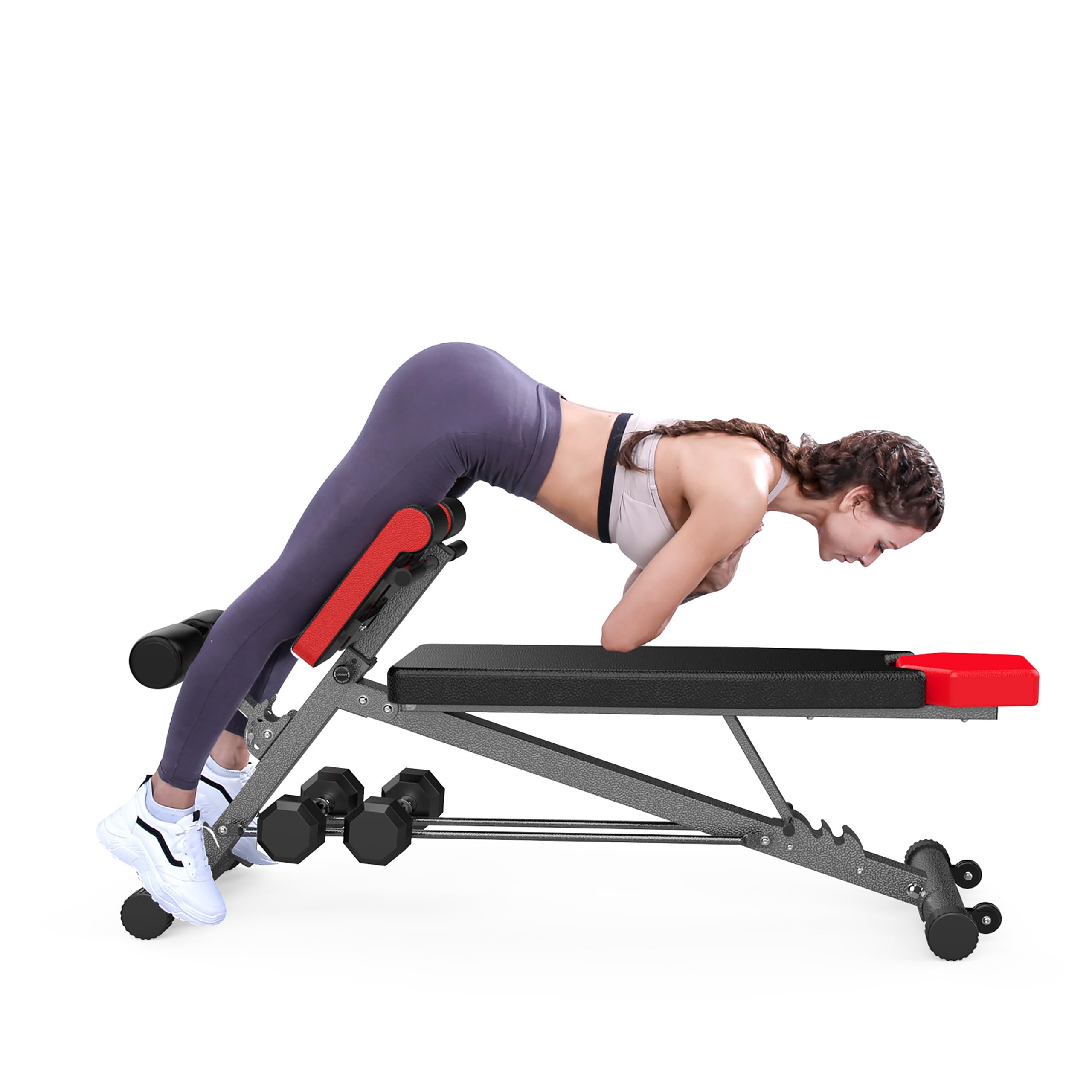
Marcy Hyper Extension Bench

Marcy Hyper Extension Bench

Core & lower back

Our Score 8.8/10
Check Price

Worth Noting

  • Padding is firm and may be uncomfortable for longer sessions, especially for men
  • Stability can be affected by uneven floor surfaces, with some wobble possible
Decline
Yes
Backrest Length
Weight Capacity
308 lbs
Read the full review

This Marcy bench is built for lower back work and decline core exercises, offering a sturdy frame and easy assembly at a budget-friendly price. The padding is firm and may feel hard during longer sessions, and stability can vary on uneven floors. It suits users focused on back rehabilitation or core training, especially those under 220 lbs who aren't expecting plush comfort.

Tip: Placing a folded towel or foam pad on the back pad can reduce discomfort during longer sets.

Bottom line: A solid, affordable option for dedicated back and core work if you can work around firm padding and a level floor.

#9

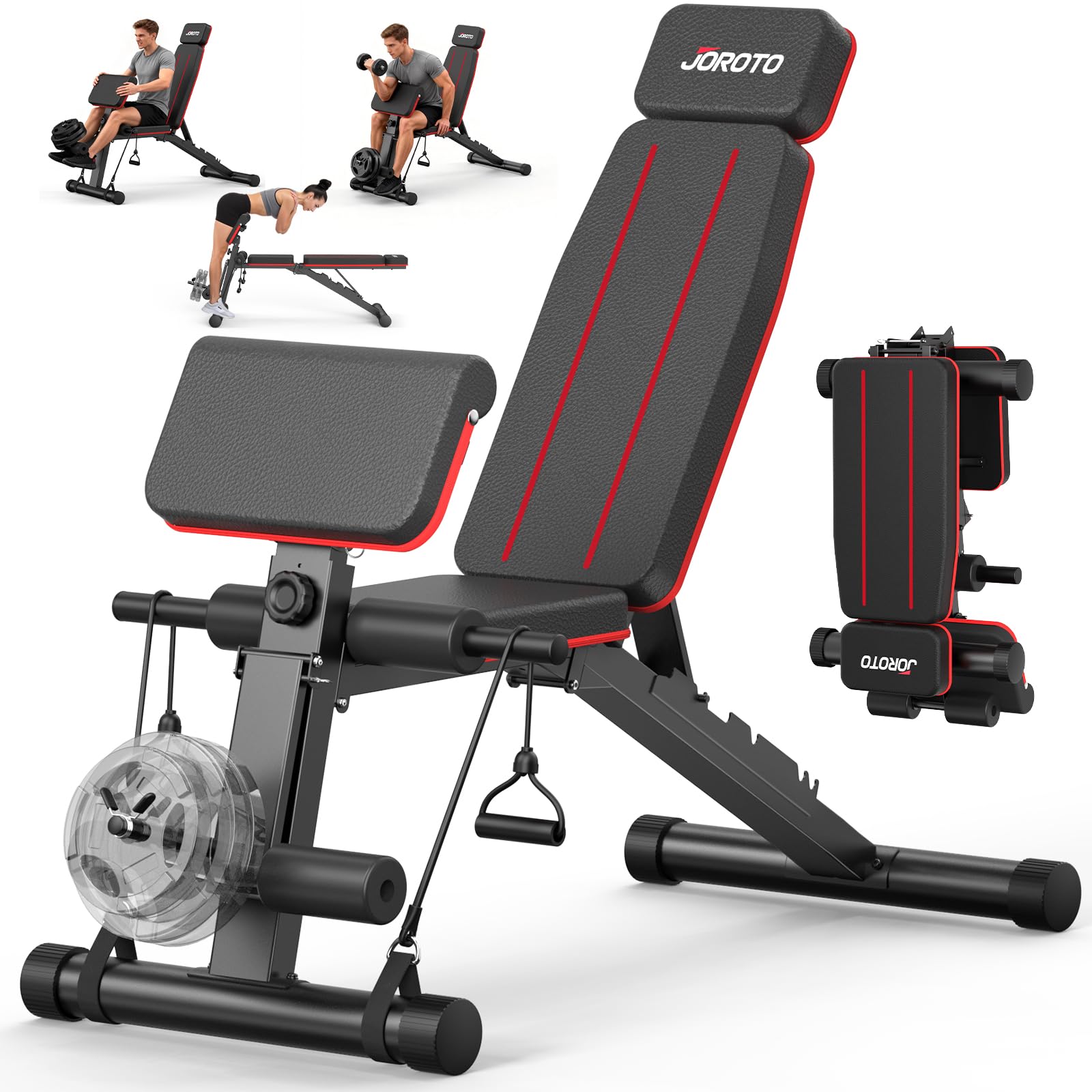
JOROTO MD55 Bench

JOROTO MD55 Bench

Multi-function value

Our Score 8.8/10
Check Price

Worth Noting

  • Pad width and foot holds are snug
Decline
Yes
Backrest Length
Weight Capacity
1000 lbs
Read the full review

The JOROTO MD55 stands out by bundling a leg extension, preacher curl, and back extension into a single foldable bench with a 1000-lb capacity — a combination rarely seen under $200. This makes it a space-saving option for home gyms focused on isolation exercises, provided the user is of average or smaller build. The bench pad is narrower than many alternatives, and the foot holds on the leg extension are tight, so larger frames may feel cramped. For those who fit, the sturdy frame and easy assembly add to the value.

Tip: The foot holds are narrow — try barefoot or thin-soled shoes for leg extensions.

Bottom line: A value-packed multi-function bench for home gyms with limited space, provided you are of average or smaller build.

#10

Finer Form Multi-Functional Bench

Finer Form Multi-Functional Bench

Versatile home gym

Our Score 8.8/10
Check Price

Worth Noting

  • Too short for users over 5'9"
Decline
Yes
Backrest Length
Weight Capacity
660 lbs
Read the full review

Replaces multiple machines with hyperextension, roman chair, sit-up, and press functions. But the short 60.5-inch length won't fit users over 5'9", and some units have misaligned holes or missing parts. A versatile gamble for under 5'9" buyers who can handle assembly quirks.

Bottom line: A solid pick for shorter home gym users who prioritize multi-function and are comfortable with potential assembly quirks.

#11

Marcy JD-1.2 Slant Board

Marcy JD-1.2 Slant Board

Cheapest slant board

Our Score 8.8/10
Check Price

Worth Noting

  • Leg padding is thin and can cause discomfort during extended sessions
Decline
Backrest Length
Weight Capacity
300 lbs
Read the full review

The Marcy JD-1.2 is the most affordable way to add decline sit-ups to a home gym, and its steel frame feels stable for the price. However, the fixed incline and thin leg pads limit comfort, and the 53-inch length suits users under 5'5". It fills a niche for very short users on a tight budget who train occasionally.

Bottom line: Best for buyers under 5'5" who need the cheapest decline option and can add their own padding for comfort.

#12

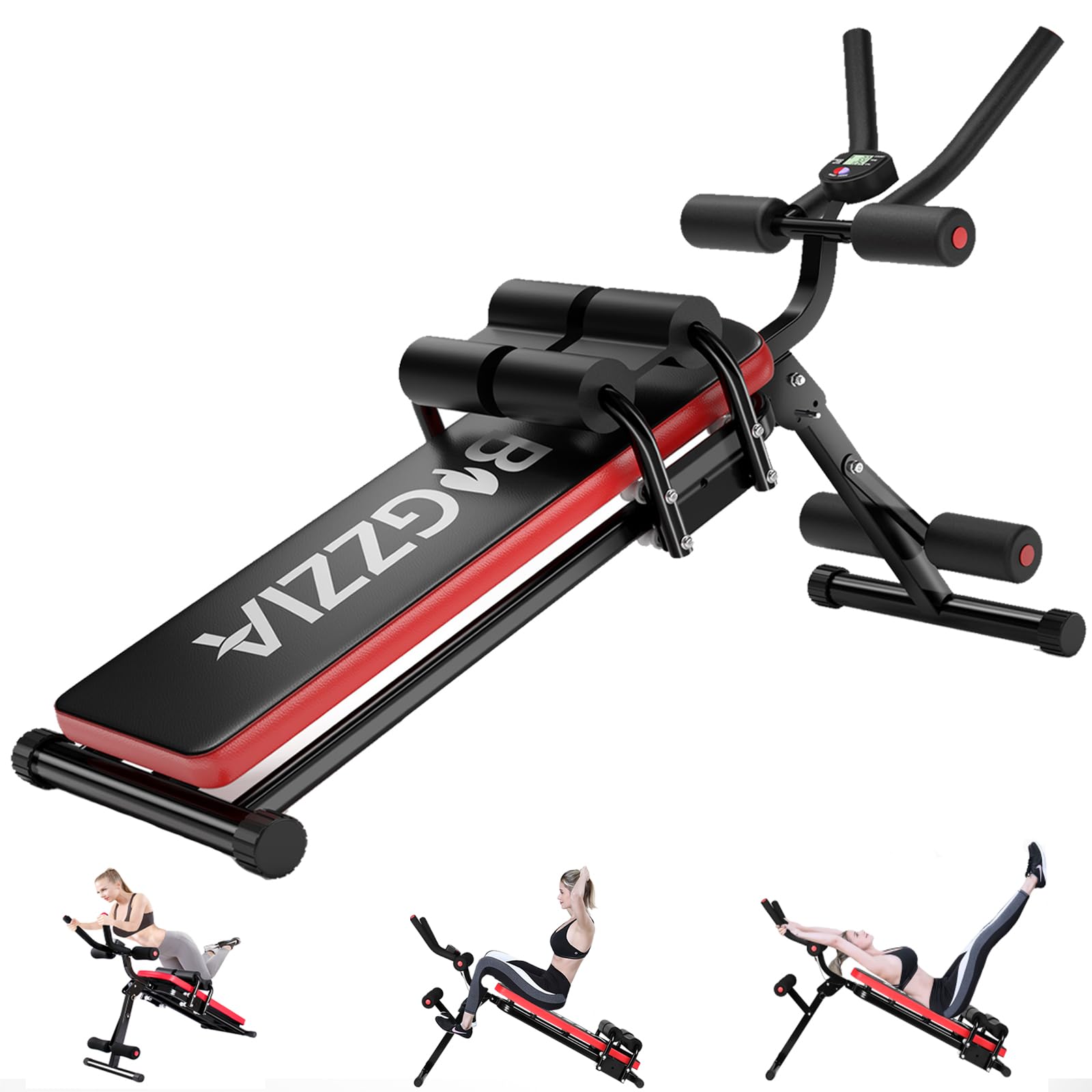
Bigzzia 5-in-1 Ab Machine

Bigzzia 5-in-1 Ab Machine

Dedicated ab machine

Our Score 8.8/10
Check Price

Worth Noting

  • Back or elbow discomfort can occur during use
Decline
Backrest Length
Weight Capacity
330 lbs
Read the full review

This five-mode machine targets core muscles through adjustable resistance and folds compactly for storage. However, some users experience back or elbow discomfort, and assembly instructions can be confusing – this is best suited for those who prioritize core-only workouts and can tolerate setup frustrations.

Bottom line: For home users focused solely on core training who don't mind a learning curve with setup, this compact machine delivers effective ab workouts.

#13

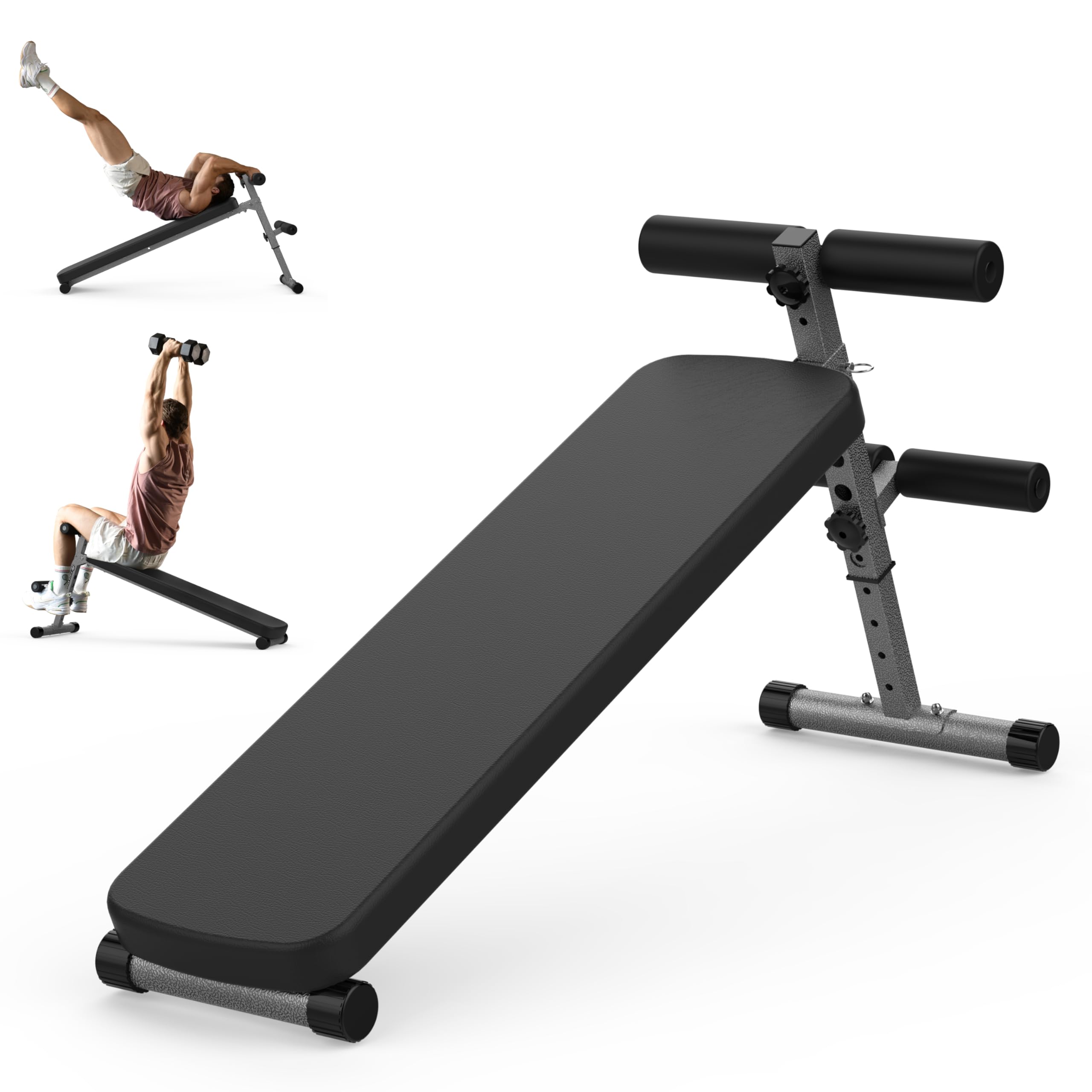
Finer Form Sit-Up Bench

Finer Form Sit-Up Bench

Basic sit-ups

Our Score 8.6/10
Check Price

Worth Noting

  • Some units may arrive with missing hardware
Decline
Yes
Backrest Length
Weight Capacity
660 lbs
Read the full review

This bench delivers stable sit-ups and decline presses at a budget price, with a backrest long enough for users up to 6'2". The padding feels thin after extended sessions, and some units arrive with missing hardware — so unpack and verify before assembly. The adjustment mechanism takes a few tries to get used to. For the price, it gets the core job done if you're willing to add a cushion and double-check the box.

Bottom line: A fit for budget shoppers under 6'2" who don't mind checking the package and using an extra pad for comfort.

How to Choose

Decline Angle for Ab Work

A decline angle of at least -10° is needed to properly engage the upper and lower abs during crunches or sit-ups. Many benches marketed as 'decline' only go to 0° (flat), which shifts the load to the hip flexors. Check the negative angle spec before buying, not just the word 'decline'.

A steeper decline like -30° provides more resistance but requires a secure foot anchor to prevent sliding. If you only plan to use a light decline, a -10° to -20° range is sufficient and often more comfortable for beginners.

Weight Capacity

Weight capacity matters, but it's not the whole story. A 600-lb rating on a lightweight frame can wobble under a 200-lb lifter doing explosive movements, while a 300-lb rating on a heavy, wide-footprint bench can feel rock solid. Look at the bench's own weight and frame design rather than the max load alone.

For heavy dumbbell work or barbell presses, a capacity of 800 lbs or more is wise, but only if the bench itself weighs at least 40 lbs. Lightweight sub-30-lb benches with high capacity numbers often sacrifice stability to keep the weight low.

Backrest Length

The backrest pad should be long enough to support your head and shoulders during decline exercises. A 30-inch pad is the minimum for an average adult; shorter pads leave the head hanging off, causing neck strain and reducing stability. Taller users (over 6') need 33 inches or more.

Measure from your hips to the top of your head while reclining. If the pad is too short, you'll compensate by arching your back, which reduces ab engagement. A folding bench often shortens the pad; check the extended length, not the folded size.

Frequently Asked Questions