Strength & Weights

Best Adjustable Weighted Vests of 2026

A weighted vest is one of the few pieces of fitness gear that keeps earning its keep as you get stronger — right up until you outgrow the fixed-weight version. Adjustable vests let you add five pounds at a time instead of buying a whole new rig, but the tradeoff is real: the more the load can move, the more it slides, bounces, and digs into your shoulders on mile two. A good one makes the extra weight feel like part of your body.

I started walking with ten pounds in a hand-me-down vest a few winters ago and never really stopped. Over the past six months, my team and I have worn 12 adjustable vests on dog walks, treadmill incline sessions, and the stairs at home, and the pattern held: sand packs are the plushest and the shiftiest, steel shot hugs the body closest, and iron weights land somewhere in between. Velcro is where cheaper vests quietly give out — straps that creep loose mid-walk turn a comfortable vest into a shoulder ache. The ones below kept their settings.

#1

Eric Flag 40-lb Weighted Vest

Top Pick
Eric Flag 40-lb Weighted Vest

Heavy progressive loads

Our Score 9.4/10
Check Price

Worth Noting

  • Premium price
Weights
Sixteen 2.4-lb iron weights
Material
1000D Oxford nylon
Empty Weight
1.6 lb
Adjustable Load
0 to 40 lbs
Read the full review

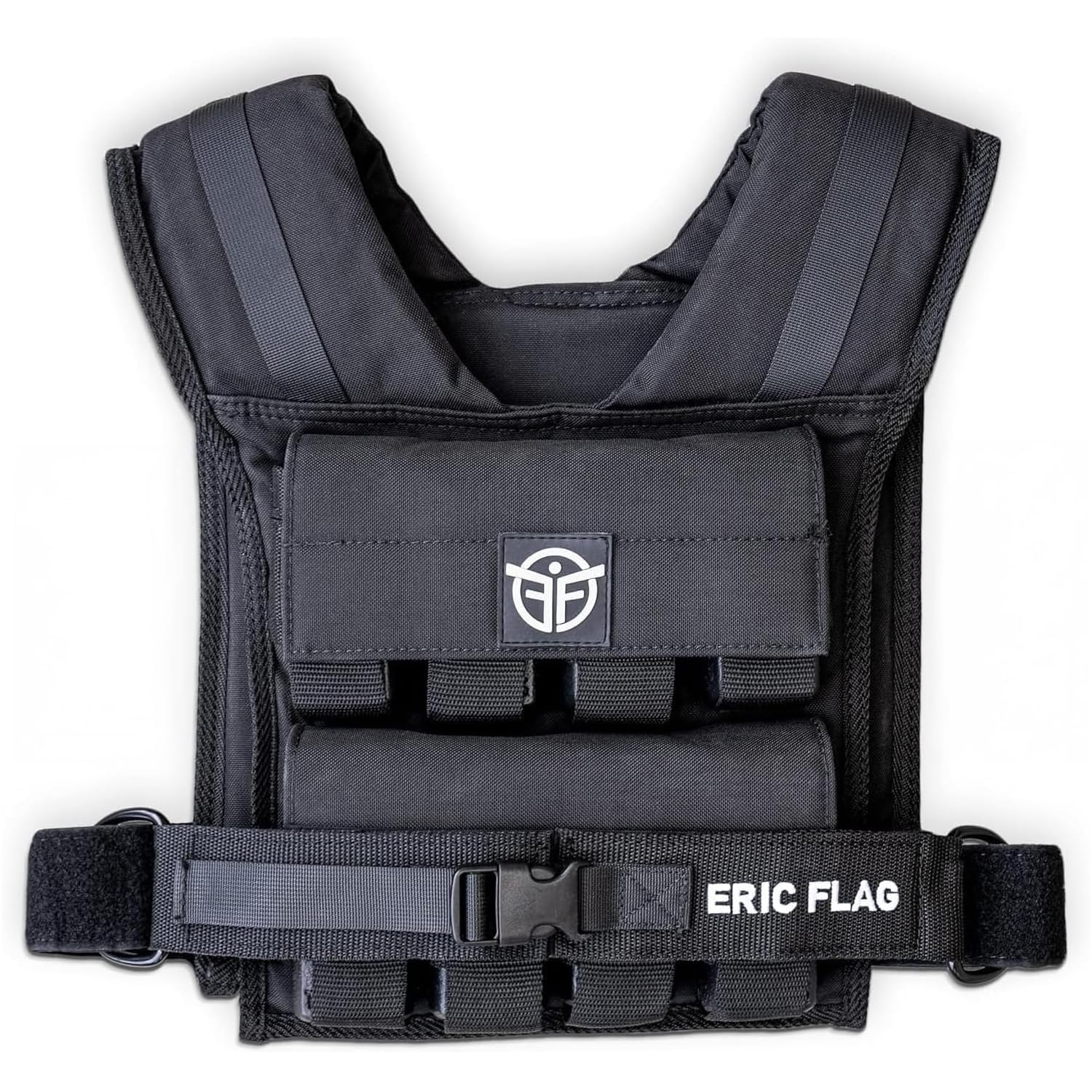
Sixteen small iron weights are the point of the Eric Flag. They sit eight in front and eight in back, each 2.4 lb, and the vest runs from its 1.6-lb empty shell to a full 40 lb. The 1000D Oxford shell is the part that feels serious: it stays close during push-ups and dips instead of swinging away from the body.

We liked it best for calisthenics, loaded walks, and progressive strength work. The front/back split makes it easy to keep the load balanced, and the empty 1.6 lb matters when you want to start a beginner with almost nothing. The 40-lb top end is enough for pull-ups, dips, and serious rucking, and the buckles and strap adjustment held the vest in place when we changed position.

The result is a vest that grows with you rather than a one-size load you outgrow. We recommend it for someone who wants one durable 0-40 lb vest and does not mind paying for the build. If you need 1-2 lb precision at the low end, the 2.4-lb steps are coarser than you may want.

Bottom line: We pick the Eric Flag for anyone who wants one vest to grow into: sixteen iron weights, a 0-40 lb range, and a tough shell make it the durable heavy-load choice.

#2

Hyperwear Hyper Vest FIT

Hyperwear Hyper Vest FIT

Women's walking/running

Our Score 9.4/10
Check Price

Worth Noting

  • Small weight containers can work loose
Washable
Machine washable
Weight Steps
0.5-lb steel-shot containers
Chest Weights
None
Adjustable Load
Up to 10 lbs
Read the full review

The Hyperwear's cut avoids weight over the chest, and that single choice changes how the vest feels. It is a women-specific design with stretch fabric, side lacing, a zip front, and no chest weights. The current version tops out at 10 lb and uses 0.5-lb steel-shot containers, so the load can climb in small steps. That makes it our pick for women who want a slim vest for walking or light running.

We appreciated the close, quiet fit. The side lacing cinches the vest down without pulling across the bust, and the shell is machine washable after sweaty sessions. It is also slim enough to wear under a loose layer, which is not true of the 40-lb vests here. The 0.5-lb increments are the most precise in this group, and they make a real difference when you are adding load slowly.

The limits are a 10-lb ceiling and a premium price. If you need to train with 20-30 lb or want a budget first vest, this is not the one. For the right buyer, the precise load steps and washable shell are worth the spend.

Bottom line: We think women who want a slim, no-chest-weight vest for walking or light running should start here; the 0.5-lb increments and washable shell justify the premium.

#3

Sportneer Adjustable Weighted Vest

Sportneer Adjustable Weighted Vest

All-around training

Our Score 9.2/10
Check Price

Worth Noting

  • Tight weight pockets slow load changes
Closure
Zip front, shoulder and waist locks
Washable
Yes, weights remove
Weight Packs
Eight 2-lb + one 1-lb packs
Adjustable Load
2 to 18 lbs
Read the full review

The zip-on front is the first thing that separates the Sportneer from the pullover vests here. You step in, close the zipper, then cinch the shoulder and waist locks; the load sits close instead of hanging off the shoulders. The current 2-18 lb model includes eight 2-lb packs and one 1-lb pack, so the same vest can feel light for a walk or substantial for squats.

That balance is why it is our top pick. We found the 18-lb ceiling covers most walking, jogging, and everyday strength work, and the smaller steps make it easier to add load without jumping past what feels comfortable. The zip front and double locks also solve the on/off problem that makes some weighted vests irritating between sets. It is not the cheapest adjustable vest here, but it gives the widest range of buyers the least fuss.

The 18-lb ceiling is the real boundary: if you want to ruck or train with 30-40 lb, this is not the vest for that job. For everyone else, the Sportneer is the one we keep coming back to because it is easy to put on, easy to wash, and stable enough for a brisk walk or a light jog.

Bottom line: We recommend the Sportneer as the default adjustable vest for most people: the 2-18 lb range, secure zip fit, and washable build cover walking, jogging, and everyday strength work.

#4

RUNmax 40-lb Weighted Vest

RUNmax 40-lb Weighted Vest

Strength and hiking

Our Score 9.2/10
Check Price

Worth Noting

  • Shoulder pressure at full load
Weights
Removable sand pouches
Material
Nylon
Included Load
40 lb
Shoulder Pads
Included
Read the full review

Forty pounds is a different kind of vest, and the RUNmax leans into it. The current 40-lb model arrives loaded, uses removable sand pouches, and includes shoulder pads. The nylon shell and hook-and-loop closures feel built for strength work rather than a fashion walk; this is the vest that makes a set of push-ups or a steep hill feel like a project.

We liked it most for strength training and hiking. The pouches let you strip weight out for a warm-up or build it back for a working set, and the shoulder pads are worth having at this load. The vest holds its shape under the full 40 lb, and the value is strong for how much weight you get.

Running is the compromise. At 40 lb the bulk is obvious, and we do not make this the vest for tempo runs or long jogs. It is better for lifting, hill walks, and rucking, where the load is the point and a little movement is easier to manage.

Bottom line: For heavy strength sessions, we like the RUNmax's 40-lb load and included shoulder pads; just treat it as a lifting and hiking vest, not a running one.

#5

APEXUP 12-18 lb Weighted Vest

APEXUP 12-18 lb Weighted Vest

Snug everyday wear

Our Score 9.2/10
Check Price

Worth Noting

  • Chemical odor when new
Pocket
Large mesh pocket
Closure
Buckle with side straps
Weight Packs
Six ironsand sandbags
Adjustable Load
12 to 18 lbs
Read the full review

The APEXUP is built around a close fit: six sandbags sit inside a neoprene shell, and the buckle plus side straps pull the load in tight. The current 12-18 lb model uses a base vest plus the six bags, so the load can come down for a walk or go up for squats. The large mesh pocket is more useful than a token key slot; a phone or keys stay off your legs. That close fit is why we recommend it for daily walks and light strength work.

We liked the side straps because they do not need constant re-cinching. The vest stays put on a treadmill walk, and the weight sits close enough that it does not feel like a backpack. The padding is modest, but at this load that is a fair trade for the lower profile.

The 18-lb ceiling is the main boundary; if you need to train heavy, Eric Flag or RUNmax is the better route. It also is not the cheapest way to reach 20 lb here, but the closer fit is what you pay for.

Bottom line: We reach for the APEXUP when a snug, stable fit matters more than maximum load; its 12-18 lb range and side straps suit daily walks and light strength work.

#6

VBSD 11-20 lb Weighted Vest

VBSD 11-20 lb Weighted Vest

Budget 20-lb loads

Our Score 9.2/10
Check Price

Worth Noting

  • 11-lb base is heavy for beginners
Reflective
Reflective strip
Back Pocket
Back mesh pocket
Weight Packs
Six 1.5-lb ironsand bags
Adjustable Load
11 to 20 lbs
Read the full review

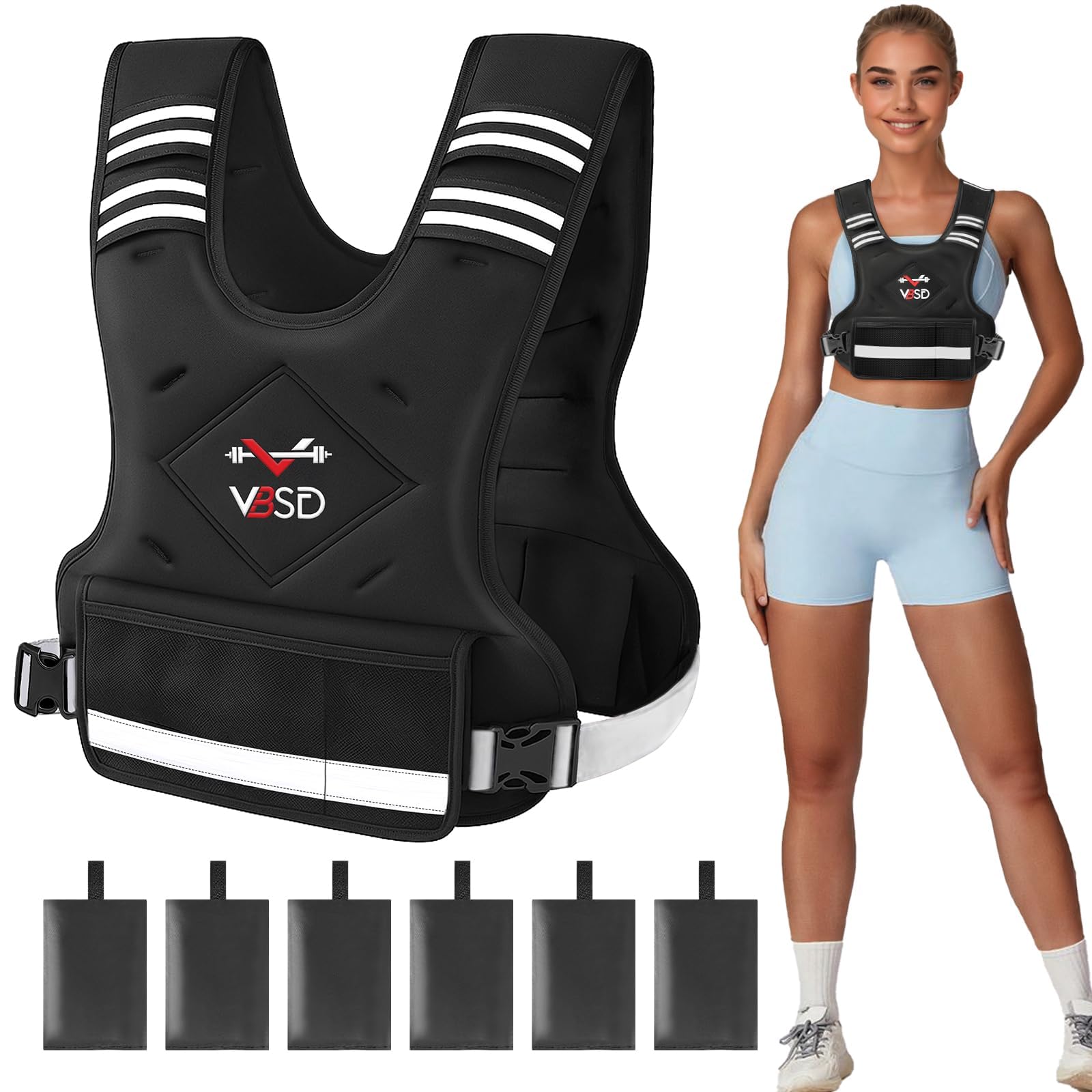
At the budget end, the VBSD offers 20 lb of adjustable load for less than most of this group. The current 11-20 lb model starts with an 11-lb base and adds six 1.5-lb ironsand bags. It is a simple neoprene vest with a back mesh pocket, reflective strip, and padded shoulder straps. Nothing about it feels fancy, but the capacity is there.

We found the bags easy to move, and the back pocket keeps a phone or keys from bouncing against your legs. The wide shoulder straps spread the load reasonably well for a budget vest, and the reflective strip is a useful detail for early walks.

The fit is the weaker part. The straps are simpler than the Sportneer's double locks, and the vest does not dial in as closely on smaller frames. It is also less polished overall.

That is the trade: you get 20 lb for a low price, but you give up some refinement. We recommend it for a cost-conscious walker who already knows they want a heavier vest. If you need a 4-lb start, choose the BAGAIL instead.

Bottom line: The VBSD is the cheapest way here to reach 20 lb, with six removable bags and a simple fit; expect a heavier base and less polish than our top pick.

#7

Wolf Tactical Weighted Vest

Wolf Tactical Weighted Vest

Plate-carrier rucking

Our Score 9.2/10
Check Price

Worth Noting

  • Internal Velcro can loosen
Fit
Adjustable shoulder straps
Plates
Sold separately
Material
600D water-resistant nylon
Load With Plates
14, 20, 31, or 42 lbs
Read the full review

The Wolf Tactical is a plate carrier, not a filled vest, and that is the first thing to understand. It arrives empty, with front and back pockets sized for weight plates that are sold separately. The shell is 600D water-resistant nylon, with MOLLE panels, a padded shoulder yoke, and adjustable shoulder straps. It is built for rucking and tactical-style training, not for someone who wants to unbox a vest and walk.

We liked the structure. The padded yoke spreads the load across the shoulders better than a bare strap, and the adjustable shoulders let the vest sit high enough to run without the plates flopping. The MOLLE panels add utility if you carry a phone, keys, or a small pouch. It feels like a piece of gear that will take abuse.

The catch is the total cost. The vest is already premium, and you still need plates before it does anything. If you already own plates, the math is easier; if not, the all-in-one vests here are simpler.

We recommend it for someone who already owns plates or wants a plate carrier for rucking. If you want a complete adjustable vest out of the box, choose the Sportneer or Eric Flag instead.

Bottom line: We see the Wolf Tactical as a plate carrier first: it is well made and adjustable, but plates cost extra, so buy it only if you already own or plan to buy them.

#8

BAGAIL Adjustable Weighted Vest

BAGAIL Adjustable Weighted Vest

Budget beginners

Our Score 9.0/10
Check Price

Worth Noting

  • 4-lb base is too much for some beginners
Pocket
Large front phone pocket
Reflective
360° strips
Weight Packs
Six 1-lb ironsand bags
Adjustable Load
4 to 10 lbs
Read the full review

A four-pound base is a gentle place to start, and the BAGAIL builds from there with six 1-lb ironsand bags. The women-specific cut uses a U-neck and an X-shape through the body, with a wide front pocket and reflective strips. The current 4-10 lb model is designed for walking, jogging, and light strength work, not for loading up like a powerlifter.

We liked the way it sits: the U-neck keeps pressure off the chest, the waist straps pull the load in, and the front pocket is big enough for a phone. The bags are easy to add or remove, and the whole thing feels more considered than its budget price suggests. For a first weighted vest, that matters more than a high top-end load.

The 10-lb ceiling is the main limit; if you want to ruck or train heavy, this is not the vest. It is also a beginner's tool, not a replacement for a heavier vest once you progress. Within those boundaries, it is our budget pick because it makes the first month of weighted walking feel manageable.

Bottom line: Our budget pick for beginners, the BAGAIL starts at a manageable 4 lb and adds six 1-lb bags, though its 10-lb ceiling rules out heavy strength work.

How We Tested the Adjustable Weighted Vests

We started by pulling every adjustable vest we could find that genuinely let you change the load in increments — no fixed plates, no one-size sandbag — then filtered by total weight range, strap and closure design, and whether the vest stayed usable as you got stronger. That left 12 vests, which we wore for six months.

Each one went into rotation for real life rather than a lab bench: a two-mile neighborhood loop with the dog, 20-minute bodyweight sessions in the garage, incline treadmill walks, laundry-and-stairs afternoons, and a couple of weekend hikes. We weighed every sand pack, iron block, and steel-shot bag on a kitchen scale against its claimed number, then re-rigged each vest from its lightest to heaviest setting, timing how long it took and checking whether the straps still sat flat afterward.

On the walks we watched for bounce and ride-up and noted exactly where the load pressed — across the collarbone, into the trapezius, or nowhere at all — both with and without shoulder pads. We adjusted the Velcro after every session to see whether hooks snagged hair or clothing and whether the straps crept looser over an hour of wear. Fit got tested on two frames, one 5-foot-4 and one 6-foot-1, checking for gaping at the chest and riding up at the neck. After a week of sweaty wear came a sniff test, before and after washing, and we judged value by usable weight range rather than sticker price, since a vest you outgrow in three months isn't a bargain.

How to Choose an Adjustable Weighted Vest

Start With the Low End, Not the Top Number

Most shoppers read the maximum load first, but the low end decides whether you can wear the vest on an easy day. A 4-lb base is a gentler start than an 11-lb base, and an empty shell that weighs 1.6 lb is a different tool from a vest that cannot go below 10 lb. We care more about the smallest useful step than the biggest number: a 2-18 lb vest with 1-lb or 2-lb changes covers more daily sessions than a 40-lb vest that jumps in 2.4-lb steps. Pick a base weight you can wear for 20-30 minutes before you worry about the top end.

Match the Vest to the Way You Move

Running asks for a close, quiet fit; strength work asks for load and shoulder support. A 40-lb vest that is fine for squats can be miserable on a jog, and a 10-lb vest will not satisfy heavy strength work. We choose the Sportneer for mixed walking, jogging, and light strength, the RUNmax for heavy strength and hiking, and the Hyperwear for women who want a slim running or walking vest. Buy for the session you do most, not the one you imagine once a month.

Check Fit at the Shoulders and Waist

A weighted vest is only as good as its two adjustment points. Shoulder straps set the height and keep the load off your neck; a waist belt or side straps stop the vest from swinging. A zip front is quicker to put on, while buckles and hook-and-loop are easier to fine-tune. Women-specific cuts such as the BAGAIL's U-neck or the Hyperwear's no-chest design can matter more than a size chart. The trap is the word adjustable: on some vests it means only the strap, not the load. Look for both.

Plan for Sweat, Odor, and Cleaning

Weight vests get sweaty, and a fixed fill is hard to wash. Removable bags or containers let you pull the load out and clean the shell, which is why we favor vests with that feature for anyone using one several times a week. New neoprene can also arrive with a chemical smell; air it out before indoor use. A machine-washable shell like the Hyperwear's is the easiest to live with, while a simple wipe-down is enough for occasional outdoor walks.

Spend Where It Changes the Experience

The parts you touch decide whether a vest feels worth the money. Padded shoulders, a wide waist strap, and a shell that resists abrasion matter more than a long list of activities on the box. If you train three or more days a week, pay for a 1000D shell like the Eric Flag's or the RUNmax's shoulder pads; if you walk twice a week, a budget vest with removable bags is enough. A cheap vest that bounces or digs in will sit in the closet, which is the most expensive outcome.

Frequently Asked Questions

Final Verdict

The Sportneer is the adjustable vest we recommend first because it gets the everyday job right: 2-18 lb of useful load, a secure zip-and-lock fit, and a washable build that covers walking, jogging, and light strength work. It is not the vest for 40-lb training, but most people do not need that.

If your training is built around heavy load, choose the Eric Flag 40-lb vest for its 16 iron weights and tougher shell. If you are buying a first vest for a woman who wants a light, close-fitting option, the BAGAIL is the budget route and the Hyperwear is the refined one.