Strength & Weights

10 Best Lat Pulldown Machine of 2026: Balancing Price and Cable Durability

Which lat pulldown machines deliver smooth operation and lasting cables without the wobble that plagues budget options — so you can train heavy without frustration.

A lat pulldown machine sounds simple: pull the bar down, release. But after a few months, many home gym owners discover cables that fray, frames that wobble at moderate weights, and seats that don't adjust enough for proper form. The frustration isn't with the exercise — it's with equipment that can't keep up.

The market is split between ultra-cheap machines that cut corners on cable quality and stability, and premium weight stack units that cost more than a used car. Most buyers don't need the latter, but they also shouldn't accept cables that peel within weeks. The real question is where the sweet spot lies: a machine that stays solid under 250-400 lbs, uses smooth pulleys, and holds up to regular use.

This guide focuses on machines that avoid the common pitfalls — wobble, cable wear, and poor adjustability — while still fitting a realistic home gym budget. The right choice comes down to matching your training volume and space to a build that won't let you down mid-rep.

#1

ER Kang Wall Mount Pulley

Top Pick
ER Kang Wall Mount Pulley

Wall-mounted compact

Our Score 9.6/10
Check Price

Worth Noting

  • Pulleys may drag or produce noise during use.
Footprint
27x18x82 in
Stability
Wall-mounted (no wobble)
Adjustability
18 positions
Weight Capacity
400 lbs
Read the full review

This wall-mounted pulley tower packs dual pulleys and 18 adjustment positions into an 18-inch footprint, ideal for tight home gyms where floor space is at a premium. Build quality is solid with 11-gauge steel, and assembly goes quickly. However, the pulleys can produce drag and noise, and the missing price data makes value comparison harder against floor-standing alternatives in the same mid-range tier.

Bottom line: Best suited for those with very limited floor space who prioritize a compact wall-mounted solution over absolute cable smoothness.
#2

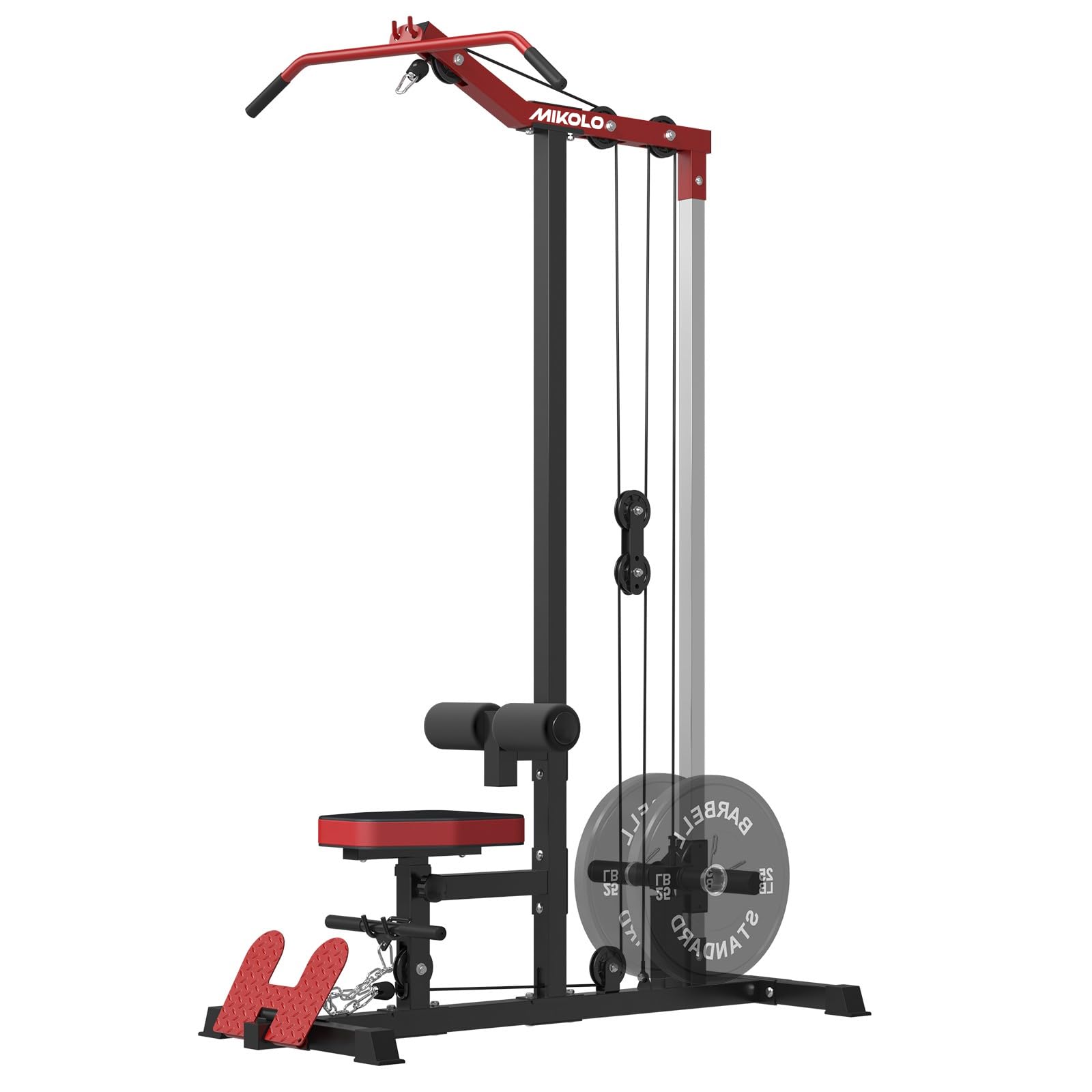
Mikolo Lat Pulldown

Mikolo Lat Pulldown

Budget home gyms

Our Score 9.4/10
Check Price

Worth Noting

  • Frame limit of 450 lbs will be reached quickly by lifters progressing past that range
Footprint
10 ft²
Stability
Stable up to 450 lbs
Adjustability
3 seat heights
Weight Capacity
450 lbs
Read the full review

The pulley system glides without catching, and the 2mm steel frame stays planted during rows and pulldowns. Assembly takes under an hour with clear instructions, and the machine feels solid throughout. The leg hold-down keeps you anchored during heavy lat work, adding to the sense of control.

This is for home gym owners who want a dedicated lat pulldown and row station without stepping up to a weight stack. The 450 lb capacity covers most intermediate training, but advanced lifters working above that will outgrow it quickly. The 10 sq ft footprint fits tighter spaces, and the three seat heights accommodate different body types without feeling flimsy.

Bottom line: For home gym users whose training stays under 450 lbs, the Mikolo delivers smooth cable work without the headaches of cheaper alternatives.

#3

XMark Lat Pull Down

XMark Lat Pull Down

Commercial feel

Our Score 9.4/10
Check Price

Worth Noting

  • May tip during low rows unless weight plates are added to the base
  • Weight stack tops at 220 lbs, which advanced lifters may outgrow quickly.
Footprint
Large footprint
Stability
May tip during rows
Adjustability
Weight Capacity
220 lbs (stack)
Read the full review

The XMark’s weight stack and heavy-duty 11-gauge steel frame deliver a smooth, stable pulldown experience that rivals gym equipment. The 220 lb stack is enough for most intermediate training, but advanced lifters may outgrow it within months. During low rows, the machine may tip if the base isn’t weighted — adding plates resolves this. This machine suits serious home gym users who value weight stack convenience over plate loading and don’t need more than 220 lbs.

Tip: Secure the base with extra plates when using the low row station to prevent tipping.

Bottom line: For home gym enthusiasts who prioritize weight stack convenience and commercial build quality over raw weight capacity, the XMark is a strong fit.

#4

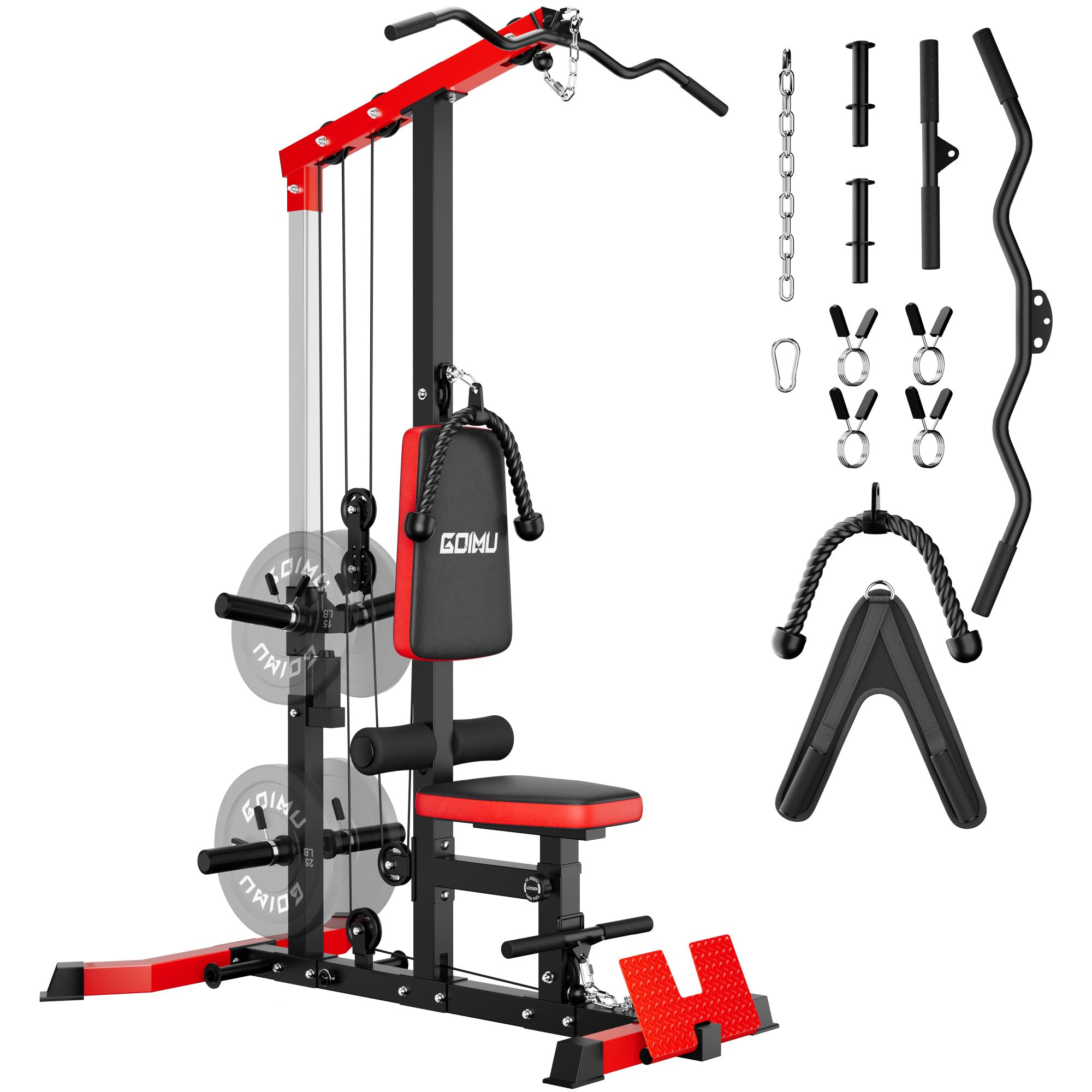
Goimu LS01 Lat Tower

Goimu LS01 Lat Tower

All-in-one cable

Our Score 9.2/10
Check Price

Worth Noting

  • The AB crunch add-on is unnecessary for dedicated lat pulldown training and adds width.
Footprint
59x23x83 in
Stability
Stable without wobble
Adjustability
3 seat heights
Weight Capacity
730 lbs (frame)
Read the full review

The Goimu LS01 pairs a steel frame rated for 730 lbs with three height seat adjustments and a 2mm steel thickness, giving it a stable foundation for home lat pulldowns and rows. The included AB crunch attachment adds variety, though for buyers focused solely on back exercises this extra station takes up floor space without improving pulldown performance. Assembly is clear and the machine stays planted during use.

Bottom line: Best for home gym users who want the option of ab work alongside lat pulldowns, and who don't mind trading a slightly lower rating than the Mikolo for a few extra features.

#5

GDLF Lat Pull Down

GDLF Lat Pull Down

Budget-limited buyers

Our Score 9.0/10
Check Price

Worth Noting

  • Cables may fray or lose coating over time, needing replacement
  • Frame can wobble under heavier loads, limiting stability
Footprint
59x26x77 in
Stability
Wobbles at high weights
Adjustability
4 seat, 4 roller positions
Weight Capacity
500 lbs
Read the full review

Over 1,800 reviews confirm this is the least expensive option that still delivers a usable lat pulldown and low row experience. The 500 lb weight capacity suits light to moderate training, though the frame may wobble when pushing near that limit and cables can fray within months of regular use. For home gyms on a strict budget who accept periodic cable replacement, this machine offers genuine functionality at an entry-level price.

Tip: Check cable tension monthly and consider upgrading to aftermarket cables for longer service.

Bottom line: Only consider this if you're on a tight budget and accept that cables will need periodic swapping and weight loads should stay moderate.

#6

Titan Plate-Loaded Lat Tower

Titan Plate-Loaded Lat Tower

Heavy home users

Our Score 9.0/10
Check Price

Worth Noting

  • Heavy rows may require floor anchoring or added base weight to prevent tipping
  • Trolley sliding along guide rods can become less smooth over time
Footprint
57x47x85 in
Stability
Requires floor anchoring
Adjustability
4 thigh pad positions
Weight Capacity
400 lbs
Read the full review

The Titan Lat Tower delivers a commercial-grade feel with its 11-gauge steel frame and wide footprint, handling heavy plate loads with minimal flex. While the top pick offers a better value for smaller spaces, the Titan's stability suits home gyms where floor space isn't tight. It's ideal for lifters who want a plate-loaded tower that won't budge, though you'll need to anchor it to the floor for heavy rows and account for its 57-inch depth.

Tip: Anchor the base or add weight plates to the lower frame for heavy rowing to maintain stability.

Bottom line: A sturdy plate-loaded tower for home gyms with ample space — best for those who prioritize build quality over convenience.

#7

Yes4All Lat Pull Down

Yes4All Lat Pull Down

Mid-range versatility

Our Score 9.0/10
Check Price

Worth Noting

  • Cables may peel or grind after limited use
Footprint
24x55x76.5 in
Stability
Sturdy and stable
Adjustability
4 seat levels
Weight Capacity
500 lbs
Read the full review

The Yes4All Lat Pull Down stands out among mid-range machines by including an additional pulley cable and an adjustable seat with four settings, giving home gym users more exercise variety than typical budget models. The machine feels solid during use, with a 500 lb capacity and anti-slip footboard that keep setups stable while seated. Cable durability, however, has been noted to peel or grind after limited use, making this a better fit for moderate training sessions rather than frequent heavy loads. While not as rock-solid as the commercial-grade Titan option, the Yes4All offers a good balance of features and cost for those who want more than a basic lat pulldown without spending on a weight stack.

Bottom line: A well-equipped mid-range lat pulldown with extra features, but cable durability makes it best for moderate home gym use rather than daily heavy training.

#8

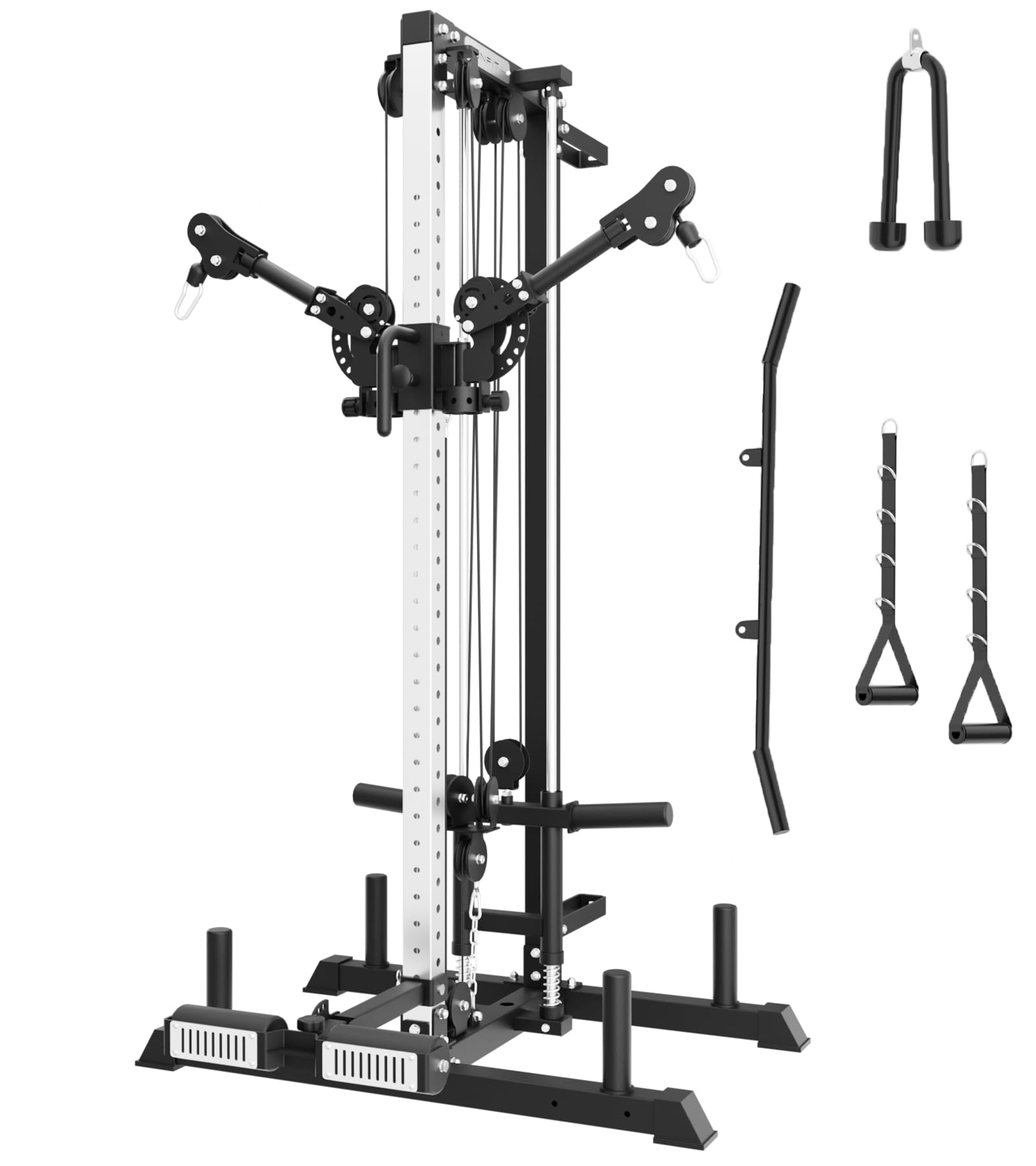
Eonfit E1 Cable Machine

Eonfit E1 Cable Machine

Space-saving training

Our Score 9.0/10
Check Price

Worth Noting

  • Assembly instructions are vague and cable routing is complex, making setup a lengthy task.
  • Leg holder may restrict full range of motion for individuals over 6'1".
Footprint
36x55x79 in
Stability
Sturdy frame
Adjustability
33 height settings
Weight Capacity
800 lbs (frame)
Read the full review

Dual 3D adjustable arms with 33 height settings turn this wall-mounted unit into a functional trainer capable of cable crossovers and lat pulldowns — a space-saving design with smooth aluminum pulleys for quiet operation. The tradeoff is a tough assembly process: cable routing is finicky and the manual lacks detail, which can take hours to sort out. Additionally, the leg holder limits leg drive for users over 6'1", making this better suited for shorter lifters who want compact versatility.

Tip: Watch online assembly videos before starting — the paper manual alone is insufficient.

Bottom line: Offers serious functional trainer versatility in a compact wall-mounted package — worth the assembly effort for shorter lifters who value space savings.

#9

Valor Fitness Portable LAT Pulldown

Valor Fitness Portable LAT Pulldown
Our Score 8.8/10
Check Price

Worth Noting

  • Without a seat or leg hold-down, it cannot support standard lat pulldown or row form
Read the full review

This portable pulley system mounts to a power rack via straps and carabiners, adding cable work for around $65. However, it lacks a seat and leg hold-down, so it cannot replace a dedicated lat pulldown machine for seated pulldowns or rows — it serves as a travel-friendly add-on for basic cable exercises.

Bottom line: Fits only as a supplemental cable system for those who already have a power rack and do not need a standalone lat pulldown machine.

#10

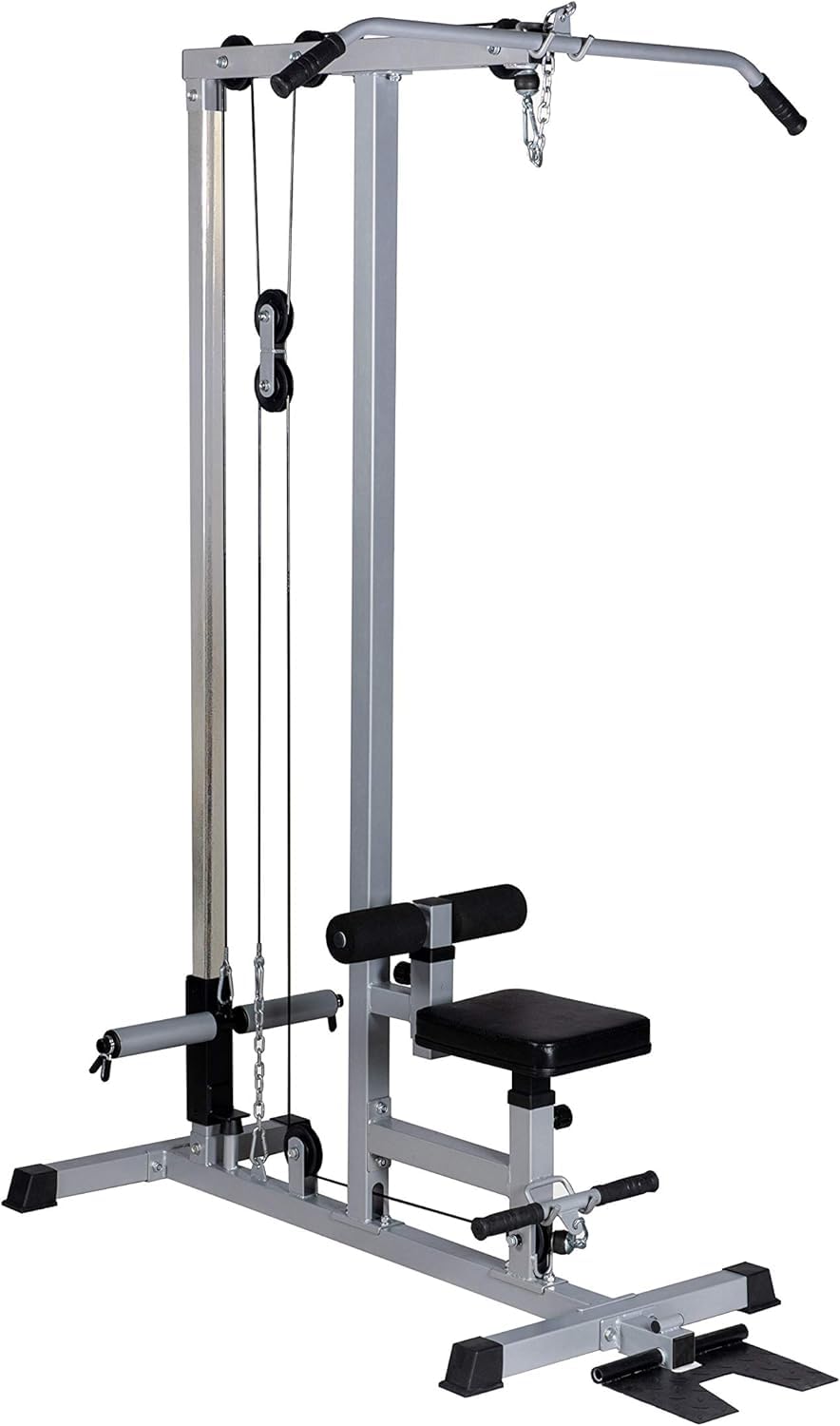
Body-Solid Powerline Lat

Body-Solid Powerline Lat

Light training

Our Score 8.4/10
Check Price

Worth Noting

  • Assembly instructions lack step-by-step detail, which may extend setup time.
Footprint
48x43x81 in
Stability
Needs base weighting
Adjustability
Weight Capacity
250 lbs
Read the full review

The Powerline's heavy-gauge steel frame and smooth pulley system allow for basic lat pulldowns and rows without cable snagging. However, the 250-pound max weight capacity restricts progression for intermediate users, making it best suited for light to moderate home gym training. At a moderate price, the build quality is a fair trade-off for casual use.

Bottom line: Best for light home gym use where the 250-pound limit won't be an issue; heavier lifters should consider alternatives.

How to Choose

Weight Capacity

Weight capacity is often listed as the frame limit, not the cable or pulley limit. A machine rated for 500 lbs may still feel shaky at 300 lbs if the cables are thin or the pulleys have plastic bearings.

For most home gym users, a working weight of 200-300 lbs is plenty for lat pulldowns and rows. Machines in the $150-$300 range with a 450+ lb frame capacity usually handle that range smoothly. Going beyond that requires either a plate-loaded tower with heavy-gauge steel or a premium weight stack unit, both of which cost significantly more.

Cable Smoothness and Durability

Cables are the first part to fail on budget machines. Nylon-coated steel cables with a tensile rating above 2,000 lbs last far longer than uncoated or thin vinyl cables. The pulleys matter too — nylon-bushed pulleys are quieter and smoother than metal-on-metal, but require periodic lubrication.

Check whether replacement cables are available from the manufacturer. If not, a frayed cable means the whole machine is effectively disposable. Machines with a separate cable guide system (like the XMark) tend to have replaceable cables, while cheaper integrated designs are not serviceable.

Stability and Floor Anchoring

A machine that wobbles or lifts off the floor during rows is dangerous and annoying. The culprit is usually a narrow base combined with a high center of gravity. Budget machines with small footprints often need to be anchored with sandbags or bolts to stay put under 200+ lbs of resistance.

Plate-loaded towers like the Titan have wider bases (47 inches) that reduce tipping, but they still recommend anchoring for heavy rows. Wall-mounted units eliminate the wobble entirely by transferring load to the wall studs. If you cannot drill into concrete or studs, choose a machine with a low, wide platform and a low pulley that pulls downward rather than forward.

Adjustability

Seat height and leg hold-down position directly affect lat pulldown mechanics. A seat that adjusts to three or four heights accommodates users from 5'2" to 6'0". Taller users need a machine with a taller frame and a leg hold-down that can slide low enough to lock their thighs without hitting the seat.

Adjustable pulleys add versatility for low rows, face pulls, and tricep extensions. Machines with a single high pulley and a single low pulley (like most budget models) are limited compared to units with a swivel arm or multiple pulley positions. If you plan to do more than just pulldowns and rows, look for at least 10-15 pulley height settings.

Footprint and Space Requirements

Floor space is the hidden cost of a lat pulldown machine. A typical standalone machine measures 24-30 inches wide by 55-60 inches deep. That fits in a corner of a garage or spare room but can feel cramped in a bedroom or apartment.

Wall-mounted units cut the footprint roughly in half and allow you to use the floor area for other exercises. However, they require a solid wall — drywall alone won't hold a 150 lb machine under load. Measure your space including the floor area needed for the seat slide and the overhead clearance (most machines are 77-85 inches tall).

Frequently Asked Questions