Strength & Weights

7 Best Cable Crossover Machine of 2026: Match Your Space and Budget

Not sure whether to go wall-mounted or freestanding? This guide helps you pick the best cable crossover machine for your home gym and strength needs.

A cable crossover machine can transform your home gym, but the wrong choice means wasted space or limited workouts. Wall-mounted stations save floor area but must anchor into studs; plate-loaded models offer solid value at the cost of manual plate handling; weight stack trainers provide smooth, convenient resistance at a premium.

The real decision comes down to how much space you have, how heavy you lift, and whether you value convenience over upfront cost. Budget wall units work for light flys and rows, but heavy compound movements demand a heavier base. Mid-range plate-loaded machines deliver reliable build quality if you have room for a 9-foot span, while weight stack trainers justify their higher price with effortless resistance changes and commercial feel.

#1

Body-Solid PFT100 Trainer

Top Pick
Body-Solid PFT100 Trainer

Serious home gyms

Our Score 9.2/10
Check Price

Worth Noting

  • Assembly requires a full afternoon and instructions could be clearer on some steps.
  • The 62-inch width dominates floor space
Footprint
42" x 63"
Max Weight
160 lbs per side
Resistance Type
Weight stack
Pulley Positions
Read the full review

The dual 160 lb weight stacks (2:1 ratio) move smoothly through a full range of cable crossover and functional trainer exercises. The frame feels solid, with no wobble during heavy pulls, and the pulley action stays quiet even at high reps.

Assembly takes most of an afternoon — expect four to six hours — and the included manual could be clearer on cable routing. Once assembled, the machine requires no ongoing adjustments; the pin-select weight stacks make changing resistance instant and consistent.

This machine is for home gym owners who want a dedicated cable station without compromises. You need at least 62 inches of floor width and a premium budget. If you have the space and the patience for a long setup, the PFT100 delivers a commercial feel that plate-loaded alternatives can't match.

Tip: Plan for a full afternoon of assembly and have a second person handy for aligning the frame pieces.

Bottom line: For serious home gym owners who have the floor space and budget, the PFT100 delivers commercial-grade cable work without the commercial price tag.
#2

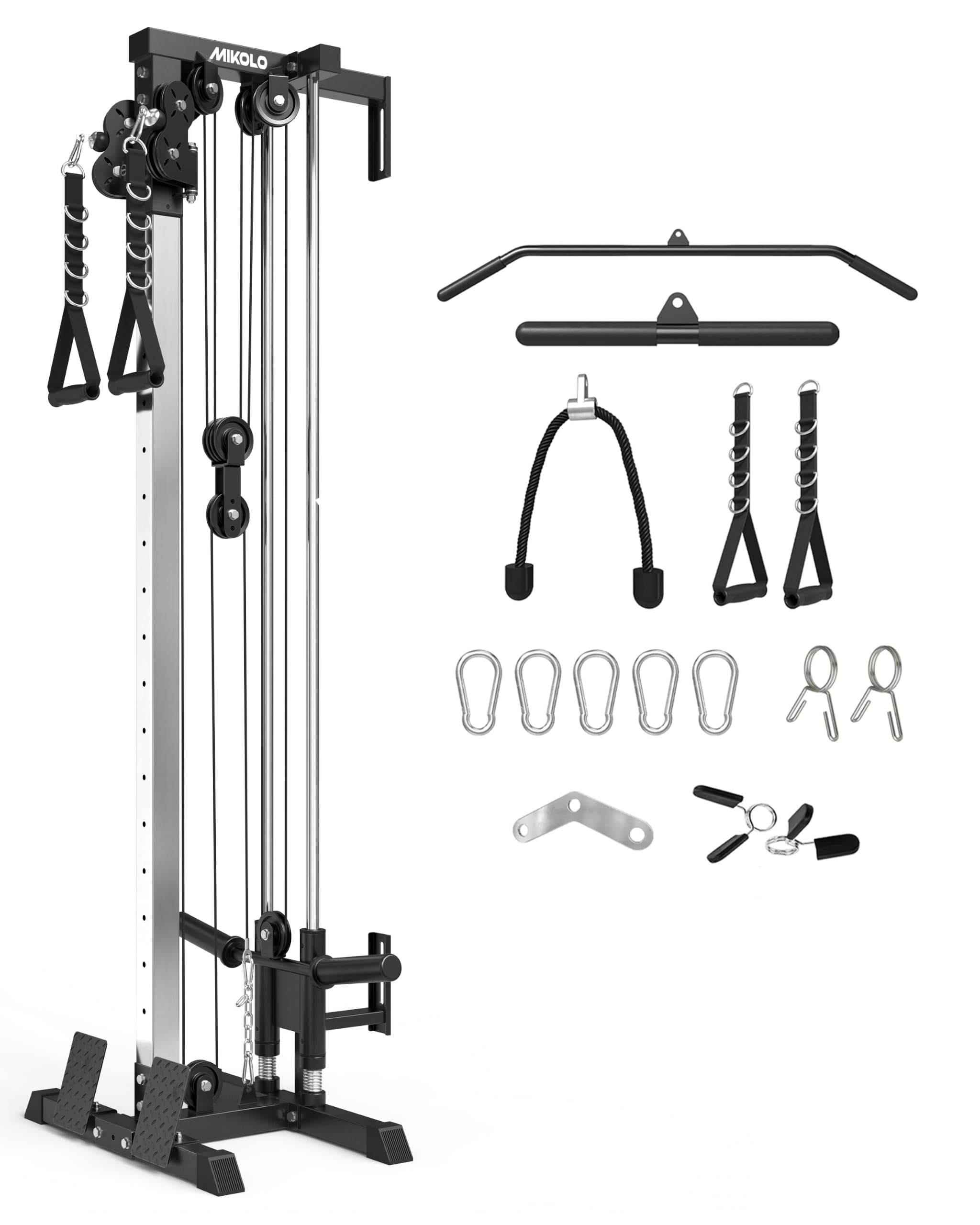
Mikolo M-G3 Wall Mount

Mikolo M-G3 Wall Mount

Space-saving home gyms

Our Score 9.2/10
Check Price

Worth Noting

Footprint
27" x 26"
Max Weight
400 lbs
Resistance Type
Plate-loaded
Pulley Positions
19
Read the full review

The Mikolo M-G3 brings a low entry price and easy assembly to home gyms seeking a dedicated cable crossover without the bulk of a multi-function station. With 19 height positions and a 400 lb max load, it offers more adjustment than the cheapest wall-mounted options, though the plastic pulleys may need upgrading for sustained heavy use.

This wall-mounted station fits buyers who want a space-saving unit for light to moderate training. The compact footprint suits smaller rooms, and the H-base provides adequate stability for standard exercises. However, guide bar clips can loosen over time, requiring periodic tightening, and the plastic pulleys may deform under high loads — considerations for those planning to push near the weight limit.

Tip: If you plan to load near the 400 lb maximum, consider replacing the plastic pulleys with metal versions for long-term durability.

Bottom line: The M-G3 is a solid budget entry for cable workouts, provided you accept its plastic pulleys and the need to periodically check clip tightness.

#3

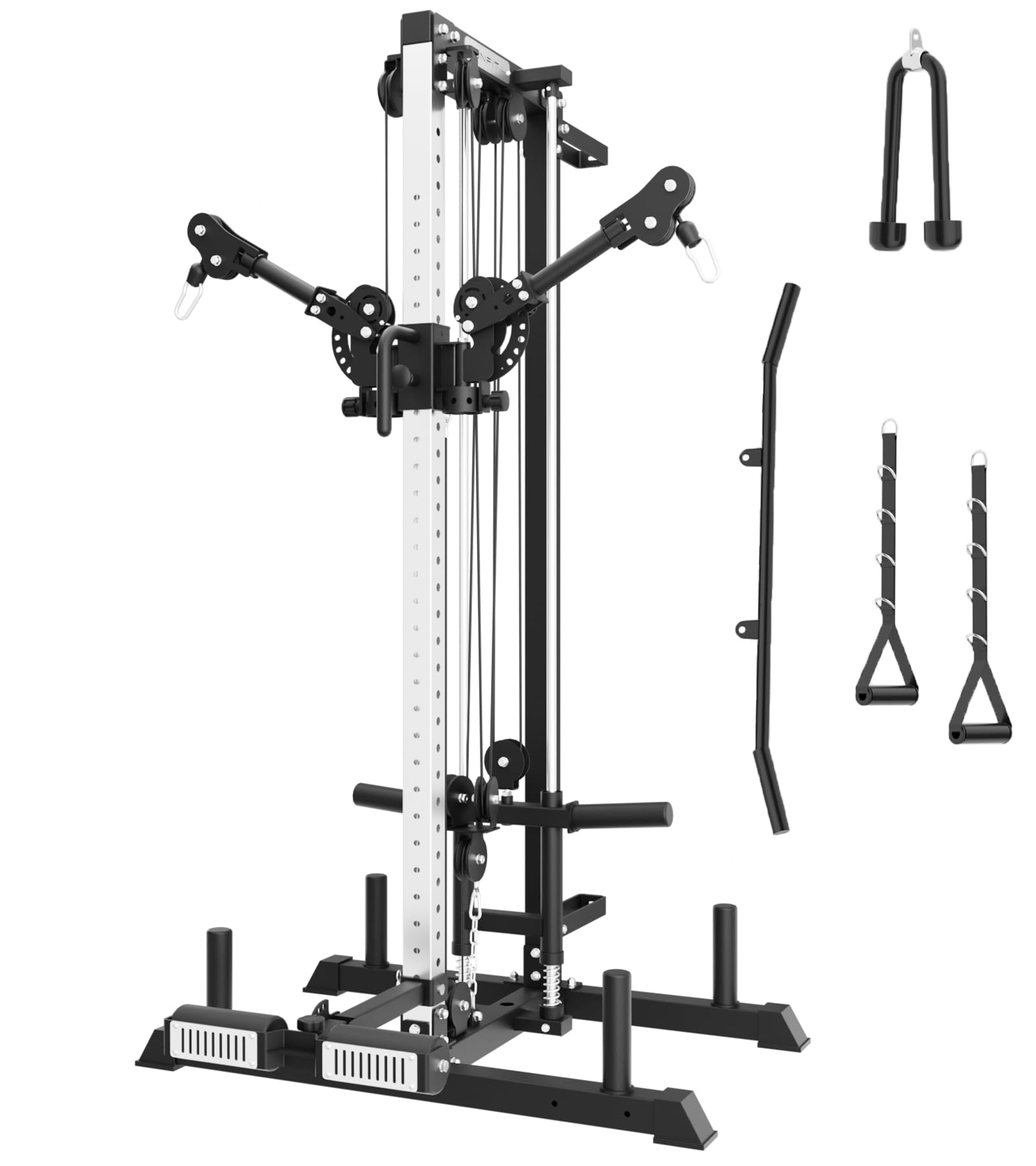
Eonfit E1 2.0 Wall Mount

Eonfit E1 2.0 Wall Mount

Small home gyms

Our Score 9.0/10
Check Price

Worth Noting

  • Some operational noise may be present during use
  • Assembly instructions for cable routing are unclear, adding time to setup.
Footprint
36" x 55"
Max Weight
800 lbs
Resistance Type
Plate-loaded
Pulley Positions
33
Read the full review

The Eonfit E1 2.0 crams 33 height settings and dual 3D adjustable arms into a wall-mounted frame that occupies roughly three square feet of floor space. This gives it more cable-angle flexibility than most plate-loaded stations at this size, allowing you to mimic crossover, fly, and press movements without needing a freestanding machine.

This setup works best for home gym owners with limited square footage who want dedicated cable work rather than a multi-function rack. The plate-loaded resistance handles up to 800 lbs of cable tension, but the assembly process demands patience — especially the cable routing, which the manual describes poorly. Some units also produce a metallic noise during operation that may be noticeable in quiet environments.

Tip: Search for assembly videos specific to this model before starting — the manual skips key steps in cable routing.

Bottom line: If wall space is your limiting factor and you value a wide range of cable angles, the Eonfit E1 2.0 delivers — just plan for a longer-than-expected assembly session.

#4

DONOW DN-5011 Crossover

DONOW DN-5011 Crossover

Versatile home gyms

Our Score 9.0/10
Check Price

Worth Noting

  • Pulleys share resistance between sides, limiting independent unilateral work.
  • Assembly is time-consuming; chains may be longer than needed for some setups.
Footprint
56" x 80"
Max Weight
Resistance Type
Plate-loaded
Pulley Positions
16
Read the full review

The DONOW DN-5011 stands out by pairing a plate-loaded cable crossover with a built-in pull-up bar, giving it an edge over standard cable machines that lack upper body weight capability. Its steel frame and smooth pulley system feel more stable than many comparably priced options, and the 16 pulley positions offer solid range for most exercises.

This machine suits home users who need both cable work and pull-ups without buying separate equipment, and who are comfortable with plate-loaded resistance changes. The main tradeoffs are a shared pulley system — both sides pull the same weight stack, so unilateral isolation is limited — and an assembly process that can test patience; some owners note the included chains are longer than ideal for certain movements.

Tip: Before final assembly, test chain length with your preferred attachments; shortening or replacing them can improve cable routing.

Bottom line: A capable two-in-one machine for home gyms that want cable crossovers and pull-ups, provided you can accept shared resistance and a moderate build project.

#5

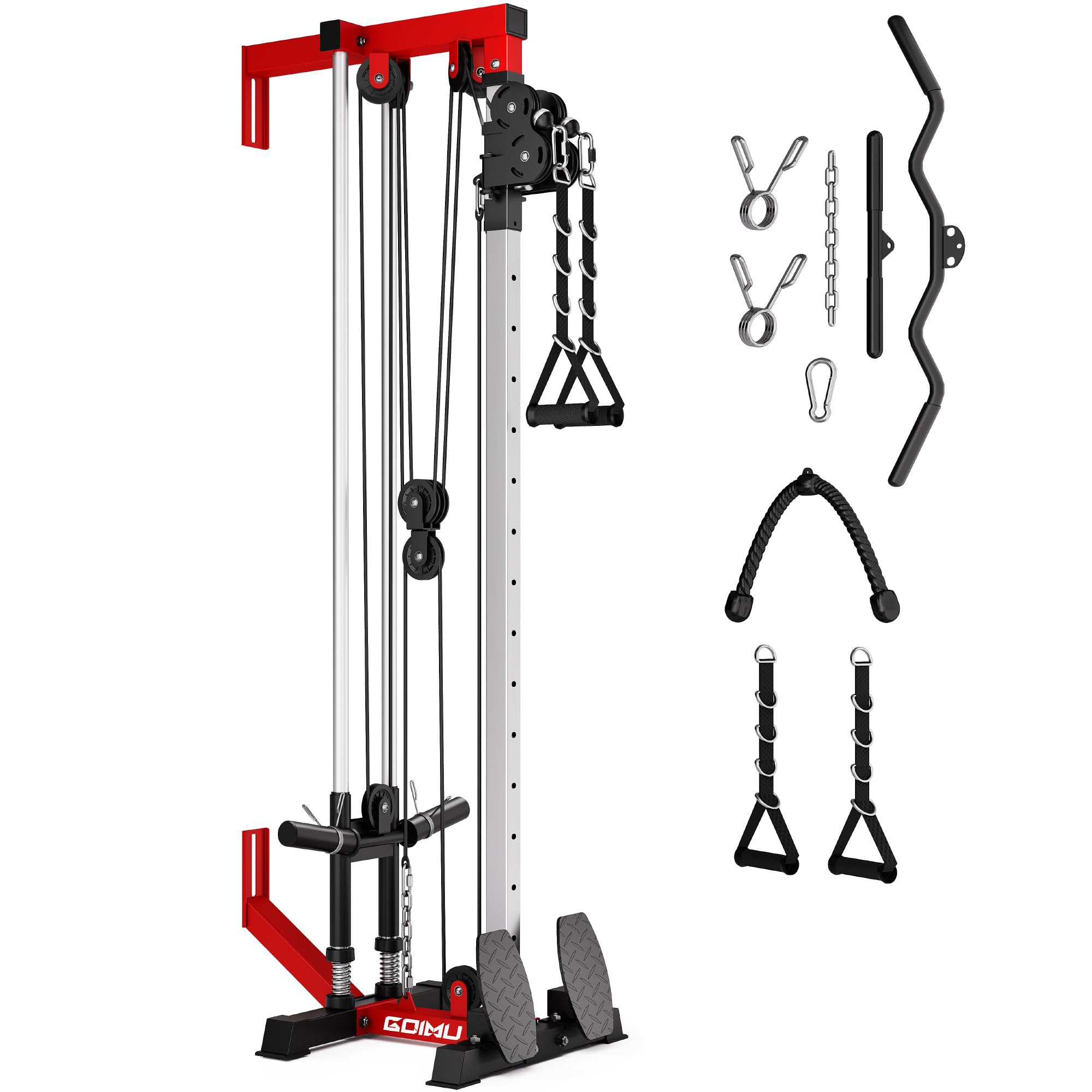
Goimu WM1 Cable Station

Goimu WM1 Cable Station

Budget home gyms

Our Score 9.0/10
Check Price

Worth Noting

  • Plastic pulleys can lose smoothness over time - upgrading to aluminum pulleys is one way to address this.
  • Highest and lowest pulley positions may not engage reliably on some units.
Footprint
25" x 18"
Max Weight
300 lbs
Resistance Type
Plate-loaded
Pulley Positions
Read the full review

The Goimu WM1 offers the lowest price and smallest footprint among wall-mounted cable stations, making it a viable option for basic cable exercises in tight spaces. Assembly is straightforward with clear instructions, and after lubricating the pulleys, operation becomes reasonably smooth. However, the plastic pulleys may not maintain that smoothness over time, and some units exhibit inconsistent engagement at the highest and lowest positions. These compromises, along with the 300 lbs resistance limit, confine it to light-to-moderate training rather than serious strength work.

Bottom line: Best suited for budget-focused home gym owners who need a basic cable station in a small space and are willing to accept plastic pulley limitations.

#6

Body-Solid PCCO90X Crossover

Body-Solid PCCO90X Crossover

Home gym owners

Our Score 8.8/10
Check Price

Worth Noting

  • Assembly instructions can be confusing and time-consuming to follow.
  • Maximum 133 lb weight stack limits progression for advanced lifters.
Footprint
37" x 113"
Max Weight
133 lbs
Resistance Type
Plate-loaded
Pulley Positions
Read the full review

The Body-Solid PCCO90X offers the best value among plate-loaded cable crossovers, with build quality that rivals machines costing twice as much. While the top pick PFT100 provides smooth weight stack changes, this machine trades that convenience for a significant price saving. However, the weight capacity is capped at 133 lbs, and the assembly instructions are notoriously unclear, which will test your patience.

This crossover is ideal for home gym owners with the required 9+ foot width who perform light to moderate strength training and want a sturdy machine without spending premium money. If you regularly lift heavy or dislike complex assembly, this model will frustrate rather than serve.

Tip: Set aside a full afternoon for assembly and consider finding online video guides, which some owners find clearer than the printed manual.

Bottom line: The PCCO90X delivers exceptional build quality at a mid-range price, making it the smart buy for light to moderate training — if you have the patience for assembly.

#7

Valor Fitness BD-61

Valor Fitness BD-61

Compact cable machine

Our Score 8.8/10
Check Price

Worth Noting

  • Assembly is time-consuming with confusing cable routing and poor instructions
  • Cables can fray and pull-up bar may flex under load, limiting heavy training
Footprint
56" x 50"
Max Weight
200 lbs
Resistance Type
Plate-loaded
Pulley Positions
17
Read the full review

This plate-loaded machine provides a compact footprint and integrated pull-up bar at a mid-range price, with smooth pulley operation for most exercises. Assembly takes notable patience due to unclear instructions and tricky cable routing, and some owners note cable fraying or pull-up bar flex under heavier loads — realities that make it better suited for moderate home training than high-volume commercial use.

Bottom line: For home gym buyers who want a compact plate-loaded cable machine with a pull-up bar and are comfortable with a challenging assembly and moderate weight capacity, this delivers good value.

How to Choose

Resistance Type

Weight stack machines use pre-loaded plates that you select with a pin, offering instant resistance changes without handling individual plates. The trade-off is higher upfront cost, heavier shipping, and a larger footprint because the stack housing adds bulk.

Plate-loaded machines are cheaper and lighter but require you to manually load plates onto a post. This makes switching weight slower and can lead to uneven loading if you only have one set of plates. For home users who train alone, the convenience of a weight stack often justifies the extra cost.

Footprint

A machine's width and depth determine whether it fits your room and allows full range of motion for cable crossovers. Plate-loaded crossover machines often require 9 feet of width to allow the arms to fully extend, while wall-mounted stations can fit into a corner as narrow as 25 inches.

Before buying, measure the actual space where the machine will sit, then subtract 2 feet on each side for arm movement. Many buyers buy a machine that fits the floor but not the workout.

Maximum Weight Capacity

The max weight rating tells you the heaviest resistance the machine can handle without straining components. For plate-loaded machines, this is the plate post limit; for weight stacks, it's the total stack weight per side.

If you plan to do heavy rows, lat pulldowns, or cable flies, aim for at least 150 lbs per side. Budget wall units often cap at 200-300 lbs total, which is fine for isolation exercises but limiting for compound movements.

Pulley Positions

More height positions give you finer control over cable angles for different exercises. A machine with 15+ positions lets you hit nearly every standard cable movement, from low rows to high flies.

Fewer positions (under 10) limit your exercise variety, and you may need to use awkward body angles to compensate. For a home gym covering full-body work, look for at least 12-16 positions.

Special Features

Added features like pull-up bars, adjustable arms, or included attachments can increase versatility without buying separate equipment. A pull-up bar on a cable machine saves floor space, but check that the bar is wide enough for a neutral grip and doesn't flex under body weight.

Adjustable arms (like 3D arms) allow precise cable positioning but add complexity to assembly and potential noise points. Attachments included (lat bars, tricep ropes) are convenient but often low quality; expect to upgrade them over time.

Frequently Asked Questions