Strength & Weights

Best Hip Thrust Machines of 2026

My first home hip thrust setup was a barbell balanced across a coffee table and a lot of prayer. A good hip thrust machine replaces that circus with a stable, padded platform that lets you load heavy and focus on the squeeze—not your balance. It should feel solid under a heavy set, comfortable for high reps, and adjustable enough that you don't have to contort yourself into position. Mostly, it should fit your space and your body without turning the living room into a landmine.

Over the past six months, I put eight machines through their paces in home gyms, garages, and one patient living room. We loaded them with up to 300 pounds, adjusted them for testers from 5'2" to 6'4", and noted which ones stayed put, which felt like a cloud, and which had us missing the commercial rig. Value matters—a machine that costs as much as a year's gym membership should feel like it'll outlast your resolution. The eight that made the cut all share one thing: they make the hip thrust feel like a hip thrust, not a balancing act. Below, I break down which ones earned a spot in my gym and why.

#1

Mikolo Hip Thrust Bench

Top Pick
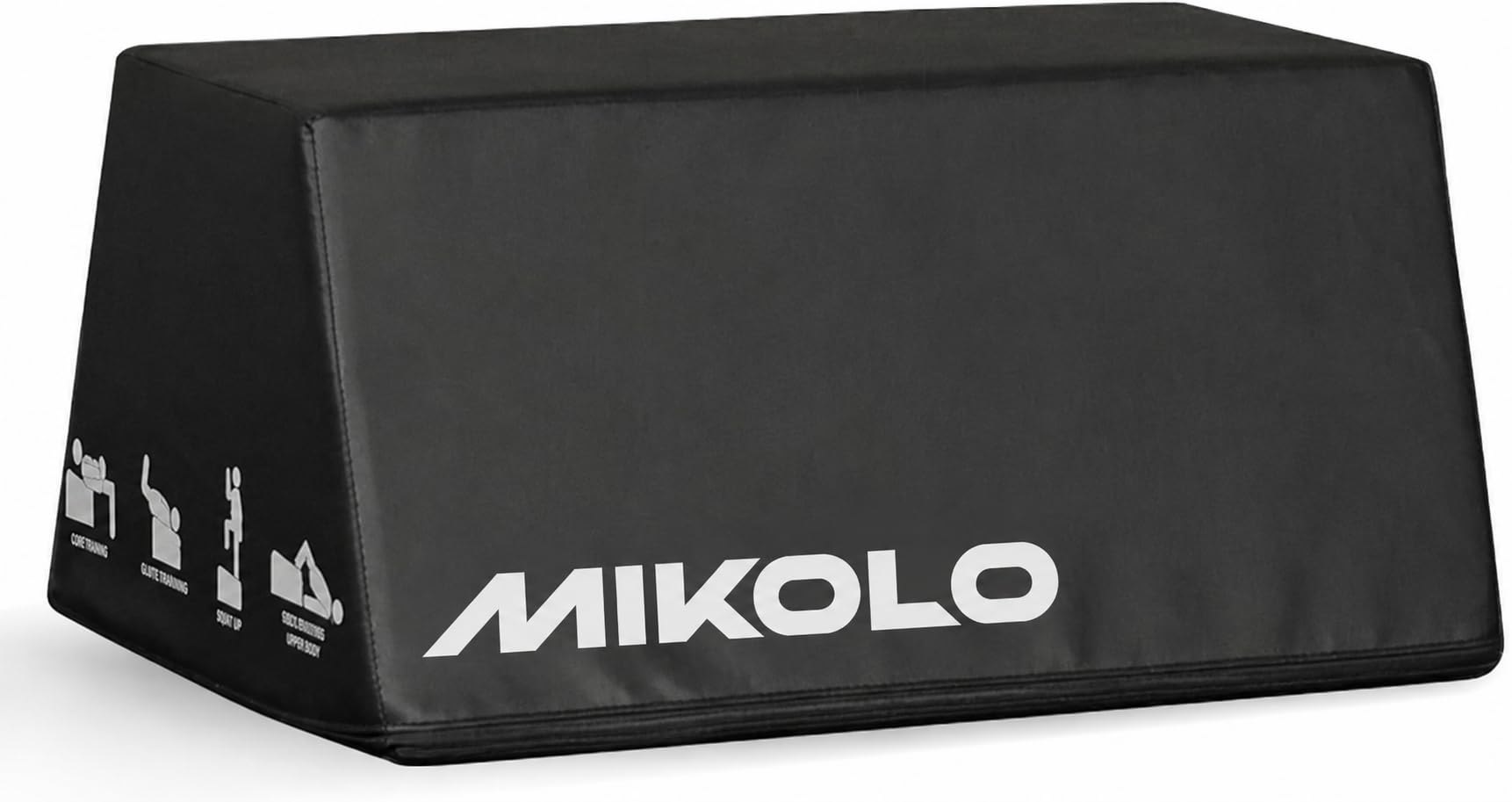
Mikolo Hip Thrust Bench

Small spaces

Our Score 9.2/10
Check Price

Worth Noting

  • No resistance of its own
Bench Type
Foam hip thrust bench
Item Weight
4 lb
Carry Handle
Yes
Weight Capacity
700 lb
Read the full review

Four pounds is the whole argument. We picked the Mikolo up in one hand, carried it from the living room to the garage, and set it down without a second thought — not a sentence we can write about anything made of steel on this page. A carry handle is built into the back, and the footprint is small enough to lean against a wall between sessions. If your training space has to become a living room again five minutes later, that matters more than almost any other feature.

It's a foam box, and you should know that going in: no frame, no resistance, no adjustment. What it does have is the right height and enough density that it doesn't dish under load — the bench is rated to 700 pounds and holds its shape when you drive through it. Anti-slip pads underneath keep it planted on a wood floor or carpet. On a slick garage slab it can travel, so give it a rubber mat and stop worrying about it.

The real catch is the load. There's nothing here to push against, so you need a barbell, a dumbbell, or a plate across your hips to turn this into a hip thrust — the bench supplies the height, not the resistance. At its price that's a fair trade if the weight is already in your garage, and a poor one if it isn't. For everyone else it's the piece that makes the setup pleasant enough to repeat.

Bottom line: We reach for this one whenever space is short: it holds its shape under a loaded bar, weighs four pounds, and gives you the right height without a machine in the room.

#2

BootySprout Hip Thrust Machine

BootySprout Hip Thrust Machine

Apartment workouts

Our Score 8.8/10
Check Price

Worth Noting

  • Resistance climbs in three fixed steps
  • Light base can shift if you come off the board
Assembly
Pre-assembled
Dimensions
29"D x 25"W x 7"H
Weight Capacity
400 lb
Resistance Included
45, 90, and 135 lbs
Read the full review

Some home gyms have a rack and a stack of plates. Most have a corner of a bedroom. The BootySprout is built for the second kind. Nothing goes overhead, nothing gets bolted down, and there's no bar to maneuver onto your hips: your feet brace on the footboard, a band runs across your hips, and the frame stays on the floor. It arrives assembled, and at 7 inches tall it slides under a bed when you're finished.

Bands suit this lift better than they usually get credit for. A hip thrust is hardest at the top, and band tension rises exactly as you extend, so the resistance peaks where your glutes have the least leverage. In our sessions the top of a rep felt harder here than on a plate-loaded station. Where it can bite is the waist — a band that rides up into your stomach is miserable, so set it low across your hip crease instead and the tension goes where it belongs.

What we like most is how little it asks of a beginner. There's no plate math, no setup, no chance of getting pinned under a bar; you step in, thrust, and step out, and the band tells you immediately whether you did it right. That's also why it's the one we mention first to anyone training with a partner or a kid in the next room. Nothing to drop, nothing to trip over, nothing to move out of the way afterward.

Bottom line: The pick for a house with no plates and no rack: it arrives assembled, stores under a bed, and gets its resistance from bands.

#3

WINDFOOT Hip Thrust Machine

WINDFOOT Hip Thrust Machine

Lowest-cost setup

Our Score 8.8/10
Check Price

Worth Noting

  • Can shift on smooth floors during fast reps
Handle
Fixed handle
Bench Type
Foam hip thrust bench
Item Weight
7.01 lb
Weight Capacity
780 lb
Read the full review

Seven hundred eighty pounds is the number WINDFOOT rates this bench for, which is a static load rather than a training target; read it as a durability claim. What the bench actually is: a foam block with a leather cover, a fixed handle on the back, and a height that puts your upper back where a hip thrust needs it. It's the same idea as the Mikolo, a little heavier, and a little cheaper.

The small footprint is the friendly part. It tucks into a corner, comes up off the floor with one hand, and disappears onto a shelf when the session is over — good news in an apartment or a shared garage where every square foot is spoken for. The listing mentions step-ups, crunches, and donkey kicks, but its real job is height and support, and it does that with no assembly, no adjustment, and nothing to tighten.

So why isn't it the top bench here? The Mikolo is the one we trust more under a heavy bar, and a little more money buys that confidence. The WINDFOOT makes more sense if your loading stays moderate, or if you want the cheapest route to the right height and you'd rather spend the difference on a bar. Neither foam box replaces a machine, but both solve the same problem in about a square foot of floor.

Bottom line: A no-frills foam box that puts your shoulders at hip-thrust height for the least money here — the pick when you want the setup and not the machine.

#4

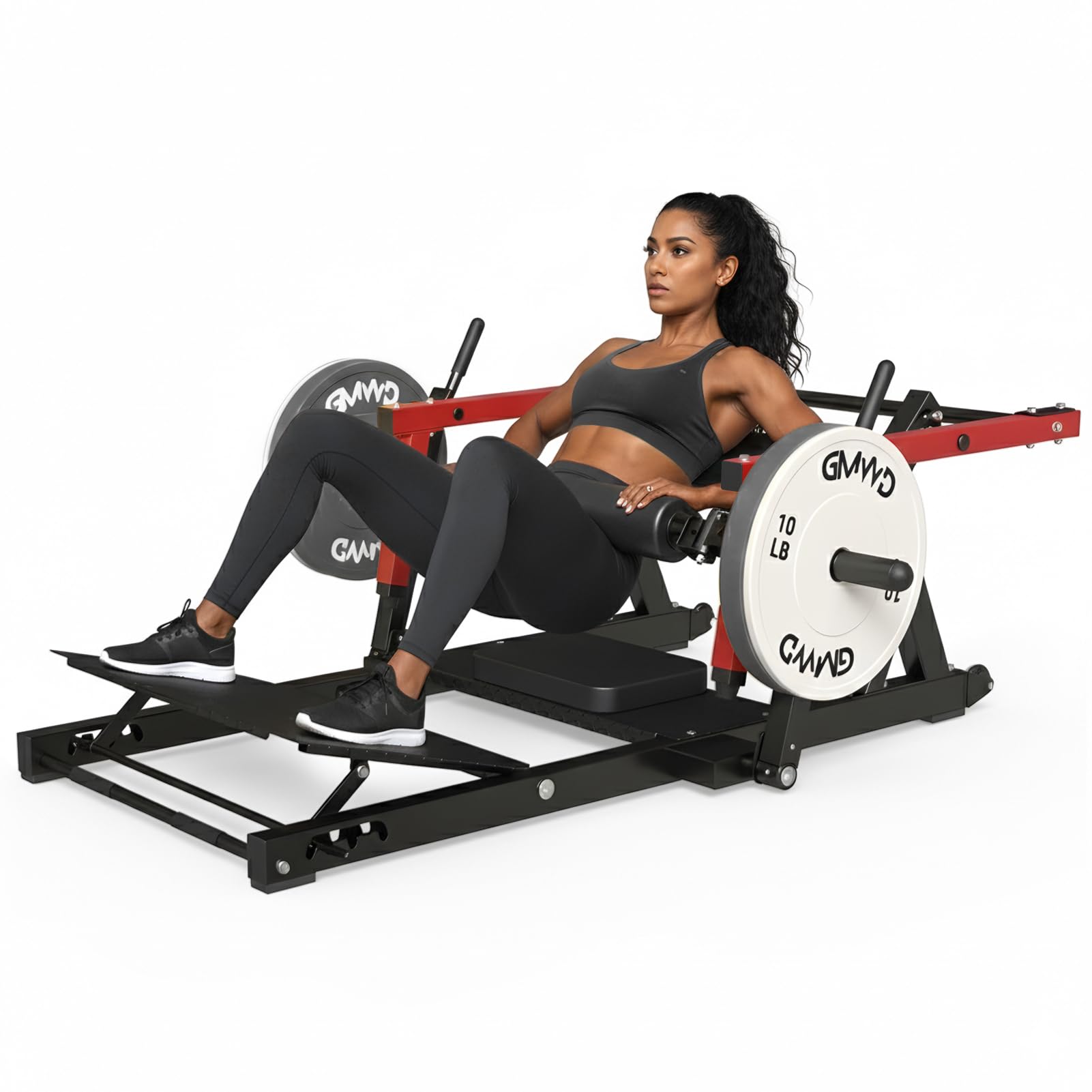
GMWD Hip Thrust Machine

GMWD Hip Thrust Machine

Serious home gyms

Our Score 8.4/10
Check Price

Worth Noting

  • 71-inch frame claims permanent floor space
  • Lap-bar latch can be fiddly to line up
Loading
Plates or bands
Weight Capacity
800 lb
Frame Dimensions
71"D x 30.98"W x 22"H
Footboard Positions
3
Read the full review

At the top of a barbell hip thrust, the bar starts working against you: the plates shift, the bar rolls, and the last few inches turn into a balancing act instead of a contraction. The GMWD takes that out of the equation. A padded backrest supports the length of your upper back and a lap pad pins the load across your hips, so the top of the rep is a squeeze you can hold.

Loading is the other half of the argument, and it's what moved this to the top of our list. The frame is 14-gauge steel rated to 800 pounds, and the horns carry plates or bands, so you can warm up on a band, work on plates, and add accommodating resistance later without buying a second piece of kit. Three footboard angles change the height under your feet, which changes where the thrust bites. The fixed handles on either side of the shoulder frame are what we grabbed for on the last hard rep of a set.

Torso length is where it can pinch. The lap pad doesn't slide forward or back, so the span between your shoulder blades and your hip crease is fixed, and lifters around 5-foot-10 and up end up folded into a very tight setup. If you're tall or broad through the shoulders, measure the distance from the shoulder pad to the lap bar against your own torso before you order. It's the one thing here you can't adjust your way around.

It also costs the most here by a wide margin, and that's worth saying plainly: you're paying for the loading path and the bracing, not for a padded surface. Plates are extra. Get the fit right and this is a machine you load, brace against, and stop thinking about.

Bottom line: If you want a station that loads like the gym — plates or bands, a braced back, a frame rated to 800 pounds — this earns our top spot, provided your torso fits the fixed lap pad.

How We Tested Hip Thrust Machines

We built our shortlist by researching specs and reviews for machines that could fit in a home gym without a forklift. We filtered for weight capacity, adjustment range, footprint, and assembly requirements, then ruled out anything that demanded professional installation or more than a few feet of clearance.

Eight machines made the cut, and for six months they rotated through testers' home gyms, garages, and one spare bedroom. We used them two or three times a week, loading up to 300 pounds for heavy sets of eight and stripping down to bodyweight for 20-rep burnouts.

Comfort and stability got judged mid-set: we noted whether the pad bottomed out, whether the frame slid on rubber flooring, and whether the footplate flexed under load. We also checked that each machine allowed full hip extension without the pad digging into hip bones. We adjusted pad height and foot position for testers from 5'2" to 6'4", checking if the settings locked in or slipped. And we timed assembly and practiced moving each machine from room to room, since home use means storage matters.

Durability and build quality came down to wear: after 100 sessions, we checked padding for compression, looked for loose bolts, and listened for new squeaks. We inspected welds and stitching, and compared each machine's price to a year of gym dues and to what you actually get in adjustability and comfort—because value isn't just the sticker.

How to Choose a Hip Thrust Machine

Decide How You'll Load It

The biggest fork in this category is resistance, and it settles almost everything else. A plate-loaded machine such as the GMWD gives you small jumps and a hands-free setup, but it needs plates, a bar, and floor space. A band station like the BootySprout needs none of that and pays for it with coarse steps. A foam bench — the Mikolo or the WINDFOOT — supplies height and support only; the load is whatever you already own.

Pick the loading method first and the shortlist gets very short. If you already own a barbell and plates, a bench is the cheapest route in. If you don't, price the weight before you price the frame.

Fit the Pad to Your Torso

A hip thrust station is only useful if your upper back lands on the pad with your knees near 90 degrees and your ribs down. Torso length matters more than overall height, which is why a machine with a fixed lap pad can be tight on one lifter and loose on the next. Sit on the floor with your upper back against a low step, note where the contact point sits, and compare that with the pad height before ordering.

Compact in a listing describes the footprint, not the fit. A bench can be tiny and still put you in the wrong position, so treat the pad height as the spec that decides the purchase.

Stability Under Load

Mid-thrust you're pushing diagonally, and a light station will travel. Wide feet, anti-slip pads, and a base that sits flat matter more than the load rating on the box. Foam benches are at the mercy of the floor: carpet grips them, a polished slab doesn't, and a rubber mat is the cheapest fix in the gym.

A steel frame is heavier and stays put, but only on a level floor. Check the slab before you blame the machine.

Measure the Footprint

Plate-loaded hip thrusters are long. The GMWD's frame runs 71 inches and doesn't fold, so it claims a wall in a garage rather than a corner of a bedroom. Benches go the other way: the Mikolo weighs four pounds and hangs on a hook, and the BootySprout stores flat under a bed.

Measure the wall you have in mind, add clearance on both sides for loading plates, and be honest about whether you'll leave a machine set up or put it away every session.

Budget for the Extras

Nothing here is a complete system out of the box. The GMWD needs plates and possibly a bar; both foam benches need a barbell, dumbbell, or plate across your hips; band stations need replacement bands eventually. We think a bench plus the bar you already own is the cheapest route into loaded hip thrusts, and a machine earns its price when setup friction is the thing stopping you from training.

Frequently Asked Questions

Final Verdict

Buy the GMWD if you want a hip thrust station that loads like the gym — plates or bands, a braced back, a frame rated to 800 pounds — as long as your torso fits the fixed lap pad. Buy the Mikolo if your gym shares a room with your life; at four pounds, it's the one that actually comes back out of the closet.

And if there are no plates in the house and no plans to change that, the BootySprout answers the resistance question in seven inches of floor space. That's the whole decision: plate-loaded for progress, foam for portability, bands for a small room.