Shoes & Apparel

11 Best Compression Socks of 2026: Verified mmHg Without the Hype

Find compression socks that deliver on their claims, from firm nursing support to budget-friendly daily wear, with honest fit guidance.

Compression socks promise better circulation, faster recovery, and less swelling. But a quick search reveals dozens of multi-packs all claiming 15-20 or 20-30 mmHg — and many fall short. The real challenge isn't finding cheap socks; it's finding ones that actually provide the pressure you need without the top band cutting into your calf.

Sizing is the silent dealbreaker. A sock that fits perfectly in the foot can be too loose at the calf or vice versa, and once you open that 8-pack, returns are rare. This guide cuts through the marketing noise to highlight the few brands that consistently deliver verified compression levels, reliable fit, and durability that lasts beyond a few washes.

Whether you're a nurse on 12-hour shifts, a runner managing shin splints, or a traveler fighting flight-related swelling, the right pair depends on matching mmHg to your activity and measuring your legs — not just your shoe size. Here's how to pick wisely.

#1

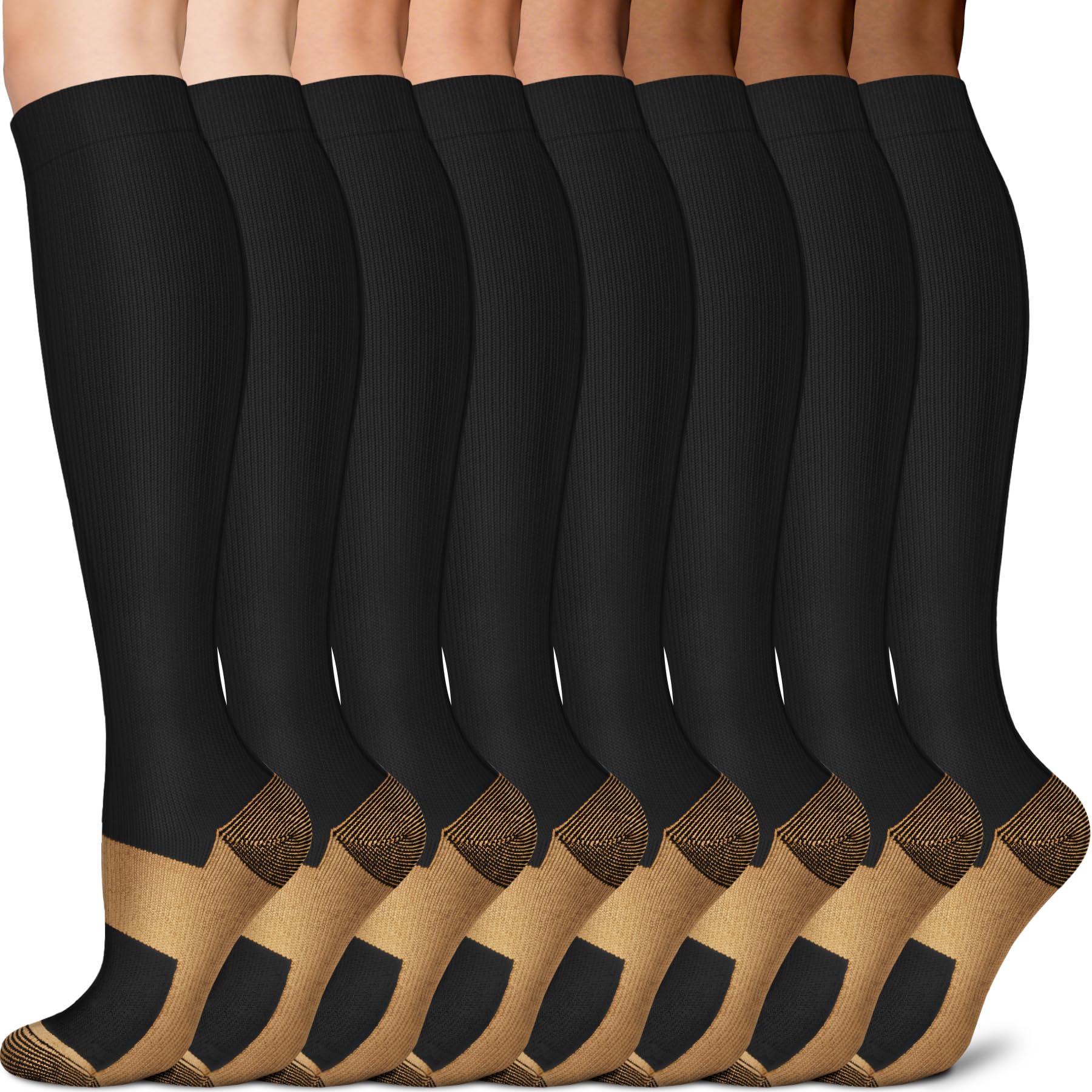
Iseasoo Copper Compression

Top Pick
Iseasoo Copper Compression

Active lifestyles

Our Score 9.2/10
Check Price

Worth Noting

  • Fit can be inconsistent for those with larger calves, leading to tightness in some pairs
Pairs
8
Compression
15-20 mmHg
Read the full review

This 8-pack delivers consistent circulation support and noticeable swelling reduction, backed by copper fibers that help control odors during active use. The graduated compression at 15-20 mmHg suits daily wear, travel, and nursing shifts without the extreme firmness of medical-grade options.

Ideal for active individuals, travelers, and professionals who want odor-resistant compression at a mid-range price. Those with larger calves may find the fit tight in some sizes, and the copper content can irritate sensitive skin — confirming it's best for standard leg proportions and non-sensitive skin.

Tip: Consider sizing up if you have larger calves, or choose a different model with wider calf options.

Bottom line: A cost-effective 8-pack with copper benefits and effective compression — best suited for standard leg sizes and those not needing medical-grade firmness.
#2

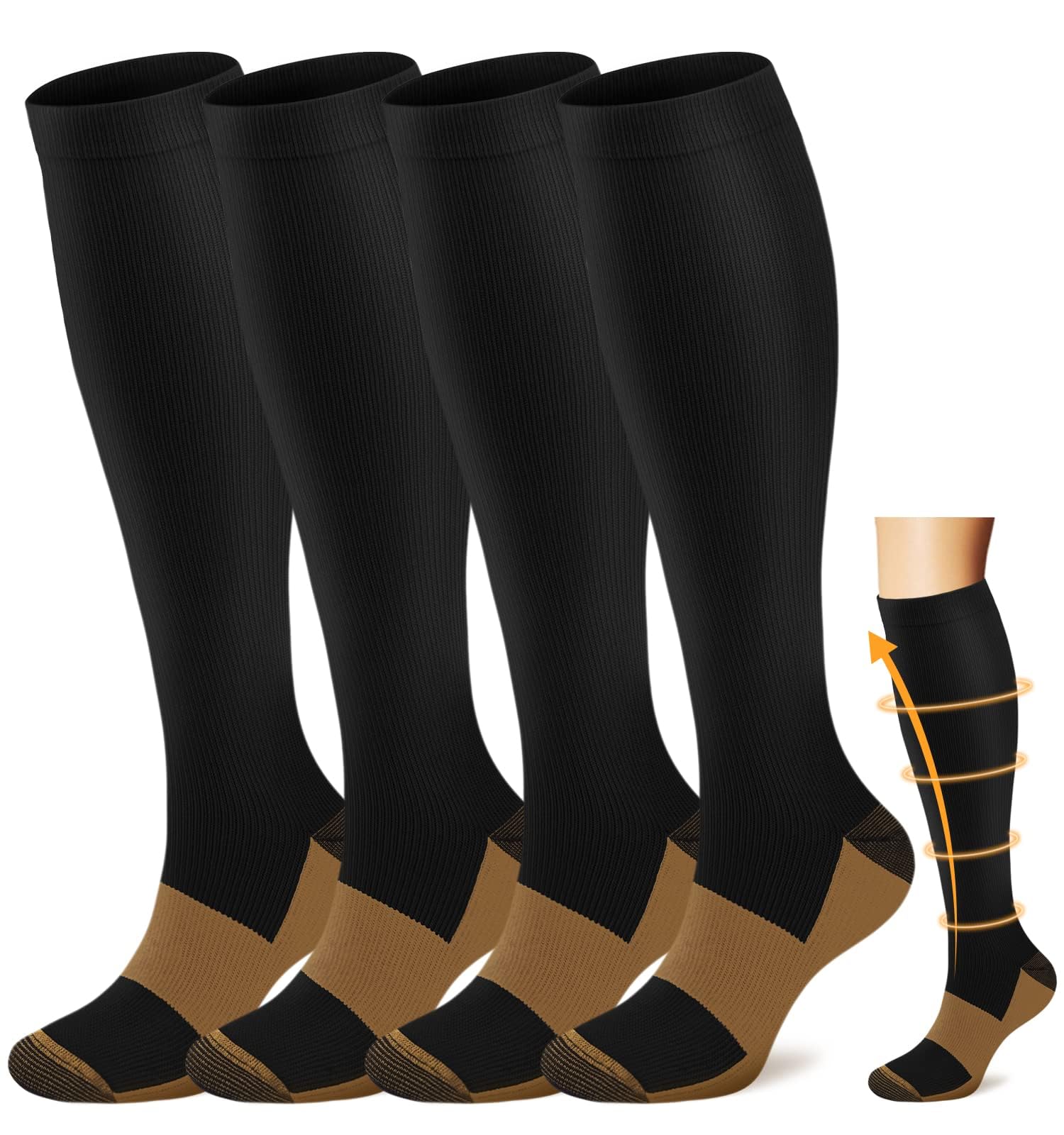
ACTINPUT Copper 4-Pack

ACTINPUT Copper 4-Pack

Daily light compression

Our Score 9.2/10
Check Price

Worth Noting

  • Sizing is inconsistent
Pairs
4
Compression
Read the full review

High-quality material and effective swelling reduction make this 4-pack a strong budget choice for daily light compression. Sizing inconsistency means some pairs may run too small, limiting fit for those with average to small legs. This inconsistency and a lower review count keep it from ranking higher.

Bottom line: Best for budget-conscious buyers with average to small legs who want light compression and can accept size variation between pairs.

#3

Physix Gear 20-30 mmHg

Physix Gear 20-30 mmHg

Firm medical support

Our Score 9.0/10
Check Price

Worth Noting

  • Top band can feel tight on larger calves, causing discomfort in some cases.
  • Putting the socks on requires more effort than typical socks, especially for those with limited hand strength.
Pairs
Compression
20-30 mmHg
Read the full review

The Physix Gear Compression Socks deliver a verified 20-30 mmHg graduated compression that maintains consistent pressure from ankle to calf. The fabric is breathable and soft against the skin, with reinforced stitching that holds up through frequent washing. For nurses on long shifts, travelers on extended flights, or runners seeking shin splint relief, the socks effectively reduce swelling and leg fatigue. They stay in place without rolling down, and the compression remains stable throughout the day. Users consistently note a noticeable reduction in foot and ankle swelling after prolonged standing or sitting. At a mid-range price, they offer strong value compared to medical-grade alternatives.

This firm compression is best suited for those who need medical-grade support for circulation, athletic recovery, or daily wear. The unisex sizing accommodates a wide range of leg dimensions with a detailed size chart. The top band can feel tight on larger calves, and pulling the socks on requires more effort than looser alternatives—a tradeoff typical of this compression level. It is manageable for most but may be problematic for those with sensitive calves, arthritis, or limited hand strength. The socks are machine washable and retain their compression after many cycles, adding to their practicality. For those who can manage the firm fit, the benefits in reduced swelling and improved circulation are well worth the effort.

Tip: Use a sock slider or wear rubber gloves to grip the fabric when pulling them on—it makes the process much easier.

Bottom line: For anyone needing firm, medical-grade compression for long shifts, travel, or recovery, this is the most consistently recommended option available.

#4

CHARMKING Compression Socks

CHARMKING Compression Socks

Daily wear and travel

Our Score 9.0/10
Check Price

Worth Noting

  • Compression level may feel lighter than the stated 15-20 mmHg for some users.
Pairs
8
Compression
15-20 mmHg
Read the full review

Eight pairs at this price point is hard to beat, and the comfort ratings back that up for daily wear. The nylon blend fabric is breathable and the 15-20 mmHg graduated compression provides mild support suitable for travel, light recovery, and standing shifts. That said, the actual pressure can feel closer to 10-15 mmHg for some users, so those needing firm medical-grade compression should look elsewhere. Fit is best for average to slim calves; the top band may be tight or loose around larger legs.

Tip: If you have larger calves, check the sizing chart carefully as the top band may feel tight.

Bottom line: A solid choice for budget-conscious buyers who want everyday compression for travel or light recovery, but not for those requiring firm medical-grade pressure.

#5

FITRELL 20-30 mmHg 3-Pack

FITRELL 20-30 mmHg 3-Pack

12-hour shifts

Our Score 9.0/10
Check Price

Worth Noting

  • Compression may feel lighter than the advertised 20-30 mmHg for those expecting firm medical-grade support
Pairs
3
Compression
20-30 mmHg
Read the full review

These socks deliver the same firm 20-30 mmHg compression as the market leader but with a noticeably softer fabric feel. They hold up well during 12-hour shifts and offer solid quality for the price. The top band fits snugly a common tradeoff with firm compression that works fine for those who can tolerate it, but may cause discomfort for users with sensitive skin or larger calves. Suited for medical professionals who need circulation support and don't mind a snug fit.

Bottom line: A budget-friendly alternative to the top pick for those who prioritize softer fabric and can work with the snug top band.

#6

Iseasoo Women's 4-Pack

Iseasoo Women's 4-Pack

Women's light compression

Our Score 9.0/10
Check Price

Worth Noting

  • Compression is too light for nurses or athletes who need firm support.
Pairs
4
Compression
Read the full review

Four pairs of compression socks in cute patterns at a budget price. The light compression helps with mild swelling for daily wear or pregnancy, but is insufficient for medical or athletic use. Fit consistency is mixed — some pairs may feel too tight or too loose.

Bottom line: Best for women who want light compression for daily style and pregnancy support, not for medical or athletic recovery.

#7

Sooverki 15-20 mmHg 8-Pack

Sooverki 15-20 mmHg 8-Pack

Light activity rotation

Our Score 9.0/10
Check Price

Worth Noting

  • Fit may be too tight or too short for some leg shapes
Pairs
8
Compression
15-20 mmHg
Read the full review

This 8-pack offers an affordable way to rotate compression socks for casual wear, but the trade-off is durability: toe holes may develop after a few sessions. The 15-20 mmHg compression feels adequate for light activity or short periods, though those needing long-term reliability should look elsewhere.

Bottom line: A budget-friendly multi-pack best suited for occasional wear or light activity where durability is not a primary concern.

#8

fenglaoda 20-30 mmHg 8-Pack

fenglaoda 20-30 mmHg 8-Pack

Moderate daily wear

Our Score 9.0/10
Check Price

Worth Noting

  • Compression may feel lighter than the 20-30 mmHg label suggests for some buyers
Pairs
8
Compression
20-30 mmHg
Read the full review

This 8-pack delivers impressive softness and padding, making it a pleasant choice for light daily wear around the house or during travel. The fabric feels gentle against the skin and the price per pair is notably low for a mid-range bundle. However, the compression often feels significantly lighter than the advertised 20-30 mmHg, and some pairs may develop tears after limited use. Those relying on firm medical-grade support or consistent durability will want to look elsewhere.

Bottom line: A comfortable, budget-friendly option for casual wear where exact compression level isn't critical, but not suitable for medical or athletic recovery needs.

#9

BLUEENJOY Copper 6-Pack

BLUEENJOY Copper 6-Pack

Style daily wear

Our Score 9.0/10
Check Price

Worth Noting

  • Sizing can vary between pairs
Pairs
6
Compression
Read the full review

These copper-infused socks offer soft, comfortable material and attractive patterns at a budget-friendly price. Compression is too light for medical or athletic recovery, and fit consistency can vary between pairs. They work best for light daily wear where style matters more than therapeutic support.

Bottom line: Best for those who prioritize cute patterns and comfort over reliable compression or consistent fit.

#10

Laite Hebe 3-Pack

Laite Hebe 3-Pack

Small legs budget

Our Score 8.8/10
Check Price

Worth Noting

  • Sizing runs small; not suitable for larger calves or feet
Pairs
3
Compression
Read the full review

The Laite Hebe 3-pack delivers genuine compression that eases leg fatigue and swelling at a budget-friendly price. Its fit suits smaller legs best — those with shoe sizes over 10 or larger calves will find the sizing too restrictive.

Tip: Measure your calf circumference and compare to the product size chart before ordering to avoid sizing issues.

Bottom line: If you have smaller legs and need affordable compression for daily wear or travel, this 3-pack delivers real benefits without breaking the bank.

#11

FuelMeFoot Copper 3-Pack

FuelMeFoot Copper 3-Pack

Budget small legs

Our Score 8.8/10
Check Price

Worth Noting

  • Sizing is very small
Pairs
3
Compression
Read the full review

Offers genuine compression at an ultra-low price, making it a strong contender for budget buyers with small feet and calves. However, the sizing is extremely limited – anyone with shoe size above 10 or larger calves will find them too tight.

Bottom line: Worth considering if you have small feet and calves and want an affordable compression trial; otherwise, the sizing will disappoint.

How to Choose

Compression Level (mmHg)

mmHg ratings indicate how much pressure the sock applies. 15-20 mmHg is standard for daily wear, travel, and light activity — it improves circulation without feeling restrictive. 20-30 mmHg is firmer and typically recommended by doctors for nursing, post-surgery recovery, and managing shin splints.

The catch: many budget multi-packs claim 20-30 mmHg but deliver noticeably less. If you need therapeutic compression, stick with brands like Physix Gear or FITRELL that have strong user consensus confirming the rating. For casual use, a 15-20 mmHg pair that actually meets its number is often more comfortable than a mislabeled 'firm' sock.

Number of Pairs

More pairs mean less laundry and a lower cost per pair — but often at the expense of individual quality. An 8-pack for $16 might use thinner fabric that loses elasticity after a few washes, while a 3-pack for the same price per pair typically uses denser knit and higher material quality.

If you rotate socks daily, a 4- to 6-pack is a practical balance. For occasional use (travel, long shifts), a 3-pack of verified compression is a smarter investment than a large pack that fails prematurely.

Fit Consistency Across Sizes

Compression socks work only when they fit snugly without binding. The most common complaint is a top band that's too tight or calves that are too wide for the sock's maximum circumference. Even brands that offer size charts often have inconsistent manufacturing tolerances.

Measure your calf circumference at the widest point and compare to each brand's size guide — not just your shoe size. If you're between sizes or have larger calves, prioritize brands with explicit wide-calf options or stretchier tops.

Durability

A compression sock that develops a hole at the toe after three wears isn't a bargain. Durability depends on material composition (nylon blends are more resilient) and construction quality — reinforced toe seams and double-stitched bands extend lifespan.

Cheap multi-packs often skimp on seam reinforcement, especially at the toes and heel. If you plan to wear them daily, spending a few dollars more per pair on a brand with proven durability (like Physix Gear) saves money in the long run.

Ease of On/Off

Firm compression socks are inherently difficult to pull on — that's expected. But some designs have overly narrow heels or tight ankle bands that make the struggle worse. 'Easy on/off' claims often contradict reality; half of Copper Fit users found them harder to put on than standard socks.

If you have limited hand strength or arthritis, look for socks with a wider heel pocket and a smoother fabric blend. Alternatively, a lower mmHg (15-20) is significantly easier to manage.

Frequently Asked Questions