Recovery

8 Best Slant Board of 2026: The Adjustable Ones That Actually Hold Up

Find a slant board that balances adjustability, stability, and durability for home rehab and stretching without breaking or slipping.

A slant board that breaks mid-stretch or slips on the floor is worse than no board at all. Many budget models sacrifice hinge quality and grip to hit a low price, leading to early failure or instability.

The most reliable boards use solid hardwood, secure hinge mechanisms, and non-slip surfaces that stay put on tile or wood floors. Whether you need gentle inclines for rehab or steep angles for intense stretching, the right board will match your activity level without compromising safety.

#1

PRIME AMBITION ATG

Top Pick

PRIME AMBITION ATG

ATG knee training

Our Score 9.8/10
Check Price

Worth Noting

  • Fixed 25-degree angle cannot be adjusted for gentler stretches or rehab needs.
  • Long-term durability under sustained high-load use is less documented than for more established boards.
Portability
5.6 lbs
Surface Width
11.3 inches
Incline Angles
Fixed 25°
Weight Capacity
1000 lbs
Read the full review

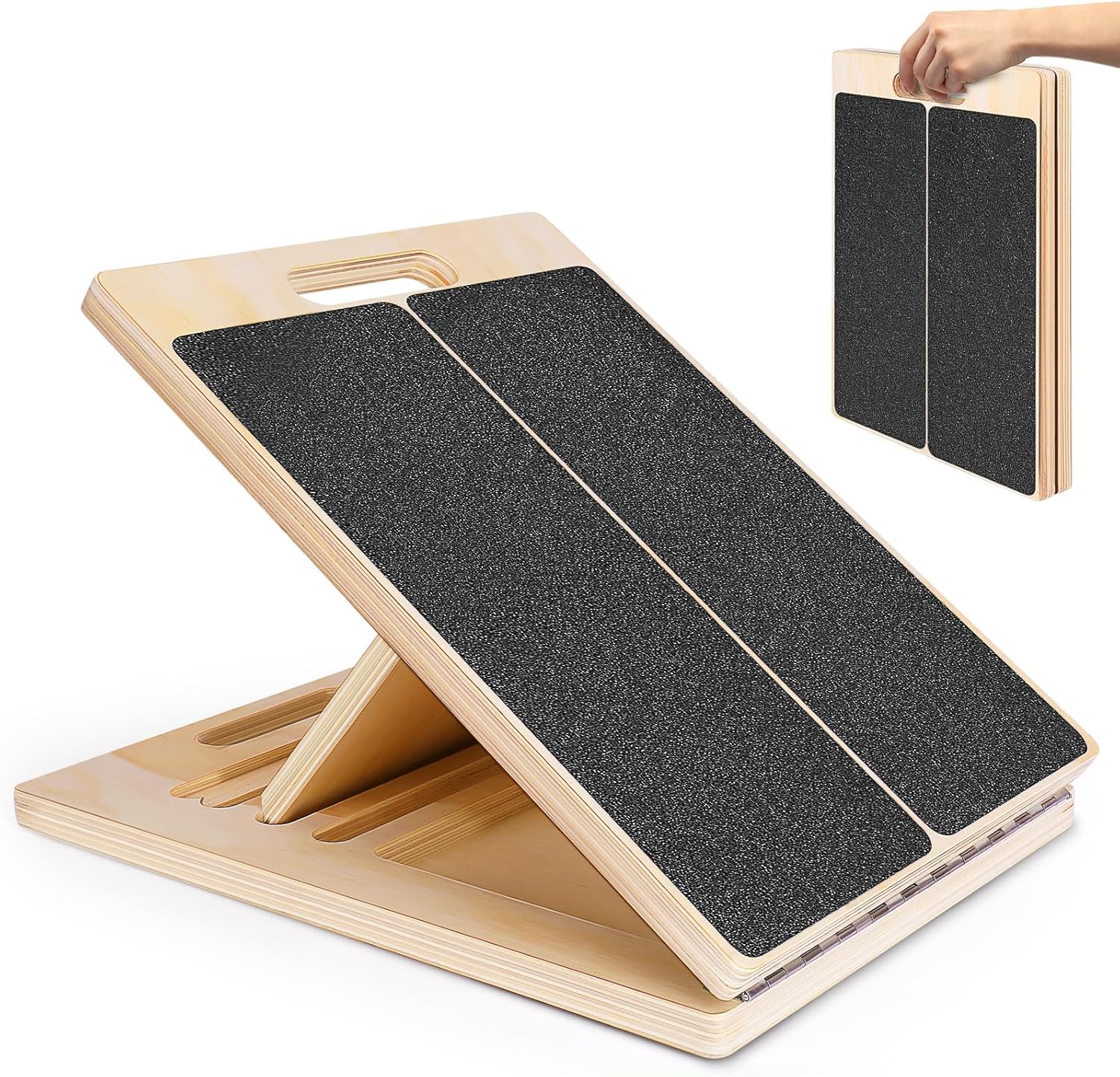
This board delivers exactly what it promises: a sturdy, non-slip platform at a 25-degree incline that stays planted under heavy loads. The 18.9-inch width provides ample room for a wide squat stance, and the hardwood plywood build feels dense and well-finished. However, the fixed angle limits its use to ATG-style training and deeper squat work; it won't serve for the variable-angle calf stretching or physical therapy exercises that many slant board buyers need. Additionally, while initial feedback is strong, the board's track record is short — long-term durability under repeated high-load use is not yet established compared to models that have been on the market longer. This makes it a solid pick for athletes committed to a fixed-angle squat routine, but a less flexible choice for home rehab or casual stretching.

Bottom line: Best for dedicated ATG squatters who want a rock-solid fixed board and are comfortable with a newer product without a years-long reliability record.
#2

StrongTek Professional

StrongTek Professional

Home rehab & stretching

Our Score 9.6/10
Check Price

Worth Noting

Portability
8.97 lbs, side handle
Surface Width
12.5 inches
Incline Angles
5 angles (15-35°)
Weight Capacity
450 lbs
Read the full review

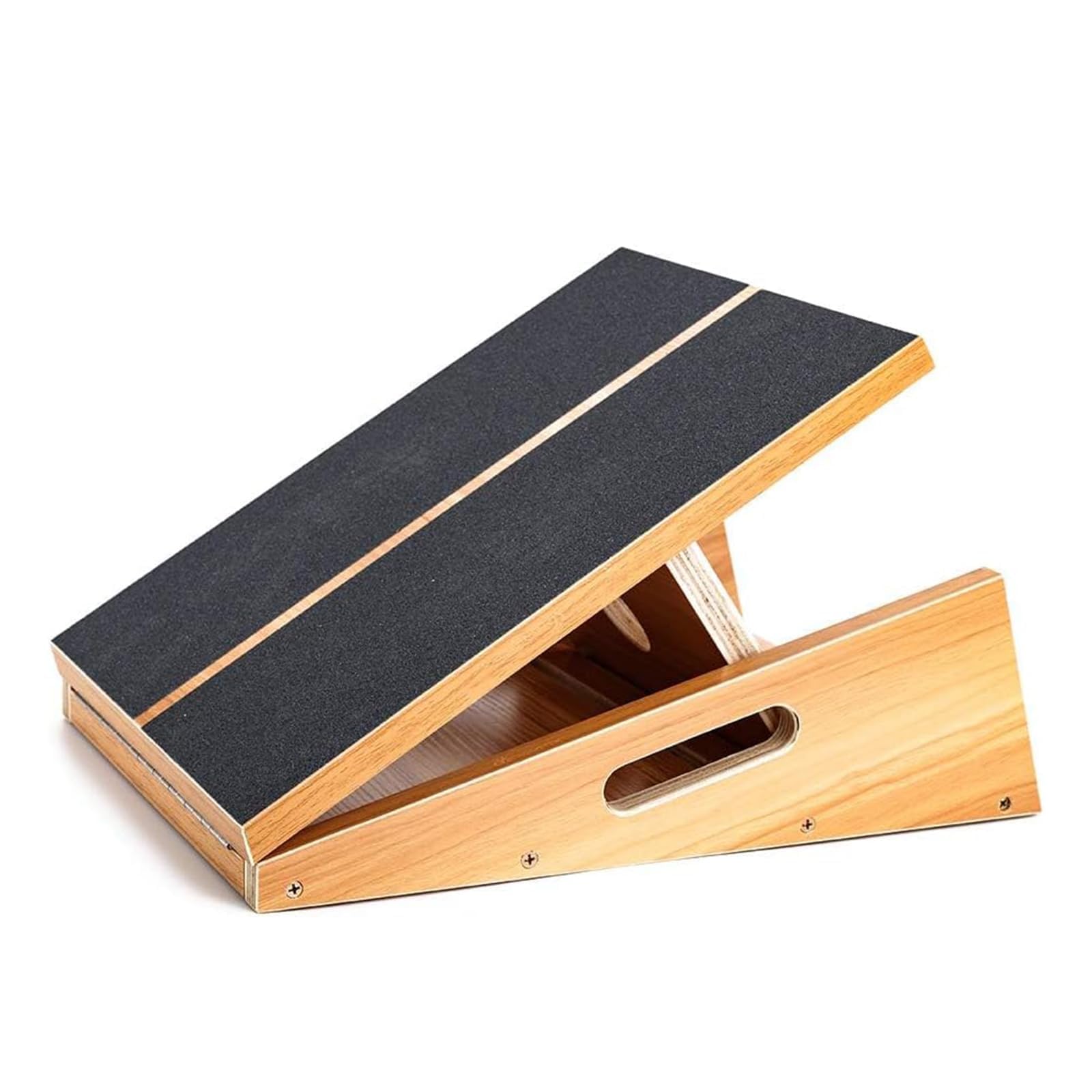
The StrongTek Professional delivers a level of build quality that sets it apart from budget alternatives. Its Lauan hardwood plywood construction and five adjustable angles (15° to 35°) provide a stable platform for calf stretches, squats, and physical therapy exercises. The hinge mechanism locks securely at each setting, and the surface supports over 450 lbs without flexing.

During daily stretching routines, the board stays planted on hardwood and carpet floors thanks to rubber feet. No wobble appears even during dynamic movements, and the side handles make it easy to carry between rooms.

This board is best suited for home rehab, regular calf stretching, and plantar fasciitis management. The grip tape on the platform provides traction but may wear down over months of heavy use — a simple replacement restores the surface. For those needing a lightweight travel board, the 8.97 lb weight makes it less portable than foam alternatives.

The five angle settings allow gradual progression in rehab and flexibility work, from a gentle 15° incline to a steeper 35° for deeper stretches. The 12.5-inch width accommodates most feet comfortably.

Bottom line: For a daily slant board used in home rehab and stretching, the StrongTek Professional offers the strongest combination of durability and adjustability at a mid-range price.

#3

MUCITAGF Professional

MUCITAGF Professional

Home stretching rehab

Our Score 9.6/10
Check Price

Worth Noting

  • Instructions are minimal, requiring some trial and error during setup.
  • The 12.5-inch width may be snug for users with larger feet or those wearing bulky shoes.
Portability
8.49 lbs
Surface Width
12.5 inches
Incline Angles
5 angles (15-35°)
Weight Capacity
Read the full review

MUCITAGF's slant board uses solid natural hardwood and an adjustable hinge system that feels as robust as boards costing twice the price. The five angle settings from 15° to 35° cover the same range as the top pick, and the board supports a range of stretches from calves to hamstrings without wobble.

This board suits home users who want an affordable, effective stretching tool without paying a premium. However, the platform measures 12.5 inches wide, which may feel narrow for anyone wearing large shoes or needing a wider squat stance. The included instructions are sparse, so expect to rely on product images for assembly cues.

Customer reports indicate the board holds up well under daily use, with no hinge looseness developing over time. The grip surface provides secure footing during calf stretches and light squats, making it a practical choice for rehab and flexibility routines.

Tip: Measure your shoe length against the 12.5-inch platform — the board works best for feet up to about size 11-12 depending on width.

Bottom line: For budget-conscious buyers who need a functional adjustable board for home stretching and rehab, this board delivers solid performance without the premium cost — just verify your foot size against the width first.

#4

StrongTek Fixed 25°

StrongTek Fixed 25°

ATG squat training

Our Score 9.4/10
Check Price

Worth Noting

  • Fixed 25° angle limits versatility
Portability
7.7 lbs
Surface Width
12.6 inches
Incline Angles
Fixed 25°
Weight Capacity
1000 lbs
Read the full review

This slant board's 19.6-inch wide surface accommodates a full squat stance without crowding, and the hardwood plywood construction holds steady under heavy loads. The non-slip grip provides secure footing during weighted exercises, making it a solid choice for strength work rather than general stretching.

Weightlifters focused on ATG squats and knee-over-toe training will find the fixed 25° angle sufficient for their routine. This board is designed for lifters who only need a single steep angle – those requiring progressive incline variation should choose an adjustable model. The fixed angle limits its use for rehabilitation programs that need varied positioning.

Tip: If you need varied incline angles for rehab, consider an adjustable board instead.

Bottom line: For lifters who need a rock-solid platform for loaded squats and ATG work, the StrongTek offers width and stability at a premium price – but anyone requiring angle adjustability should look to the adjustable top pick.

#5

XCMVCN Slant Board

XCMVCN Slant Board

Steep angle intense

Our Score 9.4/10
Check Price

Worth Noting

  • Lowest incline (23°) is steep enough to be uncomfortable for those needing gentle angles
  • Wood finish may have rough edges in some units
Portability
4.6 lbs
Surface Width
11.69 inches
Incline Angles
5 angles (23-45°)
Weight Capacity
300 lbs
Read the full review

The XCMVCN Slant Board offers five incline settings from 23° to 45° at a price that undercuts most adjustable boards. It includes a training poster and holds up under daily stretching and light squats. The wood construction is acceptable for the cost, though some units have rough edges that can be smoothed with sandpaper.

The key tradeoff is the lowest angle: 23° is steep enough to be uncomfortable for beginners or anyone in rehabilitation. If you need gentle inclines for calf stretching after injury or for physical therapy, this board likely won’t suit you. It fits best for those who already have good flexibility and want a cheap way to intensify their routine.

Tip: Sanding any rough edges with fine-grit paper improves comfort and is a quick fix given the low price.

Bottom line: Best for experienced stretchers on a tight budget who want steep angles – not suitable for rehab or beginners.

#6

NORBASE Portable

NORBASE Portable

Travel & office

Our Score 9.2/10
Check Price

Worth Noting

  • For users who need a gentle incline below 30°, this board's lowest setting may still feel too steep
Portability
Foldable, 4.5 lbs
Surface Width
11.8 inches
Incline Angles
4 angles (30-45°)
Weight Capacity
Read the full review

This board folds flat to just 1.37 inches thick and weighs under 5 pounds — small enough to slip into a duffel bag or stow under a desk. The wood construction feels solid for its size, and out of the box it’s ready to use with no assembly.

On the lowest setting at 30°, the stretch is noticeable and effective for calf and ankle flexibility. It holds up under regular use and provides a stable platform for bodyweight squats or standing stretches.

Best suited for travelers, commuters, or office workers who need a compact stretching tool. Note that the lowest angle is 30°, which may be too steep for beginners or those in early rehab — this board is ideal for intermediate users who want portability over gentle incline options.

Tip: If new to slant board stretching, start with short sessions at 30° and gradually increase time to avoid overstretching.

Bottom line: A smart choice if your priority is taking a slant board on the go — less ideal as a sole rehab tool due to the steep starting angle.

#7

ODCPN 3-in-1

ODCPN 3-in-1

Versatile balance training

Our Score 9.2/10
Check Price

Worth Noting

  • Balance modes can feel wobbly for users near the upper weight limit, especially in 360° mode
Portability
4.5 lbs
Surface Width
11.8 inches
Incline Angles
6 angles (20-45°)
Weight Capacity
300 lbs
Read the full review

Unlike dedicated slant boards that only offer incline stretching, the ODCPN 3-in-1 uses magnetic panels to switch between a slant board, a 180° rocker, and a 360° wobble board. Each mode clicks into place without tools, so you move from calf stretches to balance drills in seconds. The construction uses an 11-ply poplar core that feels solid underfoot for most body weights, and the anti-slip surface keeps shoes and bare feet planted.

The slant mode offers six angles from 20° to 45°, covering typical stretching and physical therapy needs. In rocker mode, the board tilts forward and back along a curved base – useful for ankle mobility and controlled core work. The wobble mode introduces multidirectional instability, but the range of motion is broad enough that users near the 300 lb weight limit may find it less stable than dedicated wobble boards. This limitation is most noticeable during one-legged balance exercises or when shifting weight quickly.

This board suits fitness enthusiasts who want a single tool for stretching, balance training, and light core work without buying separate equipment. It is also appropriate for physical therapy patients progressing through gradual stability challenges. Those who need a stable platform for loaded squats or who weigh above 250 lbs should look at fixed-angle boards with wider bases instead.

Bottom line: If you want a single board that covers stretching, rocking, and wobbling without buying three separate tools, this is the most space-efficient option – just keep weight expectations in check for the balance modes.

#8

NOONCRAZY Foam Wedge

NOONCRAZY Foam Wedge

Light travel stretch

Our Score 9.2/10
Check Price

Worth Noting

  • With regular heavy use, the foam may lose shape and support over months.
  • On hard floors, the wedge can slide underfoot when wearing socks or bare feet.
Portability
1 lb, stackable
Surface Width
6.5 inches per wedge
Incline Angles
4 stackable (8.5-34°)
Weight Capacity
480 lbs
Read the full review

At under one pound per piece, this stackable foam wedge is about as portable as a slant board gets. The two-piece design clicks together to offer four angles from shallow to steep, making it easy to adjust for calf stretches, ankle mobility, or light rehab exercises without taking up drawer space.

If you need a stretching aid for the office, a carry-on bag, or a post-injury routine that doesn’t involve heavy loading, this wedge fills that role nicely. The soft EPP foam feels comfortable underfoot and the weight capacity claim of 480 lbs covers most body types. That said, the foam grips poorly on tile or hardwood without a mat, and the material may compress over time if used daily for intense sessions.

The board performs best on carpet or with a non-slip pad underneath. When used as intended – light, occasional stretching on forgiving surfaces – the foam holds up well and the stackable angles give you more adjustment range than most budget travel boards. This isn't a board for heavy squats or daily loaded work, but as a lightweight option for mobility on the go, it gets the job done.

Tip: Use on carpet or a yoga mat to prevent slipping; limit use to occasional sessions to preserve foam shape.

Bottom line: A smart travel companion for light stretching, but if you need a board for daily home use on hard floors, consider a wooden alternative with grip.

How to Choose

Number of Incline Angles

A board with 5 adjustable angles from 15° to 35° covers most stretching and rehab needs, allowing gentle progression as flexibility improves. Boards with fewer angles or steeper starting points may feel too intense for beginners or those recovering from injury. If you plan to use the board mainly for gentle stretches, look for at least one angle below 25°.

Surface Width

A wider surface (12 inches or more) provides stability and comfort, especially for users with larger feet or those performing squats. Narrow boards under 11 inches may cause your feet to hang off the edge, reducing balance and confidence. Width also affects portability: wider boards are heavier and less compact.

Weight Capacity

Weight capacity is important, but the hinge mechanism is often the real weak point. Many boards claim 300-500 lbs but fail at the hinge after repeated use. For regular use, look for boards with metal hinges or reinforced joints, and check user reviews for long-term durability rather than relying solely on the listed capacity.

Non-Slip Grip

A non-slip surface on both the top platform and bottom base is critical for safety, especially on smooth floors. Foam wedges tend to slide on tile or hardwood, while wooden boards with rubber feet or grip tape provide better traction. Some boards have grip tape that wears over time, so consider whether replacement is possible.

Portability

If you travel or need to store the board under a desk, weight and foldability matter. Foldable wooden boards around 4.5 lbs are easy to pack, while heavier non-folding boards offer more stability. Foam wedges are the lightest but sacrifice durability and grip. Balance your need for portability against the intended frequency of use.

Frequently Asked Questions