Recovery

12 Best TENS Units of 2026: Pads That Stick and Controls That Make Sense

Which TENS units for home pain relief actually have pads that stay sticky and interfaces you don't need a manual for—so you can get relief without frustration.

It's a familiar frustration: you unbox a new TENS unit, stick on the pads, and within a few uses they're peeling off mid-session. Or you cycle through two dozen modes searching for the one that actually eases your stiff shoulders, only to realize the interface is more confusing than a universal remote.

That's why this guide zeroes in on units where the pads stay put and the controls feel natural—machines that fade into the background so you can focus on recovery. Whether you're managing post-run soreness or easing a nagging back tweak between workouts, the picks here deliver consistent, straightforward relief without constant pad replacements or menu-diving.

#1

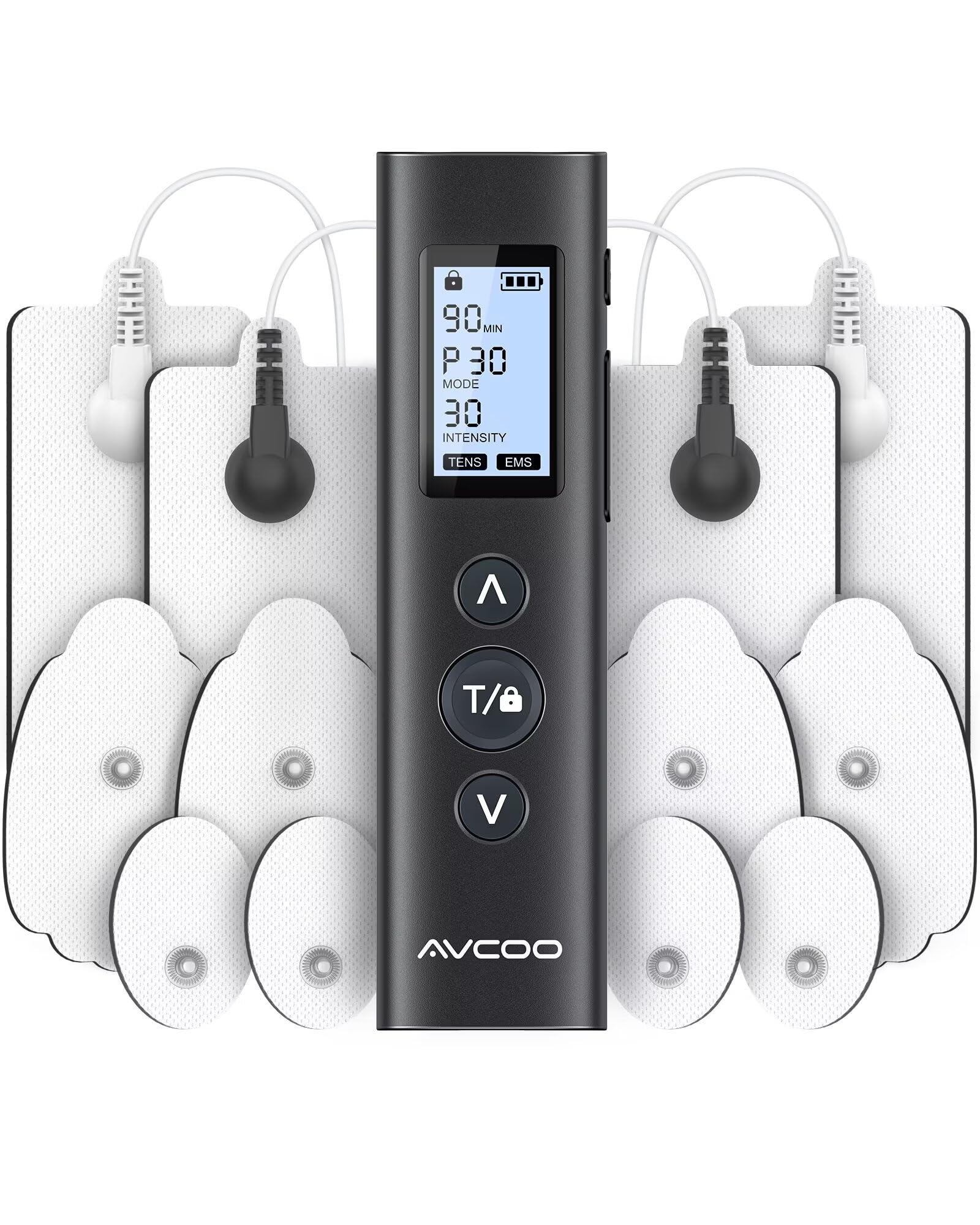
AVCOO 3-in-1

Top Pick
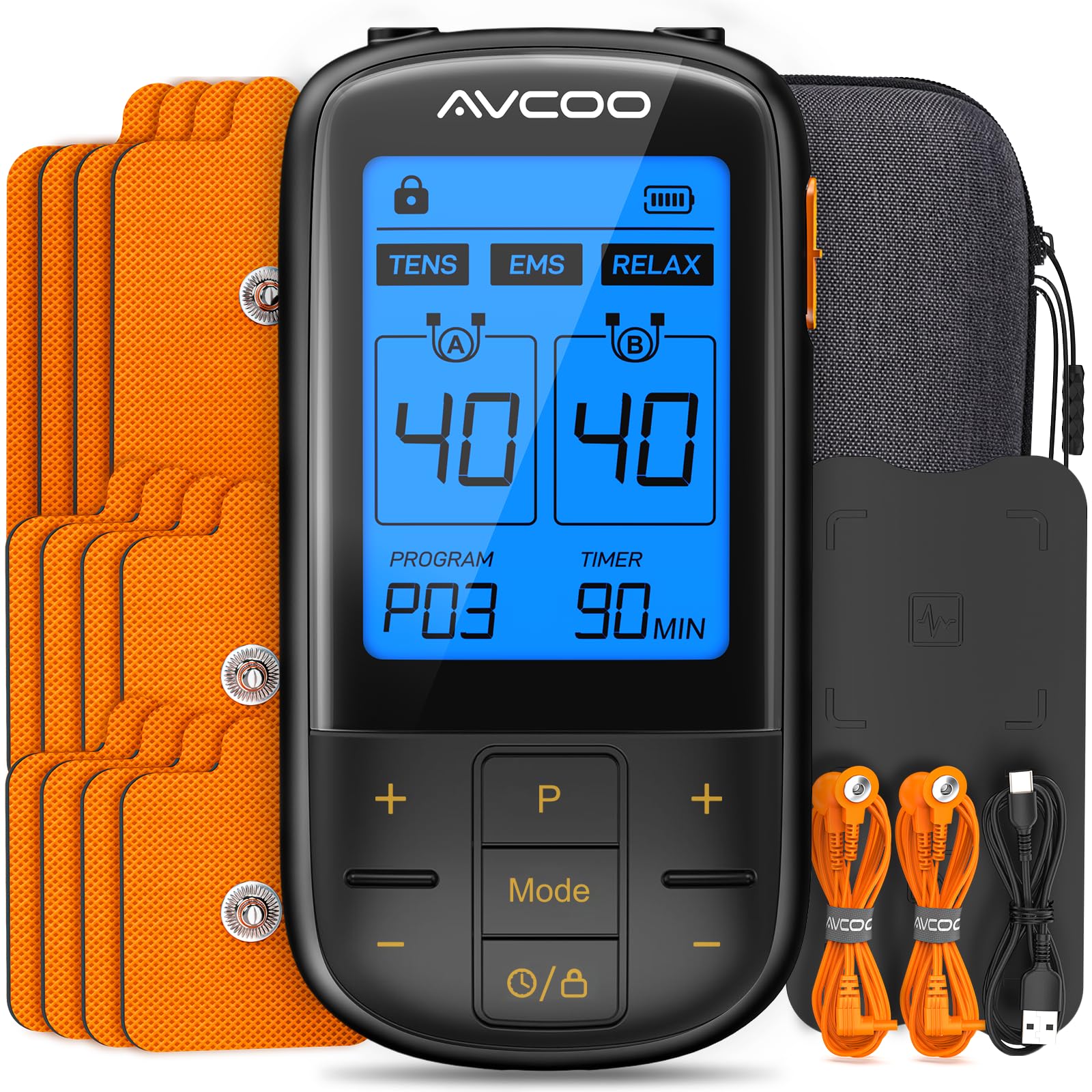
AVCOO 3-in-1

Feature richness

Our Score 9.4/10
Check Price

Worth Noting

  • The large number of modes and settings can be excessive for straightforward pain relief needs
Channels
2 (Dual)
Ease of Use
Straightforward controls
Rechargeability
Rechargeable (USB, up to 20h)
Modes & Intensity
32 modes, 40 intensity levels
Read the full review

With 32 modes and 40 intensities, the AVCOO 3-in-1 provides granular control for pain relief and muscle recovery. Its EVA travel case and rechargeable battery make it portable and convenient. However, its long-term reliability isn't as well-documented as the top pick's, and the price is similar.

Bottom line: If a wide range of therapy modes and a complete travel kit are appealing, and you don't mind a shorter reliability record, the AVCOO 3-in-1 offers feature depth that matches the best in its class.

#2

AUVON Dual Channel

AUVON Dual Channel

General pain relief

Our Score 9.2/10
Check Price

Worth Noting

  • 20 modes can feel excessive if you only need a few basic relief patterns.
  • Electrode pads may lose adhesion after several uses, requiring earlier replacement.
Channels
2 (Dual, independent)
Ease of Use
Straightforward interface
Rechargeability
Rechargeable (USB)
Modes & Intensity
20 modes, multiple intensity levels
Read the full review

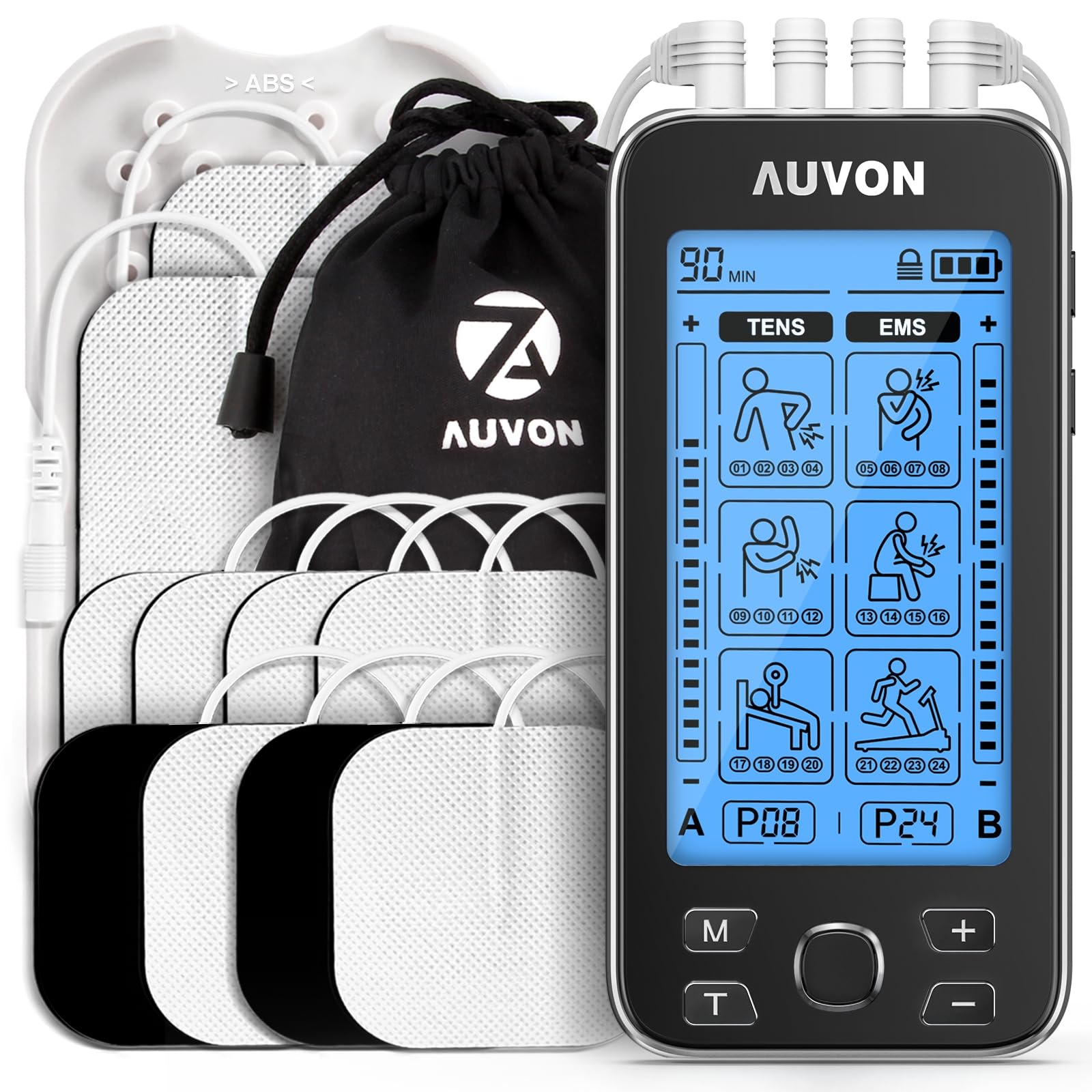
Dual independent channels let you treat two areas at different intensities, while the included large 2x4 and small 2x2 electrode pads cover wide back areas or smaller joints without needing extra accessories. The rechargeable battery lasts through multiple hour-long sessions, and the 20 modes provide enough variety to dial in effective relief for back, shoulder, or knee discomfort. The handheld remote is intuitive with a backlit display, allowing quick mode and intensity changes in low light. While not the most compact TENS unit, the extra pad real estate makes it a better fit for back pain than smaller pocket-sized alternatives.

This unit is for anyone who wants rechargeable, dual-zone therapy without juggling multiple devices. The mix of small and large pads handles everything from a tense neck to lower back spasms in one session. Just know that the electrode pads may lose their stickiness after several uses; budget for a replacement pack so you're not left without relief. If you prefer a single-button simplicity, the 20-mode selection might feel unnecessary — but for those who like to experiment with pulse patterns, it's a plus.

Tip: Keep a spare pack of TENS pads on hand; the included ones may need replacing after a few sessions.

Bottom line: For home pain relief with rechargeable freedom and independent dual-zone control, this AUVON unit delivers consistent relief — just plan for occasional pad replacements.

#3

TENS 7000 Digital

TENS 7000 Digital

Power & simplicity

Our Score 9.2/10
Check Price

Worth Noting

  • Battery drain accelerates at higher intensities, leading to more frequent 9V replacements.
  • Reliability can vary; some units may stop functioning after a few months of use.
Channels
2 (Dual)
Ease of Use
Intuitive controls
Rechargeability
No (1x 9V battery)
Modes & Intensity
Multiple preset modes
Read the full review

Unlike the rechargeable top pick, the TENS 7000 Digital runs on a single 9V battery, so you're never tethered to a charging cord — just swap in a fresh battery and continue. The large, clearly labeled dials and dual channels deliver powerful, adjustable current for back, neck, and joint pain without a learning curve. It comes with a hard carrying case and pads, making it a durable travel companion for pain relief on the go.

This unit suits first-time TENS users and those who value battery simplicity over recharging, willing to keep spare 9V batteries on hand for sessions at high intensity. Occasional units can stop functioning after a few months, placing it in the toolkit for short-term or backup use rather than as a long-term primary device.

Bottom line: A no-fuss, powerful unit for those who prefer readily available batteries over charging cables. Its longevity gamble makes it best kept as a backup or for users comfortable with occasional replacement.

#4

AUVON 24 Modes

AUVON 24 Modes

Portable relief

Our Score 9.2/10
Check Price

Worth Noting

  • 2x2 pads provide limited coverage for larger back areas
  • Pad adhesive may wear out after a few uses, needing replacement
Channels
2 (Dual)
Ease of Use
Travel-friendly, simple
Rechargeability
Rechargeable (USB-C)
Modes & Intensity
24 modes, multiple levels
Read the full review

Compared to the top pick, this AUVON model swaps pad size for pocketability — it's incredibly compact, clips to a belt, and charges via USB-C for up to 10 hours of use. The 24 modes, grouped under six massage categories, provide plenty of options for sore knees, elbows, and smaller muscle groups, while dual independent channels let you treat two areas simultaneously. It's best for budget-conscious buyers who need a travel-friendly TENS unit for spot pain, not full back coverage. The included 2x2 pads are too small for broad back relief, and their adhesive may degrade after repeated use, so those with larger pain areas should look to the top pick's mixed pad sizes.

Tip: If the unit gets stuck on a continuous pulse, switch to a different mode and back to reset it.

Bottom line: For knee, elbow, and on-the-go relief, it's a smart budget pick. Those treating broad back pain will want the larger pads included with the top pick.

#5

AVCOO 30 Modes

AVCOO 30 Modes

Budget versatility

Our Score 9.2/10
Check Price

Worth Noting

  • Initial pad adhesion can be uncomfortably strong, making removal tricky until pads soften with use
Channels
2 (Dual)
Ease of Use
Simple controls
Rechargeability
Rechargeable (up to 30h)
Modes & Intensity
30 modes, 30 intensity levels
Read the full review

The AVCOO 30 Modes delivers 30 therapy modes, 30 intensity levels, and 12 electrode pads in three shapes at an entry-level price. Initial pad adhesive is aggressively sticky, which can make removal uncomfortable—this softens after a few uses. It’s a practical budget pick if you can handle that break-in period.

Bottom line: If you want maximum modes and pad variety on a tight budget and can tolerate the initial stickiness, this unit delivers. For smaller, more portable pads, the ultra-compact model in this roundup may suit you better.

#6

CESLIFF Large Screen

CESLIFF Large Screen

Easy readability

Our Score 9.2/10
Check Price

Worth Noting

  • Initial pad adhesion can be overly strong, causing pads to fuse together if stored without backing sheets
Channels
2 (Dual, independent)
Ease of Use
Large LCD screen
Rechargeability
Rechargeable (USB)
Modes & Intensity
24 modes, 36 intensity levels
Read the full review

The large, easy-to-read LCD screen and 36 intensity levels simplify operation for back, neck, or shoulder pain. There's no carrying case, so you'll need to store the unit and pads in a pouch of your own. The adhesive on new pads can be so strong that pads stick together if not kept on their backing, so careful storage is key.

Bottom line: This unit suits anyone who wants a large, clear display for adjusting settings during home therapy and can manage without a dedicated carrying case.

#7

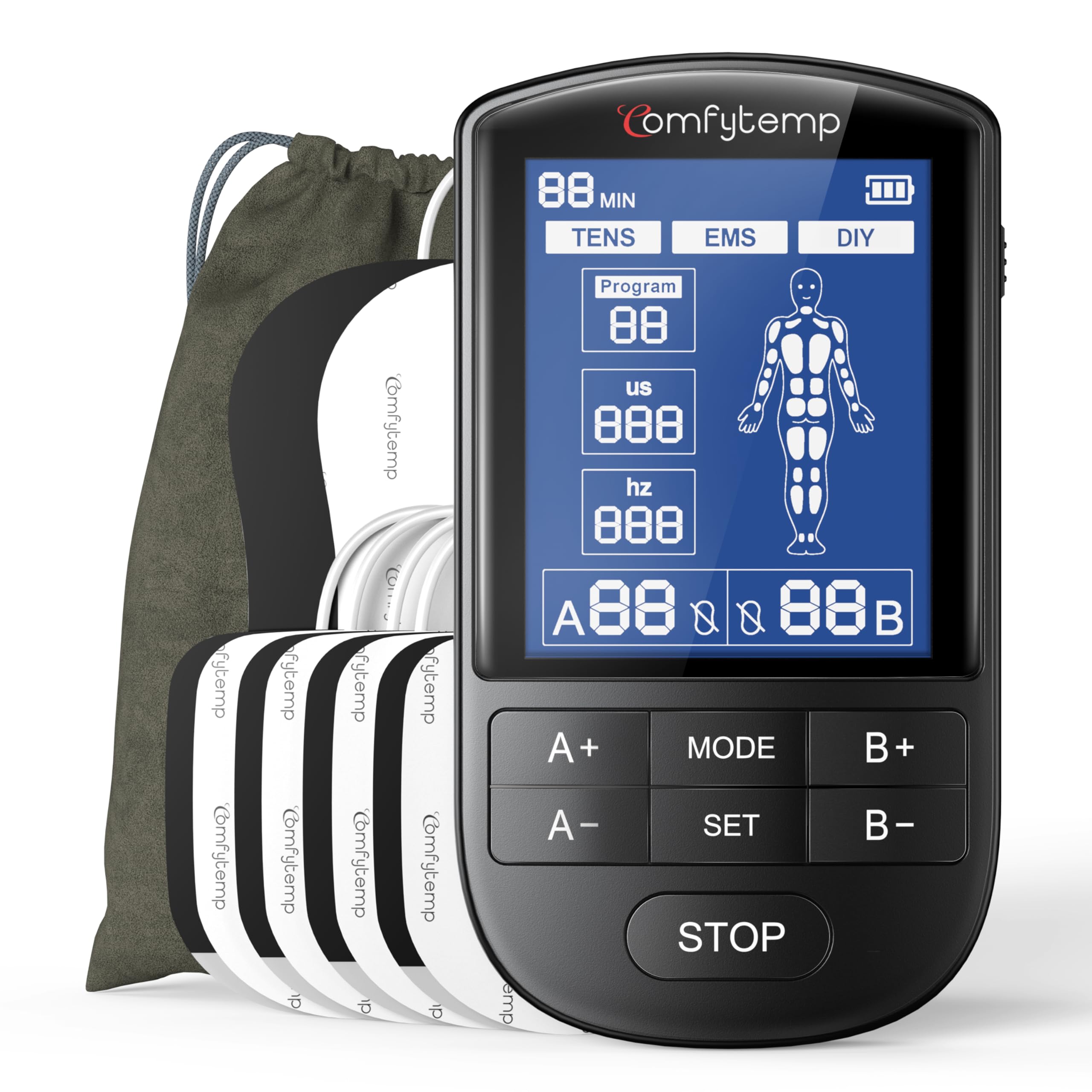
Comfytemp DIY

Comfytemp DIY

Custom programs

Our Score 9.2/10
Check Price

Worth Noting

  • Menu navigation lacks a clear start button and can be confusing to operate.
Channels
2 (Dual)
Ease of Use
Confusing menu navigation
Rechargeability
Rechargeable (up to 21h)
Modes & Intensity
20 modes + DIY custom, 20 levels
Read the full review

The DIY customization mode lets you adjust pulse frequency and width for targeted pain relief, while the large 3-inch display makes settings easy to read. However, menu navigation lacks a clear start button and can be confusing, which hampers users who prefer a grab-and-go device. This unit suits tech-savvy buyers who enjoy customizing their therapy but may frustrate those wanting simple, straightforward operation.

Bottom line: A good fit for tech-savvy buyers who want to customize their TENS experience and don't mind a learning curve; those seeking out-of-the-box simplicity should look elsewhere.

#8

TEC.BEAN 24 Modes

TEC.BEAN 24 Modes

Our Score 9.2/10
Check Price

Worth Noting

  • Pad longevity and output consistency cannot be verified
Channels
2 (Dual output)
Ease of Use
Rechargeability
Rechargeable (up to 20h)
Modes & Intensity
24 modes
Read the full review

Twenty-four modes and dual output channels aim to provide flexible pain therapy in a compact, rechargeable package. The unit ships with 8 American gel pads and a dust-proof pouch, and claims a 20-hour runtime. Durability and long-term pad stickiness are open questions — no customer feedback exists to confirm these claims outside of the spec sheet.

Bottom line: Suited for budget-conscious buyers who are willing to test unverified pad and battery claims in exchange for the American gel pad design and a long-rated runtime.

#9

Belifu Dual Channel

Belifu Dual Channel

Daily recovery

Our Score 9.0/10
Check Price

Worth Noting

  • At maximum settings, skin irritation is possible, particularly for sensitive skin.
  • Pad adhesion tends to weaken after multiple uses, requiring replacement sooner than expected.
Channels
2 (Dual, independent)
Ease of Use
Simple setup
Rechargeability
Rechargeable (USB)
Modes & Intensity
24 modes, 20 intensity levels
Read the full review

Dual independent channels and USB rechargeability match the top pick's core strengths, while 10 included pads (various sizes) and a dust-proof storage bag add value. The 24 modes cover typical pain relief and muscle stimulation needs. This unit suits home users seeking a long-lasting, feature-rich stimulator without the need for the top pick's larger pad variety. Those with very sensitive skin should be aware that higher intensity levels can cause irritation, and pad stickiness may fade over time.

Tip: To extend pad life, replace the protective film after each use and avoid storing in high heat.

Bottom line: A strong alternative to the top pick for those who want a few more pads and a storage bag, provided you can accommodate potentially shorter pad life and watch for skin sensitivity at high output.

#10

iSTIM EV-805 4Ch

iSTIM EV-805 4Ch

Multi-zone therapy

Our Score 9.0/10
Check Price

Worth Noting

  • Interface requires patience to learn and isn't intuitive for casual use.
  • Some units have shown durability concerns over extended use.
Channels
4
Ease of Use
Complex multi-channel menu
Rechargeability
Rechargeable
Modes & Intensity
24 programs, multiple levels
Read the full review

Where most TENS units cap at dual channels, the iSTIM EV-805 offers four independent outputs, enabling simultaneous, customizable treatment across large areas like the back and both knees. Unlike the other 4-channel option in this set, the iSTIM uses Japanese gel pads renowned for adhesion and includes 24 of them — mini, butterfly, and large shapes — reducing the need for immediate replacements. This is built for physical therapy enthusiasts who need multi-zone coverage and are willing to invest time mastering a complex interface and accept a premium price. Casual users or those seeking simple pain relief will find it overly complicated.

Tip: Set aside time to study the manual and experiment with the programs before relying on it for pain relief.

Bottom line: A powerful, multi-zone device for dedicated users who need 4-channel coverage and top-tier pads — but the steep learning curve and premium cost filter out casual buyers.

#11

AUVON 4 Outputs

AUVON 4 Outputs

Separate zone control

Our Score 9.0/10
Check Price

Worth Noting

  • Navigating four separate channels can feel cluttered, with a steep learning curve for new users.
Channels
4 (A1,A2,B1,B2)
Ease of Use
Complex 4-channel UI
Rechargeability
Rechargeable (USB)
Modes & Intensity
24 modes, multiple levels
Read the full review

Four independent channels allow you to treat up to 8 pads with different modes and intensities, making it ideal for targeting multiple pain areas in one session. The large display and 24 modes offer flexibility, but the multi-channel interface can feel cluttered, battery life may vary between charges, and peak output may be too gentle for those accustomed to stronger TENS units.

Bottom line: If you need to treat multiple body areas at once with varied settings and can tolerate a more complex interface, this 4-channel unit is a capable fit; users seeking high-power stimulation or simplicity should consider alternatives.

#12

Omron Max Power

Omron Max Power

Brand trust

Our Score 9.0/10
Check Price

Worth Noting

  • Electrode pads can lose their grip after a handful of uses, making replacement purchases frequent and costly
Channels
1 (single output)
Ease of Use
Simple one-button operation
Rechargeability
No (2 AAA batteries)
Modes & Intensity
2 modes, preset intensity
Read the full review

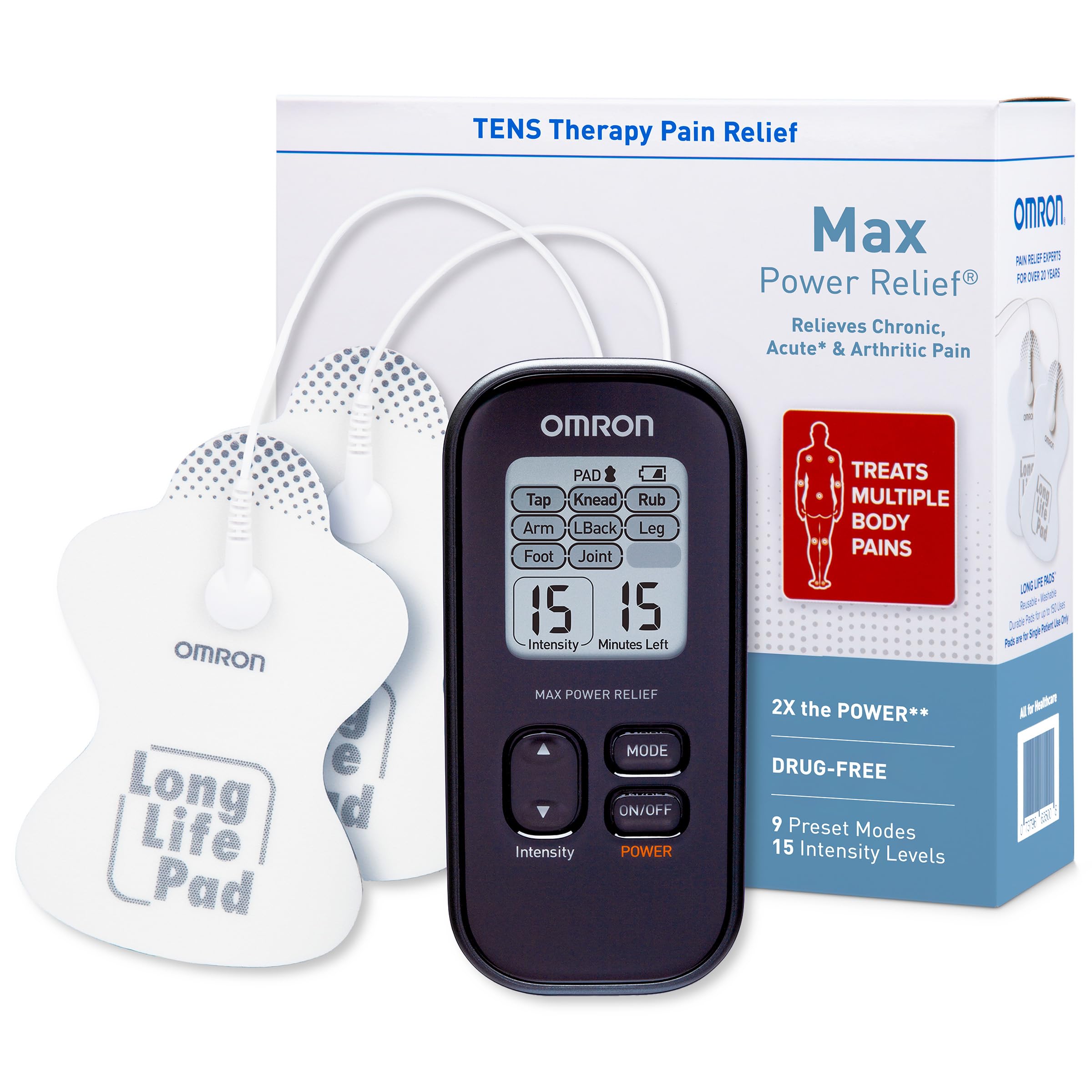
Omron's simple one-button design and medical brand heritage are its main draws. The single-channel output and non-rechargeable AAA power feel outdated, and pad adhesion may degrade after limited use, raising replacement costs. For occasional, isolated pain spots it works, but most home users seeking general relief will get more features and value from a dual-channel, rechargeable model.

Bottom line: This unit fits those who want a familiar Omron name for occasional, targeted relief and are prepared to budget for ongoing pad and battery replacements.

How to Choose

Channels

Dual-channel units let you treat two different body areas simultaneously, each with its own intensity level—critical if you have pain on both sides of your back or want to pair lower back relief with a shoulder pad. Hidden trade-off: more channels add interface complexity, but for most users, the flexibility is worth a slight learning curve.

Single-channel devices cover only one zone and typically lack the ability to address multiple pain spots in one session. They're simpler but limit your therapy options, especially as you become accustomed to the device.

Rechargeability

Rechargeable units eliminate the ongoing cost and hassle of disposable batteries. A built-in lithium battery can last several sessions on a single charge and often adopts USB-C for quick top-ups. Over years, battery capacity may degrade, but you avoid the sudden power drain some 9V battery models exhibit.

Non-rechargeable designs appeal to those who never want to wait for a charge, but frequent users can go through a 9V battery every few days at high intensity. That expense adds up, and a dead battery mid-session is a common frustration.

Modes & Intensity

Many TENS units boast 20 or 30 modes, but most people settle on two or three favorites that match their pain pattern—such as a constant tingling for nerve pain or a pulsing beat for muscle knots. The overlooked spec is intensity granularity: units with 40 fine-tuned steps let you increase power gradually without jumping from 'barely there' to 'too strong'.

Mode overload can become a usability burden. A device with a clear handful of core TENS programs and dedicated intensity buttons often serves you better than a screen crammed with cryptic abbreviations. Prioritize ease of toggling the modes you'll actually use.

Pad Quality & Count

Electrode pads lose adhesion as they collect skin oils, dust, and lint. Higher-quality gel—like American or Japanese medical-grade gel—retains stickiness longer and can be revived with a few drops of water. The number of pads included matters less than their size and the cost of replacements; large rectangle pads cover broad back areas, while small squares target joints.

Consider buying an extra set of pads upfront. A unit that ships with only two pads leaves you with no backup when adhesion fades. Devices that include 8–12 pads in varied shapes provide immediate versatility and a longer runway before you need to reorder.

Ease of Use & Interface

A clear, backlit screen with dedicated buttons for mode and intensity makes the difference between a session that starts in seconds and one that requires re-reading the manual. Elderly users or those with vision concerns should seek large LCD displays and tactile buttons, not touchscreens.

The hidden cost of a cluttered interface is missed therapy. When navigating menus feels like a chore, you're less likely to use the device consistently. A well-designed unit will have a one-touch start for your last-used settings, so you can apply the pads and press a single button.

Frequently Asked Questions