Recovery

13 Best Calf Stretcher 2026: Durable Options That Fit Right

Find the right calf stretcher for your needs — from sturdy slant boards for home rehab to portable rockers for runners. No more wasted money on boards that break or straps that don't fit.

A tight calf or aching heel can derail a run or make standing all day miserable. The market offers slant boards, foot rockers, and straps — each promising relief, but few deliver lasting results without trade-offs. Budget boards crack at the hinges, rockers demand shoes, and straps slip on smaller feet.

This guide cuts through the confusion by matching each type to the right use case. Whether you rehab at home, travel weekly, or need a simple stretch for plantar fasciitis, the key is picking the tool that fits your weight, flexibility, and surface. A 450-lb capacity board for heavy users, a 14-ounce rocker for the gym bag, or a folding wood board for deep angles — each has its place.

The strongest builds use reinforced hardware, not just wood. The most portable designs compensate for narrower platforms with non-slip grips. Knowing these differences turns a frustrating search into a purchase you use daily.

#1

StrongTek Pro Wooden Slant Board

Top Pick
StrongTek Pro Wooden Slant Board

Heavy‑duty home rehab

Our Score 9.6/10
Check Price

Worth Noting

  • Grip tape can wear off after months of daily stretching sessions.
Type
Wooden slant board
Angles
5 positions (15°–35°)
Weight
8.97 lbs
Max Load
450 lbs
Read the full review

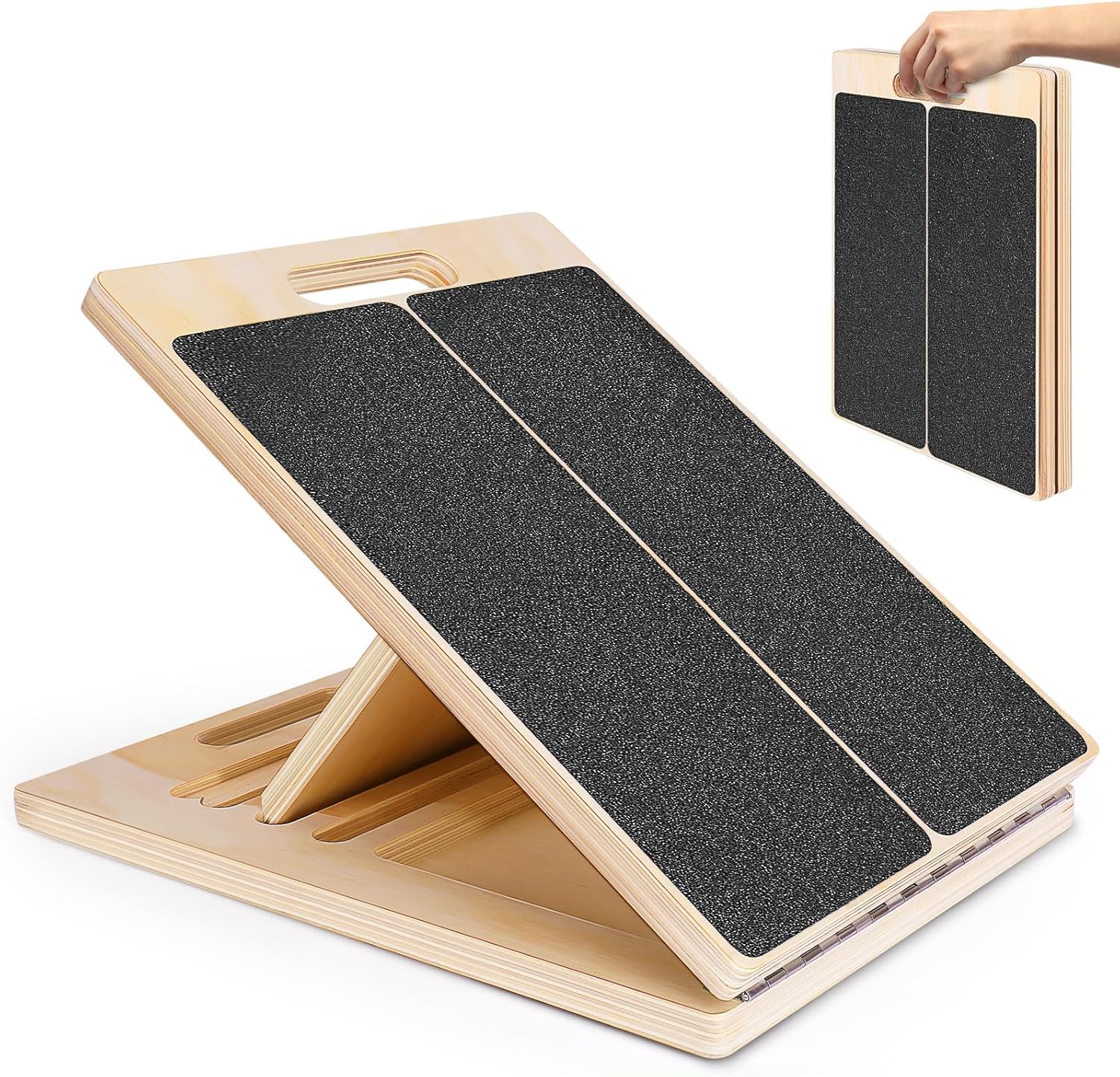
The StrongTek Pro Wooden Slant Board handles up to 450 lbs with no wobble, making it a stable platform for intensive calf stretching and rehab. Its five angle positions (15° to 35°) lock securely, so you can progress gradually without the board shifting underfoot.

For people dealing with plantar fasciitis or tight calves, this board delivers noticeable flexibility gains and pain reduction. The wide platform gives enough room for both feet, and the side handles make it easy to carry between rooms.

This board is best for physical therapy patients who need a dependable home tool, heavy users who want a solid non-wobble surface, and anyone who values multiple angle options. It’s not the right choice if you’re on a tight budget or need a lightweight board for travel — the StrongTek weighs nearly 9 lbs and costs more than alternatives. The grip tape on the standing surface can wear down after months of daily use, so plan for eventual replacement.

Compared to the nearly identical MUCITAGF board that costs less, the StrongTek Pro has a longer market history and a much larger base of customer feedback pointing to consistent build quality over time. That extra confidence is worth the higher price for those who plan to use the board daily for years.

The board’s wooden construction feels substantial underfoot, with no creaking or flex even at steepest angles. The five angle settings cover a useful range, and the locking mechanism stays firm during use.

Tip: Replace the grip tape when it loses traction; the board itself remains solid.

Bottom line: The StrongTek Pro is the board to buy for anyone who needs a stable, adjustable slant board for home rehab and heavy daily use — the grip tape wear is manageable and the construction justifies the premium.

#2

MUCITAGF Slant Board

MUCITAGF Slant Board

Budget home rehab

Our Score 9.6/10
Check Price

Worth Noting

  • Long-term durability under heavy daily use is less documented than longer-established boards.
  • Not certified for heavy-duty professional use requiring a verified 450+ lb capacity.
Type
Wooden slant board
Angles
5 positions (15°–35°)
Weight
8.5 lbs
Max Load
Read the full review

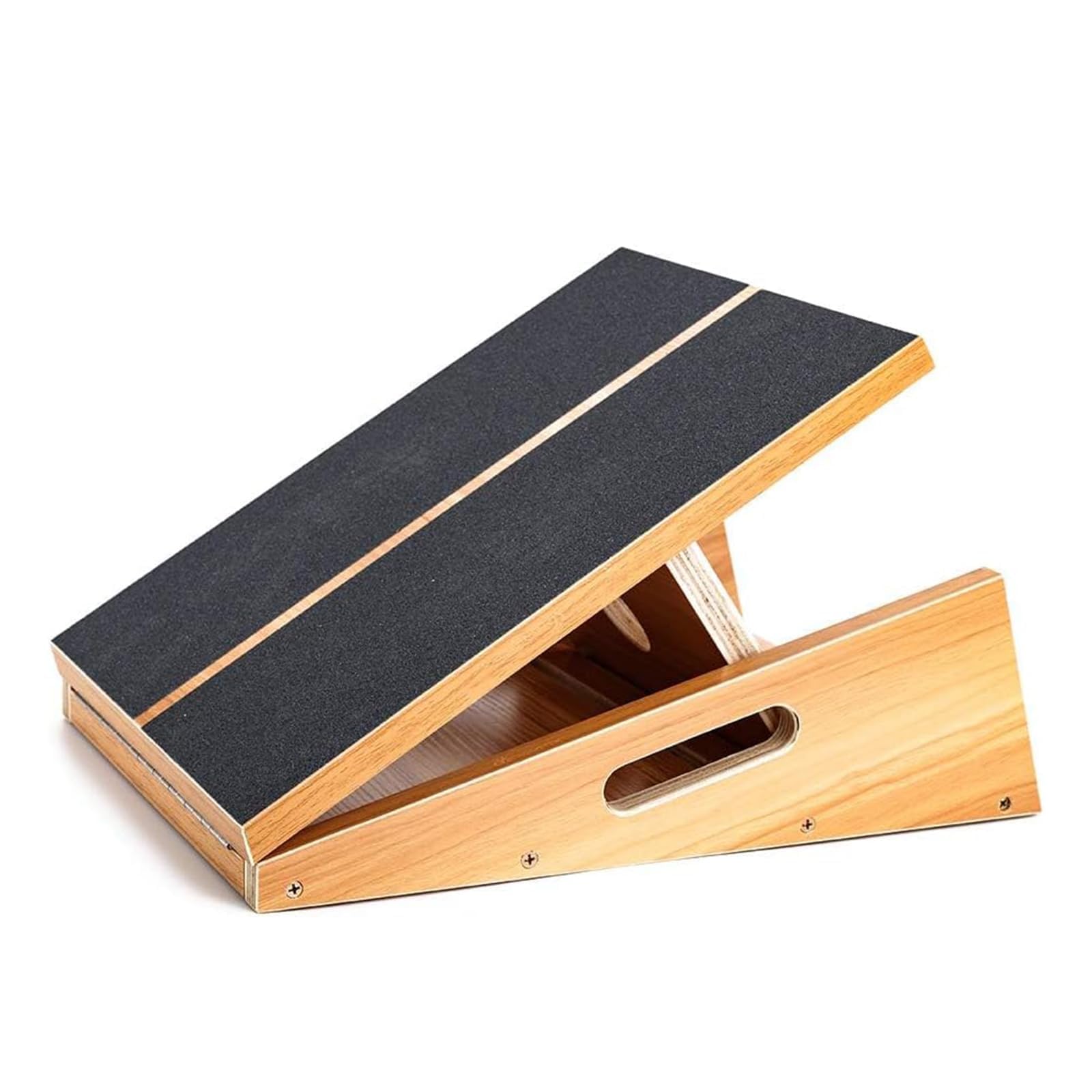
The MUCITAGF Slant Board mirrors the feature set of boards costing much more – a solid hardwood platform with five adjustable angles from 15° to 35°. While the top pick has a longer track record, this board delivers nearly identical functionality and a similarly stable feel during stretches for a lower upfront cost.

This board is a good fit for home users, runners, and plantar fasciitis sufferers on a moderate budget. The 12.5-inch platform is slightly smaller than some alternatives – fine for average feet, but may feel snug for very large feet. And because this model has a shorter track record, its long-term durability under heavy daily use is less documented than the top pick's.

The hardwood build feels solid underfoot, and the five angle settings allow gradual progression from a gentle stretch to a deeper one. Adjustment is straightforward – pull the pin, select the angle, and the board locks securely with no wobble or shifting during use.

Bottom line: A cost-effective alternative for home stretchers who value the same adjustable angles as premium boards and are comfortable with a shorter track record.

#3

XCMVCN Slant Board

XCMVCN Slant Board

Budget wood board

Our Score 9.4/10
Check Price

Worth Noting

  • Minimum 23° angle may be too steep for users with very tight calves
Type
Wooden slant board
Angles
5 positions (23°–45°)
Weight
4.6 lbs
Max Load
300 lbs
Read the full review

The XCMVCN slant board offers solid wood construction and five adjustable angles from 23° to 45° at a budget price. The folding design keeps it portable, and the base feels sturdy for the cost. However, the minimum 23° slant is steeper than beginner-friendly options, making this better suited for users who already have some calf flexibility and want an affordable tool for deeper stretching. This places it below the top picks in our roundup, as its angle range targets intermediate users.

Bottom line: Best for budget buyers who already have some calf flexibility and want a steeper stretch without spending more.

#4

ProStretch Double Foot Rocker

ProStretch Double Foot Rocker

Dual‑leg stretch

Our Score 9.4/10
Check Price

Worth Noting

  • Discontinued by manufacturer; replacement parts and warranty support are unavailable.
  • Requires shoes and may not accommodate shoe sizes over men's 12.
Type
Dual foot rocker
Angles
Weight
Max Load
250 lbs
Read the full review

The ProStretch Double lets you stretch both calves at the same time, making it a time-saver for bilateral tightness or plantar fasciitis. Its sturdy construction holds weight well without tipping. However, the unit has been discontinued, so remaining stock is limited and warranty support is unavailable — a risk for buyers expecting long-term replacement parts. It also requires shoes and accommodates up to men's size 12, which excludes larger feet.

Bottom line: Best for users who want a dual-leg stretch and are comfortable buying from remaining stock without warranty backup — if availability or large-foot fit is a priority, the single ProStretch avoids those concerns.

#5

ODCPN 3-in-1 Board

ODCPN 3-in-1 Board

PT & balance

Our Score 9.2/10
Check Price

Worth Noting

  • Balance mode wobble is not perfectly smooth; some users note a scraping sensation from the grip surface.
  • Included training poster offers only basic guidance, not a structured program.
Type
Wooden slant/balance board
Angles
6 positions (20°–45°)
Weight
4.5 lbs
Max Load
300 lbs
Read the full review

The ODCPN 3-in-1 Board stands out by combining a slant board with two balance modes via magnetic quick-switch panels. In slant mode, the 11-ply poplar wood feels solid and stable under foot, with six angles from 20° to 45° to progress calf stretches. Slip the side panels onto the bottom dome, and you get a 180° rocker or a 360° wobble board for balance exercises — swapping takes seconds.

The balance modes add versatility for home rehab, but the 360° wobble isn’t as fluid as dedicated balance boards. Some users notice a slight scraping sensation from the grip surface during rotation, which can be uncomfortable on bare skin. The included training poster is basic — it shows a few stretches but doesn’t replace a physical therapy program.

This board suits people doing physical therapy that combines calf stretching and balance work, or home gym enthusiasts who want one tool instead of two. If your primary need is a pure slant board, you’ll pay extra for features you won’t use. For those who actually benefit from both modes, the ODCPN delivers solid build and quick transitions at a mid-range price.

Tip: Wear socks or light shoes during 360° balance mode to reduce skin friction from the grip surface.

Bottom line: A capable 2-in-1 board for anyone who regularly switches between calf stretching and balance training — just plan to ignore the poster and start on lower angles to avoid grip irritation.

#6

NORBASE Portable Slant Board

NORBASE Portable Slant Board

Portable deep stretch

Our Score 9.2/10
Check Price

Worth Noting

  • Lowest angle (30°) may be too steep for users with tight calves or limited flexibility.
Type
Wooden slant board
Angles
4 positions (30°–45°)
Weight
4.5 lbs
Max Load
Read the full review

At 4.5 lbs and folding flat, this board is noticeably lighter than the top pick’s wood design while still offering a solid feel underfoot. The steeper angles (30-45°) target deep calf stretching that the slimmer ABS alternative can’t match in range.

This board suits intermediate to advanced users who have already built some ankle flexibility and want a portable option for travel or small home gyms. The 30° lowest setting is too steep for absolute beginners with tight calves — they’re better served by boards with a 15-25° starting angle.

Tip: Pair with a folded towel under the heels to effectively reduce the angle for a gentler stretch.

Bottom line: A smart, space-saving choice for experienced stretchers who need a board that travels as well as it performs — just skip it if you’re still working up to a 30° incline.

#7

ProStretch Original Foot Rocker

ProStretch Original Foot Rocker

Plantar fasciitis relief

Our Score 9.0/10
Check Price

Worth Noting

  • Barefoot use can be uncomfortable; wearing shoes is necessary for comfort
  • Platform length is too short for men's shoe sizes above 12
Type
Foot rocker
Angles
Weight
14 oz
Max Load
250 lbs
Read the full review

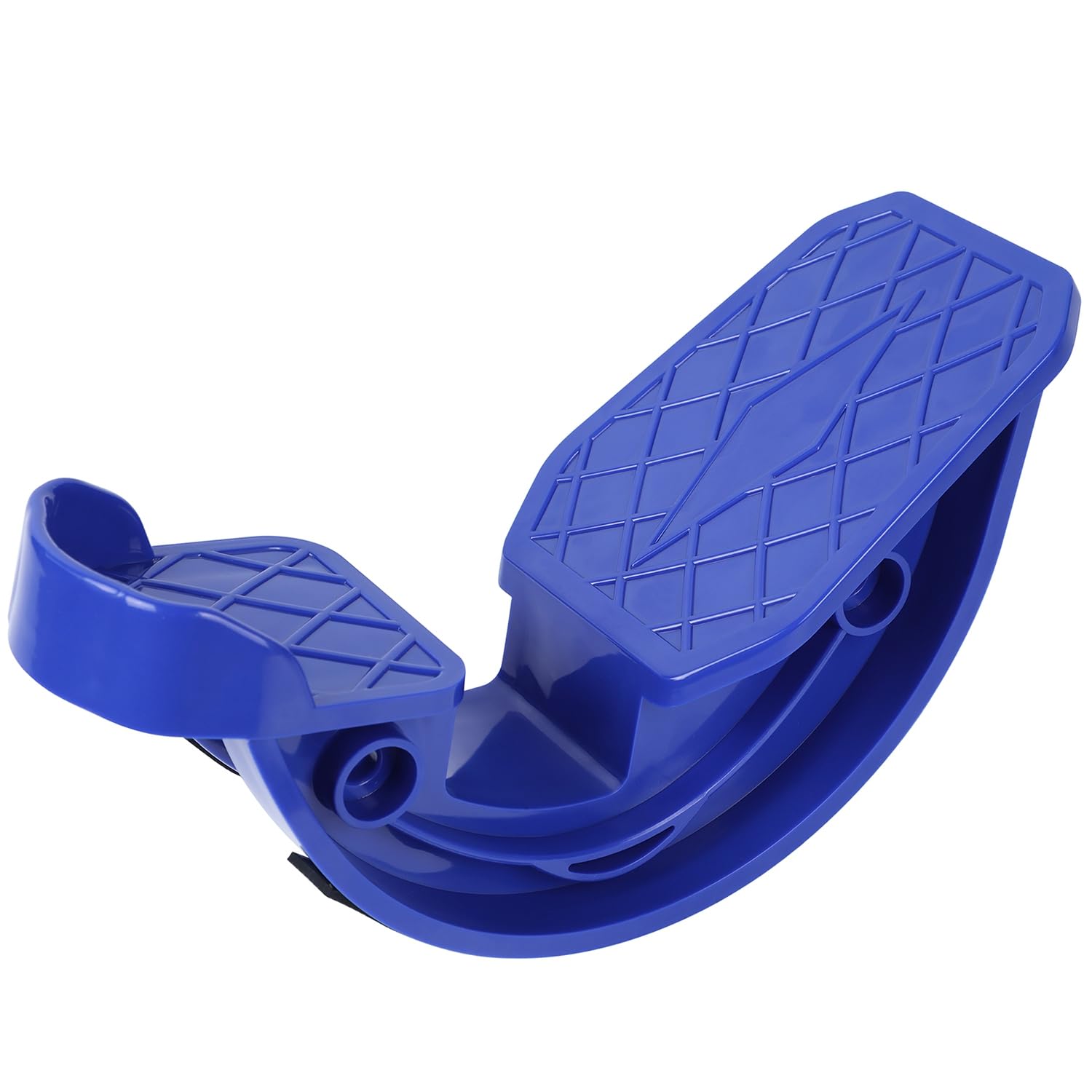
The ProStretch foot rocker isolates the calf muscle and plantar fascia through a controlled rocking motion, a design refined in physical therapy settings. With over 9,200 reviews and consistent praise from users, it offers a straightforward approach to stretching that doesn't rely on bulky equipment or complex adjustments.

The rubber construction is durable and lightweight at 14 ounces, making it easy to pack for travel or keep by the desk. The rocker works best with shoes on — the textured surface grips athletic soles firmly, providing a stable stretch. Without shoes, the pressure points can become uncomfortable, so plan to use it while wearing footwear.

This device fits people managing plantar fasciitis or Achilles tendonitis who want a cost-effective daily stretch tool. Athletes will appreciate the portability for pre-workout calf activation. However, the platform accommodates shoe sizes only up to men's 12, and barefoot use is not comfortable. If you have larger feet or prefer stretching without shoes, a slant board may be a better fit.

Tip: Wear athletic shoes while using the rocker — this avoids discomfort and provides better grip for the stretch.

Bottom line: For anyone with plantar fasciitis or tight calves who wears shoes and fits within size 12, the ProStretch offers an effective, durable, and budget-friendly stretching solution.

#8

StrongTek Portable ABS Slant

StrongTek Portable ABS Slant

Travel & office

Our Score 8.8/10
Check Price

Worth Noting

  • Narrower platform (10.6 inches) may feel unstable for feet above men's size 12.
  • Can slide on smooth tile or hardwood floors without a mat underneath.
Type
Plastic (ABS) slant board
Angles
5 levels (15°,20°,30°,40°,45°)
Weight
3.7 lbs
Max Load
300 lbs
Read the full review

At just 3.7 lbs and foldable to a compact 12x10.6x4 inches, the StrongTek Portable ABS Slant fits inside a carry-on bag or desk drawer — something no wood board can match. This makes it the obvious choice for travelers and office workers who want to stretch calves and ankles without hauling heavy equipment.

Five angle settings from 15° to 45° deliver a progressive stretch, and the non-slip surface keeps feet planted during use. On smooth tile or hardwood floors, the board can slide slightly — a yoga mat or rug underneath resolves this without adding weight.

This board suits people with feet up to men's size 10 who value portability over width. Those with size 12 or larger will find the 10.6-inch platform cramped, and anyone stretching daily on hard floors should add a mat or choose the top pick's wider, heavier wood construction.

Tip: Place the board on a grippy yoga mat or rug to prevent sliding on smooth floors.

Bottom line: If you need a slant board that travels with you and fits in tight spaces, this is the one. For home use with larger feet or hard floors, the top pick offers more stability.

#9

Hausse Foot Rocker

Hausse Foot Rocker

Budget foot rocker

Our Score 8.8/10
Check Price

Worth Noting

  • Hard plastic surface is uncomfortable on bare feet.
  • Platform length may be insufficient for shoe sizes above 12.
Type
Foot rocker
Angles
Weight
0.95 lbs
Max Load
Read the full review

The Hausse Foot Rocker delivers targeted calf and plantar fascia stretching at the lowest price in the category. Its non-slip base and simple rocker design make it easy to incorporate into a daily routine. The hard plastic surface is painful to use barefoot, and the platform is short enough that men with shoe sizes above 12 may find it cramped. These tradeoffs are acceptable if you always stretch with shoes and have average-sized feet. For barefoot users or those with larger feet, the extra cost of the ProStretch buys a more comfortable and roomier design.

Tip: Use with shoes to avoid discomfort from the hard plastic surface.

Bottom line: Best for users who always stretch with shoes and want the lowest price; skip if you stretch barefoot or have large feet.

#10

comness Stretching Strap

comness Stretching Strap
Our Score 8.8/10
Check Price

Worth Noting

  • Stitching may separate after limited use
  • Strap can slip on smaller feet (women's size 6 and under)
Read the full review

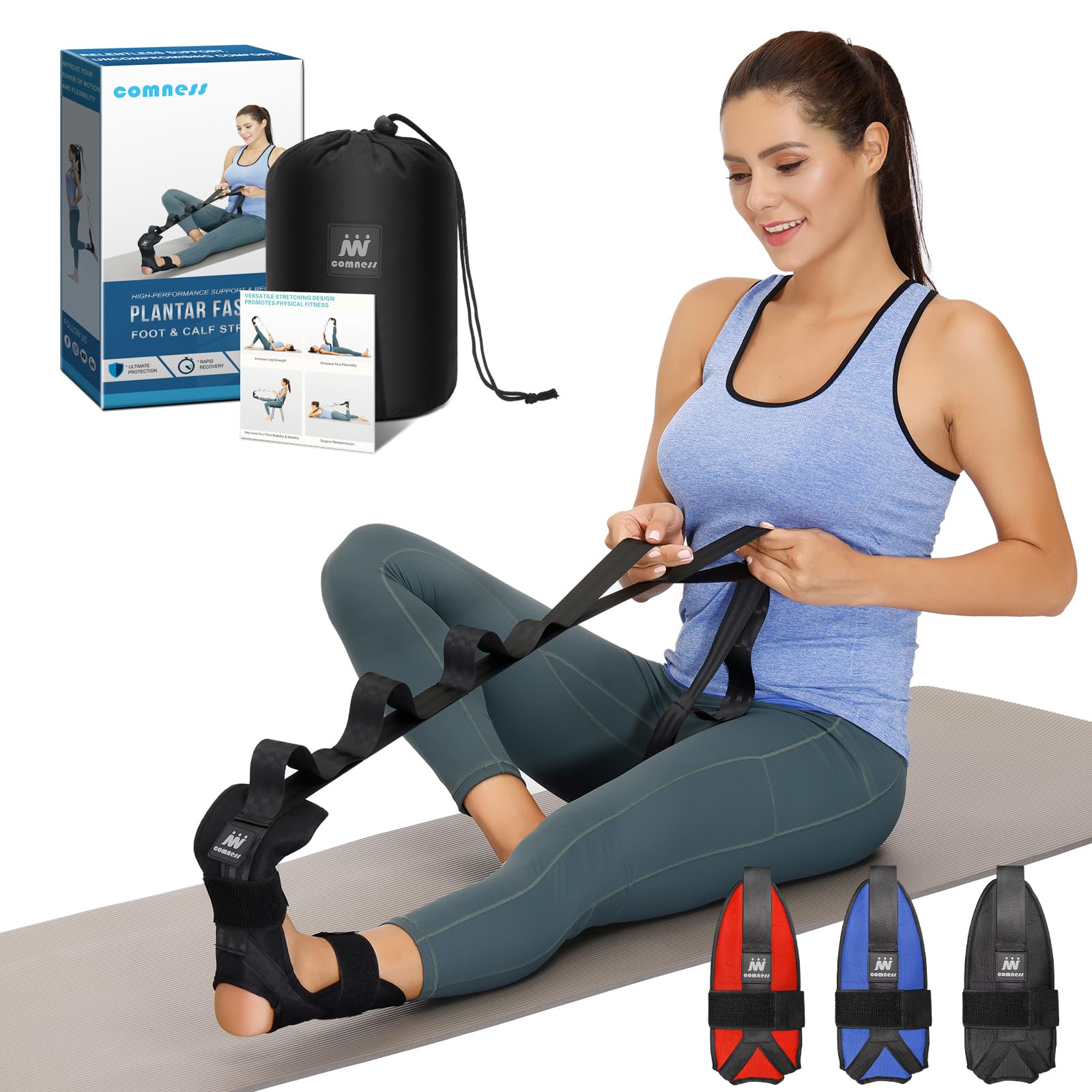
The comness Stretching Strap is an inexpensive and easily portable option for basic calf and plantar fascia stretches, fitting into a carrying pouch that slips into a bag or suitcase. Its simple loop-and-pull design makes it straightforward to use for seated or lying stretches. However, the stitching on the loops may separate after limited use, which makes this strap best suited for occasional rather than daily stretching sessions. Additionally, the strap can slip on smaller feet — those under women's size 6 — so it works best for average to larger foot sizes. For travelers or those needing a low-cost backup, this strap delivers functional stretching without the weight or bulk of a board.

Bottom line: Best as a budget-friendly travel backup or occasional-use strap for basic calf and foot stretches, provided your foot size is average or larger and you do not need daily durability.

#11

WANYIDA Stretching Strap

WANYIDA Stretching Strap
Our Score 8.8/10
Check Price

Worth Noting

  • Stitching may separate over time with regular use, reducing durability.
  • Fit can be too loose for feet smaller than women's size 6, limiting effectiveness.
Read the full review

The WANYIDA strap delivers on its low price and provides effective stretches for calf and foot when used occasionally. The adjustable loop system fits most foot sizes easily. However, stitching consistency varies between units — some straps may develop separation with repeated use. The strap also runs large for very small feet (under women's size 6), where the loops may not hold securely. These known limitations place it behind more durable options in the same category, but for someone needing an ultra-budget solution or a spare to keep in a gym bag, it remains functional.

Bottom line: Works best as a backup or travel strap for occasional use, provided your foot size fits the loops and you accept possible stitching variance.

#12

glitz Stretching Strap

glitz Stretching Strap
Our Score 8.8/10
Check Price

Worth Noting

  • Loops may be too large for people with very small feet (under women's size 6)
  • Stitching can come undone with regular use
Read the full review

At a rock-bottom price, this strap handles basic calf and foot stretches without fuss. Its lightweight design makes it easy to toss in a bag for travel or office use. However, stitching can come undone under regular strain, and the loops may not fit very small feet comfortably — this works best as an occasional aid rather than a daily tool.

Bottom line: Best for budget-minded users who need a strap for occasional stretching at home or on the go — not for daily heavy use or those with very small feet.

#13

ZocoSquat 3-in-1 Board

ZocoSquat 3-in-1 Board

Lightweight occasional

Our Score 8.8/10
Check Price

Worth Noting

  • Hinge mechanism may slip or come loose under weight over 200 lbs
Type
Wooden slant/balance board
Angles
7 positions (18°–40°)
Weight
Max Load
300 lbs
Read the full review

The ZocoSquat board combines slant stretching, calf stretches, and balance wobble in one unit. Assembly is quick, and the slant mode provides a stable, effective calf stretch across seven angles. The hinge mechanism can slip under heavier loads, particularly for users over 200 lbs — a safety consideration that limits this board to lightweight, occasional use. Balance mode adds variety but isn't as smooth as dedicated wobble boards.

Bottom line: This board works well for light stretching and balance training if you stay under 200 lbs and use it occasionally. For heavier or daily use, look elsewhere.

How to Choose

Type of Stretcher

Slant boards provide the widest range of angles and allow squats or balance work, but they take up space and are heavier. Foot rockers deliver a deep, isolated stretch of the Achilles and plantar fascia — ideal for heel pain — but force you to wear shoes to avoid discomfort. Stretching straps are the lightest and most packable, yet they offer less control over stretch intensity and often struggle to fit very small or large feet.

Choose a slant board if you want to improve ankle dorsiflexion and can store a 4–9 lb board. Pick a foot rocker if your main concern is plantar fasciitis and you always stretch with shoes. A strap is best for occasional use or travel, but expect to test the fit.

Adjustable Angle Range

More angle positions let you progress gradually, which matters for beginners with tight calves or those recovering from injury. Boards that start at 15° allow a gentle entry, while boards with a minimum of 30° force a deeper stretch right away — helpful for advanced users but risky for inflexible ankles. The number of increments also affects how easily you can fine-tune intensity; five or more positions give better control than three.

If you have limited mobility, look for a board with a low starting angle (15–20°). If you already stretch regularly and want to push stiffness, a board with steeper options (30–45°) will serve you better.

Weight Capacity and Build Material

Weight capacity directly correlates with hardware quality. Budget slant boards often use thin plywood and plastic hinges that crack under 200+ lbs, while premium boards with metal brackets and solid wood can hold 450 lbs without flex. Foot rockers have a lower limit around 250 lbs because of their rubber construction. A higher capacity also means the board stays planted during use — no rocking or tilting that could cause a fall.

For users over 250 lbs or anyone doing single-leg stretches, a wood slant board with documented 450-lb capacity (like the StrongTek Pro) is the safe bet. Lighter users can get away with 300-lb boards, but avoid models that rely on plastic hinge pins.

Portability

Portability is a trade-off between weight and stability. Foldable boards often have hinges that can loosen over time, and lightweight plastic boards may slide on smooth floors. A 3.7-lb ABS board with a non-slip surface fits in a backpack but may feel narrow for larger feet. A 8.5-lb wood board is less portable but offers a wide, stable platform that won't shift during use.

If you stretch in one place — home gym or office — a heavier wood board is worth the bulk. If you travel or move the board between rooms, a foldable model under 5 lbs saves hassle, but check that the hinge mechanism is reinforced (metal, not plastic).

Non-Slip Features

Slipping on smooth floors is a common frustration. Rubber feet or a textured bottom prevent the board from sliding forward during a stretch. On the top surface, grip tape or a textured mat keeps your foot planted. However, grip tape can wear down after months of daily use, especially on wood boards. ABS boards with molded tread tend to last longer, but can be more slippery when wet.

For hardwood or tile floors, choose a board with separate rubber pads or a full non-slip base. Test the grip by placing the board on your floor before committing to a model without return options.

Frequently Asked Questions