Home Gym

7 Best Rubber Gym Flooring of 2026: Find Mats That Stay Put Under Heavy Weights

Which rubber gym flooring supports heavy weightlifting without shifting or smelling? This guide matches mats to your workout intensity, not marketing claims.

Walking into the rubber gym flooring aisle, you will find everything from thin rolls that claim gym-ready to thick interlocking tiles. The catch: many rolls are too thin for any weightlifting, and even tiles can shift during dynamic moves. The real task is matching the flooring to your actual workout intensity.

The most common design uses a thin rubber top over dense foam to save cost and weight. That works fine for stationary equipment and light dumbbells, but under heavy deadlifts or burpees, interlocking seams can separate. This guide focuses on the mats that actually stay put and absorb impact, without the marketing confusion.

There is a genuine choice between a well-reviewed standard set with thousands of happy users and a newer tile that early adopters praise for rock-solid stability under heavy gear. Both have trade-offs, and we will break down which fits your home gym.

#1

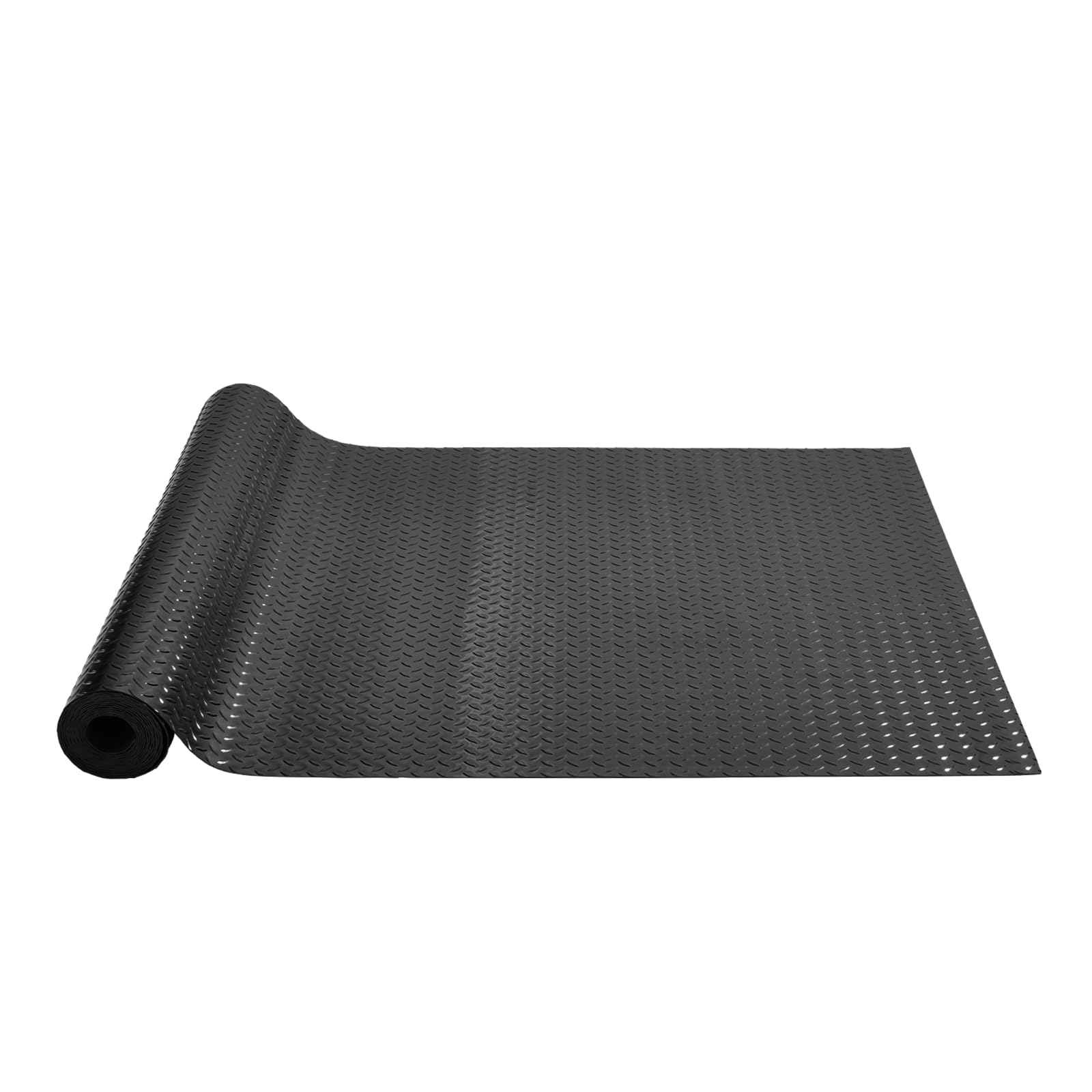
American Floor Mats 3/8in Roll

Top Pick
American Floor Mats 3/8in Roll
Our Score 9.4/10
Check Price

Worth Noting

Read the full review

This 3/8in vulcanized rubber roll offers commercial-grade thickness and a 5-year warranty, but the lack of available customer experiences means buyers must rely solely on manufacturer claims. It suits those who value pure rubber over foam and are comfortable with independent research, but falls short for anyone wanting proven durability.

Bottom line: Best for buyers who prioritize pure rubber composition over verified user feedback, and are willing to accept the risk of an unproven product.

#2

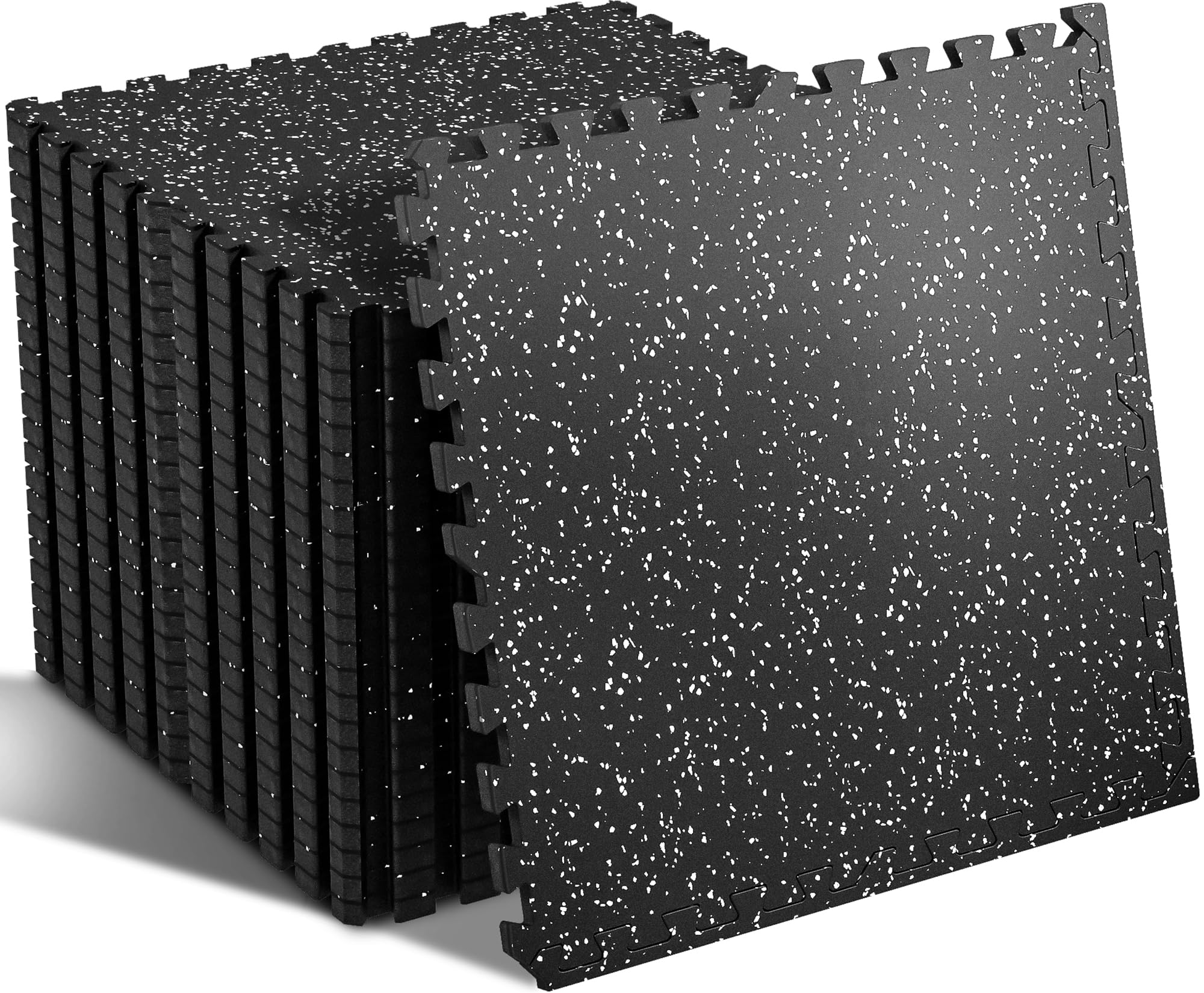
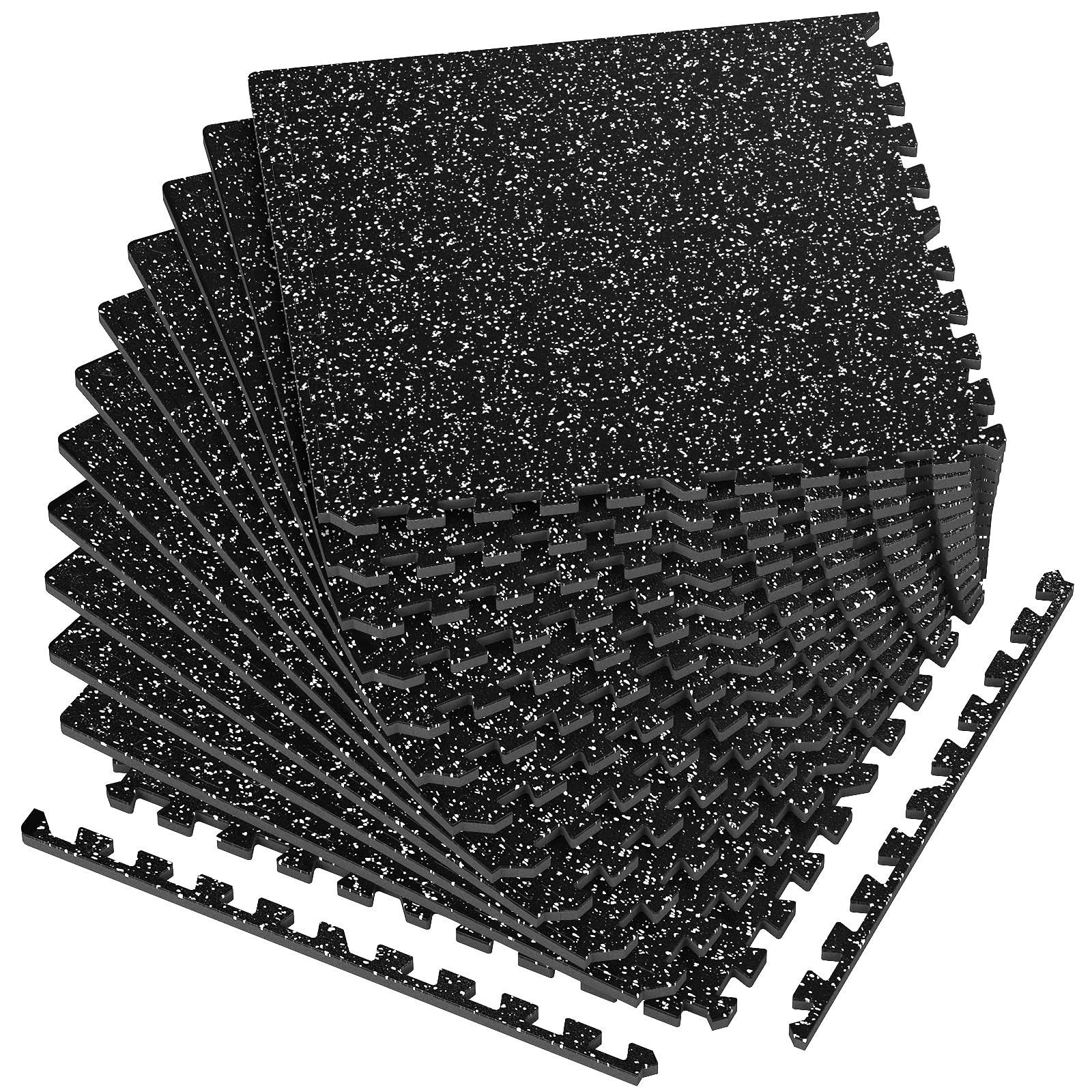
AIRHOP 0.56in Interlocking

AIRHOP 0.56in Interlocking

Balanced home gym

Our Score 9.2/10
Check Price

Worth Noting

  • In a sealed garage or basement, the rubber odor may be detectable for the first few days; ventilation clears it.
  • Corner tiles can shift slightly during intense side-to-side movements, though center tiles remain locked.
Odor
Strong, dissipates in days
Type
Interlocking tiles
Material
Rubber top/EVA foam
Thickness
0.56 in
Read the full review

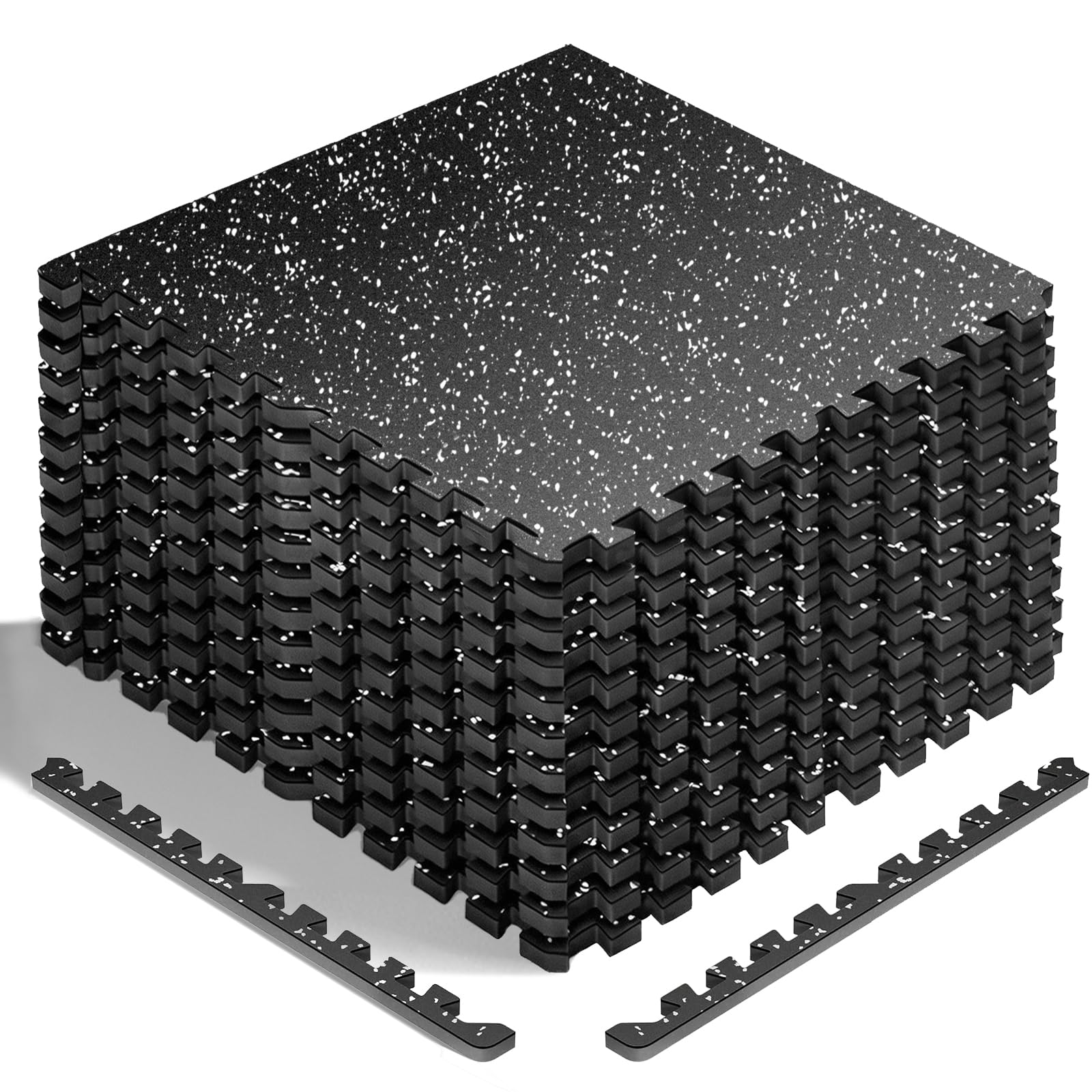
The AIRHOP tiles combine a textured rubber top with a thick EVA foam core, delivering cushioning and floor protection that handles bodyweight exercises, light dumbbell work, and cardio equipment. Assembly is straightforward: the interlocking edges snap together and stay in place during most movements.

This flooring works best for home gym owners who want a mix of shock absorption and equipment protection—ideal for garage conversions or spare rooms. The rubber top resists scratches and drops, while the foam base dampens noise. Corner tiles may shift slightly under heavy lateral movements, and the rubber smell can be noticeable in enclosed spaces for a few days. Ventilating the room or airing out the tiles before installation reduces the odor quickly.

Tip: Unpack and let the tiles air out in a ventilated space for a day or two before installing to minimize initial rubber odor.

Bottom line: The AIRHOP tiles deliver the cushioning and protection most home gyms need without the higher cost of solid rubber.

#3

HAPBEAR 0.56in Interlocking

HAPBEAR 0.56in Interlocking

Heavy equipment

Our Score 9.2/10
Check Price

Worth Noting

  • In enclosed spaces, a rubber smell may linger during the first few days
Odor
Mild
Type
Interlocking tiles
Material
Rubber top/EVA foam
Thickness
0.56 in
Read the full review

HAPBEAR's interlocking mats deliver a gap-free surface that holds up under heavy all-in-one trainers, with noticeable vibration dampening that quiets treadmills and cable machines. The tiles fit together like puzzle pieces for quick assembly. This is the right option for owners of bulky equipment who want stability over the proven track record of the top pick, though the brand is newer and long-term durability data is limited.

Tip: Air out the mats for a day or two before installing to reduce the initial rubber odor.

Bottom line: A solid choice for heavy-home-gym owners who prioritize interlocking stability and can accept a newer brand with less long-term data.

#4

SUPERJARE 0.56in Interlocking

SUPERJARE 0.56in Interlocking

Budget home gym

Our Score 9.0/10
Check Price

Worth Noting

  • Tiles may separate during vigorous lateral movements such as burpees or deadlifts, breaking floor coverage.
Odor
Type
Interlocking tiles
Material
Rubber top/EVA foam
Thickness
0.56 in
Read the full review

SUPERJARE brings a rubber-top, foam-core tile to the lowest price point in this roundup, making it an easy entry for anyone outfitting a garage or spare room on a budget. The 0.56-inch thickness and 48 sq ft coverage (12 tiles) provide a decent base for light dumbbell work, yoga, or bodyweight circuits. But the interlocking design has real limits: during lateral movements like burpees or deadlifts, tiles can shift apart, breaking the floor’s continuity.

This mat is best for first-time builders who keep workouts moderate and expect to rearrange their setup occasionally. If your routine includes heavy drops, Olympic lifts, or high-intensity interval training, the stability trade-off will frustrate you. The rubber surface looks clean with a speckled pattern, but the foam core means it lacks the dent resistance of solid rubber rolls.

Tip: Place heavy equipment like a squat stand or bench on the tiles to help keep the interlocking edges in place during movement.

Bottom line: A cost-effective starting point for light home gym use, but check your workout intensity before committing.

#5

Holymuss 1/2in Interlocking

Holymuss 1/2in Interlocking

Value home gym

Our Score 9.0/10
Check Price

Worth Noting

  • Under heavy weight drops, the 0.5in thickness may compress more than expected.
  • Some buyers consider the price high for a foam-based mat.
Odor
Type
Interlocking tiles
Material
Rubber top/EVA foam
Thickness
0.5-0.56 in
Read the full review

The Holymuss tiles offer a competitive price for a rubber top surface that handles heavy home gym equipment well. The 0.5in EVA foam core provides comfortable cushioning underfoot, but under very heavy drops it compresses more than some expect — better suited for static equipment like racks and benches than repeated deadlifts. For home gym owners who want a quality rubber surface without paying for pure rubber, this is a solid performer with easy assembly.

Tip: For deadlift areas or heavy weight drops, add a thicker rubber drop mat on top to minimize compression.

Bottom line: Best for home gym owners who want a rubber top surface without paying for solid rubber, and who primarily place static equipment rather than drop heavy weights repeatedly.

#6

VEVOR 4x15ft Rubber Roll

VEVOR 4x15ft Rubber Roll

Garage protection

Our Score 9.0/10
Check Price

Worth Noting

  • Strong cigarette-like odor that lingers for weeks
Odor
Strong, persistent
Type
Single roll
Material
SBR rubber + TPE
Thickness
3 mm
Read the full review

This rubber roll provides good floor protection against automotive fluids and light equipment at a budget-friendly price per square foot. The 3mm thickness and strong cigarette-like odor that lingers indoors make it unsuitable as primary gym flooring for heavy workouts, but it works well as a garage base layer or under artificial turf. Edge curling can occur, though taping helps.

Bottom line: Best for garage floor protection under vehicles or as a base layer for light equipment, where the low cost and coverage outweigh the odor and thickness limitations.

#7

Rubber-Cal Elephant Bark

Rubber-Cal Elephant Bark

Light equipment

Our Score 9.0/10
Check Price

Worth Noting

  • At 0.19 inches, this mat is too thin to absorb impact from dropped weights or heavy equipment.
Odor
Moderate to strong
Type
Single roll
Material
Recycled SBR rubber
Thickness
0.19 in
Read the full review

This mat handles treadmills and stationary bikes without slipping, and it cleans up easily. The thin 0.19-inch profile suits garage protection and kennel use, but cannot cushion dropped barbells. Some rolls arrive with uneven cuts or tears, so inspect on delivery.

Bottom line: A good choice for protecting garage floors from light foot traffic, equipment drips, or as a kennel mat, but not for any workout that involves dropping weights.

How to Choose

Thickness

Thickness directly determines impact absorption and floor protection. Mats under 0.2 inches are fine under treadmills but will compress or tear under dropped weights. A thickness of 0.5 inches or more is needed for deadlifts or Olympic lifting.

Thicker mats also reduce noise transfer to downstairs rooms. However, they are heavier and more expensive. For most home gyms, 0.5 to 0.6 inches hits the sweet spot between protection and cost.

Material Composition

Pure rubber mats offer the best durability and density but cost more and weigh significantly more. Most mid-range options use a rubber top layer over a high-density EVA foam core. This saves weight and cost while providing decent impact absorption.

The trade-off: heavy repeated drops can eventually dent the foam core, and the rubber top may separate from the foam under extreme use. For occasional to moderate weightlifting, the hybrid is adequate. For daily heavy drops, seek 100% vulcanized rubber rolls.

Type

Interlocking tiles are the most convenient for home gyms: they are easy to install, replaceable, and allow for modular layouts. However, the seams can separate during lateral movements like burpees or lateral lunges, especially if the perimeter is not secured.

Single rolls provide a seamless surface with no shifting seams, making them ideal for high-intensity workouts. But they are harder to install, difficult to cut, and cannot be reconfigured. Rolls also tend to curl at the edges unless weighted down or taped.

Odor Levels

New rubber products almost always have a strong chemical smell from manufacturing. This is normal and usually dissipates within 3 to 7 days in a well-ventilated space. Mats with recycled rubber content tend to smell stronger and longer than virgin rubber.

Buyers sensitive to odors should plan to air out mats in a garage or outdoor area before installing them inside. Some products list 'low VOC' or 'odorless' claims, but real-world user reports often contradict those claims.

Ease of Assembly and Stability

Interlocking tiles use a puzzle-like system that typically snaps together in under an hour for a 48-square-foot space. However, stability varies widely: some systems have tight, secure connections that resist separation, while others loosen over time or under movement.

A common workaround is to apply double-sided carpet tape along the perimeter joints or use edge strips. Perimeter taping dramatically reduces shifting and keeps the floor flat during dynamic exercises.

Frequently Asked Questions