Home Gym

8 Best Power Towers of 2026: That Actually Stay Stable

Which power towers truly stay stable for dips and pull-ups, and which ones wobble despite high weight ratings.

You bought a power tower to get stronger, not to fight for balance. But the market is flooded with models that look solid on screen yet wobble under 200 lbs of real body weight. Aggressive marketing numbers often outpace the engineering needed for true stability.

Stability starts with the base. H-shaped and X-shaped frames distribute forces evenly, while thick 2mm steel resists flexing during pull-ups or weighted dips. Feet that don't grip or level properly turn small sways into dangerous shakes, especially for heavier users. The distance between the pull-up bar and backrest also matters; a tight clearance can cause leg interference mid-rep.

In this roundup, you'll find the towers that have actually earned a reputation for staying planted — across hundreds of workouts and varying loads. We've steered clear of the ones that owners report flexing or rocking, no matter how impressive their specs look.

#1

Pooboo Power Tower

Top Pick
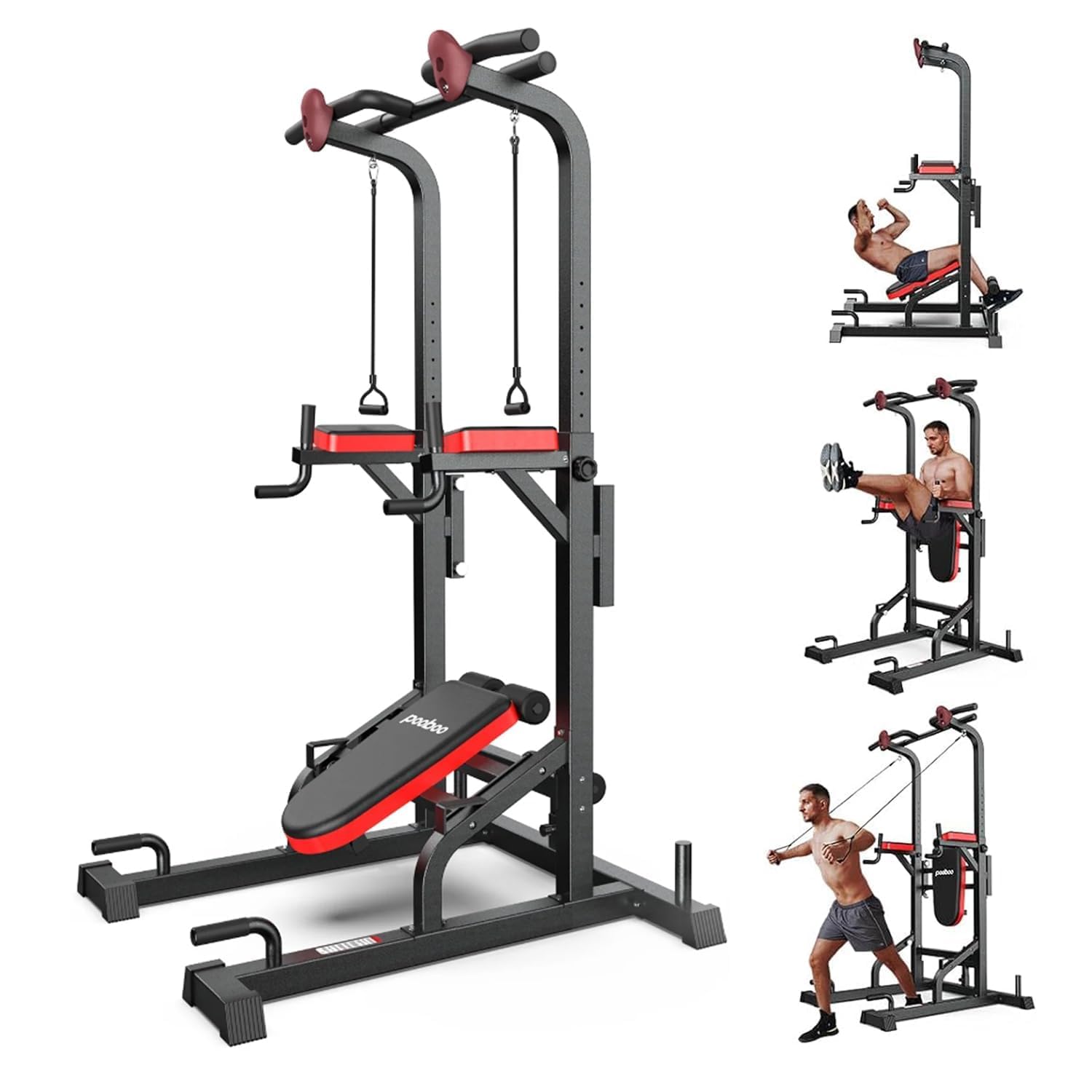
Pooboo Power Tower

Serious lifters

Our Score 9.6/10
Check Price

Worth Noting

  • Incline bench and climbing grips add extra assembly time and may be unwanted by those focusing only on pull-ups and dips.
Max Weight Capacity
440 lbs
Height Range & Bar Clearance
71.4"–94.4", 11 levels
Read the full review

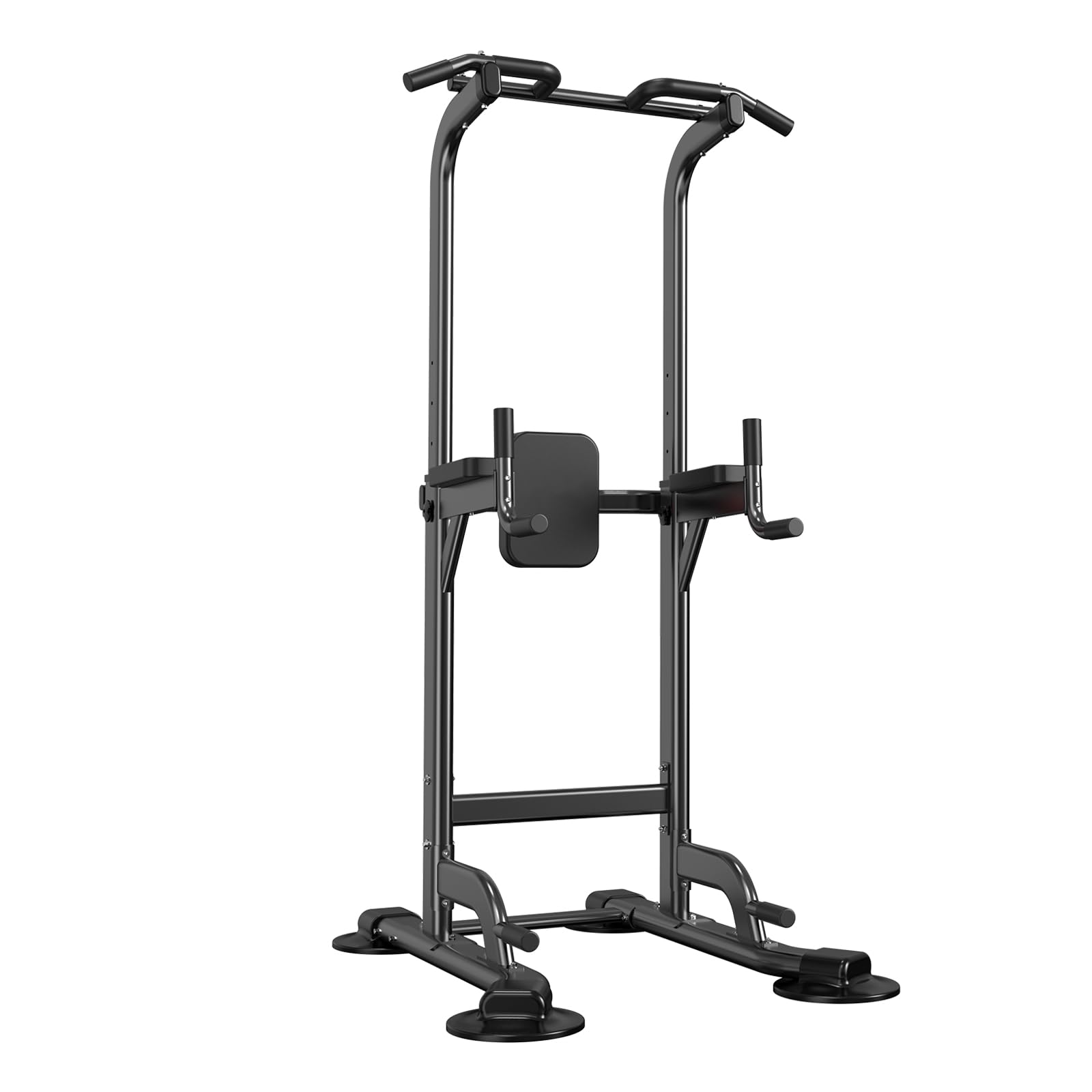
Pooboo’s H-shape base and heavy-gauge steel tubing translate into a power tower that simply does not shake, even during aggressive exercises. The 440-pound capacity is understated — the frame handles kipping pull-ups and weighted dips with zero detectable flex or shift. Reinforced joints and a wide footprint make it feel bolted to the floor, even on carpet.

Eleven height levels between 71.4 and 94.4 inches accommodate everyone from younger teens to tall adults, while the included incline bench opens up chest presses, decline sit-ups, and other exercises typically absent from a dip station. Rock climbing grips add another angle for pull-up variations.

Assembly is simple thanks to clearly labeled parts and step-by-step instructions, taking most people under an hour. The incline bench and climbing grips are designed to be left off if not needed — the core tower still functions as a standalone dip and pull-up station. Once built, the frame requires no adjustment beyond occasional bolt tightening.

At its premium price point, the Pooboo tower offers more than bare-bones models by bundling a bench and grips that would otherwise be separate purchases. The steel thickness and build quality exceed what hobbyist home gyms typically see, giving it a commercial feel that justifies the investment for those who will use the attachments.

This tower is built for intermediate to advanced lifters and families who need multiple height settings. The robust frame and 440-pound rating cater to heavier users and weighted exercises. If your goal is only pull-ups and dips, a bare-bones model saves cost and avoids the attachments that will go unused.

Tip: If you only need pull-ups and dips, leave the incline bench and climbing grips in the box — the core tower still functions independently.

Bottom line: For anyone building a home bodyweight training station where wobble is a dealbreaker, this tower’s rock-solid performance and bonus attachments offer the most complete package in its class.
#2

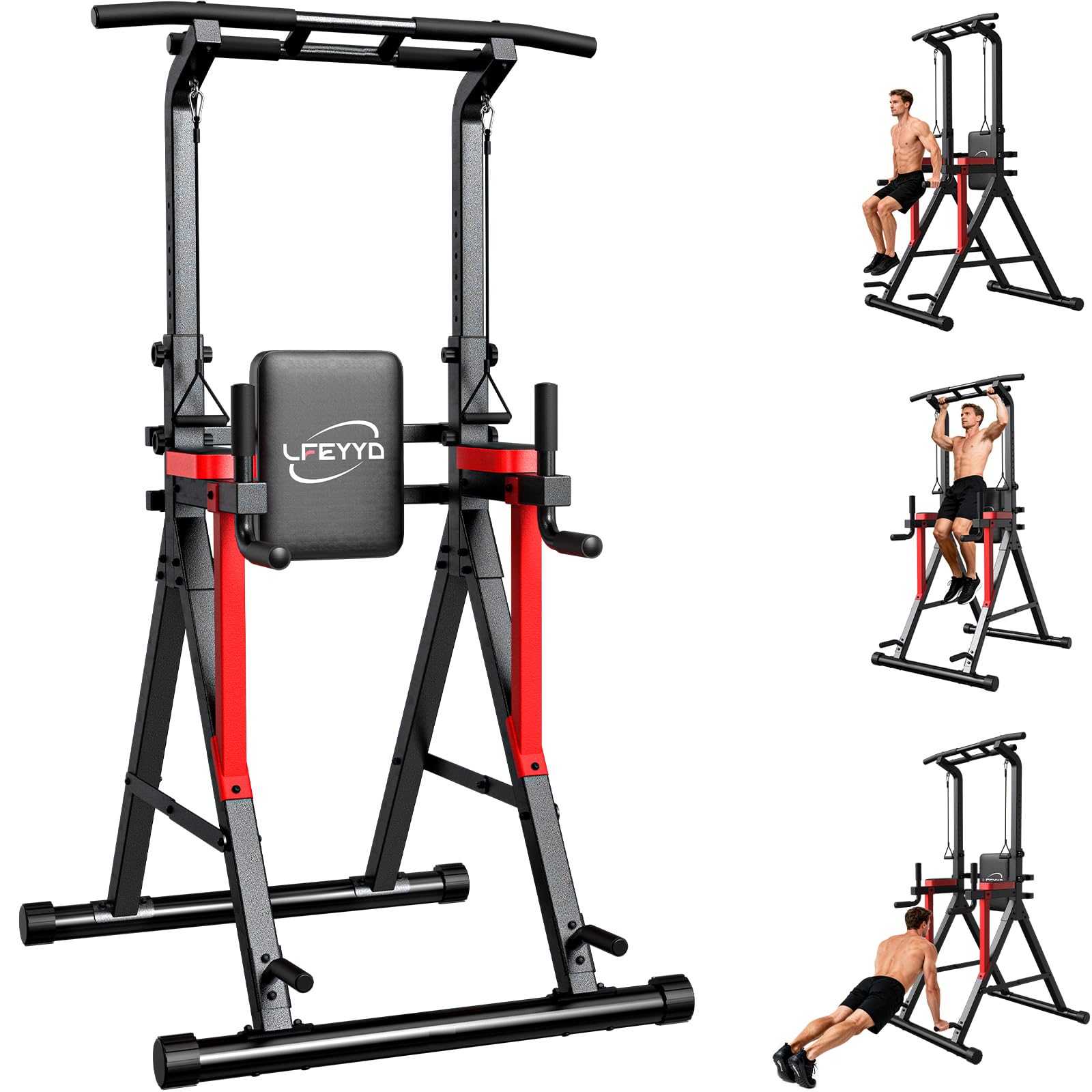
LFEYYD Power Tower

LFEYYD Power Tower

Stable & Adjustable

Our Score 9.6/10
Check Price

Worth Noting

  • Not foldable
  • Lacks incline bench for chest-supported rows and presses
Max Weight Capacity
400 lbs
Height Range & Bar Clearance
72.7"–88.4", 13 levels
Read the full review

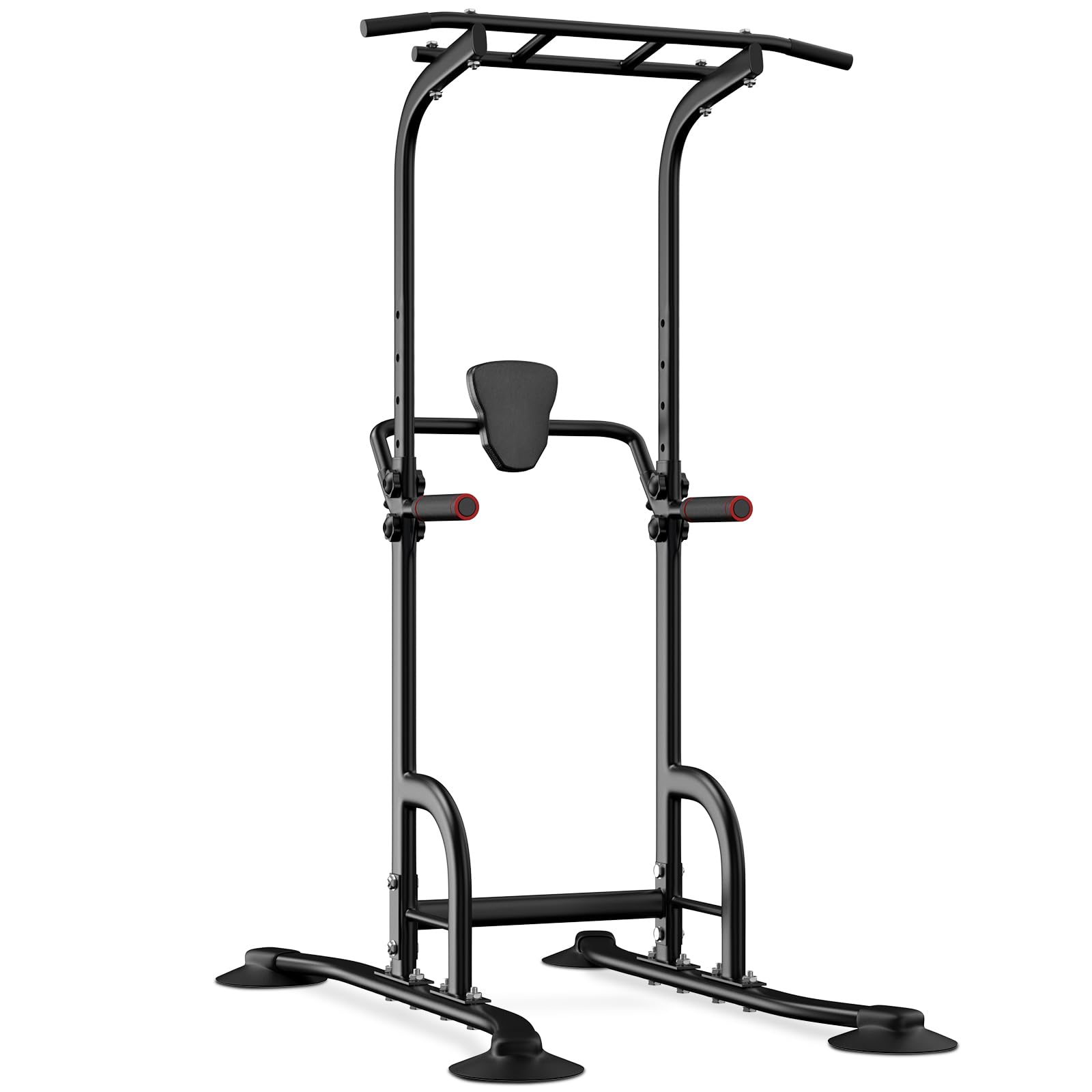
The X-shaped reinforced base and 13 height settings eliminate the wobble that plagues many budget towers, delivering steady pull-ups and dips even under a 400-pound load. Unlike wider multi-user models that rely on sheer weight, the geometry here resists lateral sway during kipping pull-ups and weighted dips, making intense workouts feel secure.

This tower suits users who want a stable, straightforward station for pull-ups, chin-ups, dips, and knee raises — not a multi-gym with sliding benches. The thickly padded arm and back supports make long sessions more comfortable than on bare steel bars, and the height adjustment mechanism moves smoothly enough that swapping between family members takes seconds. You will not find an incline bench here, and the frame does not fold away for storage — those omissions keep the design rigid and the price mid-range. For home gyms where space allows, that is a more than fair exchange.

Bottom line: If wobble-free pull-ups and dips are your priority, the LFEYYD is a value-conscious choice that forgoes folding and bench attachments to deliver a solid foundation.

#3

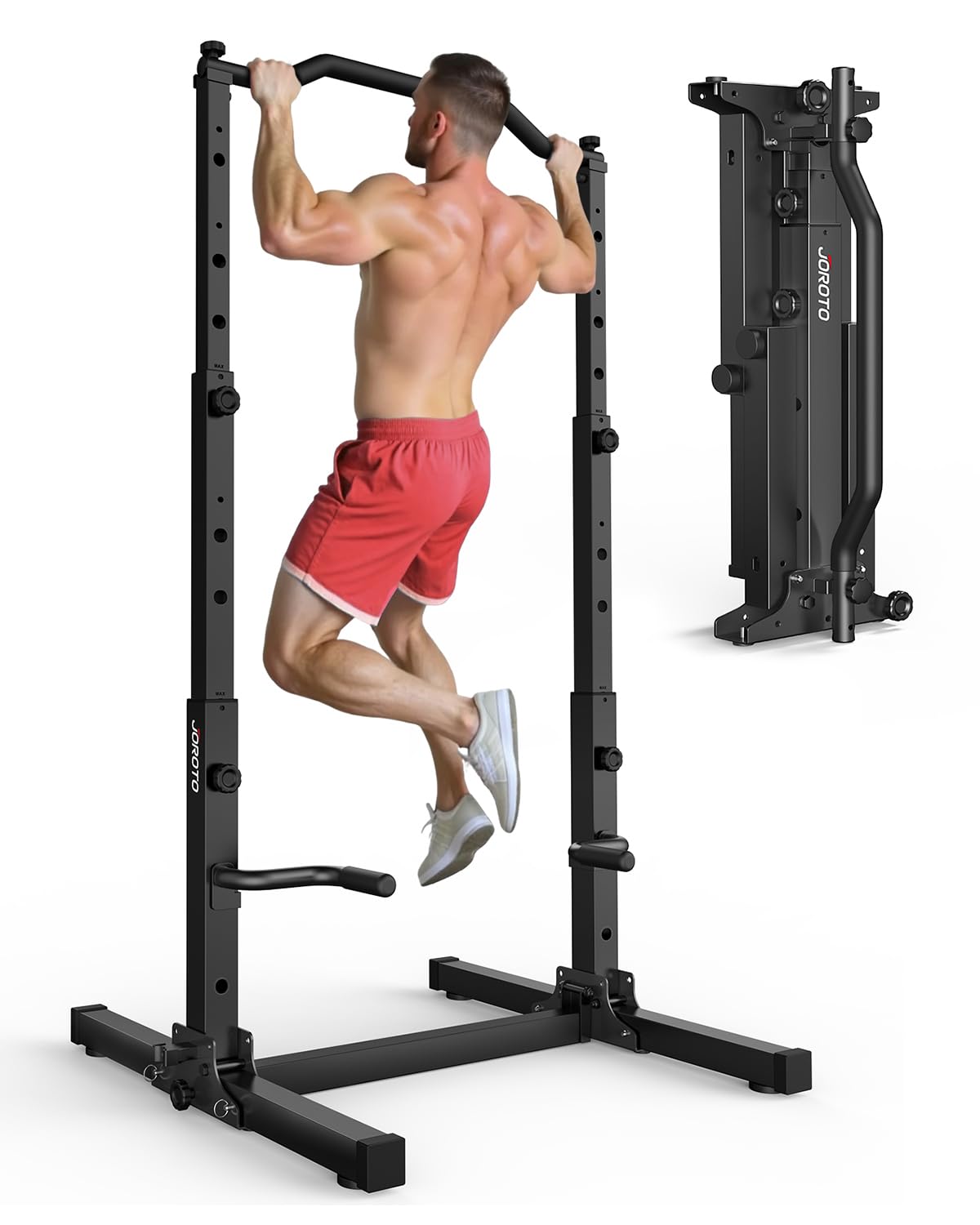
JOROTO Foldable Station

JOROTO Foldable Station

Space-saving foldable

Our Score 9.0/10
Check Price

Worth Noting

  • Wobble can occur if the foot levelling knobs are not perfectly adjusted to the floor surface
Max Weight Capacity
450 lbs
Height Range & Bar Clearance
40.4"–82.8"
Read the full review

The JOROTO Foldable Station collapses to a 41.5-inch footprint yet carries a 450 lb weight capacity, making it the standout foldable option for tight home gyms. Unlike the ultra-stable non-foldable model, this station folds and stores quickly after training without giving up the core pull-up and dip stations you need.

Assembly is straightforward and the height adjustment moves smoothly through its range. Once the foot knobs are dialed in, the frame feels secure under bodyweight and added load. Stability hinges on precise leveling; uneven flooring can introduce slight movement, a tradeoff shared by most folding designs.

This unit suits apartment dwellers and home gym users who need to reclaim floor space after each session. It is built for those willing to spend an extra minute evening out the foot knobs on their specific floor surface — once set, the station stays planted. If instant rock-solid stability without any adjustment is a priority, the fixed non-foldable station remains the better match.

Tip: After unfolding, spend a minute adjusting each foot knob while pressing on the uprights; even slight floor imperfections can create movement, but a quick tweak locks it solid.

Bottom line: If folding storage is non-negotiable and you are ready for a brief levelling routine, this station delivers the fold-and-forget convenience that fixed frames cannot provide.

#4

Sportsroyals Power Tower

Sportsroyals Power Tower

Family-friendly

Our Score 8.8/10
Check Price

Worth Noting

  • Occasional missing hardware may require reaching out to support before assembly is possible.
  • Dip bar spacing can feel wide for narrower frames, and pull-up bar clearance behind the backrest is limited.
  • Stability varies between units; side-to-side wobble can occur during pull-ups or dips, especially for users above 200 lbs.
Max Weight Capacity
360 lbs
Height Range & Bar Clearance
57.09"–83", 8 height, 5 backrest
Read the full review

With eight height levels and a five-position backrest, the Sportsroyals tower accommodates users from 57 inches up to 83 inches, making it easier for a household to share one station. Where the top pick prioritizes unwavering stability through a broad, weighted base, this model chooses broad adjustability and a smaller footprint. The steel frame feels solid for bodyweight exercises, and the station handles pull-ups, dips, push-ups, and leg raises without groaning.

This tower suits lighter users and families who value adjustability across different statures and can accept some side-to-side movement during vigorous sets. Heavier exercisers or those who insist on a completely rigid feel will notice flex and wobble that the top pick eliminates. On arrival, check all hardware before assembly; an occasional box may be missing a bolt or nut. The dip bar width can feel wide for narrower frames, and the pull-up bar clearance behind the backrest is tight for taller individuals.

Tip: Inventory all bolts, nuts, and washers before starting assembly; support can ship a replacement quickly if anything is missing.

Bottom line: If a single tower must serve multiple family members of varying heights and you're under 200 lbs, this adjustability-forward station earns its place. Those who prize a locked-in feel at any body weight will find the top pick's unyielding frame a better match.

#5

ONETWOFIT Foldable Tower

ONETWOFIT Foldable Tower

Tool-free foldable

Our Score 8.8/10
Check Price

Worth Noting

Max Weight Capacity
400 lbs
Height Range & Bar Clearance
50"–88.2"
Read the full review

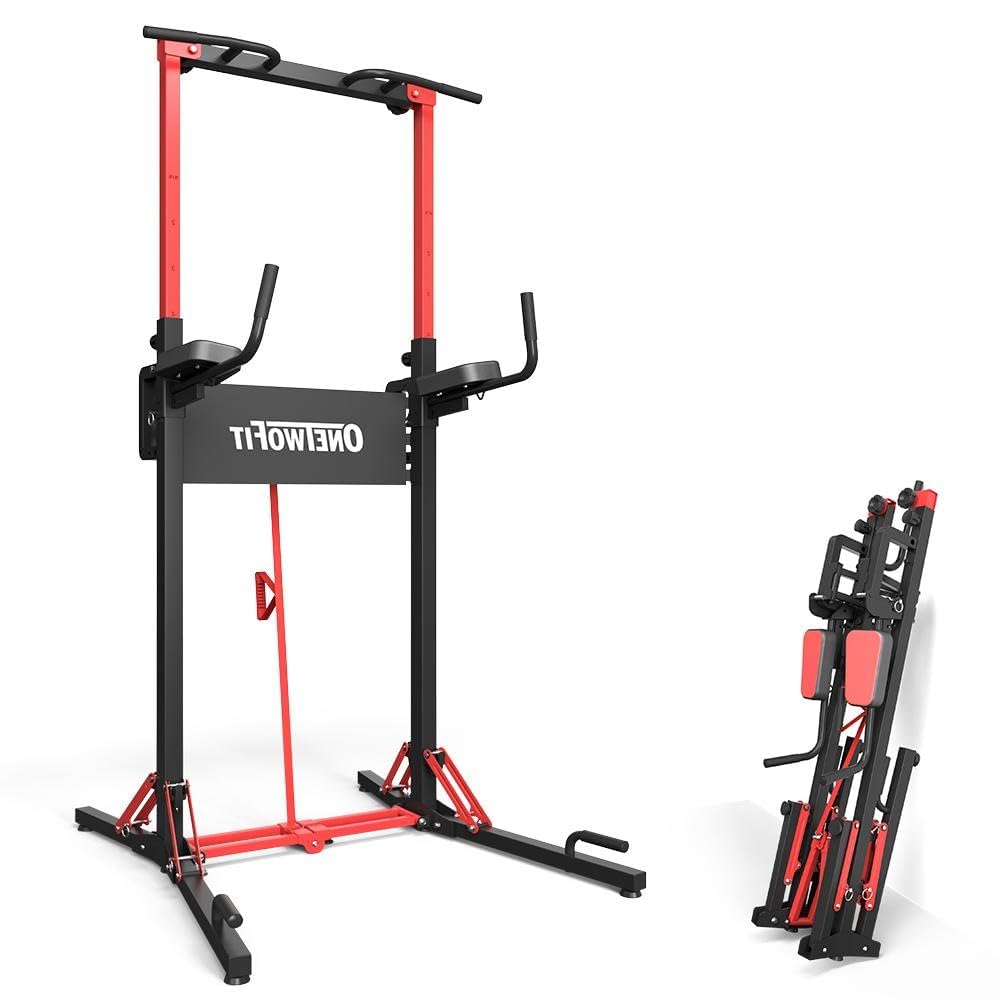
The ONETWOFIT Foldable Tower distinguishes itself with a design that collapses to a 9.8-by-9.8-inch footprint and assembles without tools, making it an attractive choice for apartments or shared spaces where equipment must disappear after each workout. Its 400-pound capacity and 50-to-88.2-inch height range cover a broad user base, from pull-ups to dips. However, real-world stability and long-term durability under frequent, heavy use haven't been widely validated, which introduces some uncertainty for those who rely on a proven, immovable frame. This tradeoff is most tolerable for lifters who prioritize ultra-compact storage and quick setup and are willing to judge the build quality themselves rather than leaning on a track record of user experience.

Bottom line: If your workout space doubles as a living area and you're willing to trade a long track record for the convenience of instant storage, this tower delivers a rare blend of compactness and quick setup.

#6

Dskeuzeew Pull Up Station

Dskeuzeew Pull Up Station

Light-use budget

Our Score 8.6/10
Check Price

Worth Noting

  • Noticeable wobble during pull-ups or dips, especially on uneven floors.
  • Padding and armrest covers can tear or arrive pre-scuffed.
Max Weight Capacity
450 lbs
Height Range & Bar Clearance
72"–87.8", 13 levels
Read the full review

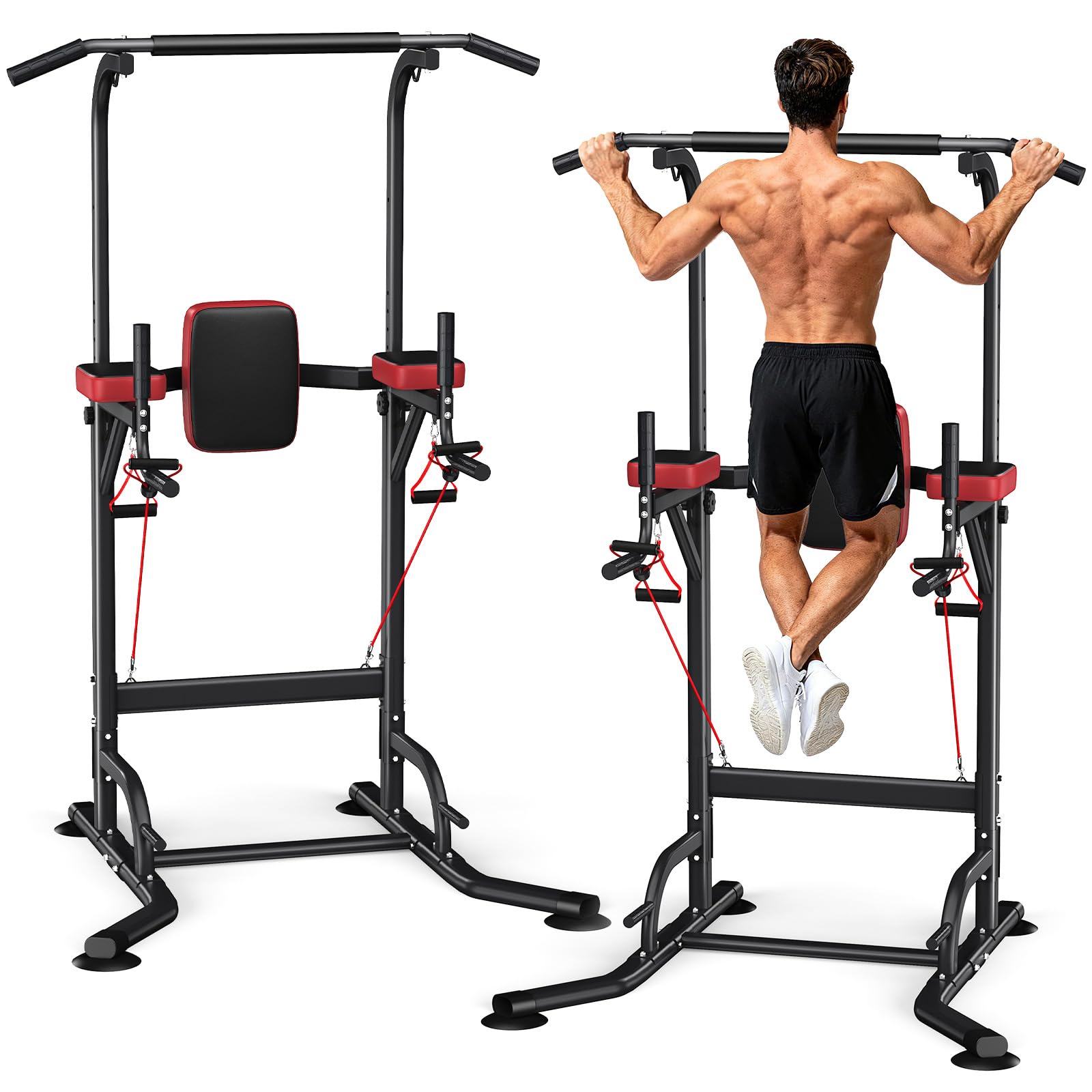
The Dskeuzeew pull-up station combines a high 450 lb stated capacity with included resistance ropes at a budget-friendly price, opening up pull-ups, dips, and band work without a gym membership. Assembly is straightforward, and the 13 height levels accommodate a range of users. The elastic bands can snap under tension, so they call for careful, controlled movements. The tower's stability is not on par with heavier, more expensive options — a tradeoff that fits light routines. For those who prioritize low cost and accessory value over rock-solid steadiness, this tower is worth considering, provided the bands see limited heavy use.

Tip: Tighten all hardware and use on a level floor to reduce wobble, and reserve the bands for light resistance work.

Bottom line: This tower suits light to moderate users wanting an affordable multi-function station with resistance bands, as long as they accept some wobble and the band durability risk.

#7

BangTong&Li Power Tower

BangTong&Li Power Tower

Ultra-budget beginner

Our Score 8.6/10
Check Price

Worth Noting

  • Pull-up bar sits close to the backrest, which can limit leg clearance during kipping or strict pull-ups.
  • Dip bar width is on the narrow side, potentially uncomfortable for users with broad shoulders.
  • The tower can wobble during exercises, particularly when the user weighs over 180 lbs.
Max Weight Capacity
330 lbs
Height Range & Bar Clearance
74.8"–82.68", 6 levels
Read the full review

This tower assembles in minutes with included tools and its small footprint fits tight spaces well. Pull-ups, dips, and leg raises feel natural for light users. The lightweight construction and compact geometry, though, place practical limits on who will have a comfortable workout. Once a user pushes past 180 lbs or has broad shoulders, stability and fit constraints become noticeable. That's not a flaw; it's a boundary that keeps this as an ultralow-cost entry for smaller beginners.

Bottom line: For absolute beginners under 5'8" and 180 lbs who need a compact pull-up/dip station on a tight budget, the BangTong&Li delivers the basics and assembles without fuss.

#8

K KiNGKANG Power Tower

K KiNGKANG Power Tower

Tall user budget

Our Score 8.4/10
Check Price

Worth Noting

  • Narrow dip bars may feel cramped for broad-shouldered users.
  • Side-to-side wobble occurs during dips and pull-ups, especially for users over 180 lbs.
Max Weight Capacity
338 lbs
Height Range & Bar Clearance
72.8"–92.5", 6 levels
Read the full review

Assembly is straightforward, and six height settings up to 92.5 inches let tall users hang fully extended during pull-ups — a rare find at this price. The station includes multi-grip pull-up bar, dip bars, and push-up handles, covering the basics. Stability is the trade-off: the frame flexes under load, becoming more pronounced for those over 180 lbs, and the narrow dip space can feel cramped for broad shoulders. If you fit the slim-and-tall profile and want casual home workouts, it's functional.

Bottom line: For a user under 180 lbs with a height over 6 feet, this power tower provides an uncommonly tall pull-up bar at a low price — as long as you accept some wobble and a narrow dip stance.

How to Choose

Stability: The Base Makes the Difference

A tower's resistance to wobble starts with its footprint. H-shaped and X-shaped bases distribute your shifting weight across a wider area, while narrow square frames concentrate force and twist more easily. Look for at least a 40-inch width and steel that is 2mm thick; anything thinner will flex under dynamic moves like kipping pull-ups.

Even with a solid base, leveling feet are crucial. If the tower can't make full contact with the floor, it will rock side to side. Some models include rubber caps or adjustable knobs that let you compensate for uneven surfaces. Test yours on the exact spot where you plan to train, and place a mat underneath if needed.

Max Weight: What the Number Really Means

The higher the advertised capacity, the more tempting the spec, but many budget towers exaggerate their limits. A listing may claim 450 lbs, yet the frame flexes noticeably at only 200 lbs. The true max is often limited by the thinnest component — a bolt, a weld, or the tube wall.

For consistent performance, assume you need at least a 50% safety margin over your body weight. If you weigh 200 lbs, look for towers genuinely tested to 350 lbs and backed by user reports of no flex. Heavier lifters should prioritize models with reinforced gussets and thicker tubing, even if the listed number isn't the highest.

Height Range and Bar Clearance: Why It Matters for Leg Room

Adjustable height accommodates everyone from teenagers to tall adults, but pull-up bar height alone isn't enough. The distance between the bar and the backrest pad is what determines whether you can hang freely or bump your knees on every rep. A clearance of less than 18 inches forces you to bend your legs, making strict pull-ups awkward.

Some towers allow you to remove or reposition the backrest to open up space for leg raises. If you're over 6 feet tall, prioritize models that offer at least 90 inches of bar height and a roomy clearance behind it, so your legs can dangle without interference.

Dip Bar Width and Comfort: Fit for Your Shoulders

Dip bars that are too wide strain the shoulder joint by forcing external rotation, while bars set too narrow can crowd your torso and limit range of motion. Ideal spacing usually falls between 24 and 28 inches, matching the average shoulder width. If the bars are fixed, check the measurement before buying.

Padding is another overlooked factor. Thick, high-density foam on the armrests and backrest reduces pressure during longer sets. When possible, choose a tower with either removable pads or a design that doesn't push your chest into the uprights, which can happen on models where the backrest sits too close to the dip station.

Assembly and Footprint: Space and Setup

Most power towers arrive in a single box with dozens of bolts and parts. Clear instructions and labeled hardware can cut assembly time in half. Before ordering, measure your floor space: a tower with a 44-by-38-inch base needs more room than one with a 34-by-26-inch footprint, especially if you plan to move around it.

Foldable towers solve the storage problem but introduce a hinge mechanism that must lock securely. The best folders use thick gauge steel at the pivot and large locking pins that don't wiggle over time. If you need to stow the tower daily, a foldable design is worth the premium, but expect to spend an extra minute leveling it each setup.

Frequently Asked Questions