Cardio Machines

6 Best Non Folding Treadmills 2026: Commercial Stability for Runs

Find non-folding treadmills with true commercial stability for serious runners. This guide focuses on permanent, heavy-duty machines that don't compromise on build or performance.

Most treadmills marketed as heavy-duty are actually foldable, leaving runners with a machine that wobbles at speed. The deck flexes, the frame creaks, and the motor struggles under sustained use.

True non-folding treadmills are rare - they require a permanent spot and a bigger budget. But the payoff is a rigid frame, a larger motor, and a deck that stays flat mile after mile.

If you plan to run hard and keep your treadmill in one place, the non-folding design is the difference between a machine that feels like a toy and one that lasts a decade.

#1

3G Cardio Elite Runner

Top Pick
3G Cardio Elite Runner

Serious runners

Our Score 9.0/10
Check Price

Worth Noting

  • In some units, the plastic motor cover may crack or speed buttons may become less responsive
  • At 366 lbs, this treadmill requires professional delivery and a ground-floor location; not suitable for basements with narrow stairs.
Deck Size
22 x 62 in
Non-Folding
Non-foldable 366 lbs
Incline Range
Auto 0-15%
Motor & Capacity
4.0 HP, 400 lbs
Read the full review

The 3G Cardio Elite Runner X is built with a welded steel frame and a 4.0 HP motor — the kind of construction typically found in commercial gyms. The 22-by-62-inch deck provides ample running surface for tall or long-stride runners, and the Ortho Flex shock system absorbs impact without sacrificing ground feel. This is a machine that stays planted at any speed.

At full 12 MPH sprints, the frame shows no wobble or vibration — users consistently describe it as feeling bolted to the floor. The motor is also quieter than expected for its power class, producing a low hum rather than a high-pitched whine. Noise is not an issue in shared living spaces, though the unit itself demands a permanent home.

This treadmill is best suited for serious runners and marathon trainers who weigh up to 400 lbs and want a machine that will hold up to daily hard miles. The tradeoff is its weight: 366 lbs means it requires professional in-room delivery with a lift gate truck, and it will not fit through narrow basement stairways or tight doorways. Plan the placement before purchase.

The large deck and thick belt reduce joint strain during long runs, and the auto incline range (0-15%) offers variety without sacrificing stability. Non-folding design eliminates hinge wear and wobble, but also means the treadmill occupies permanent floor space — a dedicated room or garage is ideal.

Some units have been reported with a plastic motor cover that can develop hairline cracks, or speed buttons that become less responsive over time. These are cosmetic or minor functional issues, not safety concerns, but worth inspecting upon delivery and contacting support promptly if they appear.

Tip: Arrange for in-room delivery with a lift gate truck — the 366 lb unit cannot be safely moved by two people.

Bottom line: If you have the floor space and can manage the delivery logistics, this is the most stable, long-lasting home treadmill for serious runners who want a true commercial feel.
#2

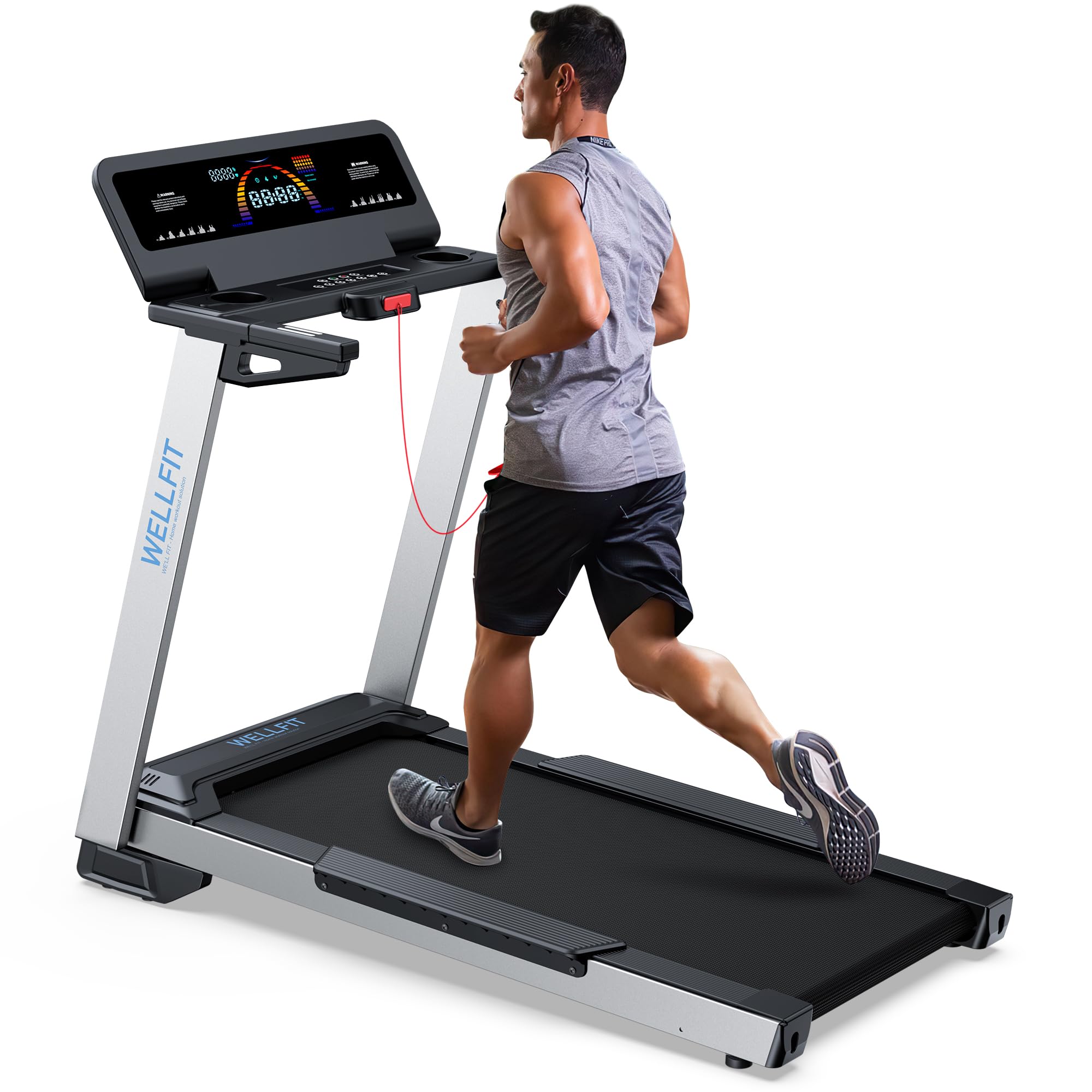
WELLFIT Home Treadmill

WELLFIT Home Treadmill

Budget heavy users

Our Score 9.0/10
Check Price

Worth Noting

Deck Size
20 x 45 in
Non-Folding
Folding
Incline Range
Manual 0-5%
Motor & Capacity
4.0 HP, 450 lbs
Read the full review

The WELLFIT Home Treadmill offers a 450 lb weight capacity and a 4.0 HP motor at a budget-friendly price, making it an attractive option for heavier users on a tight budget. However, its folding design and manual 0-5% incline distinguish it from non-folding models intended for permanent placement; buyers seeking a stationary running machine will find the foldable frame less stable over time and the limited incline insufficient for hill training.

Bottom line: This treadmill fits when your priority is high capacity and low cost over permanent stability and incline range.

#3

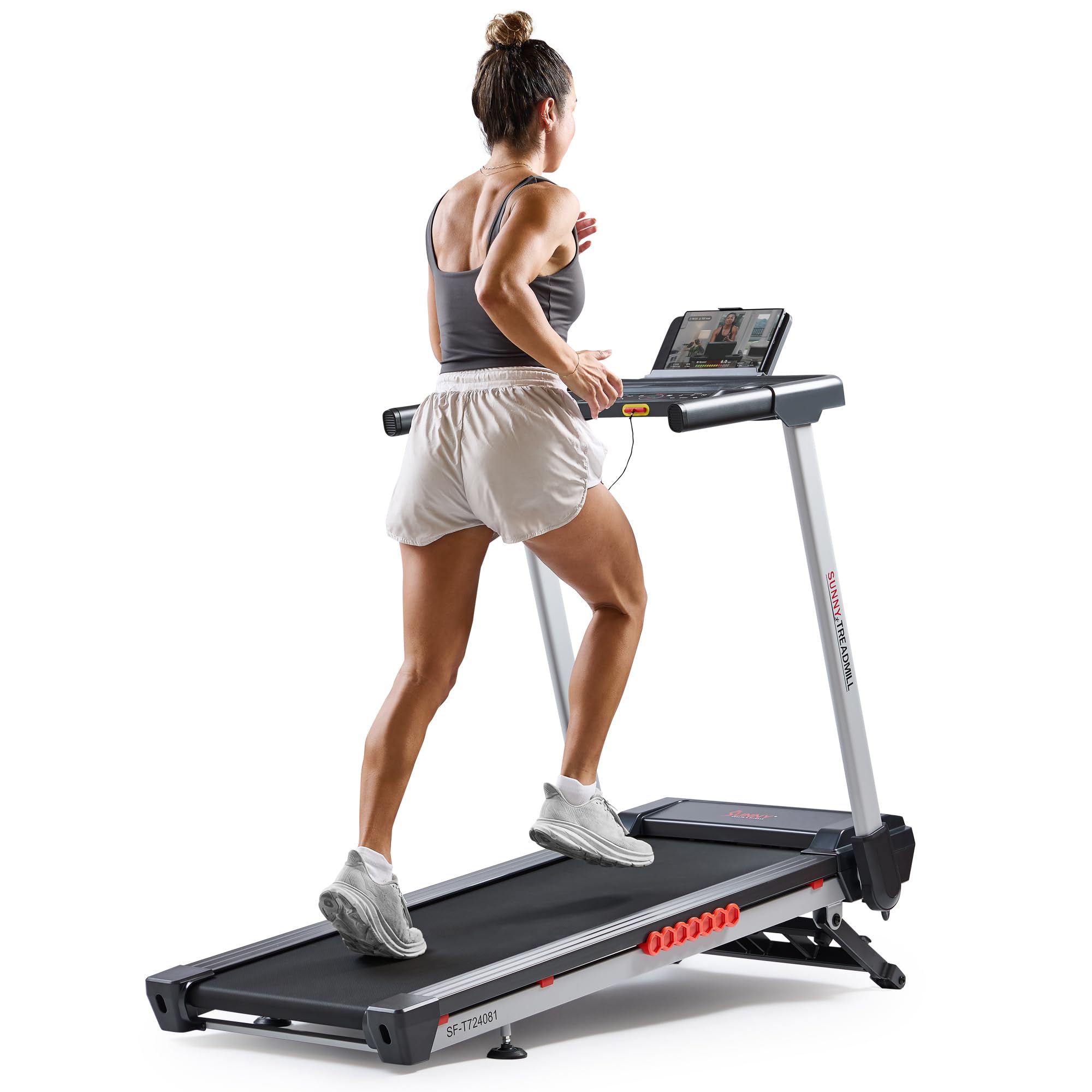
Sunny Health SF-T724081

Sunny Health SF-T724081

Casual walkers

Our Score 8.8/10
Check Price

Worth Noting

  • Motor and frame components can degrade after 6–18 months of regular use, limiting long-term value.
  • Some units may arrive with power or belt movement issues, requiring early troubleshooting.
Deck Size
18 x 50 in
Non-Folding
Folding
Incline Range
Auto 0-12%
Motor & Capacity
2.0 HP, 300 lbs
Read the full review

The Sunny Health & Fitness Premium Smart Treadmill offers an appealing entry price for casual walkers who want a compact, foldable design that sets up in under 30 minutes. Its 2.0 HP motor runs quietly enough for apartments, and the auto incline adds variety without complexity. However, this isn't a treadmill built for permanence or heavy use. Reports of motors losing power, frames developing cracks, and belts stopping after several months of use indicate the construction can't support frequent jogging or running. For someone seeking a non-folding, long-term running solution, this model's folding hinge and documented durability limits create a clear mismatch in expectations.

Bottom line: Works as a temporary walking treadmill for tight budgets, but not for buyers who need a non-folding machine or expect reliable performance beyond a year.

#4

SB Fitness CT400

SB Fitness CT400

HIIT and intervals

Our Score 8.6/10
Check Price

Worth Noting

  • The curved deck demands continuous effort
  • No incline adjustment limits the ability to vary resistance for hill simulation.
Deck Size
18 x 60 in (curved)
Non-Folding
Non-foldable heavy
Incline Range
None (curved)
Motor & Capacity
Self-powered, 375 lbs
Read the full review

The SB Fitness CT400 stands apart from motorized options by using a curved slat deck that relies entirely on your own stride to generate momentum. This design removes motor noise and power consumption, making it a practical choice for runners who want a dedicated, stationary machine in a home gym. The non-folding steel frame reinforces its permanent placement intent, though at 140 pounds it remains manageable for one-time positioning.

Build quality is consistent for a mid-range price point. The deck spans 60 by 18 inches and the slats offer a firm but forgiving surface for high-intensity intervals. Assembly takes under an hour with the included instructions, and the three resistance levels give some control over load without needing electronics. The 375-pound weight capacity supports a broad range of users.

This treadmill suits runners focused on sprint intervals and HIIT sessions where constant effort is desired. The curved design inherently requires you to stay engaged — it does not coast. That same characteristic makes it unsuitable for casual walking, recovery jogs, or anyone who prefers a motor to sustain a steady pace. There is no incline adjustment, and the lack of preset programs means variety comes from your own training structure.

Bottom line: For interval runners who want a non-motorized, non-folding treadmill that keeps them fully engaged, this is a cost-effective alternative to premium curved models. Just be clear that passive walking is not in its repertoire.

#5

Assault Runner Pro

Assault Runner Pro

HIIT CrossFit

Our Score 8.6/10
Check Price

Worth Noting

  • Belt and slat noise may be noticeable in quiet environments
  • Folding design conflicts with the non-folding requirement for permanent placement
Deck Size
Curved 43.3 in
Non-Folding
Folding
Incline Range
N/A (curved)
Motor & Capacity
None, 350 lbs
Read the full review

The Assault Runner Pro delivers smooth, curved motion and a solid build that athletes appreciate for high-intensity interval training. However, it folds for storage and the belt and slats generate more noise than expected, making it a niche option even within folding products. For those seeking a non-folding treadmill for permanent placement, this model does not meet that requirement.

Tip: Place in a gym or well-ventilated area to minimize noise impact from the belt and slats.

Bottom line: Suitable for athletes who want a motorless curved trainer and can accommodate a foldable design; not recommended for those seeking a non-folding treadmill for permanent installation.

#6

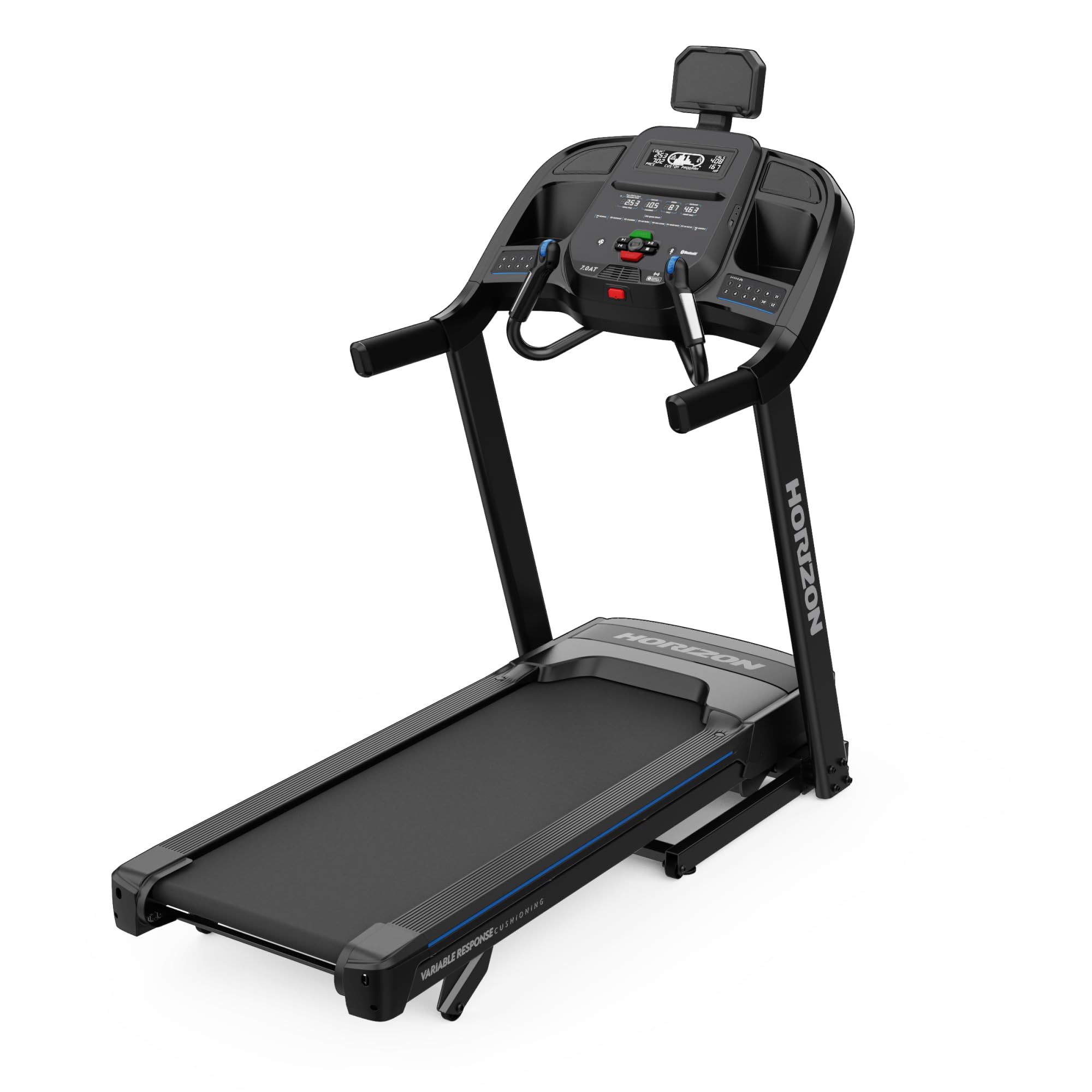
Horizon Fitness 7.0AT

Horizon Fitness 7.0AT

App-connected runners

Our Score 8.2/10
Check Price

Worth Noting

  • Incline and speed controls can be accidentally bumped during runs, disrupting workout flow.
  • Motor clicking or intermittent power loss may appear in some units within weeks of use.
Deck Size
20 x 60 in
Non-Folding
Folding
Incline Range
Auto 0-15%
Motor & Capacity
3.0 HP, 325 lbs
Read the full review

The Horizon Fitness 7.0 AT offers a 60-inch running deck, auto incline, and Bluetooth connectivity at a mid-range price — strong features for runners who value app integration. However, it folds, which contradicts the non-folding requirement for permanent placement. Some units may develop motor clicking or intermittent power loss within weeks, and the incline/speed dials can be bumped during runs. These factors prevent it from competing with dedicated non-folding models in long-term stability.

Bottom line: A decent option for runners who want app connectivity and a large deck, provided they can accept the folding design and potential motor irregularities that make it unsuitable for long-term permanent placement.

How to Choose

Motor Power and Weight Capacity

A motor rated for sustained use (continuous horsepower, not peak) determines how well the treadmill maintains speed under load. A 2.0 HP motor may feel fine for walking but will struggle to keep pace during a 10-minute mile run.

Weight capacity is not just a safety limit; it directly affects frame rigidity. A 300 lb capacity treadmill flexes noticeably under a 250 lb runner, accelerating wear on the belt and bearings.

Running Deck Dimensions

Deck width and length dictate stride comfort. An 18-inch belt forces narrow foot placement and increases the chance of stepping off edge during sprints. A 22-inch width gives room for natural gait.

Length matters for tall runners: a 60-inch deck requires slowing down to avoid hitting the motor hood, while a 62-inch deck accommodates longer strides without adjustment.

Incline Range

Auto incline provides gradual, repeatable gradients for hill training. Manual incline (only adjustable by lifting the deck) maxes out at 5% and cannot be changed mid-run.

For serious runners, a 15% auto incline allows true hill simulation. The trade-off is added electronic complexity and cost.

Non-Folding Construction

A non-folding frame is a single welded unit with no hinge or folding joint. This eliminates the most common failure point in treadmills and provides a perfectly stable platform at speed.

The downside is weight: non-folding machines often exceed 300 lbs, making delivery and placement a two-person job. Measure doorways and stair turns before ordering.

Frequently Asked Questions