Cardio Machines

7 Best Cushioned Treadmill 2026: Soften Impact Without Sacrificing Stability

Cut through the cushioning claims to find a treadmill that actually protects your joints while staying stable and reliable.

Every treadmill ad boasts about cushioning, but the difference between a soft landing and a jarring step comes down to specific design choices. Many affordable models use thin rubber pads that compress quickly, leaving your knees to absorb the rest. Add in inconsistent reliability and the push for subscriptions, and finding the right machine becomes a frustrating guessing game.

The real shortcut is knowing which specs actually reduce impact. A long deck (55 to 60 inches) gives you room to stride naturally without feeling cramped. A weighted, well-built frame keeps the platform stable at higher speeds. And auto incline adds variety but introduces extra complexity. Match these factors to your running style and space, and you'll land on a treadmill that softens each step without falling apart.

#1

WELLFIT 4.5HP 15%

Top Pick
WELLFIT 4.5HP 15%

Heavy users & runners

Our Score 9.2/10
Check Price

Worth Noting

  • Incline mechanism may become unresponsive or glitchy in a small number of units.
Motor
4.5 HP Brushless
Foldability
Folding
Incline Range
0-15% Auto
Weight Capacity
500 lbs
Read the full review

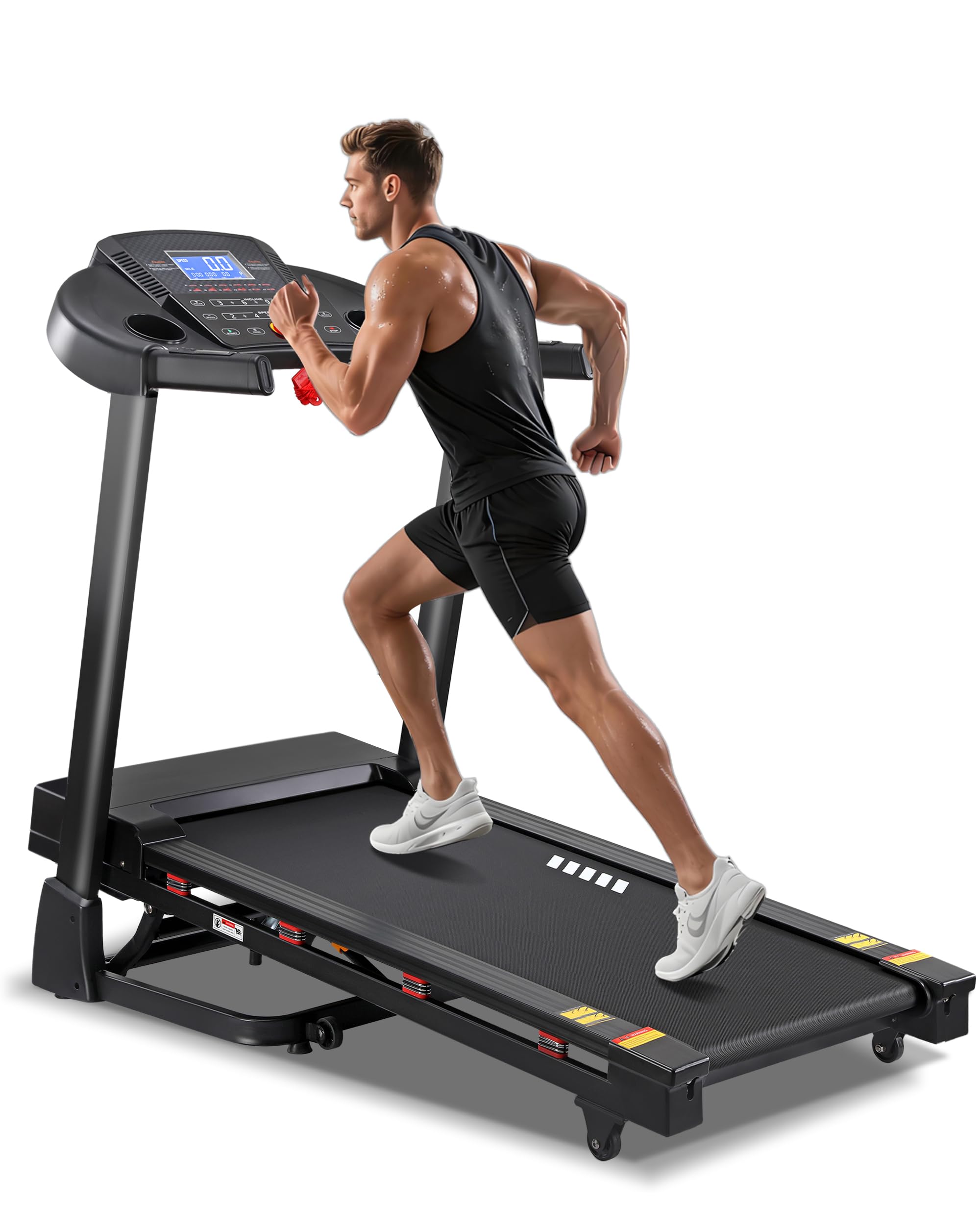
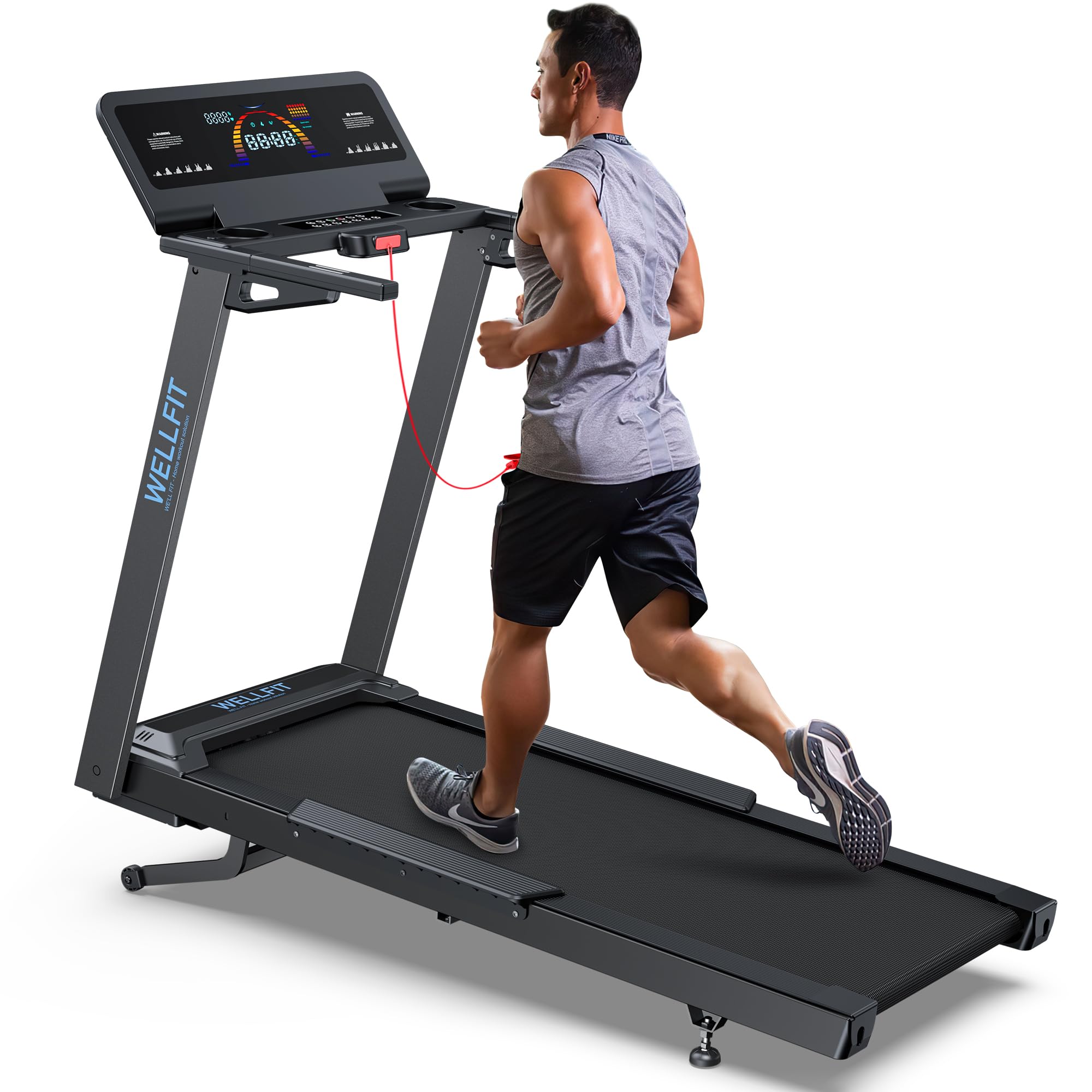
The WELLFIT supports up to 500 lbs with a 15% auto incline and requires no subscription — a combination typically reserved for pricier units. Its 4.5 HP brushless motor delivers consistent speed up to 10 MPH, while the cushioning system uses eight shock absorbers and a multi-layer belt to reduce impact, making it a solid choice for joint-conscious runners.

The machine runs quietly, with a motor that blends into background conversation and won’t disturb neighbors in an apartment setting. The frame stays stable during high-speed strides, though a small number of units have experienced incline mechanism glitches where the deck fails to adjust. Checking this function early in ownership is advisable.

The eight shock absorbers and five-layer belt strike a balance between softness and responsiveness. The deck cushions impact without feeling spongy, maintaining feedback for a natural running stride — a detail that matters for those who run seriously but want less joint stress. This makes it a strong option for runners focused on reducing impact without losing belt feel.

This treadmill suits heavier users (up to 500 lbs) who need a stable platform, apartment dwellers who value quiet operation, and runners seeking auto incline without the premium. The 55-inch deck is adequate for most but may feel short for runners over 6’2’. Incline glitches, while uncommon, are a possible QC variance to be aware of when purchasing.

Given its mid-range price, the WELLFIT undercuts many competitors that charge more for similar capacity and incline features. Brands like NordicTrack and ProForm require an iFIT subscription for auto incline and coaching, while WELLFIT keeps all core functions free — a meaningful saving over time for those who want a straightforward, durable machine.

Bottom line: For anyone prioritizing impact reduction and heavy-duty build over brand name, the WELLFIT delivers genuine cushioning and stability at a price that leaves comparable models behind.

#2

3G Cardio Elite X

3G Cardio Elite X

Serious marathon runners

Our Score 9.0/10
Check Price

Worth Noting

  • Plastic motor cover and button panels can crack over time; check for stress points after assembly.
  • At 366 pounds, moving or repositioning requires multiple people and a dolly
Motor
4.0 HP Club-rated
Foldability
Non-folding
Incline Range
0-15% Auto
Weight Capacity
400 lbs
Read the full review

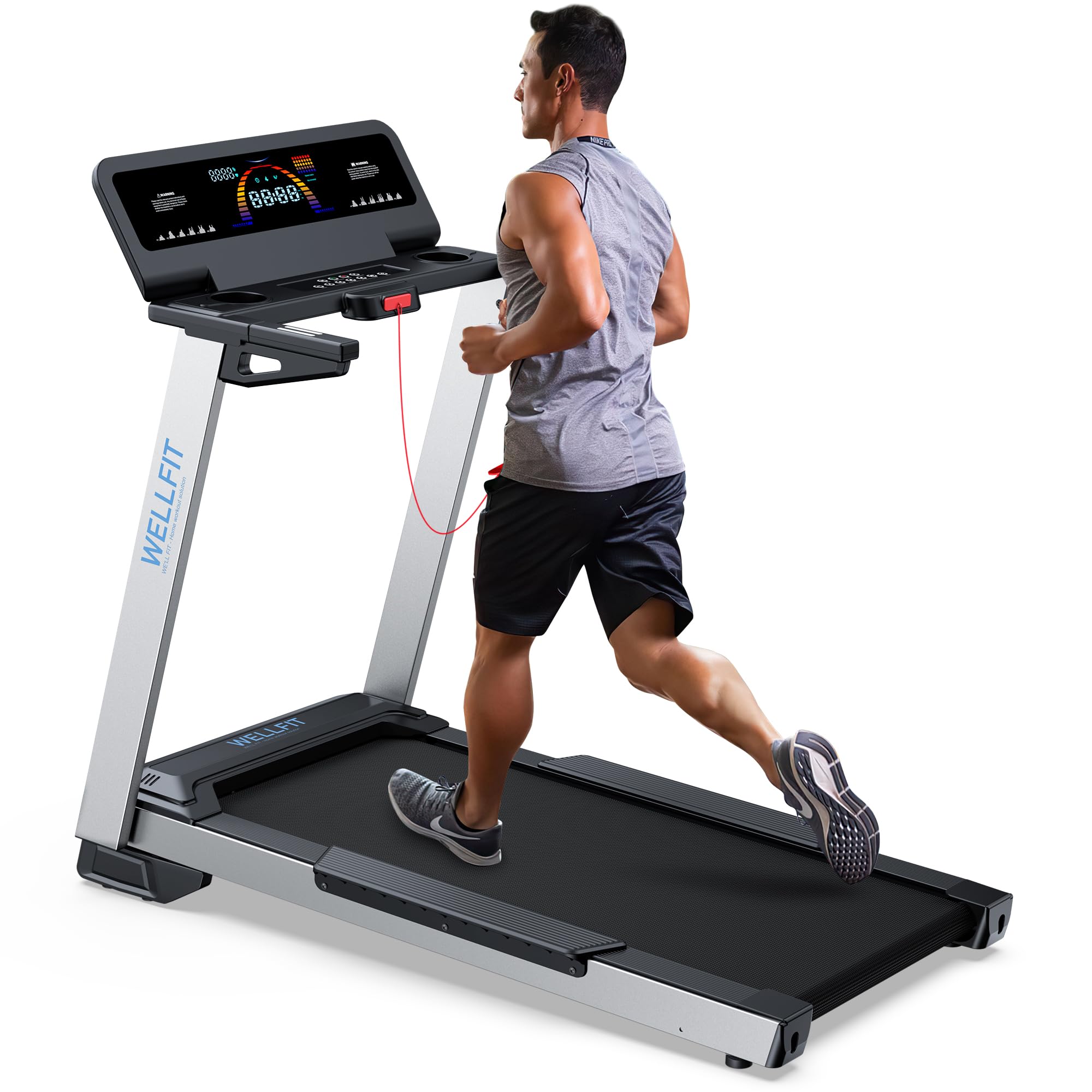
The 3G Cardio Elite Runner X delivers a 22-by-62-inch running deck and a 4.0 HP club-rated motor, offering a spacious, quiet ride that absorbs impact through its Ortho Flex Shock suspension. The belt remains smooth even at top speed, and the frame feels planted during hard strides – no wobble or shake.

This treadmill is for marathon trainers and tall runners who need a long, wide belt and don't plan to fold or frequently relocate the machine. The tradeoff? Its 366-pound body makes delivery and placement a two-person job, and the motor cover and console buttons use plastic that can crack under stress – a contrast to the all-metal feel of the top pick.

No subscription is required for any core function, and the lifetime frame warranty adds long-term peace of mind. The cushioning system is effective but not aggressively soft – it provides enough give for joint protection without sacrificing road-like feedback for performance training.

Tip: Arrange for in-room delivery with assembly (typically $150–$200) to avoid struggling with the 366-pound box and awkward motor cover fitment.

Bottom line: If you have a dedicated training space and want a no-subscription, rock-solid treadmill that handles heavy mileage, this delivers – just budget for delivery help and keep an eye on the plastic trim.

#3

WELLFIT 4.0HP Manual

WELLFIT 4.0HP Manual

Heavy walkers/joggers

Our Score 9.0/10
Check Price

Worth Noting

  • Manual incline limited to 5%
  • Short 45-inch deck may feel cramped for users over 6'2" or those with long strides
Motor
4.0 HP Brushless
Foldability
Folding
Incline Range
0-5% Manual
Weight Capacity
450 lbs
Read the full review

This treadmill delivers a stable, cushioned surface with eight shock absorbers and a five-layer belt, supporting up to 450 lbs at speeds up to 10 mph. Its quiet motor and solid build feel more premium than the price suggests. The 45-inch deck and fixed incline system make it better suited for walking and light jogging than for serious running or tall users. For the entry-level price, it's a value-focused choice.

Bottom line: Best for heavy walkers and light joggers on a tight budget who prioritize durability and quiet operation over incline flexibility.

#4

ECHANFIT 15% Auto

ECHANFIT 15% Auto

Budget auto incline runners

Our Score 9.0/10
Check Price

Worth Noting

  • Deck width at 18.11 inches is adequate but can feel narrow for wider running strides.
  • Motor or control electronics may require attention under frequent daily use over several months.
Motor
3.5 HP Brushless
Foldability
Folding
Incline Range
0-15% Auto
Weight Capacity
350 lbs
Read the full review

The ECHANFIT delivers an auto incline and multi-layer cushioned deck at a price point rarely seen in compact folding models. Its 3.5 HP brushless motor runs quietly, and assembly feedback is consistently positive. For runners under 6 feet who prioritize impact reduction and tight budgets, it offers a rare combination of features. However, long-term durability under daily use is less certain — a few units have shown motor or control issues after several months. The deck width at 18.11 inches is adequate but narrow for wider strides. This treadmill fits best for lighter-use scenarios or buyers comfortable with some uncertainty for the upfront savings.

Bottom line: This treadmill fits budget-focused runners under 6 feet who need auto incline and cushioning but plan to use it a few times per week rather than daily — and accept some trade-off in long-term certainty.

#5

ProForm Carbon TLX

ProForm Carbon TLX

iFIT coaching fans

Our Score 8.8/10
Check Price

Worth Noting

  • Assembly instructions can be unclear and require two people for the hydraulic assist step
  • iFIT subscription is required to access most console features, adding ongoing cost
Motor
3.0 HP
Foldability
Folding
Incline Range
0-12% Auto
Weight Capacity
300 lbs
Read the full review

The 60-inch running surface and ProShox cushioning give the Carbon TLX an advantage over shorter-deck models in its price range, offering enough room for longer strides without feeling cramped. The 3.0 HP motor stays quiet at higher speeds, and the auto incline adjusts between 0-12%. However, the console's interactive training, auto-adjust coaching, and global workout library require an iFIT subscription - without it, the treadmill operates as a basic manual machine.

This treadmill suits runners who already value iFIT's guided workouts and are comfortable with the monthly fee to unlock the full experience. The assembly process can be more involved than expected, needing two people for the hydraulic folding mechanism. For buyers who want a no-subscription treadmill with similar specs, the top pick in this category offers comparable cushioning and auto incline without recurring costs.

Bottom line: If you are already invested in the iFIT ecosystem and want a long deck with cushioning, the Carbon TLX delivers. Just be prepared to pay for the subscription to get the full benefit.

#6

NordicTrack T 6.5 S

NordicTrack T 6.5 S

First-time buyers

Our Score 8.6/10
Check Price

Worth Noting

  • Assembly instructions can be unclear and some parts are heavy; a second person is often helpful.
  • Motor and belt noise may be noticeable in quiet rooms, less of an issue in a home gym or garage.
  • Some units have experienced motor or electronic issues within months, so it's worth checking warranty coverage.
Motor
2.8 HP SMART-Response
Foldability
Folding
Incline Range
0-10% Auto
Weight Capacity
300 lbs
Read the full review

With over 33,000 reviews, the NordicTrack T 6.5 S is one of the most purchased treadmills in its price range. Its 20-inch by 55-inch deck and KeyFlex cushioning reduce impact for walkers and light joggers, and the folding design saves floor space.

This treadmill suits first-time buyers who intend to subscribe to iFIT for guided workouts, as many smart features depend on that ongoing cost. Some units have experienced motor or electronic issues early on, so shoppers wanting maximum long-term simplicity may prefer a more robust alternative like the top pick.

Assembly can be a two-person task with unclear instructions, and the motor and belt noise is higher than quiet-home environments allow. For those who can manage the setup and aren't bothered by noise during use, the T 6.5 S delivers consistent daily performance for walking and light jogging.

Bottom line: A practical starter treadmill for those committed to iFIT, but the subscription cost and occasional reliability concerns make the top pick a better long-term value for most shoppers.

#7

Horizon 7.0 AT

Horizon 7.0 AT

Tech-savvy tall runners

Our Score 8.2/10
Check Price

Worth Noting

  • Quick-dial speed/incline controls are easy to bump during a run, causing sudden changes
  • Incline adjustment can feel unresponsive or inconsistent between units
  • Motor or control electronics may stop working in a minority of units within months
Motor
3.0 HP Rapid Sync
Foldability
Folding
Incline Range
0-15% Auto
Weight Capacity
325 lbs
Read the full review

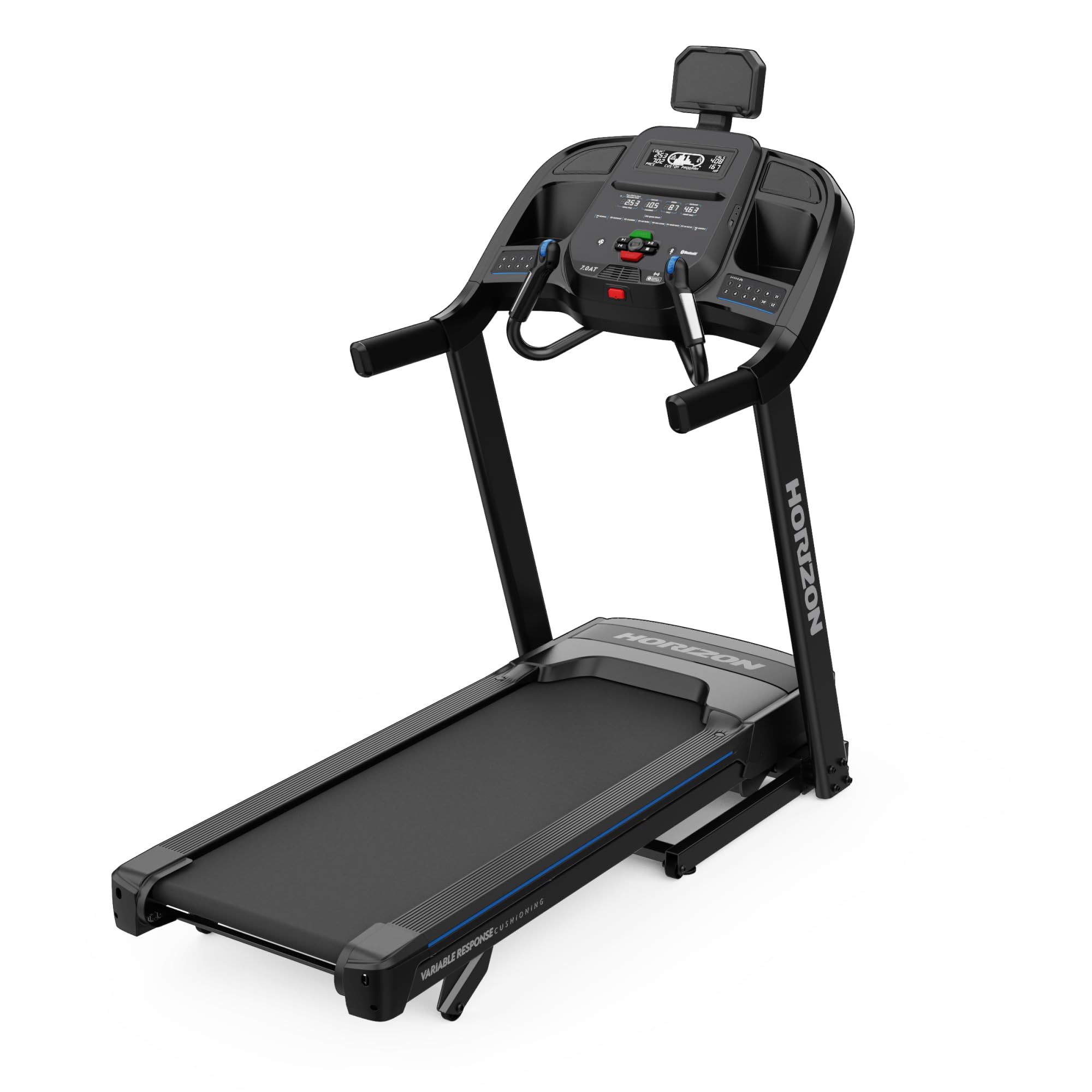
The Horizon 7.0 AT delivers a 60-inch running deck and 3-zone Variable Response Cushioning at a mid-range price, giving tall runners the stride space and impact absorption that many competitors reserve for higher-cost models. Where the top pick in this category relies on its own subscription platform, the Horizon works with any Bluetooth-paired app — including Peloton — so you aren't forced into a recurring fee to access guided workouts.

This setup suits runners over 6 feet who find standard 50-inch decks restrictive, and it folds upright to reclaim floor space between runs. The tradeoff: a notable minority of owners have experienced motor or control electronics stopping within months of purchase. This isn't a blanket failure — many units run fine for years — but it raises the threshold for buying with confidence, especially for those who plan heavy daily use.

Tip: The quick-dial controls sit near the hand position — keep your grip a few inches away to avoid accidental speed bumps during a stride.

Bottom line: If your priority is a long deck and cushioning without a subscription tie-in, the Horizon 7.0 AT delivers on those specs — but the reliability record means it's best for buyers comfortable with a higher chance of early repair needs.

How to Choose

Cushioning System Type and Effectiveness

Cushioning systems range from simple rubber pads to multi-zone shock absorber arrays. The most effective setups combine a thick belt with multiple compressible elements that dissipate impact before it reaches your joints. Pads alone often bottom out under heavier runners, making the treadmill feel solid but jarring.

A system with at least eight shock absorbers or a three-zone variable response offers a noticeable difference. However, overly soft cushioning can create an unstable platform, especially during sprints. Look for a balance that absorbs without bouncing you off balance.

Running Deck Size

A deck that is too short forces you to shorten your stride, altering your gait and increasing impact on your hips and knees. For runners over 5'8", a 55-inch deck is the minimum; taller runners need 60 inches. Width also matters – at least 18 inches is comfortable, but 20 inches feels more natural. The trade-off is footprint: longer decks require more floor space and often make the treadmill heavier.

Motor Horsepower and Noise

Continuous duty horsepower (CHP) between 2.5 and 3.0 is adequate for walking and light jogging. Sustained running at 6+ mph demands at least 3.0 CHP, with 4.0 CHP preferred for heavy use. Brushless motors run quieter and last longer than brushed ones. Noise level is not always proportional to power – some high-HP motors are quieter than lower-spec units due to insulation and belt quality.

Test the treadmill at your typical speed if possible. A loud motor or belt squeak is a sign of poor build and will become annoying over time. Apartment dwellers should prioritize models explicitly praised for quiet operation.

Incline Range (Auto vs Manual)

Auto incline allows you to change slope without stopping, adding variety and simulating hills. A range of 0-12% is enough for most home users; 15% accommodates steep hill training. Manual incline is simpler and less likely to malfunction, but you must stop and adjust it physically. The hidden trade-off: auto incline mechanisms add cost and are a common failure point in mid-range treadmills. If you rarely run hills, manual incline saves money and reduces complexity.

Weight Capacity and Build Quality

Weight capacity directly correlates with frame sturdiness. A 300 lb limit is standard for light joggers, but heavy runners or those over 250 lbs benefit from 400-500 lb capacity. Higher capacity machines use thicker steel and heavier components, making them more stable but difficult to move. Build quality shows in the feel of the frame under full stride – wobble indicates inadequate bracing. Reading user feedback about stability at speed is more reliable than the spec sheet.

Foldability and Footprint

Folding treadmills save space but often sacrifice some frame rigidity. Hydraulic assist makes folding easier, but the mechanism can add weight and complexity. Non-folding designs are inherently more stable and easier to maintain, but require a permanent spot. If you plan to store the treadmill upright after each use, look for a model with a deck lock that feels secure and does not add wobble during running. A smaller footprint usually means a shorter deck – decide which trade-off matters more.

Frequently Asked Questions