Accessories

13 Best Running GPS Watch of 2026: Find Your Perfect Training Partner

Find the best running GPS watch for your training style – whether you need advanced metrics, ultra-long battery, or budget AMOLED.

Many runners find that advertised battery life on GPS watches doesn't match real-world use, and wrist heart rate can lag during intervals. But the right watch balances specs and reliability for your specific routine.

The sweet spot for most runners is $200-350, where AMOLED displays and advanced training metrics become standard. Whether you prioritize lightweight comfort for ultras or a bright screen for daily runs, this guide breaks down the key trade-offs.

Choosing between button controls and touchscreen, or between COROS battery efficiency and Garmin's ecosystem depth, comes down to how you train. The picks below reflect those real-world priorities.

#1

COROS PACE 4

Top Pick
COROS PACE 4

Lightweight fans

Our Score 9.6/10
Check Price

Worth Noting

  • Voice command functionality is still in early stages
Display
1.2" AMOLED
GPS Support
Dual-frequency
Battery (GPS)
41 hours
Music Storage
Read the full review

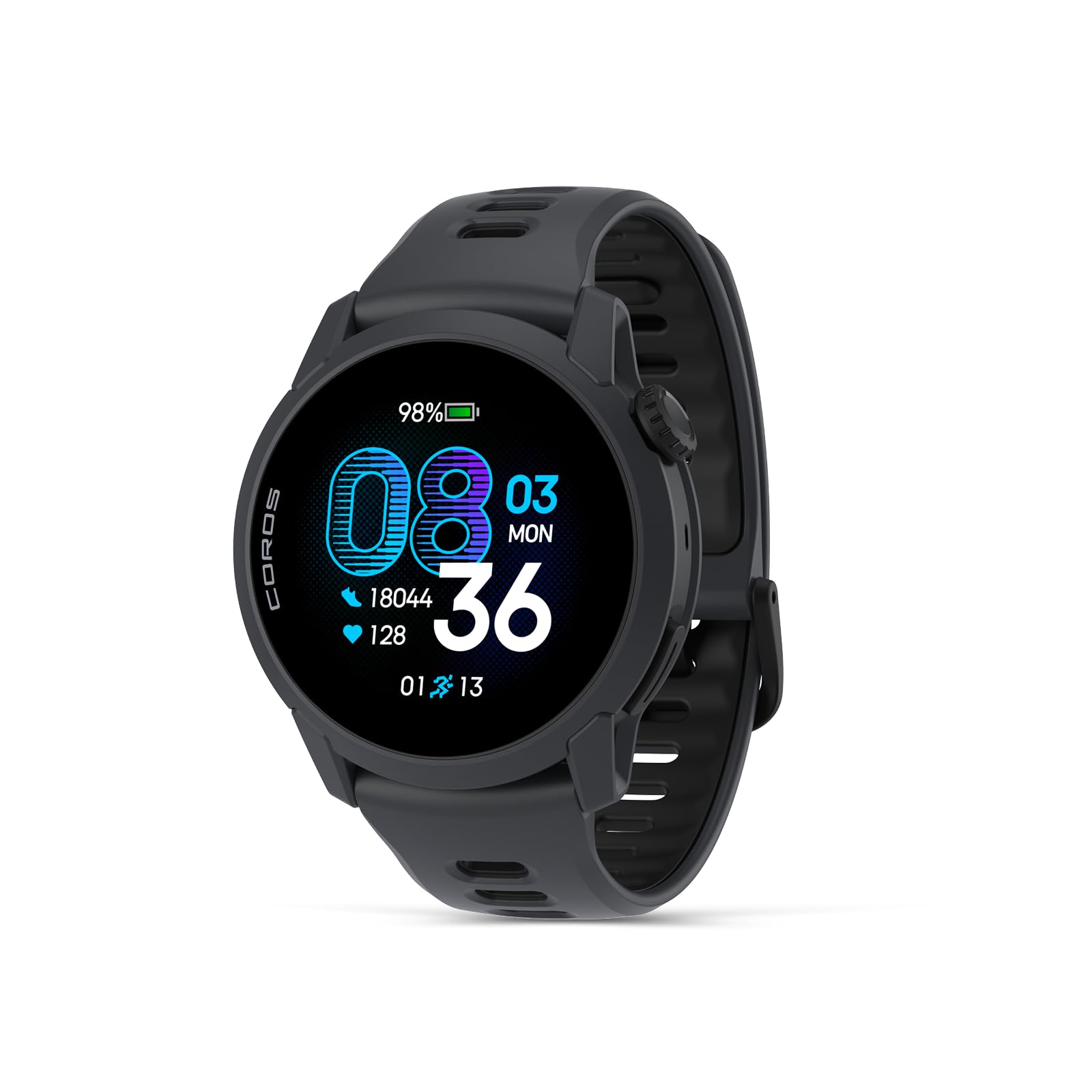
The PACE 4 builds on COROS's lightest platform with a 32g body that disappears on the wrist, dual-frequency GPS, and a digital crown for navigation. Voice controls add a new layer of interaction, but their utility depends on your running routine — occasional commands may feel more like a novelty than a necessity. This is a watch for early adopters who want cutting-edge weight and features now, accepting that long-term durability is not yet established and the voice ecosystem is still maturing.

Bottom line: The PACE 4 is the right choice for runners who want the lightest possible running watch with the latest COROS features, as long as they are comfortable with a newer platform and have patience for voice feature polish.
#2

Garmin Forerunner 265

Garmin Forerunner 265

Serious runners

Our Score 9.4/10
Check Price

Worth Noting

  • Interface has a steep learning curve and button-heavy menus that can frustrate new users
  • GPS and heart rate accuracy can drift in challenging conditions or during high-intensity intervals
Display
1.3" AMOLED
GPS Support
Multi-band with SatIQ
Battery (GPS)
20 hours
Music Storage
8 GB
Read the full review

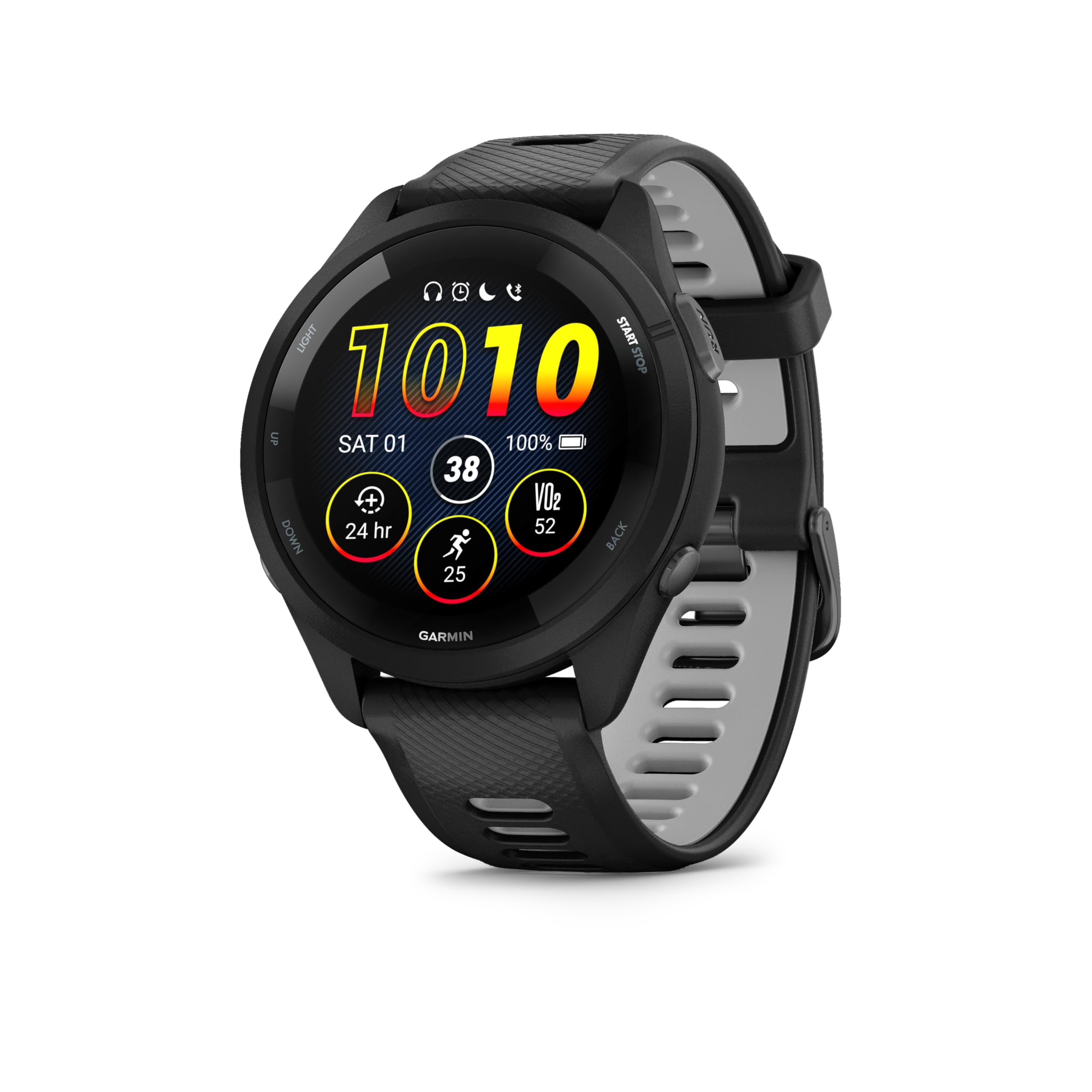
The 1.3-inch AMOLED display brings run data to life with bright colors and crisp clarity even under direct sun, making pace, heart rate, and lap splits instantly readable. Garmin packs in training load, HRV status, and recovery insights that turn raw data into actionable guidance for pacing and rest days.

Battery life holds up well for daily use: expect seven to ten days with workouts, and GPS mode carries through a 20-hour ultra without needing a charge. A minority of users notice occasional GPS drift during tight urban canyons or heart rate readings that lag behind effort during intervals — worth checking against a chest strap if you train by heart rate zones.

This watch suits runners who want to track every variable of their training — load, readiness, sleep, and recovery — and who are comfortable spending time learning a button-heavy interface with many menu layers. The steep learning curve means it can feel clunky during the first few runs, but the customization options and depth of metrics reward the effort for those who stick with it.

Tip: Spend time customizing data screens and practice menu navigation on easy runs — the interface becomes faster once you learn the button shortcuts.

Bottom line: For runners who want pro-level analytics without stepping up to the 965’s price, the 265 delivers a well-rounded package that earns its spot as the mid-range benchmark.

#3

Garmin Forerunner 965

Garmin Forerunner 965

Serious runners

Our Score 9.4/10
Check Price

Worth Noting

Display
1.4" AMOLED
GPS Support
Multi-band with SatIQ
Battery (GPS)
31 hours
Music Storage
32 GB
Read the full review

Full-color offline maps with terrain contours and points of interest, plus 32GB of music storage, distinguish the Forerunner 965 from the top pick Forerunner 265. It keeps all the advanced training analytics — HRV status, training readiness, and recovery insights — that data-driven runners rely on, and adds a bright 1.4-inch AMOLED display that is readable even in direct sunlight.

Battery life reaches up to 23 days in smartwatch mode and 31 hours with GPS, fitting multi-day trail runs. The morning report provides sleep score, HRV, and training readiness to guide daily effort. Wireless sync via Wi-Fi and Bluetooth is fast and reliable, and the titanium bezel makes it comfortable for all-day wear.

This premium-priced watch is aimed at serious runners and triathletes who need offline trail navigation and music without carrying a phone, and who train in remote areas without cell service. The high cost only makes sense if these features are used regularly — for road runners who always have a phone, the 265 is a better fit. Occasional GPS drift and heart rate inaccuracies have been noted in certain conditions, so runners who demand perfect consistency should test it carefully. For most athletes, the Forerunner 265 delivers the same deep training analytics at a lower price.

Bottom line: The 965 is purpose-built for runners who rely on offline maps and music during their training.

#4

Amazfit Active Max

Amazfit Active Max

Budget runners

Our Score 9.4/10
Check Price

Worth Noting

  • Step counting can occasionally miscount during casual walking or daily activity
  • Zepp app lacks the deep training load and recovery analytics of Garmin or COROS
Display
1.5" AMOLED, 3000 nits
GPS Support
5 satellite systems
Battery (GPS)
20 hours
Music Storage
4 GB
Read the full review

The Amazfit Active Max stands out with its 1.5-inch 3000-nit AMOLED screen — one of the largest and brightest displays in the budget segment — and a battery that easily lasts two weeks between charges. Offline maps and 4GB music storage add utility for runs without a phone. Where it falls short compared to the top pick is training depth: the Zepp app provides basic metrics but lacks the actionable recovery and load insights that serious runners get from Garmin or COROS.

In daily use, the screen remains readable even under direct sunlight, and the GPS locks quickly with five satellite systems. Battery life consistently exceeds the claimed 25 days for mixed use; with GPS tracking active, expect around 20 hours, which covers most long runs and marathons. Offline maps render smoothly and help navigate unfamiliar routes, though the watch lacks turn-by-turn prompts found on pricier models.

This watch suits budget-conscious runners who want a bright, large display and long battery life without investing in Garmin’s ecosystem. It also works well for everyday athletes who track multiple sports. The tradeoff: step counting can be slightly off during walks or casual activity, and the Zepp app’s training analysis is less detailed than what you’d get from Garmin Connect. Those who rely on advanced recovery metrics or third-party app integrations should look at the top pick instead.

Tip: If step count accuracy is important for daily activity tracking, consider a wrist-based pedometer; the watch's step tracking may vary.

Bottom line: For runners who value a big, bright display and exceptional battery life over advanced training metrics, the Active Max delivers remarkable value with offline maps and music built in.

#5

Garmin Forerunner 165

Garmin Forerunner 165

New runners

Our Score 9.4/10
Check Price

Worth Noting

  • No onboard music storage or offline maps
  • Heart rate and sleep tracking accuracy can degrade after several months of use
Display
1.2" AMOLED
GPS Support
Multi-band GNSS
Battery (GPS)
19 hours
Music Storage
Read the full review

The Forerunner 165 brings Garmin's colorful AMOLED display and recovery metrics to the sub-$200 mark, undercutting the 265 by a noticeable margin while keeping the core training tools most runners need. For those who can do without music storage or offline maps, this watch offers a crisp screen and accurate GPS tracking without the premium price tag.

Battery life comfortably exceeds a week with daily runs, and the interface is straightforward enough to set up without digging through a manual. Occasional sensor drift has been noted in heart rate and sleep tracking after a few months of use — a minority of units show this, but it's something to keep an eye on.

This watch fits best for runners focused on training data and recovery who don't need onboard music or maps and are comfortable relying on their phone for audio. It's also a strong upgrade for anyone moving from a basic fitness tracker who wants Garmin's ecosystem without jumping to the 265's price bracket. The lack of offline maps and the possibility of sensor inaccuracies after extended use are the main tradeoffs to weigh.

Tip: Keep your phone handy for music or podcasts — the watch relies on phone storage for audio.

Bottom line: If you want Garmin's AMOLED display and recovery metrics but don't need music or maps on your wrist, this is the most cost-effective way to get them — just be aware of the occasional sensor drift.

#6

COROS PACE Pro

COROS PACE Pro

AMOLED fans

Our Score 9.4/10
Check Price

Worth Noting

  • The 1.3-inch screen can feel cramped for viewing map details while running
  • No music storage or smartwatch features like calendar integration - purely a sports watch
Display
1.3" AMOLED, 1500 nits
GPS Support
Dual-frequency
Battery (GPS)
38 hours
Music Storage
Read the full review

With a bright 1.3-inch AMOLED screen and global offline maps, the COROS PACE Pro brings navigation and visibility that serious runners value, all at a price below Garmin's top-tier options. Dual-frequency GPS locks quickly and tracks reliably in dense urban or tree-covered routes. The watch is purpose-built for sports, so it skips music storage and smartwatch extras like calendar alerts. Its 20-day battery is solid but a few days shy of the Forerunner 265, and the COROS app ecosystem is less mature for deep analytics. Runners who want modern display and mapping without paying a premium for smartwatch features will find this a strong fit.

Bottom line: For runners who prioritize offline maps and a bright display over smartwatch extras and are comfortable with COROS's younger app ecosystem, the PACE Pro offers strong value at a mid-range price.

#7

Garmin Forerunner 255

Garmin Forerunner 255

Battery focus

Our Score 9.4/10
Check Price

Worth Noting

  • Button-only navigation can be confusing, especially for users accustomed to touchscreens.
  • No on-board music storage on this version (available on the Forerunner 255 Music).
Display
1.3" MIP
GPS Support
Multi-band GNSS
Battery (GPS)
30 hours
Music Storage
Read the full review

The Forerunner 255 earns its reputation for battery endurance in a mid-range form that sacrifices screen vibrancy and menu simplicity. Its 30-hour GPS mode and multi-band GNSS satisfy long runs and multi-sport events without the weight of a premium price tag or the drain of an AMOLED display. The tradeoffs show up in a button-only interface that requires some learning and a MIP display that lacks the pop of color AMOLED screens. Additionally, this non-music variant won't store playlists, though the Forerunner 255 Music model covers that need. Occasional sensor drift in the barometer or heart rate monitor has been noted after months of use, but this isn't a universal issue.

Bottom line: Best suited for runners who value battery life above all else and are comfortable with a learning curve — ideal for ultra training and multi-sport events where every extra hour of GPS tracking matters.

#8

Garmin Forerunner 570

Garmin Forerunner 570

Smaller wrists

Our Score 9.4/10
Check Price

Worth Noting

  • Costs more than the 265 without offering additional features or battery life
  • Heart rate readings can be inconsistent during hard efforts
Display
1.2" AMOLED
GPS Support
Multi-band GNSS
Battery (GPS)
18 hours
Music Storage
8 GB
Read the full review

The Forerunner 570 delivers multi-band GPS, a bright AMOLED display, and Garmin's training metrics in a compact 42mm case that sits comfortably on smaller wrists. It tracks runs accurately and provides recovery insights useful for triathlon training. The catch is a premium price that doesn't add anything over the cheaper 265, which also offers longer battery life (10 days vs 7-10). Heart rate readings can lag during high-intensity efforts, so pairing with a chest strap is advisable for interval work.

Tip: For accurate heart rate data during intense intervals, pair with a chest strap.

Bottom line: Best for runners who prioritize a compact fit and want Garmin's full ecosystem, provided the premium over the 265 is acceptable.

#9

Garmin Forerunner 935

Garmin Forerunner 935

Triathlon value

Our Score 9.4/10
Check Price

Worth Noting

  • Cosmetic wear such as scratches on the bezel may be present, and the warranty is limited to 90 days.
  • Heart rate monitoring is less accurate than newer Garmin watches or chest straps, especially during intervals.
Display
1.2" MIP
GPS Support
GLONASS
Battery (GPS)
24 hours
Music Storage
Read the full review

This renewed Forerunner 935 delivers premium triathlon features like running dynamics, a barometric altimeter, and accurate GPS tracking at a budget-friendly price. Weighing just 49g, it's comfortable for all-day wear and training. However, being renewed means cosmetic wear like scratches may be present, and the warranty is only 90 days. The older heart rate sensor is less precise than current models, so serious interval pacing may benefit from a chest strap.

Bottom line: Fits budget-conscious triathletes who want premium running metrics and are willing to accept cosmetic imperfections and a short warranty.

#10

Garmin Forerunner 970

Garmin Forerunner 970

Enthusiasts

Our Score 9.4/10
Check Price

Worth Noting

  • Some units ship with scratches on the titanium bezel, requiring inspection at delivery.
  • Activity data can occasionally corrupt after saving, posing a risk for runners who track detailed training logs.
Display
1.4" AMOLED, sapphire
GPS Support
Multi-band GNSS
Battery (GPS)
26 hours
Music Storage
32 GB
Read the full review

The Forerunner 970 delivers unique hardware additions not found on other running watches: a flashlight that runners report as surprisingly useful for early morning or evening runs, ECG capability for on-demand electrocardiograms, and a titanium bezel with sapphire crystal that resists scratches far better than standard glass. But the $650 price is a steep premium over the Forerunner 965, which offers nearly identical training metrics and GPS accuracy for $150 less. Some units have arrived with bezel scratches out of the box, and occasional software bugs can corrupt activity data — issues that make this a watch for buyers who specifically want these exclusive features and can absorb the cost and minor risks.

Tip: Regularly sync your activities to a secondary app to guard against data corruption.

Bottom line: This watch fits the runner who specifically wants the flashlight, ECG, and sapphire durability — and is willing to pay a premium and accept minor QC and software risks.

#11

Amazfit Active 3 Premium

Amazfit Active 3 Premium

Sapphire value

Our Score 9.2/10
Check Price

Worth Noting

  • Zepp app lacks advanced training analytics like HRV and training readiness.
  • GPS battery life around 20 hours may not cover long runs or multi-day events.
Display
1.32" AMOLED, sapphire
GPS Support
6 satellite systems
Battery (GPS)
20 hours
Music Storage
4 GB
Read the full review

The Amazfit Active 3 Premium combines a 1.32-inch AMOLED display with sapphire crystal and a stainless steel bezel — materials normally found on watches twice the price. It includes offline maps and 4GB music storage, features that are rare at this price point. The screen stays readable in bright sunlight, and the build quality feels substantial.

Where it falls short is in the software experience. The Zepp app provides basic health tracking and running metrics but lacks the training load, HRV, and recovery insights found in Garmin Connect. Battery life is around 20 hours with GPS, which is sufficient for most daily runs but may not cover long weekend efforts. For runners focused on getting a durable watch with offline maps without spending over $200, these tradeoffs are acceptable.

Bottom line: For runners who value scratch resistance and offline maps over deep training metrics, this Amazfit delivers a premium-feeling watch at a fraction of the cost of competitors.

#12

COROS PACE 3

COROS PACE 3

Ultra runners

Our Score 9.0/10
Check Price

Worth Noting

  • Menu navigation can be confusing for those new to COROS watches.
  • Optical heart rate readings may lag behind chest strap data during intense intervals.
  • Occasional charging or power issues have been reported after two to three years of use.
Display
1.2" MIP
GPS Support
Dual-frequency
Battery (GPS)
38 hours
Music Storage
Read the full review

The COROS PACE 3 sets a benchmark for battery life in a lightweight running watch, offering 38 hours of GPS tracking and dual-frequency GNSS that holds a lock in urban canyons and forest trails. Its 30g weight (with nylon band) makes it nearly unnoticeable on the wrist during long runs, and the transflective MIP display sips power, extending time between charges well beyond what AMOLED watches at this price can match.

This watch is built for marathon and ultra runners who want maximum GPS endurance without paying premium prices. The MIP display is less vibrant than AMOLED alternatives, and the optical heart rate sensor can lag behind a chest strap during high-intensity intervals. Some units have shown charging or power issues after two to three years of heavy use, so buyers planning to keep the watch for many seasons should factor that in.

The COROS app provides clear training data and route navigation, though first-time users may need to spend time learning the button-based menu system. For runners focused on distance and time over flashy screen graphics, the tradeoffs are worth the battery savings.

Tip: Spend an hour with the manual to navigate the menu; the learning curve shortens quickly.

Bottom line: For runners who need maximum battery and GPS accuracy without a premium tag, the PACE 3 is a practical choice – just weigh the display and HR tradeoffs against your priorities.

#13

Garmin Forerunner 55

Garmin Forerunner 55

Beginner budget

Our Score 9.0/10
Check Price

Worth Noting

  • Some units may develop charging or tracking issues after several months of use
  • Button navigation can be confusing for those accustomed to touchscreen interfaces
Display
1.04" MIP
GPS Support
GLONASS, Galileo
Battery (GPS)
20 hours
Music Storage
Read the full review

The Forerunner 55 covers the fundamentals: accurate GPS tracking for pace and distance, heart rate monitoring, and a battery that easily lasts a week with daily runs. Its transflective display stays readable in direct sunlight, and the 37g weight makes it comfortable for all-day wear. For someone new to running watches who just wants distance and time without extra frills, this delivers.

The tradeoffs become clear after a few months. Some units have shown charging or accuracy issues over time, and the button-based menu system can feel unintuitive compared to touchscreen alternatives. This watch suits buyers who are willing to learn the interface and accept possible unit variance — a first running watch for a teen or a budget-conscious adult comfortable with basic functionality.

Tip: Set up the watch via Garmin Connect before your first run to understand the button shortcuts and adjust the data fields.

Bottom line: Best for budget-conscious beginners or parents buying a first watch for a teen, provided they are willing to learn the interface and accept possible unit variance.

How to Choose

GPS Accuracy and Satellite Support

Multi-band GNSS (dual-frequency) provides the most reliable tracking in challenging environments like city canyons or dense forests. Watches with single-band GPS can show noticeable drift on twisty trails or near tall buildings.

For runners who stick to open roads or parks, standard GPS is usually sufficient. But if you run in urban areas or under heavy tree cover, multi-band support becomes a real accuracy advantage.

Battery Life in GPS Mode

Advertised smartwatch battery life is irrelevant for runners; always check the GPS hours. Real-world performance when using all features (always-on display, multi-band) often delivers 60-70% of the claim.

For daily runs of an hour, 15-20 GPS hours is plenty. Ultra runners who run 6+ hour events need at least 30 GPS hours. COROS pace 3 at 38 hours leads the budget segment, while Garmin's Forerunner 255 offers 30 hours at a mid-range price.

Display Type: AMOLED vs MIP

AMOLED displays offer vibrant colors and high contrast, making them easier to read in bright sunlight. The trade-off is higher power consumption, reducing GPS battery life by 20-30% compared to MIP screens.

MIP (memory-in-pixel) displays are reflective and use minimal power, ideal for long battery life. They remain readable in direct sun but struggle in low light. Your choice depends on whether you prioritize screen clarity or maximum runtime.

Training Metrics and Recovery Insights

Advanced metrics like HRV (heart rate variability), training readiness, and recovery time help you avoid overtraining and optimize performance. Garmin's ecosystem is the most mature here, with actionable insights directly on the watch.

COROS offers structured training plans and load tracking, but lacks the depth of Garmin's HRV analysis. Amazfit provides basic health tracking but falls short for serious runners who need data-driven training adjustments.

Music and Map Storage

Onboard music storage lets you leave your phone at home during runs. Forerunner 265 and 965 offer 8GB and 32GB respectively, enough for hundreds of songs. COROS and budget Amazfit models often skip this feature.

Offline maps are essential for trail runners navigating unfamiliar routes. Garmin 965 and COROS Pace Pro include full-color maps. If you run the same loops daily, map storage is an unnecessary expense.

Frequently Asked Questions