Accessories

11 Best Powerlifting Belt of 2026: Find Your Fit Without Returns

Struggling with sizing charts? Find the best powerlifting belt for your lifts – leather vs nylon, prong vs lever, and how to size correctly every time.

Every powerlifting belt buyer faces the same frustration: you measure your waist, follow the size chart, and the belt still doesn't fit. It's not your measuring tape – most leather belts run small, and nylon belts have their own quirks. The real challenge is finding a belt that matches your training style and body without the hassle of returns.

That trade-off between rigidity and convenience is the core decision. A stiff leather belt gives you maximum support for heavy squats, but requires weeks of break-in and precise sizing. A lightweight nylon belt adjusts instantly and needs no break-in, but may not hold up under 500-pound deadlifts. Knowing which trade-off matters most to your training is the key to a smart purchase.

This guide cuts through the confusion by focusing on what actually matters: material thickness, buckle reliability, and sizing accuracy. Whether you’re after a competition-legal 10mm belt or a budget-friendly nylon starter, the picks here share one trait – they deliver on their promise without guesswork.

#1

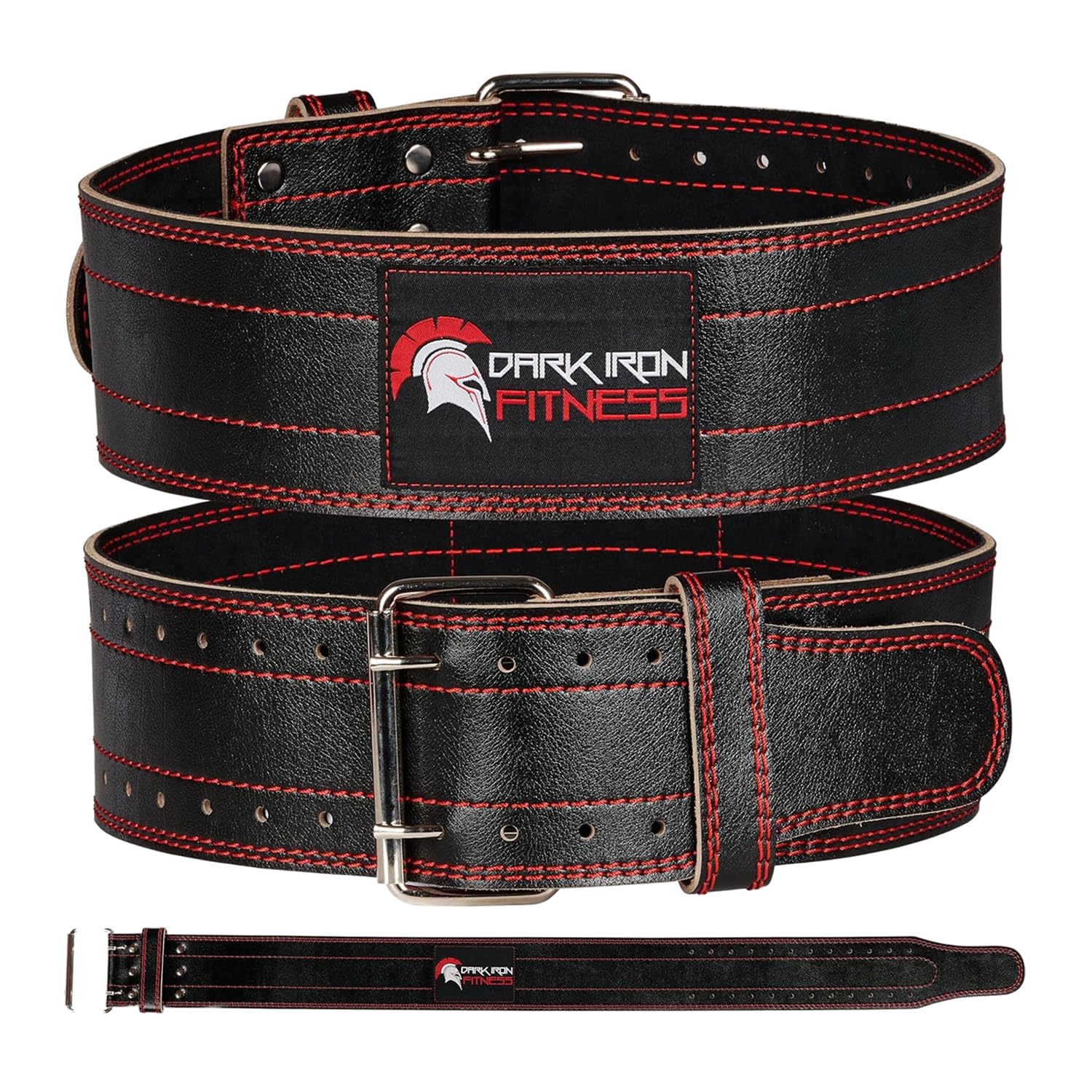
Dark Iron Fitness Genuine Leather

Top Pick
Dark Iron Fitness Genuine Leather

Powerlifting heavy lifts

Our Score 9.4/10
Check Price

Worth Noting

  • Fresh leather starts stiff and needs several training sessions to soften.
Width
4 inches
Closure
Double-prong metal buckle
Material
Leather
Thickness
5 mm
Read the full review

The Dark Iron belt offers immediate stability for heavy squats and deadlifts, with a 4-inch width that distributes pressure evenly across the core. The double-prong buckle locks securely, and the 5mm leather provides enough rigidity to brace against without digging into the ribs. The stitching and hardware hold up well session after session, which explains why it has become a go-to choice among serious lifters.

This belt suits powerlifters who prefer the predictable hold of a traditional buckle over lever or velcro closures. It works best for intermediate to advanced lifters with torso lengths that accommodate the uniform 4-inch width – those with very short torsos may find a tapered design more comfortable. The leather starts stiff and requires several sessions to mold to your shape; this is standard for new leather belts and not a defect.

Tip: Wear the belt around the house for a few days or roll it to speed up the break-in.

Bottom line: This belt delivers consistent support and build quality for heavy squats and deadlifts without the premium cost – a straightforward choice for powerlifters who value durability over flash.

#2

Jaffick 6-Inch Leather

Jaffick 6-Inch Leather

Extra lumbar coverage

Our Score 9.4/10
Check Price

Worth Noting

  • When ordering, sizing can run small - expect to go 2–3 inches above your measured waist.
Width
6 inches
Closure
Double-pin steel buckle
Material
Leather double-sided
Thickness
7 mm
Read the full review

This belt brings thick 7mm leather and a double-pin buckle at a budget-friendly price. The 6-inch width provides extra lower back coverage for those with longer torsos or strongman needs. However, sizing can run small; ordering 2–3 inches above your measured waist is necessary. The wide design also does not fit standard powerlifting where 4-inch belts are the norm.

Bottom line: Best suited for strongman athletes or lifters with longer torsos who need extra lumbar coverage and are prepared to order 2–3 inches above their waist measurement.

#3

ProFitness Leather 4″

ProFitness Leather 4″

Value leather belt

Our Score 9.2/10
Check Price

Worth Noting

  • Sizing can be off by a half-inch or more, so careful measurement and potential exchange may be needed.
Width
4 inches
Closure
Double-prong buckle
Material
Genuine leather with suede
Thickness
7 mm
Read the full review

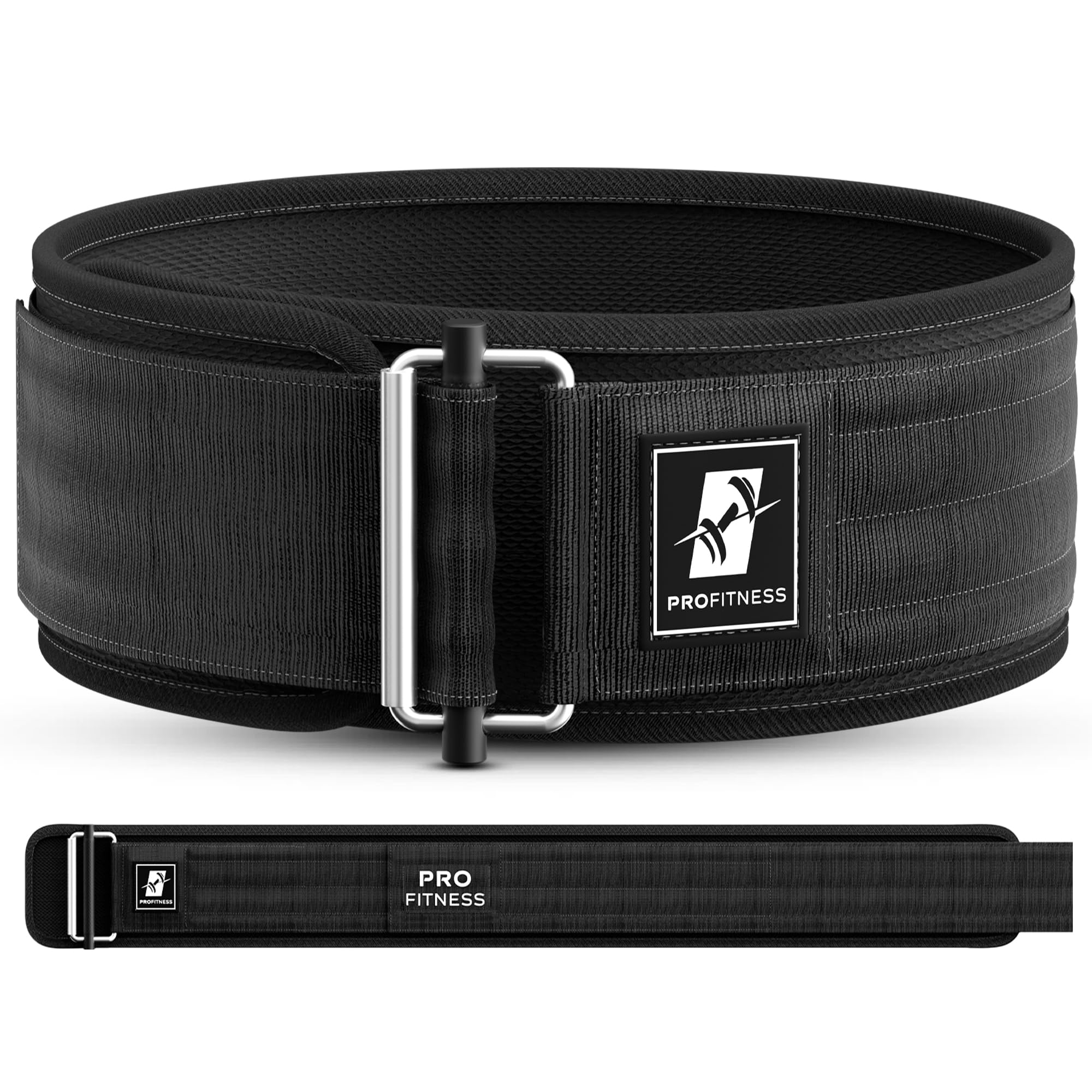
Thick 7mm genuine leather and a double-prong buckle deliver the rigid support expected from belts twice its price. The suede interior provides comfort from the first wear, reducing the break-in period common with leather belts.

Ideal for powerlifters who want a high-quality leather belt without spending over $50. Sizing variance may require exchanging — measure your waist and consider ordering one size up if between sizes.

Tip: Use a soft measuring tape around your waist at navel height; if your measurement falls between sizes, order the larger size.

Bottom line: For lifters on a budget who still want a rigid leather belt, this is the clear choice — just double-check your size.

#4

Iron Bull 10mm Leather

Iron Bull 10mm Leather

Competition powerlifting

Our Score 9.2/10
Check Price

Worth Noting

  • Requires a 2–4 week break-in period; belt is uncomfortable and hard to buckle initially.
  • Sizing may vary between batches, requiring some buyers to exchange for correct fit.
Width
4 inches
Closure
Double-prong buckle
Material
Leather 10mm
Thickness
10 mm
Read the full review

The Iron Bull 10mm belt delivers the stiffness needed for heavy squat and deadlift attempts, meeting IPF standards for sanctioned meets. Its thick leather provides a rigid brace that helps you push against the belt during one-rep max efforts. The tradeoff is a demanding break-in period of 2–4 weeks and occasional sizing inconsistency. This is a belt for advanced powerlifters who compete and accept the initial discomfort as part of the process.

Tip: Break in the belt by wearing it for light sets or around the house before using it for max attempts.

Bottom line: A serious competition belt for advanced powerlifters who are willing to work through the break-in for a rigid, IPF-legal brace.

#5

Schiek Nylon 4.75″

Schiek Nylon 4.75″

Contoured nylon fit

Our Score 9.2/10
Check Price

Worth Noting

  • Velcro closure can lose holding power over months of heavy use.
Width
4.75 inches
Closure
One-way buckle with velcro
Material
Nylon
Thickness
4 mm
Read the full review

The Schiek 2004 stands out for its tapered design that follows the hips without digging, and USA-made build quality that feels substantial. The velcro lock on the one-way buckle provides a snug fit for deadlifts and squats in the moderate-to-heavy range. However, the velcro can lose grip over months of frequent use, making this a better match for lifters who train at sub-maximal loads and want hip-friendly contouring rather than absolute rigidity.

Bottom line: A good choice if you prioritize hip comfort over belt rigidity and lift in the moderate range, but for heavy powerlifting a leather buckle belt is a safer bet.

#6

ProFitness Auto-Lock Nylon

ProFitness Auto-Lock Nylon

Beginner nylon belt

Our Score 9.2/10
Check Price

Worth Noting

  • Nylon lacks the rigidity for heavy squat or deadlift loads
Width
4 inches
Closure
Hook & loop auto-lock
Material
Nylon/polyester
Thickness
Read the full review

The ProFitness nylon belt is comfortable and easy to adjust, making it a solid choice for learning bracing in crossfit or general gym work. Customer service is notably responsive when sizing issues come up. However, the nylon compresses under heavy loads and the sizing runs small, so it is not suited for max-effort squats or deadlifts — best reserved for light training and beginners.

Bottom line: Works well for crossfit WODs and beginners practicing bracing, but skip it if you need a stiff belt for heavy powerlifting.

#7

Harbinger Nylon 4″

Harbinger Nylon 4″

Classic nylon workhorse

Our Score 9.2/10
Check Price

Worth Noting

  • Velcro closure can loosen under heavy loads, limiting use for max-effort lifts
Width
4 inches
Closure
Roller buckle with velcro
Material
Nylon webbing
Thickness
3 mm
Read the full review

This nylon belt delivers flexibility and comfort for dynamic movements like CrossFit, with a roller buckle that allows quick adjustments. The velcro closure can loosen under heavy loads, making it unsuitable for max-effort squats or deadlifts. It’s a budget-friendly option for light to moderate lifting, not a replacement for a stiff leather belt.

Bottom line: Best suited for light to moderate lifting, CrossFit, or general gym training where flexibility matters more than maximum rigidity.

#8

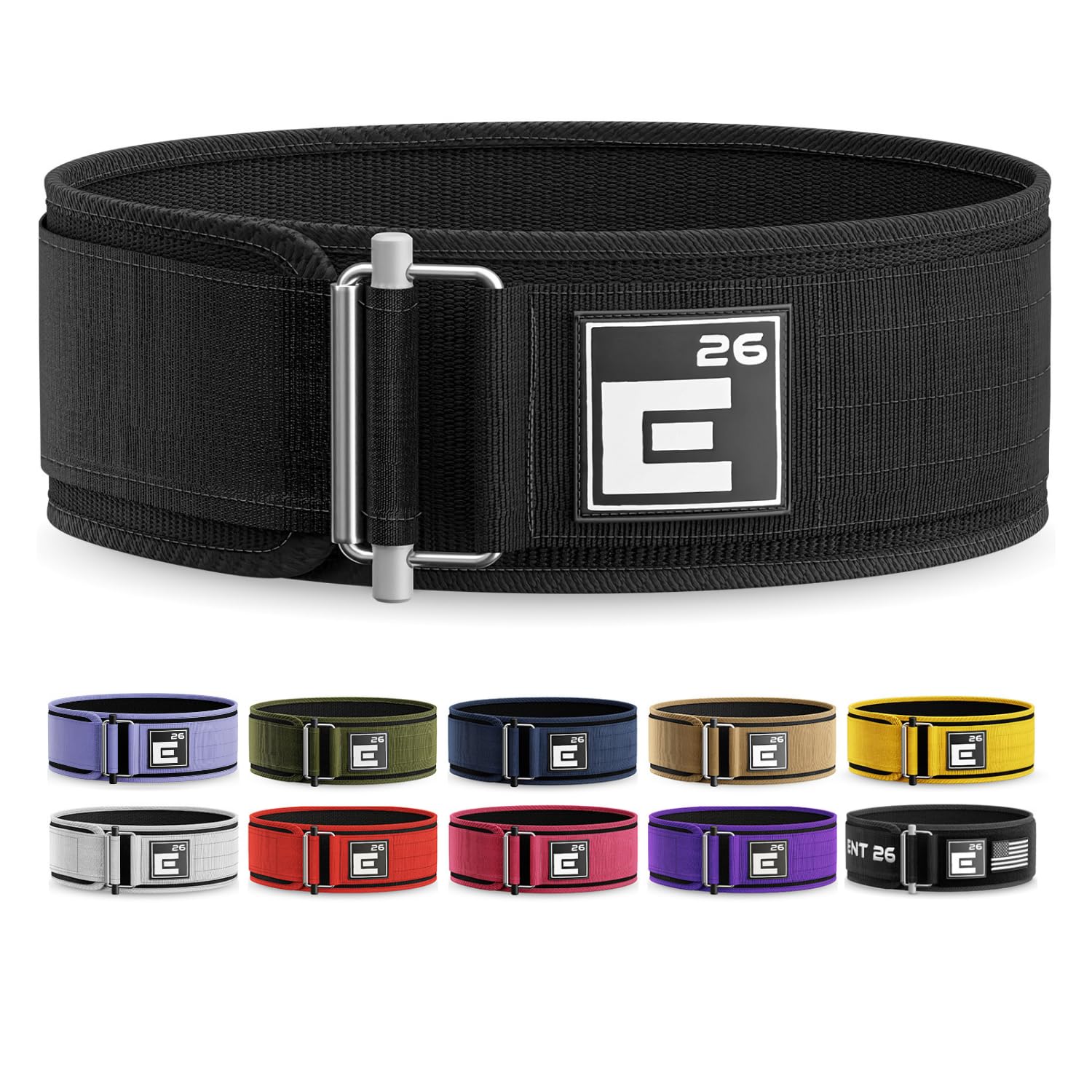
Element 26 Self-Locking Nylon

Element 26 Self-Locking Nylon

CrossFit versatile

Our Score 9.0/10
Check Price

Worth Noting

Width
4 inches
Closure
Self-locking metal buckle
Material
Nylon
Thickness
Read the full review

The Element 26 uses a self-locking buckle and lightweight nylon for quick adjustments between sets — no break-in needed. It provides solid support for loads up to around 400 lbs and stays comfortable during dynamic movements like cleans and snatches. However, the buckle may pop open near maximal loads and sizing runs small, so it's best suited for CrossFitters and beginners who value speed over rigid bracing for heavy one-rep maxes.

Tip: Measure your waist and order one size larger than usual to avoid a too-tight fit.

Bottom line: For lifters who want a fast-adjust belt for WODs and general strength work, this is a good value — just confirm your size before ordering.

#9

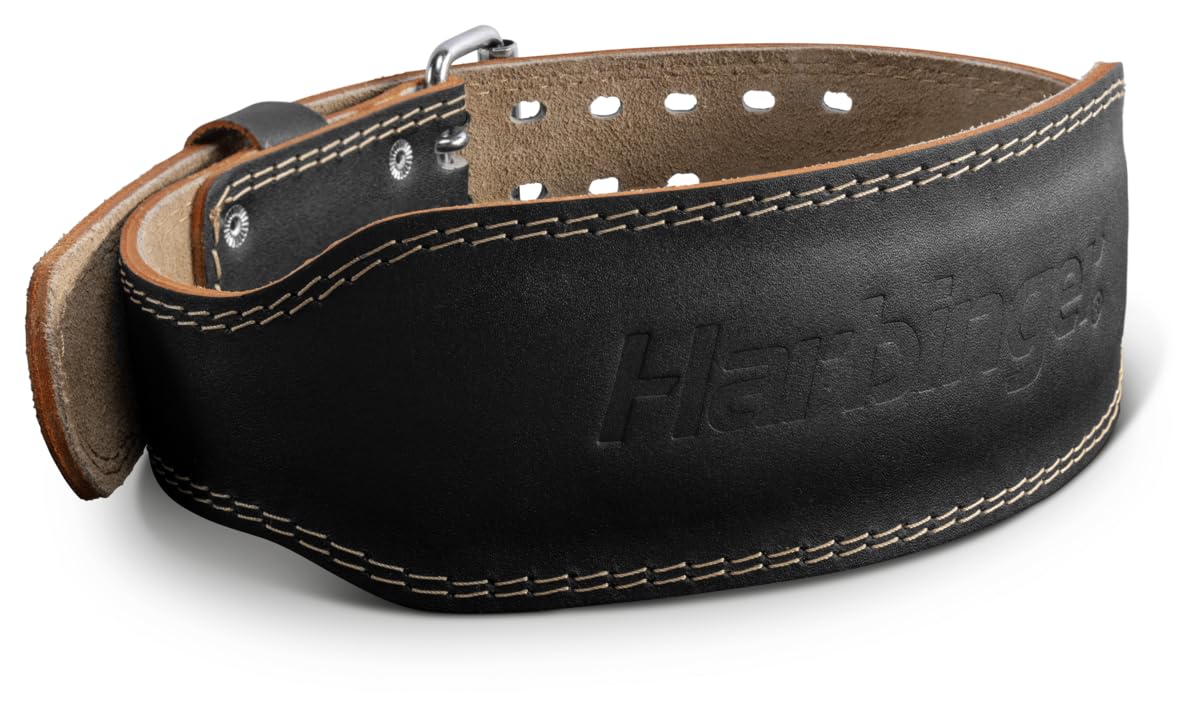
Harbinger Padded Leather

Harbinger Padded Leather

Padded comfort belt

Our Score 9.0/10
Check Price

Worth Noting

  • Sizing runs small; expect to order one or two sizes up
Width
4 inches
Closure
Dual-prong steel roller buckle
Material
Split leather with foam
Thickness
Read the full review

The foam padding provides immediate comfort for lifters with sensitive hips, and the belt offers solid lower back support for deadlifts and squats at a budget-friendly price. However, the sizing runs small (most need to size up 1-2 notches) and durability is variable, making this a better fit for casual training than daily heavy powerlifting.

Bottom line: Best for lifters with sensitive hips who prioritize comfort over longevity and are willing to manage size exchanges.

#10

Gymreapers 7mm Leather

Gymreapers 7mm Leather

Suede leather option

Our Score 9.0/10
Check Price

Worth Noting

  • Sizing runs small; may need to order one to two sizes above waist measurement.
Width
4 inches tapered
Closure
Double-prong steel buckle
Material
Leather with suede
Thickness
7 mm
Read the full review

The suede lining provides a soft feel against the skin, and the matte finish gives it a clean look out of the box. However, sizing runs small—most buyers need to go up at least one size—and the hardware (buckle prongs, stitching) can show premature wear, making this a better fit for light-to-moderate training where fit and finish matter more than long-term heavy use.

Bottom line: Works best for casual gym sessions where the suede comfort and appearance are a priority, but for consistent heavy powerlifting, the sizing and hardware concerns make a more predictable belt like Dark Iron a safer choice.

#11

RDX Cowhide Leather 4″

RDX Cowhide Leather 4″

Budget leather belt

Our Score 8.8/10
Check Price

Worth Noting

  • Some belts may stretch or lose shape over months of heavy use.
Width
4 inches
Closure
Dual-prong roller buckle
Material
Cowhide leather with suede
Thickness
7 mm
Read the full review

The RDX belt delivers genuine cowhide leather and 7mm thickness at a budget price where most competitors offer nylon. Sizing runs small, so ordering one to two sizes up is necessary — a manageable step for lifters willing to work around it. This suits budget-conscious powerlifters who want leather support for deadlifts and squats without spending over $30.

Tip: Order one to two sizes up from your waist measurement to fit as intended.

Bottom line: The RDX belt is a strong value pick for lifters on a tight budget, as long as you order up and accept that long-term durability may vary.

How to Choose

Material: Leather vs Nylon

Leather belts provide the rigidity needed for maximal bracing under heavy loads. The stiff material transfers pressure evenly across the core, but requires a break-in period of 5–10 sessions to mold to your body.

Nylon belts are lightweight and flexible, making them ideal for dynamic movements like crossfit or Olympic lifts. However, nylon can compress or stretch over time, reducing support for squats and deadlifts above 400 pounds.

Thickness: 5mm to 10mm

Thicker belts (7mm–10mm) offer greater spinal support by creating a more rigid wall against your abdomen. The downside is increased stiffness and a longer break-in — expect 2–4 weeks for a 10mm belt to become comfortable.

Thinner belts (5mm) are more forgiving out of the box and sufficient for moderate training. They trade some ultimate rigidity for immediate usability, making them a good fit for lifters who don't compete in powerlifting.

Width: 4-Inch vs 6-Inch

A 4-inch width is the standard for powerlifting — it allows proper bracing for squats and deadlifts without restricting hip flexion. Most IPF-legal belts are 4 inches wide.

6-inch belts provide extra lumbar coverage for strongman training or lifters with longer torsos. The added width can limit range of motion in the hips during the bottom of a squat, so test your mobility before committing.

Closure Type

Double-prong buckles are the most reliable for heavy loads — they distribute force evenly and won't slip under 500+ pounds. The trade-off is slower adjustments between sets.

Lever mechanisms offer quick on/off but can jam or fail under repeated heavy use. Auto-lock nylon belts (hook-and-loop or self-locking) are convenient for crossfit but may pop open near maximal loads.

Sizing Accuracy

Sizing inconsistency is the most common complaint across all brands. Many belts run 1–3 inches smaller than their chart indicates, especially leather models. Measure your waist at the belly button while standing, not your pant size.

A safe rule: if your measurement falls between two sizes, order the larger one. Some brands recommend sizing up even if you're at the top end of a size range. Plan for a potential exchange until you know the brand's true fit.

Frequently Asked Questions