Yoga & Mobility

8 Best Hot Yoga Mats of 2026: Mats That Actually Hold Grip in Sweat

Find hot yoga mats that stay non-slip when sweat hits – from budget-friendly to lifetime durability for dedicated practitioners.

Heat and sweat turn many yoga mats into slip hazards. A mat that works for gentle stretching can become unusable in a hot class. The problem isn't your form – it's the open-cell foam that soaks up moisture and loses grip.

The solution lies in material: closed-cell PVC and some TPE mats repel sweat, keeping the surface stable. Thicker mats cushion joints but can throw off balance, while thinner pads offer better ground feel.

This guide focuses on mats that maintain grip when it matters most – from a budget-friendly option that handles moderate sweat to a premium mat built to last a lifetime. The real trade-off is upfront cost versus long-term sweat resistance.

#1

Gaiam Premium 6mm

Top Pick
Gaiam Premium 6mm

Style-focused yoga

Our Score 9.4/10
Check Price

Worth Noting

  • In heated or sweaty sessions, the mat's grip can diminish noticeably.
  • New mat has a noticeable PVC smell that needs several days to dissipate.
Weight
3.2 lbs
Material
PVC
Thickness
6mm
Read the full review

The Gaiam Premium 6mm Print mat stands out with its vibrant patterns and enough cushioning to protect knees during floor poses. However, the PVC surface loses grip when damp — this mat suits regular yoga in cool, dry studios or home practice without heavy sweating. An initial PVC odor requires a few days of airing out before first use.

Tip: Unroll and air out the mat in a ventilated area for a few days before first use to reduce the initial odor.

Bottom line: A good choice for yogis who prioritize style and joint comfort in low-sweat environments — but not for hot yoga.

#2

Manduka PRO 6mm

Manduka PRO 6mm

Dedicated hot yoga

Our Score 9.2/10
Check Price

Worth Noting

  • Surface can feel slick when new
  • Heavy at 7.5 lbs, making it cumbersome for frequent transport
Weight
7.5 lbs
Material
PVC
Thickness
6mm
Read the full review

The Manduka PRO's closed-cell PVC construction actively repels sweat instead of absorbing it, keeping the surface dry even during intense hot yoga. The non-slip bottom with dot pattern holds firmly on studio floors, and the 6mm thickness provides enough cushion for knees without sacrificing stability. This construction is why Manduka backs it with a lifetime warranty — they expect it to outlast other mats.

This mat suits the daily hot yoga practitioner who wants one mat for years of studio use. At 7.5 lbs, it is heavy and best kept at a home studio or designated space rather than carried to class. New users should expect a break-in period where the surface feels slick before the texture becomes grippy. At a premium price, it prioritizes longevity and sweat resistance over portability or low upfront cost.

Tip: Accelerate the break-in by wiping the surface with a salt water solution or using a yoga towel during the first few sessions.

Bottom line: For hot yoga regulars who value durability and sweat resistance above all else, the Manduka PRO delivers on its promises without gimmicks.

#3

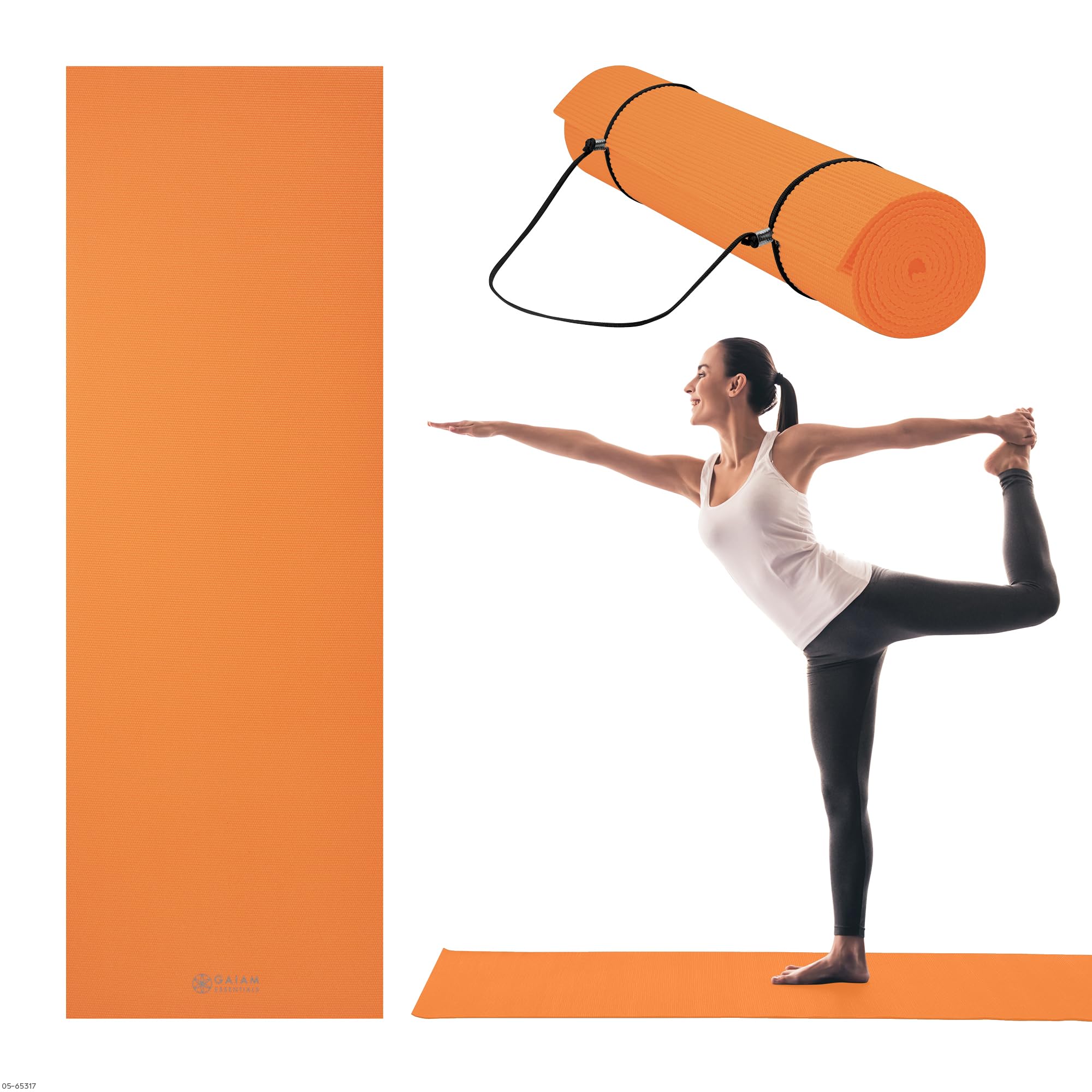
Gaiam Essentials 6mm

Gaiam Essentials 6mm

Hot yoga beginners

Our Score 9.2/10
Check Price

Worth Noting

  • Grip can be inconsistent when sweat accumulates, particularly on smooth floors
  • Some units may have a noticeable PVC odor that requires airing out
Weight
3.5 lbs
Material
PVC
Thickness
6mm
Read the full review

The Gaiam Essentials is one of the few budget-friendly mats that explicitly states suitability for hot yoga, making it an accessible starting point for beginners. However, grip performance can vary when sweat pools, especially on smooth floors, so it suits practitioners with moderate sweating who are willing to use a towel for extra traction. This mat is not as consistent as premium closed-cell options like the Manduka PRO, but the lower price and included carrier strap make it a reasonable entry point for hot yoga beginners.

Tip: Air out the mat for a couple of days before first use to reduce initial odor.

Bottom line: A low-cost hot yoga mat for beginners who accept that grip varies and PVC odor may be present.

#4

Amazon Basics Extra Thick

Amazon Basics Extra Thick

Joint cushioning stretches

Our Score 9.2/10
Check Price

Worth Noting

  • Becomes slippery when wet, limiting use to low-sweat activities.
Weight
2.2 lbs
Material
NBR
Thickness
12.7mm
Read the full review

The Amazon Basics Extra Thick mat delivers generous cushioning at a budget-friendly price, ideal for gentle yoga on hard floors. Its 0.5-inch NBR foam protects knees and elbows effectively.

But the same foam absorbs moisture and loses grip in sweaty conditions, making this a poor fit for hot yoga. It works best for floor exercises, stretching, or cool-temperature practice where sweat is minimal.

Bottom line: A cost-effective choice for joint-friendly floor exercises, but not for hot yoga or sweaty sessions.

#5

Ewedoos TPE 6mm

Ewedoos TPE 6mm

Alignment home practice

Our Score 9.2/10
Check Price

Worth Noting

  • In sweaty or hot conditions, the mat's surface loses grip, making it unsuitable for hot yoga.
Weight
1.8 lbs
Material
TPE
Thickness
6mm
Read the full review

This mat's alignment marks offer clear visual guidance for pose adjustments, and the TPE material stays odor-free out of the box. However, moisture causes the surface to lose traction – not suitable for hot yoga – and the material scuffs easily, making it a budget option for gentle, dry routines.

Bottom line: Best for dry, alignment-focused home practice where sweat is not a factor, but not for heated studios.

#6

Gruper TPE 6mm

Gruper TPE 6mm

Eco-friendly dry yoga

Our Score 9.0/10
Check Price

Worth Noting

  • Slippery when exposed to moisture; unsuitable for sweaty sessions
  • Surface may tear after regular use, reducing lifespan
Weight
1.65 lbs
Material
TPE
Thickness
6mm
Read the full review

The Gruper Yoga Mat uses TPE material to keep weight low and dry-grip performance solid for gentle practice in cool rooms. It packs easily with the included strap, making it convenient for studio sessions where sweat is minimal.

This mat suits eco-conscious yogis who practice in dry, low-temperature settings. However, moisture from sweat or humidity causes the surface to become slippery, and some tearing has been reported over time, so it does not hold up in hot yoga environments.

Bottom line: A light, eco-friendly option for dry studio work, but not the mat you want in a hot room.

#7

Fitvids 1/2-inch

Fitvids 1/2-inch

Budget floor exercises

Our Score 9.0/10
Check Price

Worth Noting

  • Becomes slippery when wet, making it unsuitable for heated practice.
Weight
1.8 lbs
Material
NBR
Thickness
12.7mm
Read the full review

Provides exceptional cushioning at a low price for floor exercises and kids' play. However, the foam absorbs sweat and turns slippery in heated rooms, and the material may tear with regular yoga practice — best for occasional, dry use.

Bottom line: This mat works well for occasional stretching, gentle yoga, or as a soft play surface for kids — not for hot yoga or frequent practice.

#8

Retrospec Solana 1"

Retrospec Solana 1"

Restorative yoga stretching

Our Score 9.0/10
Check Price

Worth Noting

  • Open-cell foam absorbs moisture, becoming slippery in hot yoga conditions.
Weight
2.2 lbs
Material
NBR
Thickness
25mm
Read the full review

The Solana's 1-inch foam offers exceptional joint protection for restorative yoga and post-workout stretching. However, the open-cell NBR material absorbs sweat, making it slippery in heated rooms, and the thickness compromises balance for standing poses. Durability is mixed – the foam can tear under point pressure.

Bottom line: Best for those prioritizing joint cushion over sweat resistance or balance – use for yin yoga, not vinyasa or hot classes.

How to Choose

Material Matters

PVC (polyvinyl chloride) is the standard for hot yoga mats. Closed-cell PVC repels moisture instead of absorbing it, so sweat sits on the surface and can be wiped off. This keeps the top layer grippy even in a humid room.

TPE (thermoplastic elastomer) is a lighter, eco-friendly alternative but may soften with heat over time, reducing grip. NBR (nitrile rubber) is soft and thick but open-cell – it soaks up sweat like a sponge and turns dangerously slippery.

Thickness and Stability

Thicker mats (10mm and above) cushion knees and joints but make balancing poses harder because your feet sink into the foam. Thinner mats (4-6mm) give a firmer connection to the floor, improving stability in standing poses.

For hot yoga, a 6mm mat is the sweet spot: enough padding for comfort without compromising ground feel. If you need extra joint support, place a thin towel under your knees rather than using a thick mat.

Construction: Closed vs Open Cell

Closed-cell construction means the material's surface is sealed – sweat cannot penetrate. This is non-negotiable for hot yoga. Open-cell foam (common in budget mats) absorbs liquid, leading to bacterial growth and a slick surface within minutes.

You can test this at home: drip water on the mat. If it beads up, it's closed-cell. If it soaks in, it's open-cell and not suitable for heated practice.

Weight and Portability

Premium closed-cell mats like the Manduka PRO weigh 7.5 pounds – durable but heavy to carry. Lighter PVC or TPE mats (2-3 lbs) are easier to transport but may wear faster.

Consider how often you move the mat. For home practice, weight matters less; for studio-goers, a lighter mat with a strap or bag is more practical.

Frequently Asked Questions