Strength & Weights

13 Best Pull Up Bar of 2026: Secure Bars That Protect Your Doorframe

Which pull up bars stay secure without damaging your doorframe or risking falls. For home gym owners who want stability without permanent installation.

A pull-up bar should be a simple piece of equipment. But anyone who has hung one from a door frame knows the trade-offs: some bars wobble at 200 pounds, others leave permanent marks on the trim, and a few are outright unsafe.

The key is matching the mounting style to your home and your weight. No-drill bars work well for standard frames, but not all are built the same. Wall and ceiling mounts offer rock-solid stability but require permanent installation.

This guide focuses on the bars that actually deliver on their promises, whether you need a temporary doorway setup or a permanent garage gym station.

#1

AmazeFan Doorway Bar

Top Pick
AmazeFan Doorway Bar

Standard door frames

Our Score 9.2/10
Check Price

Worth Noting

  • Padding may leave marks or peel paint on some door frames.
  • Does not fit door frames with trim thicker than 3.5 inches or rounded molding.
Mount Type
Doorway no-drill
Grip Options
Multi-angle ergonomic
Installation
Hook-over, no tools
Weight Capacity
400 lbs
Read the full review

This bar stays put during pull-ups, with no wobble or shifting once mounted. It arrives fully assembled -- just hook it over the door frame and you're ready to go. The multi-angle ergonomic grips offer multiple hand positions without sacrificing stability.

This bar suits home users with standard door frames (21 to 36 inches wide, trim up to 3.5 inches). The padding can leave marks or peel paint on some painted frames -- a thin cloth between the bar and frame prevents this. It won't fit doors with thick or rounded molding.

Tip: Place a thin cloth between the bar's padding and the door frame to protect painted surfaces.

Bottom line: For anyone with a standard door frame who wants a no-hassle, stable pull-up bar, this is the bar to buy.

#2

OneTwoFit Wall Mount

OneTwoFit Wall Mount

Concrete wall garages

Our Score 9.2/10
Check Price

Worth Noting

  • Occasional missing bolts or wedge nuts in the box
Mount Type
Wall-mounted
Grip Options
Multi-grip padded
Installation
Bolt to concrete/brick
Weight Capacity
440 lbs
Read the full review

This wall-mount delivers the kind of rock-solid anchor that freestanding towers can’t match once it’s bolted into concrete or brick. The heavy-duty steel frame handles heavy use without flex, and the multi-grip design lets you do pull-ups, chin-ups, dips, and leg raises from a single unit. It’s a step up from budget wall mounts like the B019H3C8L4, which may need hardware upgrades and can bend under load. Best suited for homeowners with a garage or basement wall — not interior drywall, so renters or apartment dwellers should look elsewhere. A small number of units arrive missing bolts or wedge nuts, so it’s worth checking the hardware bag before starting installation.

Tip: Open the hardware bag and confirm all fasteners are present before you start drilling; replacements are standard sizes at any hardware store.

Bottom line: A no-compromise wall mount for anyone with a concrete or brick wall who prioritizes stability over portability.

#3

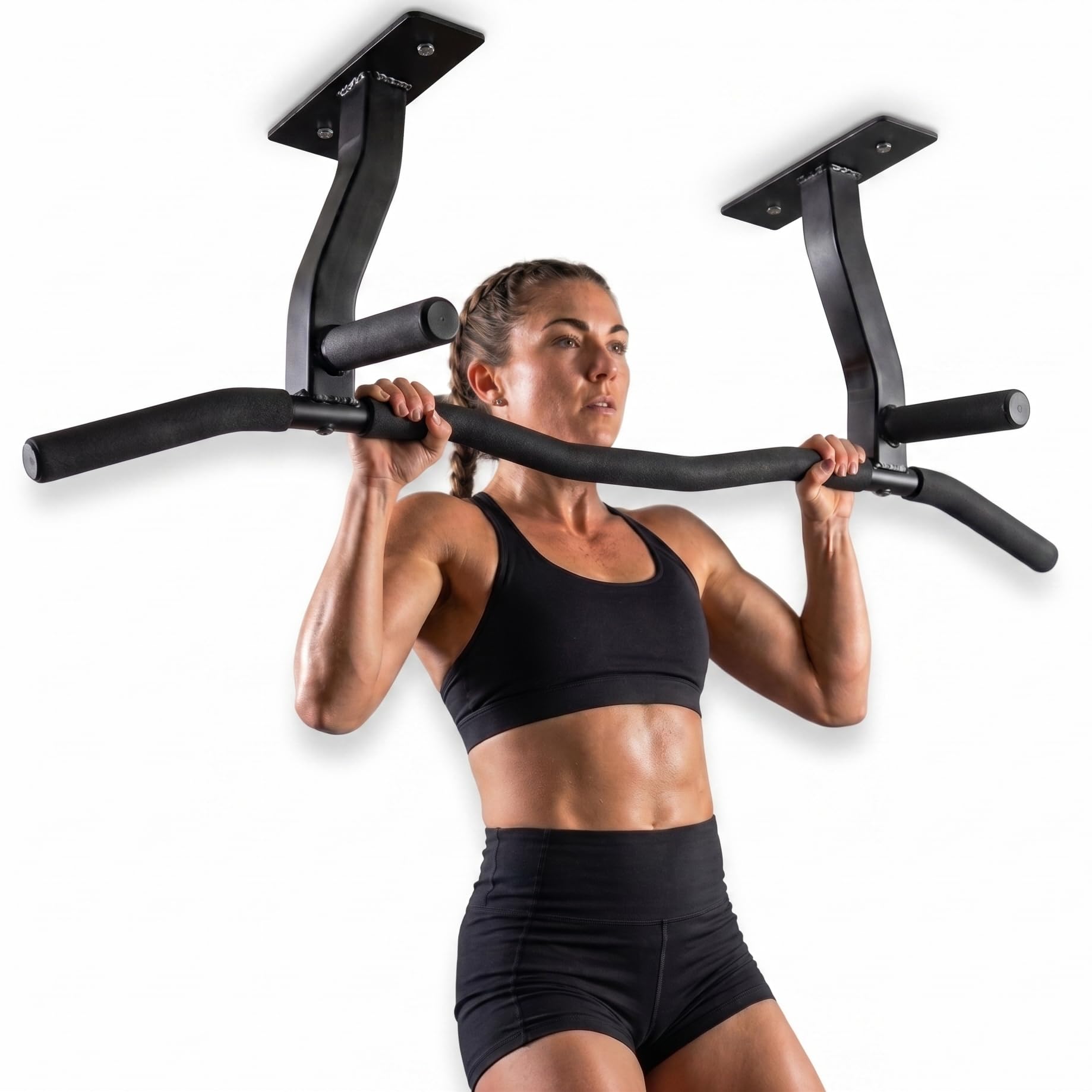
UBP Ceiling Mount Bar

UBP Ceiling Mount Bar

Accessible joists

Our Score 9.2/10
Check Price

Worth Noting

  • Foam grips can rotate slightly during use, which some find distracting.
  • Hangs about 24 inches from the ceiling
Mount Type
Ceiling mount
Grip Options
4 ergonomic positions
Installation
Bolt to joists
Weight Capacity
300 lbs
Read the full review

This bar delivers rock-solid stability by bolting directly into ceiling joists — the included template and thick steel construction make installation precise and the feel confidence-inspiring. It targets homeowners with exposed joists in a garage or basement where 24 inches of clearance below the ceiling is acceptable. That drop can be problematic in low garages, so measure headroom before committing.

Tip: If grip rotation bothers you, a light wrap of athletic tape around the foam can lock them in place.

Bottom line: The gold standard ceiling mount for homeowners with accessible joists who want unwavering stability and are comfortable with the 24-inch drop.

#4

JFIT Deluxe Doorway Bar

JFIT Deluxe Doorway Bar

Permanent doorway install

Our Score 9.0/10
Check Price

Worth Noting

  • Requires drilling screws into the door frame, leaving permanent holes.
  • Telescopic bar may not grip door frames thicker than about six inches.
Mount Type
Doorway screw-mount
Grip Options
Comfort foam grips
Installation
Screw into frame
Weight Capacity
300 lbs
Read the full review

The JFIT Deluxe Doorway Bar trades tool-free installation for rock-solid stability at a very low price. Its brackets screw directly into the door frame, eliminating the wobble that plagues many no-drill bars. The telescopic design adjusts from 25.25 to 40 inches, and the included comfort grips make pull-ups easier on the hands.

This bar is for homeowners who want a secure, permanent setup and don’t mind leaving screw holes in the frame. Renters or anyone avoiding alterations should look at a no-drill option like the top-pick AmazeFan instead. Also, the bar may not fit door frames deeper than about six inches, so measure before buying.

Tip: Measure your door frame depth before ordering; frames over 6 inches may need a different mounting method.

Bottom line: For homeowners willing to drill, this is the most secure doorway bar at a budget price – just confirm your frame depth first.

#5

KAKICLAY Doorway Bar

KAKICLAY Doorway Bar

High-weight doorway

Our Score 9.0/10
Check Price

Worth Noting

  • May not fit door frames with thick molding or non-standard widths
  • Metal hooks can leave scratches and paint peeling on door frame surfaces
Mount Type
Doorway no-drill
Grip Options
Multi-grip + straps
Installation
Hook-over, no tools
Weight Capacity
440 lbs
Read the full review

With a 440-lb weight capacity and multi-grip design, the KAKICLAY bar stands out as a no-drill option for heavy pull-ups and varied exercises. Its hook-over style avoids permanent installation, but the metal contact points can leave scratches and paint chips on door frames, and the fit works reliably only on standard dimensions – non-standard frames or thick molding may cause issues. This bar suits users who prioritize raw capacity over surface protection and have a standard doorway.

Tip: Applying painter's tape to the contact points can reduce paint peeling and scratches.

Bottom line: A high-capacity no-drill bar for heavy users who have a standard door frame and accept minor cosmetic marks – a capable alternative to the top pick's broader fit and gentler contact.

#6

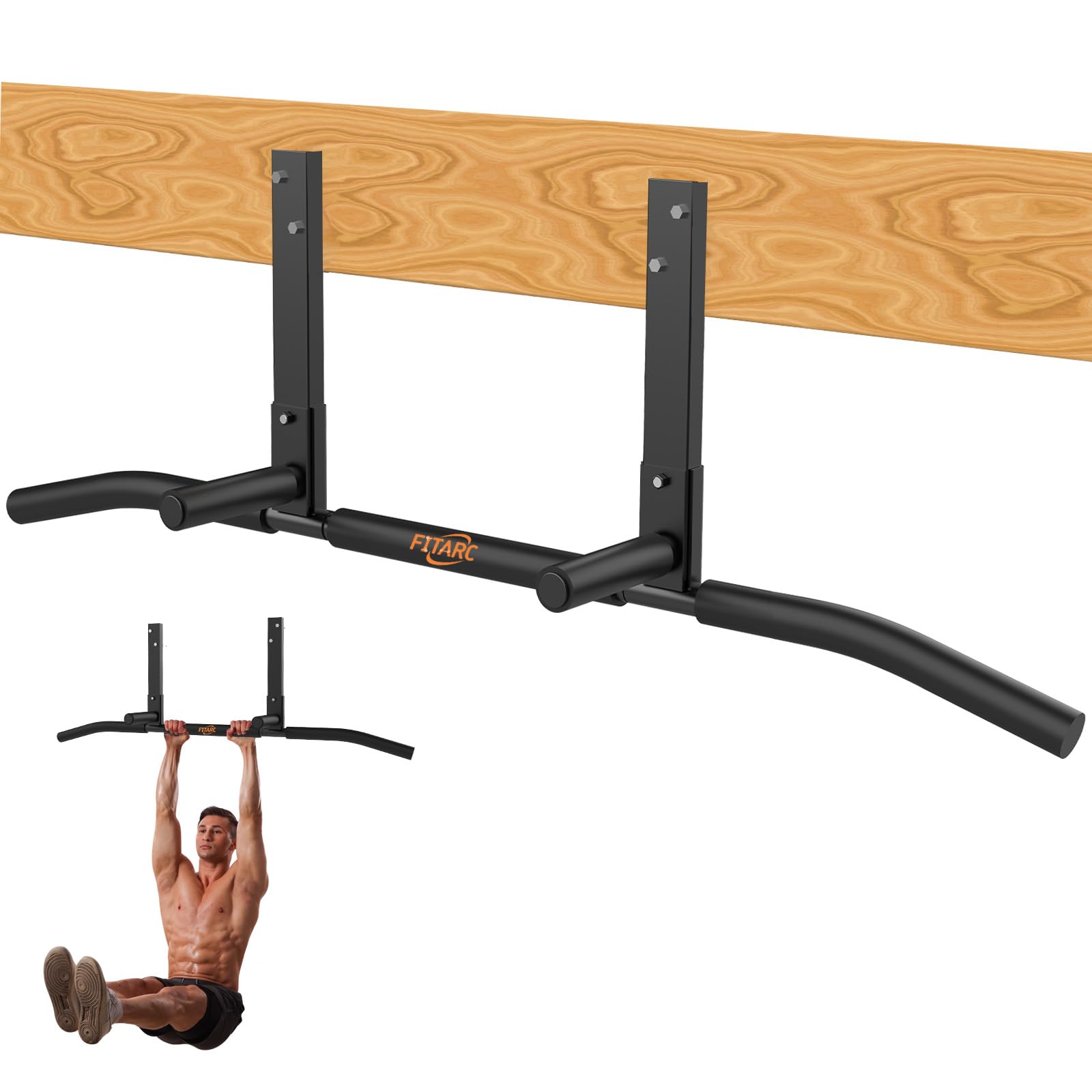
Fitarc Joist Mount Bar

Fitarc Joist Mount Bar

Beam ceiling mount

Our Score 9.0/10
Check Price

Worth Noting

  • Included screws and bolts may strip or break during installation
Mount Type
Ceiling mount
Grip Options
Padded grips
Installation
Bolt to joist
Weight Capacity
440 lbs
Read the full review

The Fitarc bar works well when mounted on a solid exposed joist, offering a budget-friendly ceiling option. However, the included hardware can strip during tightening, and the bar may wobble if all joints aren't fully secured – a limitation that puts it behind premium alternatives like the Ultimate Body Press ceiling mount.

Bottom line: Best for DIYers with exposed joists who are willing to swap the mounting hardware and double-check every connection.

#7

PULLUP&DIP Hook-Over Bar

PULLUP&DIP Hook-Over Bar

Lightweight no-drill

Our Score 9.0/10
Check Price

Worth Noting

  • For users over 220 lbs, the 240-lb capacity leaves no margin, making this bar unsuitable
Mount Type
Doorway no-drill
Grip Options
Padded handles
Installation
Hook-over, no tools
Weight Capacity
240 lbs
Read the full review

This hook-over bar feels solid and stable during pull-ups, with tool-free installation that takes minutes. The padded handles add comfort during use. However, the 240-lb weight capacity means heavier users cannot rely on it, and the rubber spacers may degrade over time, affecting stability.

Bottom line: Best suited for lighter home users (under 220 lbs) who value build quality and tool-free setup over a higher weight capacity.

#8

Z ZHICHI Dip Station

Z ZHICHI Dip Station

Shorter users

Our Score 9.0/10
Check Price

Worth Noting

  • Pull-up bar height is too short for users over 6'0''; base may wobble on carpet or uneven floors.
Mount Type
Freestanding
Grip Options
Foam grips
Installation
Assembly required
Weight Capacity
350 lbs
Read the full review

Combines quick assembly and sturdy build at a budget-friendly price, but the pull-up bar height limits users under 5'10'', requiring bent knees for taller individuals. Stability can wobble on carpet or uneven floors, making it best for shorter, lighter users who prioritize cost and space savings over rock-solid feel.

Bottom line: Best suited for teens or shorter adults who need a compact, budget-friendly home gym station — not for tall users or those requiring stable footing on carpet.

#9

Sportsroyals Power Tower

Sportsroyals Power Tower

Full-body calisthenics

Our Score 8.8/10
Check Price

Worth Noting

  • Some units ship with missing hardware, requiring a trip to the hardware store.
  • On uneven floors or under heavier users, the frame can wobble during dips and pull-ups.
Mount Type
Freestanding
Grip Options
Multiple grips
Installation
Assembly required
Weight Capacity
360 lbs
Read the full review

The Sportsroyals Power Tower packs a full-body workout station into a single freestanding frame at a mid-range price. Assembly takes under an hour for most, and the build quality feels solid for day-to-day calisthenics. Where it differs from simpler power towers, like the budget option from Relife (B081JXJ9VD), is the broader set of grip positions and included accessories – ideal for home gym enthusiasts who want pull-ups, dips, push-ups, and leg raises without buying separate gear. The tradeoff is that on uneven flooring or for heavier users, the frame can shift or wobble during dynamic movements. It also pays to check the hardware package upon arrival; occasional missing nuts or bolts have been noted, though replacements are straightforward.

This power tower suits buyers who value exercise variety and a low upfront cost more than the rock-solid feel of a wall-mounted bar. If your floor is level and you stay under 250 lbs, the wobble is minor; in a garage or basement setup, it’s a non-issue. For those pushing the weight limit or working on carpet, a mat or rubber shims help reduce movement.

Tip: Verify all hardware upon arrival and place the unit on a level surface to minimize wobble.

Bottom line: Solid build and versatility justify the price for those who can manage the potential wobble and QC lottery.

#10

RELIFE Power Tower

RELIFE Power Tower

Budget full-body

Our Score 8.8/10
Check Price

Worth Noting

  • Foam padding on elbow pads and grips can tear after a few months of regular use
Mount Type
Freestanding
Grip Options
Foam grips
Installation
Assembly required
Weight Capacity
400 lbs
Read the full review

The RELIFE Power Tower offers good stability and easy assembly at a competitive price, suiting home gym users under 200 lbs. However, the foam padding can tear over time, and occasional metal bending has been noted, so it requires careful handling during assembly.

Bottom line: Fits best for budget-conscious home gym users under 200 lbs who prioritize stability and full-body station features over long-term padding durability.

#11

Yes4All Wall Mount Bar

Yes4All Wall Mount Bar

Stud wall mount

Our Score 8.8/10
Check Price

Worth Noting

  • Included lag bolts may break during installation, requiring replacement
Mount Type
Wall-mounted
Grip Options
Multi-grip foam
Installation
Bolt to studs
Weight Capacity
300 lbs
Read the full review

The Yes4All is the cheapest wall-mount pull-up bar, offering solid construction when properly secured to studs. However, the included lag bolts can break during installation, and the bar may flex under loads above 200 lbs. Best for lighter users on a tight budget who don't mind replacing hardware.

Bottom line: Best for lighter users who have solid wall studs, a tight budget, and are willing to swap the stock bolts for stronger ones.

#12

UBP XL Doorway Bar

UBP XL Doorway Bar

Full ROM doorway

Our Score 8.8/10
Check Price

Worth Noting

  • Only fits standard door frames without thick molding or deep jambs.
Mount Type
Doorway no-drill
Grip Options
Elevated bar
Installation
Hook-over, no tools
Weight Capacity
300 lbs
Read the full review

The elevated bar design provides 10 inches of clearance for a full range of motion without bumping the door frame, and assembly is simple. However, it requires a standard 24-36 inch doorway with no thick molding or deep jambs, and the bar can sway during heavier use — fine for mid-weight training if your frame fits.

Bottom line: This bar works well for users with a standard doorway who prioritize pull-up clearance and can tolerate some movement — but it is not for non-standard frames or those needing rock-solid stability.

#13

SogesPower Power Tower

SogesPower Power Tower

Basic power tower

Our Score 8.8/10
Check Price

Worth Noting

  • The frame can wobble during dips or pull-ups on standard flooring.
Mount Type
Freestanding
Grip Options
Adjustable grips
Installation
Assembly required
Weight Capacity
330 lbs
Read the full review

Budget-friendly power tower with adjustable height and easy assembly in about 30 minutes. Wobble can occur during dips or pull-ups, and the pull-up bar sits low enough that users over six feet may need to bend their knees. This suits shorter individuals on a tight budget who want a basic freestanding setup without a big investment.

Bottom line: A workable option for shorter users on a budget who can accept some movement during use.

How to Choose

Mount Type

The mount type determines where you can install the bar and how permanent the setup is. Doorway bars are convenient but rely on the doorframe's structural integrity. Freestanding power towers take up floor space but need no wall attachment. Wall- and ceiling-mounted bars offer the most stability but require drilling into solid surfaces.

Weight Capacity

Weight capacity is often listed as the bar's limit, but the real constraint is your mounting surface. A 400-lb rated bar won't hold if the doorframe is hollow or the trim is thin. For wall mounts, you need studs that can anchor heavy loads. For power towers, the base weight and width matter more than the labeled capacity.

Installation Method

Installation ranges from no-tool hook-overs to permanent bolt-in setups. Hook-over bars are quick but may leave marks. Screw-in bars require drilling into the doorframe but gain stability. Wall and ceiling mounts involve lag bolts into studs or joists — a solid choice if you own your space. Power towers just need assembly, but check that all hardware is included.

Stability

Stability is the most common complaint for both doorway bars and power towers. No-drill bars can shift if the hook design doesn't fit snugly. Power towers wobble when the base is narrow or the floor is uneven. Wall and ceiling mounts eliminate wobble entirely, but at the cost of a permanent installation. For doorway bars, look for designs that distribute pressure across a wide contact area.

Grip Options

Multiple grip positions let you vary your workout — neutral, wide, narrow, and angled grips target different muscle groups. Foam padding can degrade quickly, so harder rubber or textured steel lasts longer. Some bars include removable straps for ring training or ab exercises, adding versatility without extra cost.

Frequently Asked Questions