Strength & Weights

7 Best Chest Press Machine of 2026: Models with True Converging Motion

Find a chest press machine for your home gym that actually delivers independent converging arms without sacrificing stability or budget.

Many chest press machines advertise independent converging arms, but the actual pressing path often tells a different story. Some move only straight up and down, limiting the stretch and contraction of the pectorals. That gap between marketing and real-world motion is the top frustration for home gym buyers.

The machines included here are those where the arms either follow a natural inward arc or at least allow independent movement without side-to-side wobble. Bench length, weight capacity, ease of assembly, and overall stability also determine whether a machine becomes a long-term fixture or a regretted purchase. Budget models under $200 can deliver impressive value, but only if they avoid the common pitfalls of short benches and non-converging arms.

A well-chosen chest press machine transforms a home gym corner into a reliable pressing station. The right one will feel stable, fit your body, and let you train with confidence—no spotter required.

#1

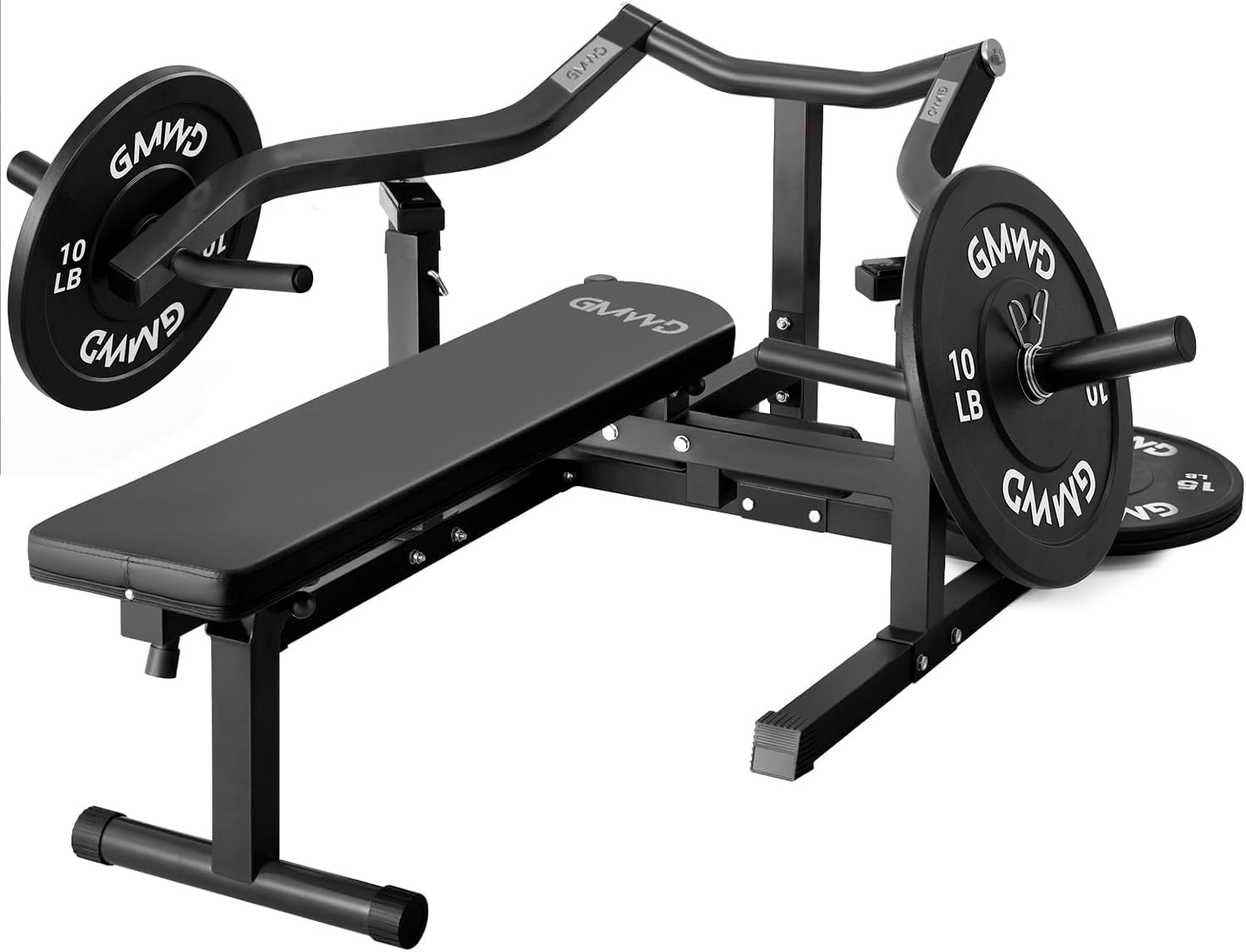
GMWD Chest Press Machine

Top Pick
GMWD Chest Press Machine

Home gym, spotter-free

Our Score 9.2/10
Check Price

Worth Noting

  • Bench length may limit leg support for users over 6'2'.
  • Occasional cosmetic defects or bent parts reported; quality control can vary between units.
Arm Motion
Independent, non-converging
Bench Adjust
Flat, Incline, Upright
Space Saving
Foldable
Build Quality
14-ga alloy steel
Read the full review

The GMWD uses a 14-gauge alloy steel frame that feels solid under load, and the independent arm movement lets each side travel its own path to address strength imbalances. Assembly takes most buyers under an hour with clear instructions. The bench adjusts to flat, incline, and upright positions, covering the core pressing angles for chest development. The arms have a smooth action without wobble, supporting up to 200 lbs per side.

This machine fits home gym users who want a dedicated chest press without a spotter, especially those with uneven strength who can benefit from independent arms. The bench length works for most lifters, but users over 6'2' may find it short for full leg support. Some units arrive with minor scratches or bent parts, so a quick inspection on delivery helps catch any cosmetic issues early.

Tip: Inspect all parts immediately after unboxing – minor cosmetic issues can be resolved with a replacement request if caught early.

Bottom line: A well-reviewed home chest press that delivers independent arm motion and solid build quality at a budget price, with the caveat that QC checks are recommended upon delivery.
#2

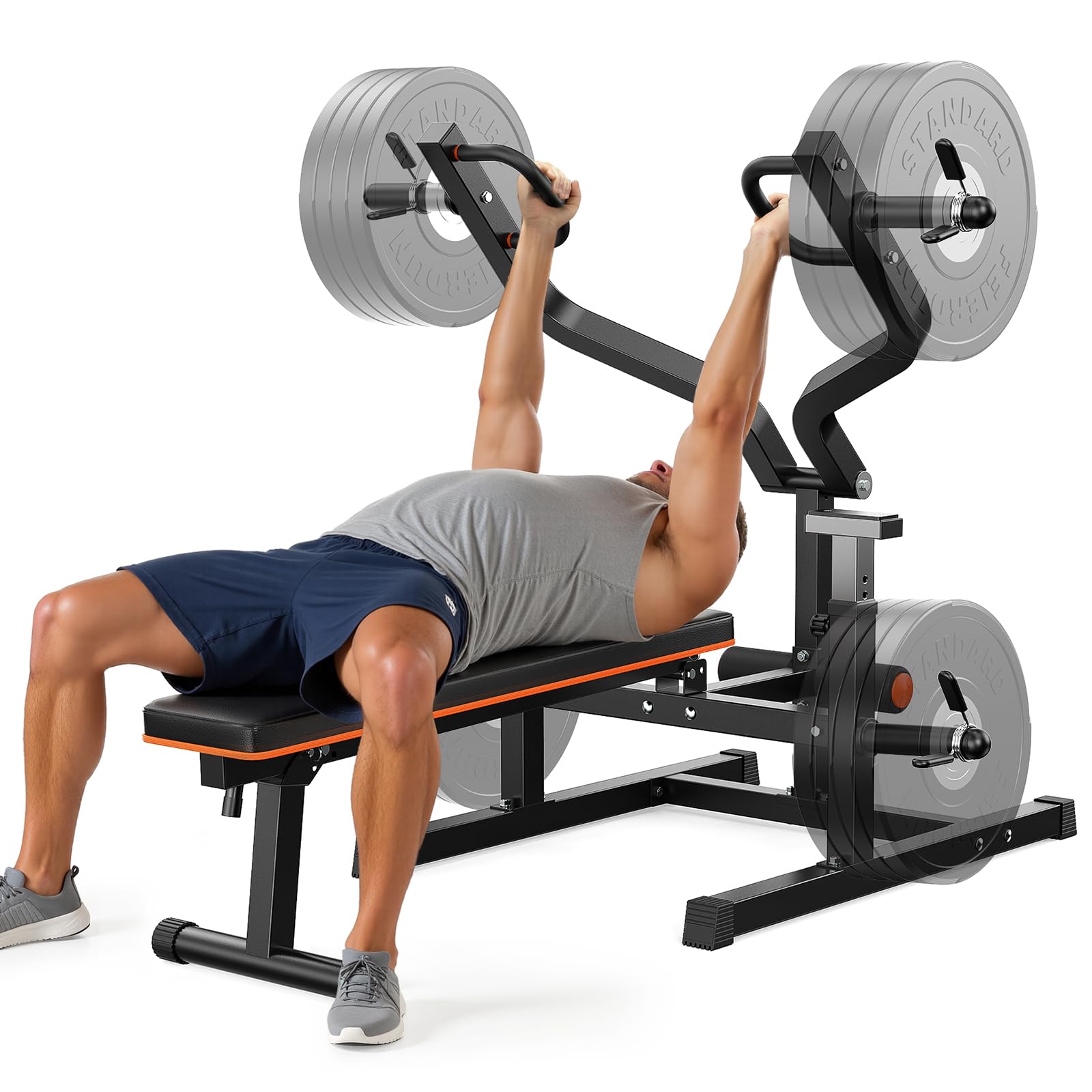
FEIERDUN WB18

FEIERDUN WB18

Multiple grip angles

Our Score 8.8/10
Check Price

Worth Noting

  • Arm motion may not converge on some units, limiting pectoral activation.
  • Adjusting spotter arm positions requires removing weight plates first.
Arm Motion
Independent, non-converging
Bench Adjust
Flat, Incline, Decline
Space Saving
Foldable
Build Quality
Read the full review

Three separate U-handle grips let you shift hand position to emphasize upper, middle, or lower chest — a feature not found on other machines in this price range. The tradeoff is that the arms may not converge on some units, moving straight up instead, which reduces the targeted pec squeeze of a true converging press. This machine suits home gym users who prioritize grip variety and a foldable design over absolute convergence, and who don’t mind checking for consistent motion upon assembly.

Tip: Test the arm path with light weight after assembly — if the arms travel straight up, contact support as convergence may be misaligned.

Bottom line: For lifters who want the most handle variety in a compact chest press and can tolerate the convergence inconsistency, the FEIERDUN delivers solid build and versatility.

#3

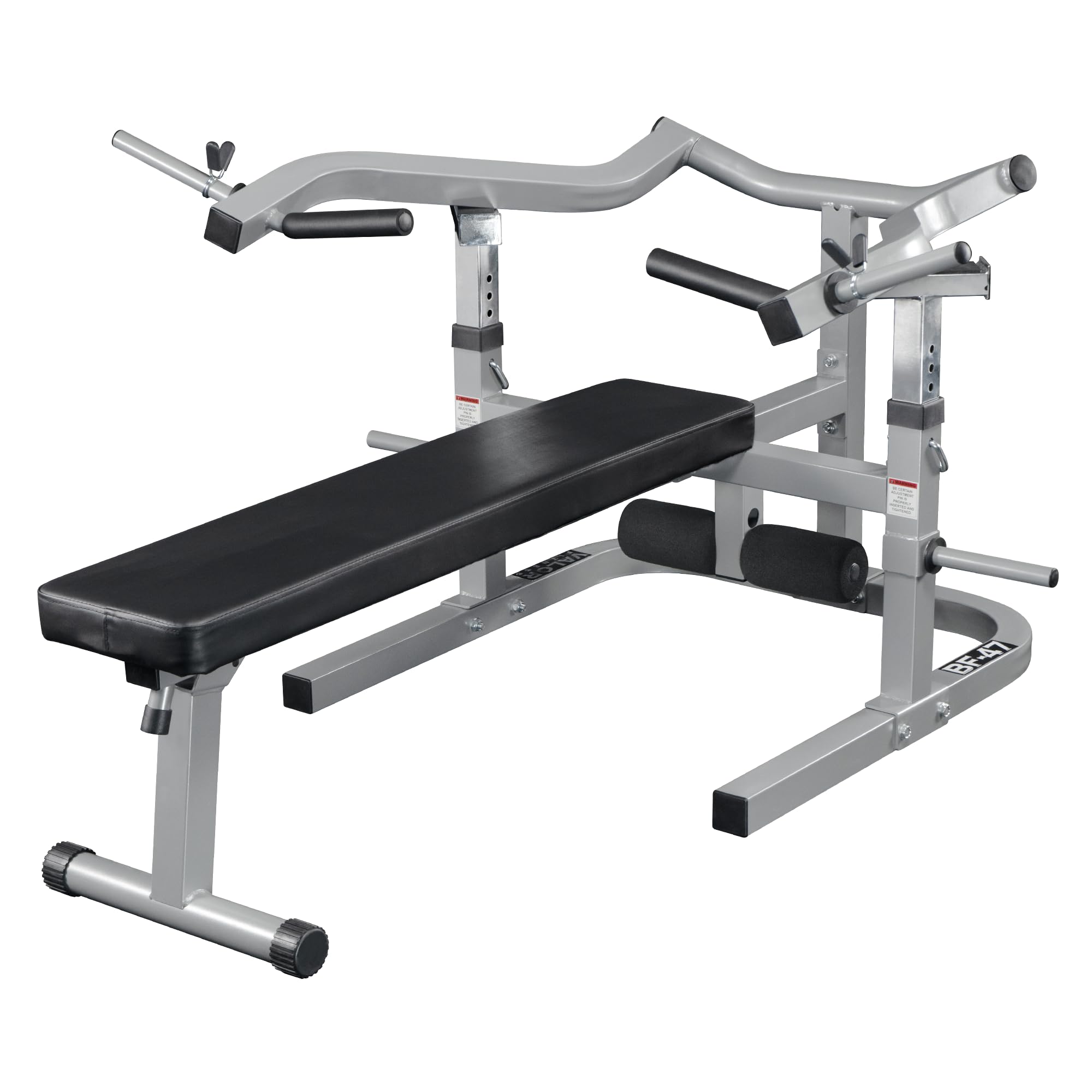
Valor Fitness BF-47

Valor Fitness BF-47

Small frame, rehab

Our Score 8.8/10
Check Price

Worth Noting

  • Narrow and short bench may feel restrictive for users over 5'6''.
  • 250 lb total capacity limits weight progression for intermediate lifters.
Arm Motion
Independent, converging
Bench Adjust
Flat, Incline
Space Saving
Build Quality
Alloy Steel 2x2
Read the full review

The Valor Fitness BF-47 stands apart from the top pick by prioritizing a shoulder-friendly pressing motion through its independent converging arms. This design allows a natural arc that reduces joint stress — a clear benefit for those recovering from shoulder injuries.

This machine suits small-framed lifters under 5'6'' and anyone needing a gentle chest press for rehabilitation. However, the low total capacity of 250 lbs and the narrow bench make it unsuitable for progressive overload or larger body types.

Tip: Test the bench width and grip spacing before buying — the fixed dimensions may not suit broader shoulders.

Bottom line: Best for targeted shoulder rehab and lightweight training. If you need higher capacity or a wider bench, look at the top pick.

#4

Goimu Z1-PRO

Goimu Z1-PRO

Budget, beginners

Our Score 8.8/10
Check Price

Worth Noting

  • Incline angle is nearly flat, limiting upper chest development.
Arm Motion
Independent, non-converging
Bench Adjust
Flat, Incline, Decline
Space Saving
Build Quality
Alloy Steel
Read the full review

The Goimu Z1-PRO offers 300-lb per arm capacity at a budget price, appealing to cost-conscious beginners. However, the incline is so shallow it barely changes the press angle, and the arms press outward instead of inward, reducing upper chest engagement and potentially causing shoulder strain. This machine works for light, flat pressing but falls short for anyone seeking incline work or a natural convergence path.

Bottom line: For light to moderate flat pressing on a tight budget, this machine can serve, but it is not suited for incline work or serious chest training.

#5

Mdeam Chest Press

Mdeam Chest Press

Budget, beginners

Our Score 8.6/10
Check Price

Worth Noting

  • Frame stability may not support progressive overload training
Arm Motion
Independent, converging
Bench Adjust
Flat, Incline
Space Saving
Foldable
Build Quality
14-ga alloy steel
Read the full review

At under $160, the Mdeam Chest Press combines independent converging arms with a foldable design for compact storage. The adjustable bench (flat and incline) and smooth arm motion support chest, shoulder, and triceps work at lighter loads. Some units may show lateral arm movement near the 200-lb per side limit, so this machine suits beginners and lighter users under 200 lbs who want affordable targeted pressing without a premium price.

Bottom line: For budget-conscious beginners who can accept some arm play under heavier loads, the Mdeam delivers functional pressing at a fraction of the cost of higher-end machines.

#6

VEVOR Chest Press

VEVOR Chest Press

Higher capacity

Our Score 8.4/10
Check Price

Worth Noting

  • Assembly can be time-consuming and instructions may be confusing for some.
Arm Motion
Independent
Bench Adjust
Flat, Incline, Decline
Space Saving
Build Quality
1.5mm carbon steel
Read the full review

The VEVOR Chest Press delivers a 220-lb per arm capacity paired with a 1.5mm carbon steel frame. The powder coating and finish impress for the price, and the machine stays stable on concrete floors with smooth operation once assembled. This press suits buyers who want a higher per-arm load without jumping to premium pricing, but assembly can take several hours and the instructions may be unclear.

Tip: Set aside a few hours for assembly and have a second person help align parts.

Bottom line: A capable mid-range option for lifters wanting a sturdy frame and higher per-arm load, provided you have patience for assembly.

#7

Wesfital Bench Press

Wesfital Bench Press

Shorter users

Our Score 8.4/10
Check Price

Worth Noting

  • Bench length is too short for users over 5'8", causing head to hang off during presses.
Arm Motion
Independent, converging
Bench Adjust
Flat, Incline
Space Saving
Build Quality
Read the full review

This set includes a dumbbell rack, leg extension, and curling pad, giving you multiple workout options in one package. The bench adjusts to flat and incline, and assembly is straightforward for most buyers. However, the bench is too short for anyone over 5'8" — your head will hang off — and the bar height is fixed, forcing an awkward low starting position. Those tradeoffs limit it to shorter lifters who prioritize accessory storage over proper bench press ergonomics.

Bottom line: Only consider this if you are under 5'8" and want a multi-function bench that doubles as a dumbbell rack — the fixed bar height and short deck make it a poor fit for taller lifters.

How to Choose

Weight Capacity

Total weight capacity tells you the machine’s overall limit, but per-arm capacity matters more for progressive overload. A machine rated 1200 lbs total may only allow 200 lbs per arm, limiting chest work if you bench heavy. Look at both numbers, not just the big total.

Arm Motion

True converging arms move inward as you press, mimicking a dumbbell press and maximizing pectoral contraction. Many budget machines claim converging motion but the arms only travel straight up and down. This reduces muscle activation and can cause shoulder discomfort over time.

Bench Adjustability

Flat, incline, and decline positions target different areas of the chest. A machine with only flat and incline still covers most training needs, but a true decline (head below hips) requires careful design to avoid stability issues. Check if the bench actually achieves a meaningful angle—some incline settings are nearly flat.

Build Quality

Frame material thickness and gauge determine wobble under heavy loads. 14-gauge alloy steel is common at budget prices and holds up well for most home lifters. Thinner tubing can flex, making the machine feel loose during reps. Welds and powder coating also affect long-term durability.

Space Saving

Foldable designs are a huge advantage for home gyms with limited floor space. However, folding mechanisms add potential failure points and may not feel as solid as a fixed frame. If you plan to leave the machine assembled, a non-foldable unit with a smaller footprint can be just as space-efficient.

Frequently Asked Questions