Strength & Weights

11 Best Barbell Collars of 2026: Secure Lifting Without Overspending

Find barbell collars that stay put during deadlifts and squats – from budget quick-release to heavy-duty clamps for every lifter.

Many lifters discover their collars slip mid-set or crack after a few drops. The market is flooded with options, from cheap spring clips to premium metal clamps, yet the real sweet spot is surprisingly low-priced plastic quick-release designs.

The key trade-off is not price but use-case: budget collars work flawlessly for controlled lifts but can break under repeated drops. This guide highlights collars that balance ease of use, hold security, and durability so you can choose based on how you actually train, not just the sticker price.

#1

Greententljs Quick Release

Top Pick
Greententljs Quick Release

Home gym beginners

Our Score 9.6/10
Check Price

Worth Noting

  • Plastic housing may crack under repeated heavy drops from overhead
  • Fit can be loose on bars with worn or thicker sleeves
Material
Plastic composite
Bar Diameter
2 inch Olympic
Sleeve Space
Standard width
Grip Security
Patented design
Read the full review

The Greententljs Quick Release collars prioritize speed and grip. The lever mechanism allows you to secure or remove the collars in seconds — no fumbling with screws or springs. At this price point, the hold is dependable for most gym lifts, keeping plates firmly in place during squats, bench press, and deadlifts.

The plastic composite construction keeps weight down and cost low, but it is not intended for Olympic-style dropping. Lifters who control the bar through the full range of motion will find these collars hold up well. They best suit home gym owners who change weights frequently and want a hassle-free option that outperforms basic spring clips. For those who regularly drop the bar from overhead, a metal or reinforced resin collar is a more durable choice.

Tip: Avoid dropping the bar from overhead to extend the collar's lifespan; they work best for controlled lifts.

Bottom line: For home lifters who prioritize speed and cost, these collars are a solid pick that outperform spring clips and many pricier quick-release alternatives.
#2

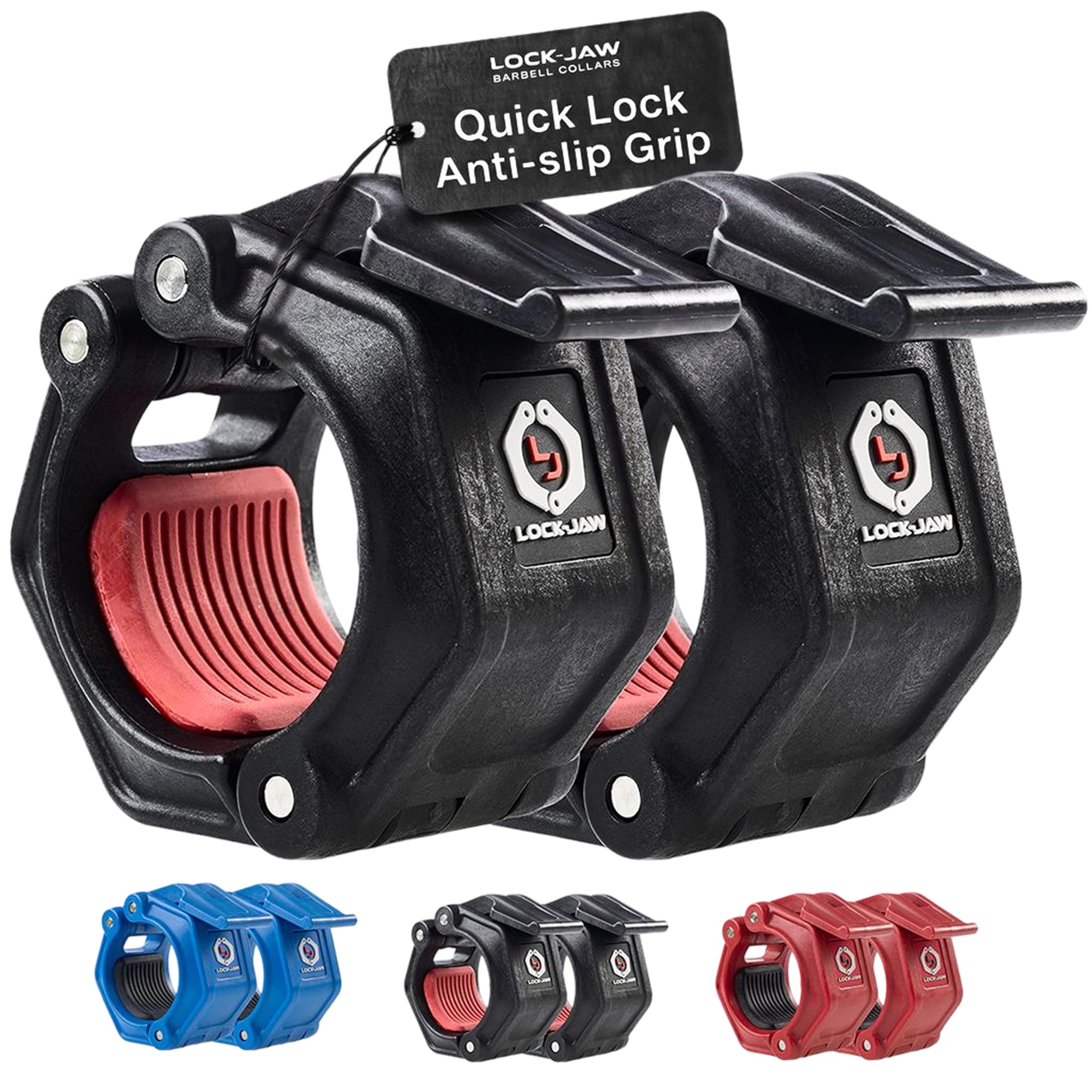
Lock-Jaw OLY 2

Lock-Jaw OLY 2

Heavy lifters, CrossFit

Our Score 9.6/10
Check Price

Worth Noting

  • During the first few uses, the lever requires extra effort to close—loosens up with time.
  • Fits standard 2-inch Olympic bars well, but may be too tight for specialty bars with thicker or irregular sleeves.
Material
Reinforced nylon resin
Bar Diameter
2 inch / 50mm
Sleeve Space
Standard width
Grip Security
Internal elastomer pads
Read the full review

Lock-Jaw OLY 2 delivers the holding power of premium metal collars without the heavy price tag, using reinforced nylon resin and a quick-release lever. Internal elastomer pads grip the bar securely even under heavy loads, and the lifetime warranty adds peace of mind. The tradeoff: the clamp starts stiff and requires a short break-in, and the fit can be too tight for some specialty bars. Best for serious lifters who want rock-solid stability and are willing to accept the initial stiffness.

Tip: Work the clamp open and closed a dozen times before first use to speed up the break-in.

Bottom line: Worthwhile investment for serious lifters who want better durability than budget alternatives.

#3

Lock-Jaw PRO 2

Lock-Jaw PRO 2

Competitive powerlifters

Our Score 9.6/10
Check Price

Worth Noting

  • Premium cost may be hard to justify for casual home gym use.
Material
Cast iron (heavy duty)
Bar Diameter
2 inch / 50mm
Sleeve Space
Standard width
Grip Security
Internal pads
Read the full review

The Lock-Jaw PRO 2 delivers outstanding grip and cast-iron toughness, surviving repeated drops without loosening. However, its premium cost—over double the resin alternative—and limited fit with specialty bars make it excessive for most home gyms. Only worth it when cast-iron durability is non-negotiable.

Bottom line: Only for competitive lifters or commercial gyms where indestructible clamps are a requirement, not a luxury.

#4

POWER GUIDANCE Slim

POWER GUIDANCE Slim

Max sleeve capacity

Our Score 9.4/10
Check Price

Worth Noting

  • Can be difficult to close for some users, especially with sweaty hands
  • Grip may slip under very heavy loads (300+ lbs)
Material
Nylon with TPR rubber
Bar Diameter
2 inch Olympic
Sleeve Space
1 inch (slim)
Grip Security
Non-slip lining
Read the full review

This slim collar frees up over an inch of sleeve space per side compared to standard quick-release models, letting you load more plates on the bar without sacrificing hold. The nylon-and-TPR construction keeps weight in check without the bulk of thicker competitors.

Best for home gym lifters who want to maximize plate capacity without spending much — the mechanism can be stiff to close, and grip may slip when pushing past 300 lbs. If you train in the moderate-to-heavy range and value sleeve room over brute-force clamping, this is a smart budget pick.

Tip: Press down evenly on both sides of the lever while aligning the collar square on the sleeve — this reduces effort and ensures a consistent clamp.

Bottom line: A space-saving collar that delivers good grip at a low price — just be aware of the load limit and initial stiffness.

#5

Forcefree+ Clips

Forcefree+ Clips

Budget durability seeker

Our Score 9.4/10
Check Price

Worth Noting

  • Clamp may feel stiff to close initially, requiring some hand strength to lock.
Material
Nylon + glass fiber
Bar Diameter
2 inch
Sleeve Space
Standard width
Grip Security
TPR rubber lining
Read the full review

The Forcefree+ Clips pair nylon/glass fiber composite with a TPR rubber grip for better holding power than budget plastic collars. Unlike ultra-cheap alternatives that can slip or crack, these offer a more secure feel at a similar price point. Quick-release mechanism works smoothly for most, and the slim profile leaves more room on the bar for plates.

Best for home gym users who want a reliable collar without spending extra. A small number of users find the clamp stiff to close initially – expect a brief break-in period. Not suited for heavy commercial use where bars are dropped repeatedly; the composite is more durable than plastic but not indestructible.

Tip: If the clamp feels tight, try opening and closing it a few times to loosen the hinge.

Bottom line: A solid choice for budget-conscious home gym users who value composite durability over all-plastic clamps.

#6

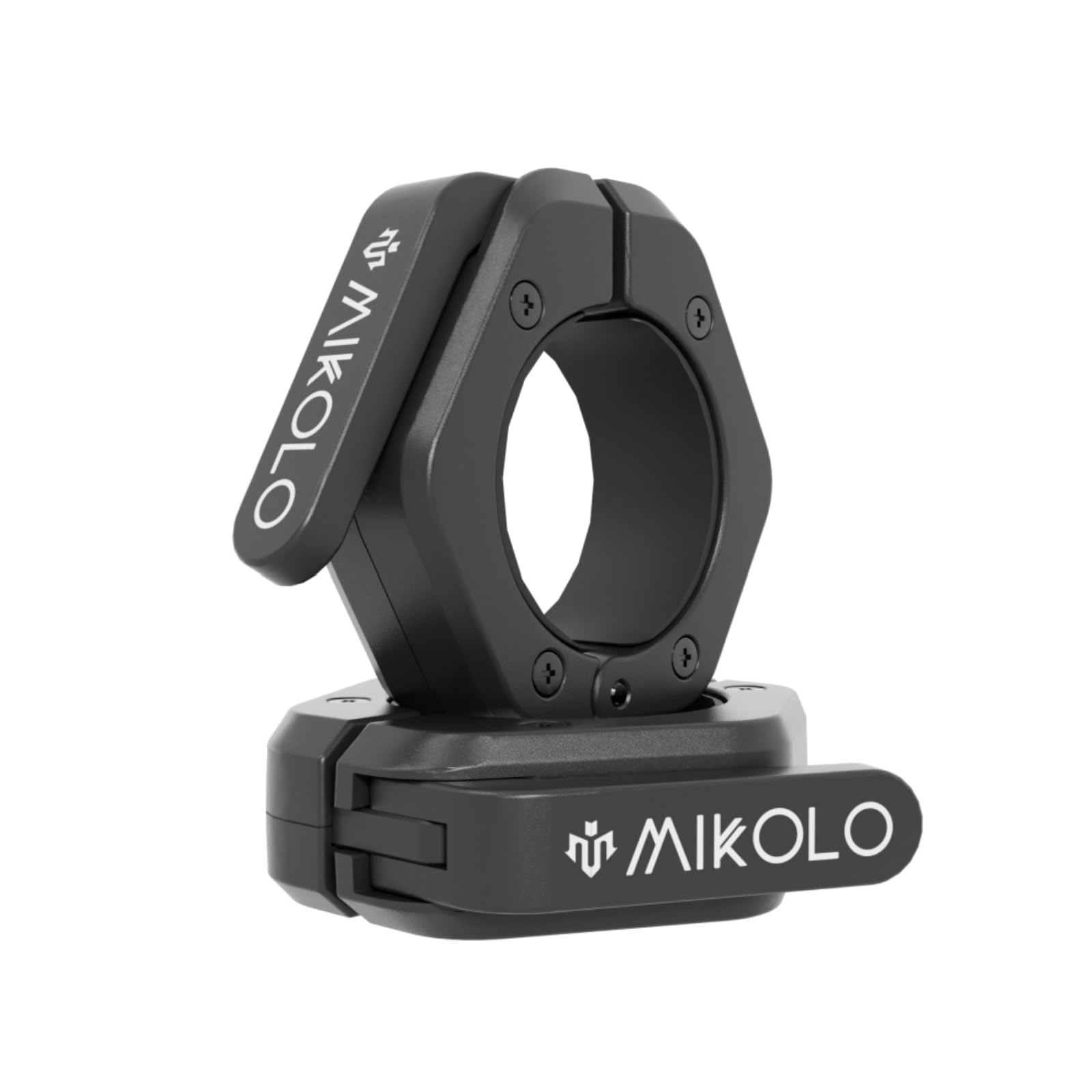
Mikolo Magnetic

Mikolo Magnetic

Magnetic storage fans

Our Score 9.4/10
Check Price

Worth Noting

  • Magnet strength is modest; the clamps can fall off the rack if bumped heavily.
Material
Nylon with TPR lining
Bar Diameter
2 inch
Sleeve Space
Standard width
Grip Security
Dual-sided magnets
Read the full review

The Mikolo Barbell Clamps add magnetic storage to the standard quick-release lever design, letting you stick them to a metal rack between sets. The nylon body with TPR lining feels solid in the hand, and the lever action is simple to operate — no fumbling or twisting.

This set suits home gym users who frequently misplace collars, thanks to the magnets that keep the clamps within reach. The magnet grip is modest — a heavy bump against the rack can knock them off — so they work best when the rack stays stationary. Long-term durability under heavy use is still unproven, making them a practical pick for moderate training rather than intense powerlifting.

Tip: Place the clamps on a flat section of the rack to minimize accidental knocks.

Bottom line: If you train at home and misplace collars often, the Mikolo clamps offer a smart storage solution without breaking the bank — just keep the rack steady.

#7

Clout Fitness Clamps

Clout Fitness Clamps

High review count

Our Score 9.4/10
Check Price

Worth Noting

  • Plastic housing can crack under heavy impact or repeated drops, reducing lifespan.
Material
Plastic
Bar Diameter
2 inch Olympic
Sleeve Space
Standard width
Grip Security
Standard grip
Read the full review

These clamps slide on and off effortlessly, making plate changes fast during home workouts. The plastic body can crack under repeated heavy use, and grip may slip on maximum loads – a tradeoff for the low price.

Bottom line: A budget choice for casual home use, but those lifting near maximal loads or dropping bars should look at the top pick in this review instead.

#8

DMoose Quick Release

DMoose Quick Release

Style and color options

Our Score 9.2/10
Check Price

Worth Noting

  • Grip may slip under heavier loads, limiting use to moderate weight training.
Material
Nylon, TPR lining
Bar Diameter
2 inch
Sleeve Space
Standard width
Grip Security
TPR grip
Read the full review

These clips combine a nylon and TPR construction with a non-magnetic quick-release lever. Their build quality and color options add visual appeal to any home gym. However, the grip can slip under heavier loads, making them better matched to moderate use rather than maximal lifts.

Bottom line: A suitable choice for lifters who prioritize aesthetics over absolute security, or who stay within light to moderate training loads.

#9

Fox Claw Steel

Fox Claw Steel

Metal collar preference

Our Score 9.2/10
Check Price

Worth Noting

  • Tightening takes more effort and the collar may loosen during heavy use.
Material
Stainless steel, chrome
Bar Diameter
2 inch Olympic
Sleeve Space
Standard width
Grip Security
Screw adjustment
Read the full review

This metal collar offers a solid stainless steel build that feels more durable than plastic, and it fits a range of bar diameters. The screw mechanism requires a bit of patience to tighten, and some users note the collar can loosen during heavy sets. It works well for anyone who dislikes plastic collars and needs wider bar compatibility, as long as they accept the extra time and occasional re-tightening.

Bottom line: A good choice for lifters who prefer metal build and need varied bar compatibility, provided they are willing to spend extra time securing the collar and check tightness between sets.

#10

ironcompany Lock-Jaw 1"

ironcompany Lock-Jaw 1"

1-inch barbell users

Our Score 9.0/10
Check Price

Worth Noting

  • Grip may loosen on smooth bars or under higher loads, so occasional re-tightening is needed.
  • Plastic construction can crack if the bar is dropped hard
Material
Injection molded plastic
Bar Diameter
1 inch standard
Sleeve Space
Standard width
Grip Security
Lock-Jaw style
Read the full review

Snapping onto 1-inch bars in under a second, the Lock-Jaw design makes plate changes noticeably faster than twisting metal collars. The composite plastic build feels solid for light to moderate training.

This pair is best suited for Les Mills Body Pump classes or light training where speed matters more than heavy loads. Grip can slip under heavier weights, and the plastic body may snap if the bar is dropped repeatedly — this is a dedicated standard-bar collar, not a 2-inch substitute.

Bottom line: If you own a standard 1-inch bar and want the convenience of a quick-release collar, this is the obvious choice — just keep loads moderate and avoid drops.

#11

ProsourceFit Spring

ProsourceFit Spring

Traditional spring clip fans

Our Score 9.0/10
Check Price

Worth Noting

  • Fit can be inconsistent across barbell sleeves, sometimes too loose or too tight.
Material
Chrome-plated steel
Bar Diameter
2 inch
Sleeve Space
Standard width
Grip Security
Plastic grips
Read the full review

This ProsourceFit spring collar uses a classic mechanism that secures plates well, making it a functional option if you prefer the traditional feel or need a spare set. However, the spring demands strong hands to squeeze and the plastic grips can be slippery when sweaty — these tradeoffs explain why quick-release collars are now the preferred choice for most lifters.

Bottom line: A reasonable backup for those who already prefer spring clips, but most buyers will find quick-release collars more practical.

How to Choose

Bar Diameter Compatibility

Most barbells use either a 1-inch or 2-inch sleeve diameter. Olympic bars are 2 inches, while standard home gym bars are often 1 inch. Using the wrong size means the collar either won't grip at all or will be too loose to hold plates securely.

Always measure your barbell sleeve with a caliper or tape measure before buying. Some 1-inch bars have slight tolerance variations, and many 1-inch collars are actually designed for slightly smaller diameters, leading to fitment issues.

Locking Mechanism Type

Quick-release lever collars dominate the market because they snap on and off in one motion, saving time between sets. Spring clips require significant hand strength to squeeze and often slip off under heavy loads, while screw-type metal collars are more secure but slower to adjust.

The trade-off is convenience versus absolute hold. For most lifters, a lever-style quick release offers the best balance of speed and grip. Screw collars are better for maximal loads where a few seconds of adjustment is acceptable.

Material Durability

Budget plastic collars work well for controlled lifts but can crack or snap if dropped from overhead repeatedly. Reinforced nylon or resin composites (like those with glass fiber) offer significantly better impact resistance without a huge price jump.

Cast iron and stainless steel collars are nearly indestructible but cost more and can mar the bar's sleeve. For home gyms where drops are rare, a quality nylon-resin collar is plenty durable. For competitive lifters who drop regularly, metal is a safer long-term investment.

Grip Security and Slip Resistance

Grip security depends on the collar's inner lining and clamping force. Many budget collars rely on bare plastic against the bar, which can creep under heavy loads. Collars with elastomer pads, TPR rubber, or textured linings provide a much higher friction hold.

A collar's grip is most tested during deadlifts and squats, where plate shifting can throw off balance. Models that pass the 'push test' – where you can shove the collar toward the center without it moving – are the ones to trust.

Sleeve Space Considerations

Standard collars take up about 2 inches of sleeve space, which can be a problem when loading many plates or bumper sets on shorter bars. Slim collars are about 1 inch wide, freeing up space for an extra plate or two.

The downside is that slim collars often have less surface area for the grip mechanism, which can reduce holding power at extreme loads. If you routinely max out the sleeve length, a slim collar is worth it – otherwise, standard width is fine.

Frequently Asked Questions