Shoes & Apparel

6 Best Running Insoles of 2026: Which Balance Support and Durability

Find running insoles that match your arch and foot shape without sacrificing durability or comfort.

Many runners find that the insoles that feel great in the store lose their bounce within a few weeks. Others discover that the arch support that worked for a friend creates pressure points or makes their shoes too tight. These issues aren't rare—they're the most common complaints among buyers.

The challenge is that insole marketing focuses heavily on injury prevention and arch support, but real-world durability and fit compatibility often fall short. Some prioritize plush cushioning, others firm correction, and each choice comes with a hidden trade-off in longevity or shoe volume.

This guide highlights insoles that handle the most common pitfalls: early wear, mismatched arch height, and shoe width conflicts. The picks are organized by what you actually need—from budget-friendly cushioning to firm pronation control—so you can match the right insole to your running routine.

#1

CURREX RunPro Insoles

Top Pick
CURREX RunPro Insoles

Long-distance runners

Our Score 9.2/10
Check Price

Worth Noting

  • Forefoot padding may feel thin for runners accustomed to plush cushioning
Cushioning
Firm forefoot, plush heel
Durability
High-quality, long-lasting
Arch Support
Dynamic 3D, low/med/high
Fit Compatibility
Works with most shoes
Read the full review

The CURREX RunPro’s three-profile arch system lets you dial in support from low to high without swapping insoles. Combined with a zero-heel-drop platform, it maintains natural foot mechanics during runs while reducing fatigue — particularly for those with medium to high arches.

Real-world feedback points to consistent pain relief, especially for plantar fasciitis, and the materials hold up well over time. The tradeoff is in the forefoot: cushioning there is thinner than many plush-focused insoles, so runners who want a soft landing zone may find it lacking.

These insoles are best for runners who prioritize arch support and injury prevention over maximum cushioning, especially on long distances. If you prefer a plush, cloud-like feel or are on a tight budget, the RunPro’s premium-priced design and firm forefoot may not suit you.

Tip: If you prefer a softer forefoot, pair these with shoes that already have generous built-in cushioning.

Bottom line: For runners who need targeted arch support and are willing to accept a firmer forefoot, the RunPro is a well-validated option that holds up over time.
#2

PowerStep Pulse Performance

PowerStep Pulse Performance

Overpronation relief

Our Score 9.2/10
Check Price

Worth Noting

  • Top layer can peel within weeks of daily use, reducing usable life
Cushioning
Dual-layer foam, firm
Durability
Some top-layer peeling
Arch Support
Firm, overpronation control
Fit Compatibility
Good for medium feet
Read the full review

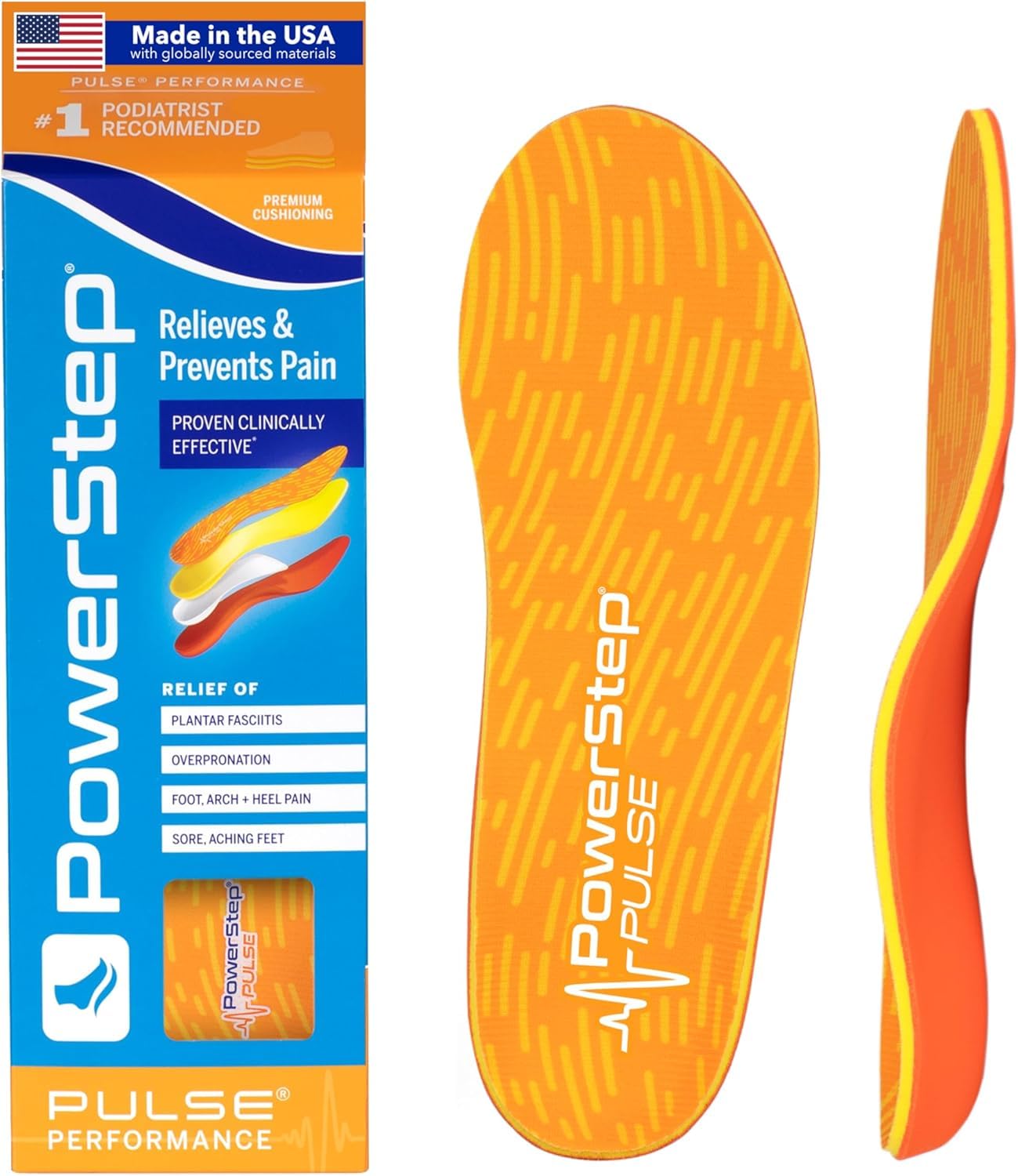
PowerStep Pulse Performance uses a firm plastic shell and dual-density foam to deliver targeted overpronation correction for flat feet. The tradeoff: the top layer can peel within weeks of regular use, particularly in high-friction areas, which limits its lifespan compared to alternatives like the CURREX RunPro.

This insole suits runners with flat feet or plantar fasciitis who need immediate, firm arch support and are willing to accept shorter durability in exchange for that correction. It is less ideal for those who prioritize long-term consistency or prefer plush cushioning.

Tip: Inspect insoles regularly for peeling; replacing every 4-6 months may be expected with frequent use.

Bottom line: For flat-footed runners who need firm pronation correction and aren't bothered by potential early replacement, this insole delivers sharp support.

#3

Superfeet Run Cushion High

Superfeet Run Cushion High

High arch comfort

Our Score 9.2/10
Check Price

Worth Noting

  • Fabric cover can peel and insoles may flatten within a few months of normal running use.
Cushioning
Flexible, adaptive
Durability
Cover may peel early
Arch Support
High, deep heel cup
Fit Compatibility
Fits high-arched feet
Read the full review

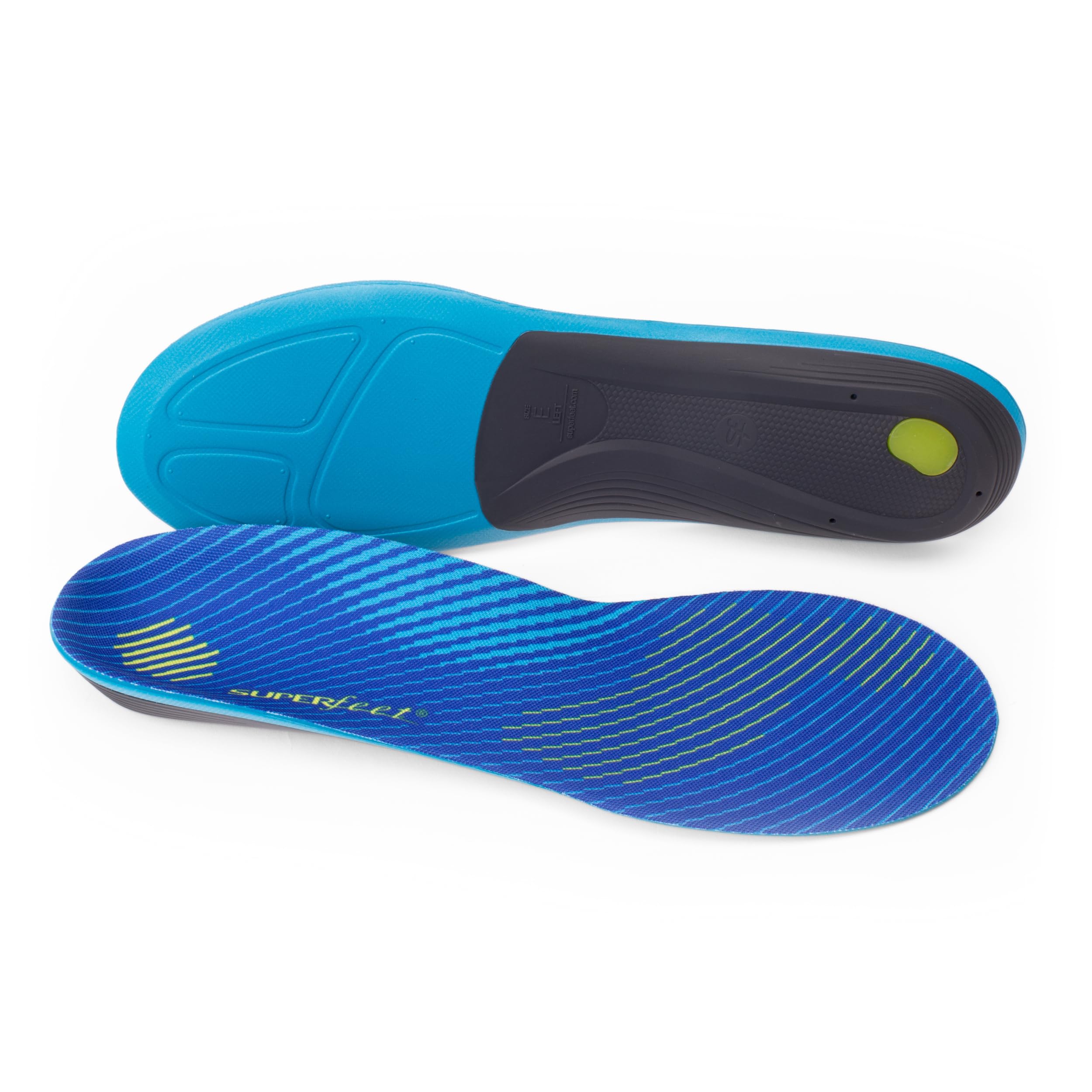
Superfeet's Run Cushion High Arch uses Adaptive Comfort Technology to flex with the foot while locking the heel into a deep cup, avoiding the rigid feel of stable medium-arch alternatives. This design suits high-arched runners who want immediate support rather than overpronation correction. The fabric cover can peel and the insoles may flatten within a few months of regular use, so it's best for those who prioritize comfort over longevity.

Tip: Plan on replacing these insoles every 4-6 months under heavy running use to maintain support.

Bottom line: The Superfeet Run Cushion High Arch delivers immediate, flexible support for high-arched runners, but its short lifespan makes it a better fit for those who prioritize comfort over mileage.

#4

Superfeet Run Support Medium

Superfeet Run Support Medium

Medium arch stability

Our Score 9.0/10
Check Price

Worth Noting

  • Cushioning is notably firm; runners used to soft insoles may find the ride too hard for impact absorption.
Cushioning
Firm, stable
Durability
Good, known brand
Arch Support
Medium, EVOLyte carbon
Fit Compatibility
Trims to fit most
Read the full review

The carbon-fiber stabilizer cap gives this insole a responsive, supportive platform that holds its shape mile after mile. Unlike the adaptive high-arch alternative that flexes more, this one keeps a consistent profile for medium-arch runners who prefer a firm, planted feel. It works best for those who don't mind firmer cushioning underfoot — if you're used to soft, plush insoles, the impact absorption will feel notably stiff.

Tip: Pair with slightly thicker socks if you want a touch of extra cushioning without changing the support profile.

Bottom line: A durable, no-nonsense insole for runners who prioritize stability and support over plush comfort.

#5

Dr. Scholl's Run Active

Dr. Scholl's Run Active

Casual runners

Our Score 8.8/10
Check Price

Worth Noting

  • May be too wide for narrow shoes or limited-volume footwear
Cushioning
Extra plush heel/ball
Durability
Good for casual use
Arch Support
Minimal arch support
Fit Compatibility
May be too wide
Read the full review

Dr. Scholl's Run Active delivers thick cushioning under the heel and forefoot that softens each stride without the price tag of premium sports insoles. It prioritizes comfort over arch support or stability, so runners with moderate, neutral gaits will get the most out of it. The insole's wide shape can overwhelm narrow shoes or those with limited interior volume — a consideration for anyone who's had fit issues with inserts before.

Tip: Trim the insole to size with scissors before inserting, and test with your roomiest pair of shoes first.

Bottom line: A cost-effective cushioning upgrade for casual runners who don't need arch support, provided the shoe has enough interior space.

#6

Spenco Polysorb Walker/Runner

Spenco Polysorb Walker/Runner

All-round value

Our Score 8.8/10
Check Price

Worth Noting

  • In snug running shoes, the added width can make the fit tight
Cushioning
Balanced shock absorption
Durability
Good value durability
Arch Support
Contoured medium arch
Fit Compatibility
May be too wide
Read the full review

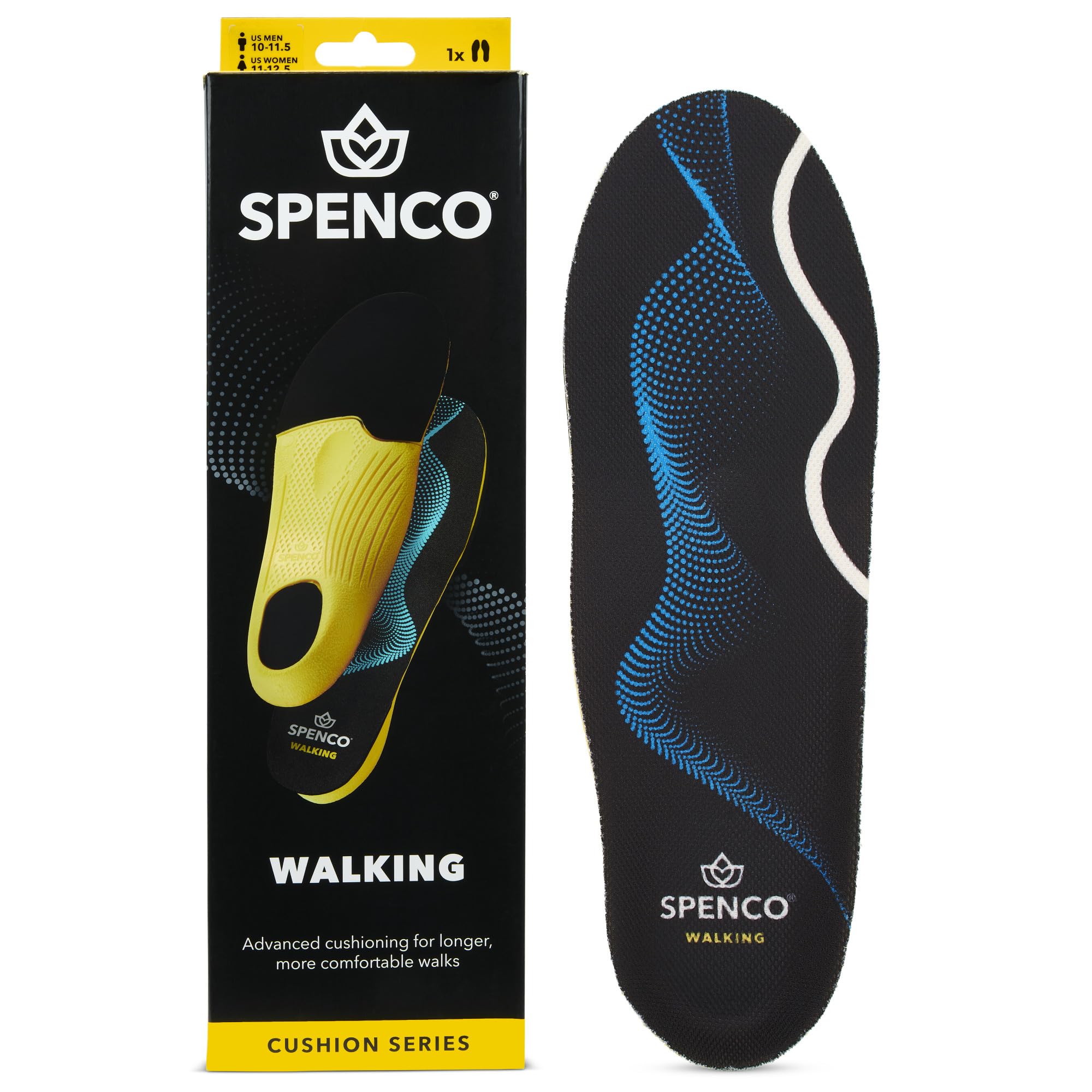
The Spenco Polysorb delivers a contoured medium arch paired with a Spencore heel plug for shock absorption and a 4-way stretch antimicrobial fabric. This combination provides consistent cushioning and support for runners who need moderate arch help without the stiffness of higher-end orthotics. The insole is noticeably wider, which adds volume inside the shoe — something to account for in tighter-fitting running shoes.

Best suited for runners and walkers with wider feet or those who want extra volume filling, this insole offers reliable comfort for daily training. Runners with narrow feet or shoes that already fit snugly should look elsewhere, as the extra width can create pressure points.

Tip: If your running shoes have a removable insole, swap it out to free up volume; otherwise consider half-size up.

Bottom line: For runners who want durable cushioning and moderate arch support without spending premium money, this insole delivers — just confirm your shoe has enough room.

How to Choose

Arch Support Height

Arch support height is the most publicized spec, but it's also the most misunderstood. Low, medium, and high profiles exist because your foot's arch needs a specific shape to distribute impact evenly. Using a high-arch insole on a flat foot creates pressure on the arch bone, while a low-arch insole on a high arch offers no support, leading to overpronation or supination.

The consequence is often pain in the knees or lower back after a few miles. To find your ideal height, do a wet test: wet your foot and step on a paper towel. A full footprint indicates flat feet (low arch), a missing middle indicates high arch, and a moderate curve is medium. Most running insoles offer one fixed height, but some, like the CURREX RunPro, provide interchangeable profiles.

Cushioning Firmness

Cushioning is a trade-off between plush comfort and ground feel. Soft foam absorbs shock but can destabilize your stride, especially on uneven terrain. Firm cushioning provides better energy return and feedback but may feel harsh on hard pavement. Runners who log high mileage often prefer a firmer base to maintain form, while casual joggers benefit from plush padding.

The hidden trade-off is that very soft insoles compress quickly, reducing their cushioning effect within 100-200 miles. If you run 20 miles per week, that means replacing them every two months. Firmer insoles, like those with carbon-fiber plates, retain their shape longer but require a break-in period of 10-20 miles to conform to your foot.

Durability

Durability is the category's weakest link. Many premium insoles (priced $50+) suffer from top-layer peeling or arch collapse within three to six months of regular use. The problem stems from bonding materials: foam layers separate from fabric covers under repeated moisture and shear forces. Budget insoles often use simpler construction that either holds up well (if you run low mileage) or fails faster (if you run daily).

The key is matching durability expectations to your mileage. A 300-mile lifespan is reasonable for most insoles; beyond that, even the best designs show wear. Check return policies: PowerStep offers a 60-day satisfaction guarantee, which helps if the insole wears earlier than expected. For high-mileage runners, choosing a model with a replaceable top layer or a bonded carbon-fiber base can extend usable life.

Fit Compatibility

Fit is the most common complaint: insoles that are too wide or too thick take up too much shoe volume, making your running shoes feel tight and causing blisters or toe crowding. This happens because most insoles are designed for generic shoe shapes, not accounting for narrow or low-volume footwear. Even trim-to-fit models vary in how much material can be cut without ruining the arch.

To avoid this, measure the insole length and width against your shoe's original insole before buying. If the new insole is thicker, you may need to loosen laces or remove the original liner. For narrow shoes, look for slim-profile insoles like Superfeet's low-volume options. If you have a wide foot, Spenco's extra volume can be a benefit rather than a problem.

Price vs. Feature Set

Price doesn't guarantee durability, but it often indicates better materials and more rigorous testing. Budget insoles ($10-$15) use basic foam that compresses quickly, while mid-range options ($25-$35) like Spenco Polysorb add contoured arches and antimicrobial covers. Premium insoles ($50-$60) include carbon-fiber stabilizers, multiple arch profiles, and heel cups that reduce pronation.

The real value lies in matching the feature set to your running habits. A casual runner who logs 10 miles per week may get a year of use from a $12 Dr. Scholl's. A marathoner training 40 miles per week should invest in a $55 CURREX that offers adjustable support and better shock absorption. Over-spending on a premium insole for light use is wasteful, but under-spending for heavy use leads to frequent replacements and potential injury.

Frequently Asked Questions