Recovery

10 Best EMS Muscle Stimulator 2026: Find the Right Dual-Channel Unit

Which EMS muscle stimulator delivers independent dual-channel control without frustrating pad wear? This guide matches your pain relief needs to the right unit.

Many EMS stimulators promise relief but fall short when pads lose adhesion after a few sessions or the unit lacks independent channel control for treating different body areas simultaneously. The result is a device that ends up sitting in a drawer.

Beyond marketing claims, the critical buying factors are dual-channel independence, pad quality, and mode variety over raw channel count. Units with separate intensity controls for each channel let you adjust the left shoulder differently from the right knee, which is crucial for multi-site pain.

This guide focuses on the real differentiators: independent channels, pad longevity, and battery life. We help you match these specs to your specific pain points and usage frequency, so you invest in a unit that delivers consistent results without replacing pads every week.

#1

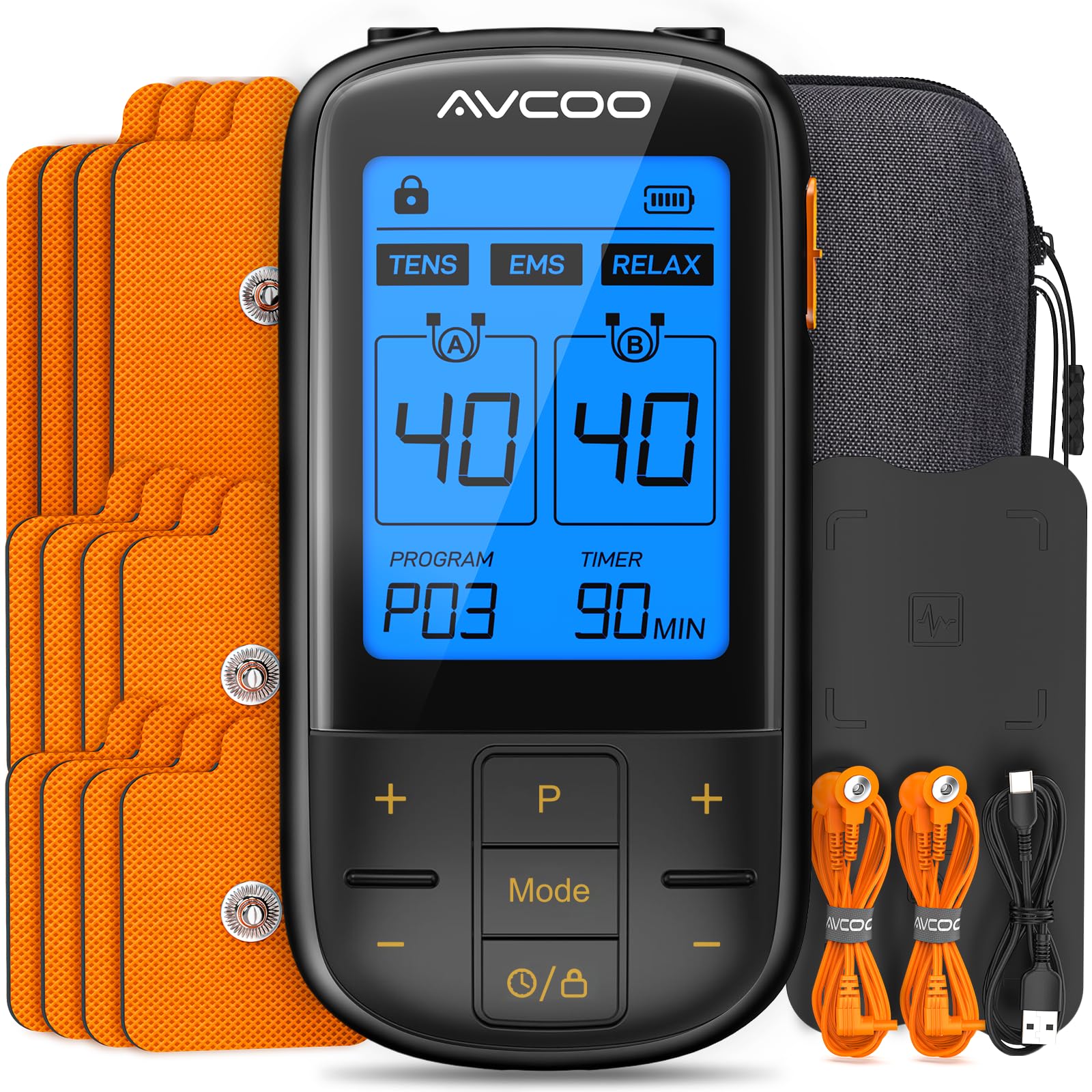
AVCOO 3-in-1

Top Pick
AVCOO 3-in-1

New 3-in-1

Our Score 9.4/10
Check Price

Worth Noting

  • Pad adhesion may weaken after several uses
Modes
32 modes, 40 intensity
Channels
2
Pad Count
12
Battery Type
Rechargeable
Read the full review

The AVCOO 3-in-1 packs 32 modes and 40 intensity levels for targeted pain relief, along with a protective EVA case that makes it travel-friendly. Its long-term durability under frequent use hasn't been established, and pad adhesion may weaken after several uses.

Bottom line: Best for travelers or first-time buyers who want maximum mode count and portability, provided they're comfortable with possible pad replacement.

#2

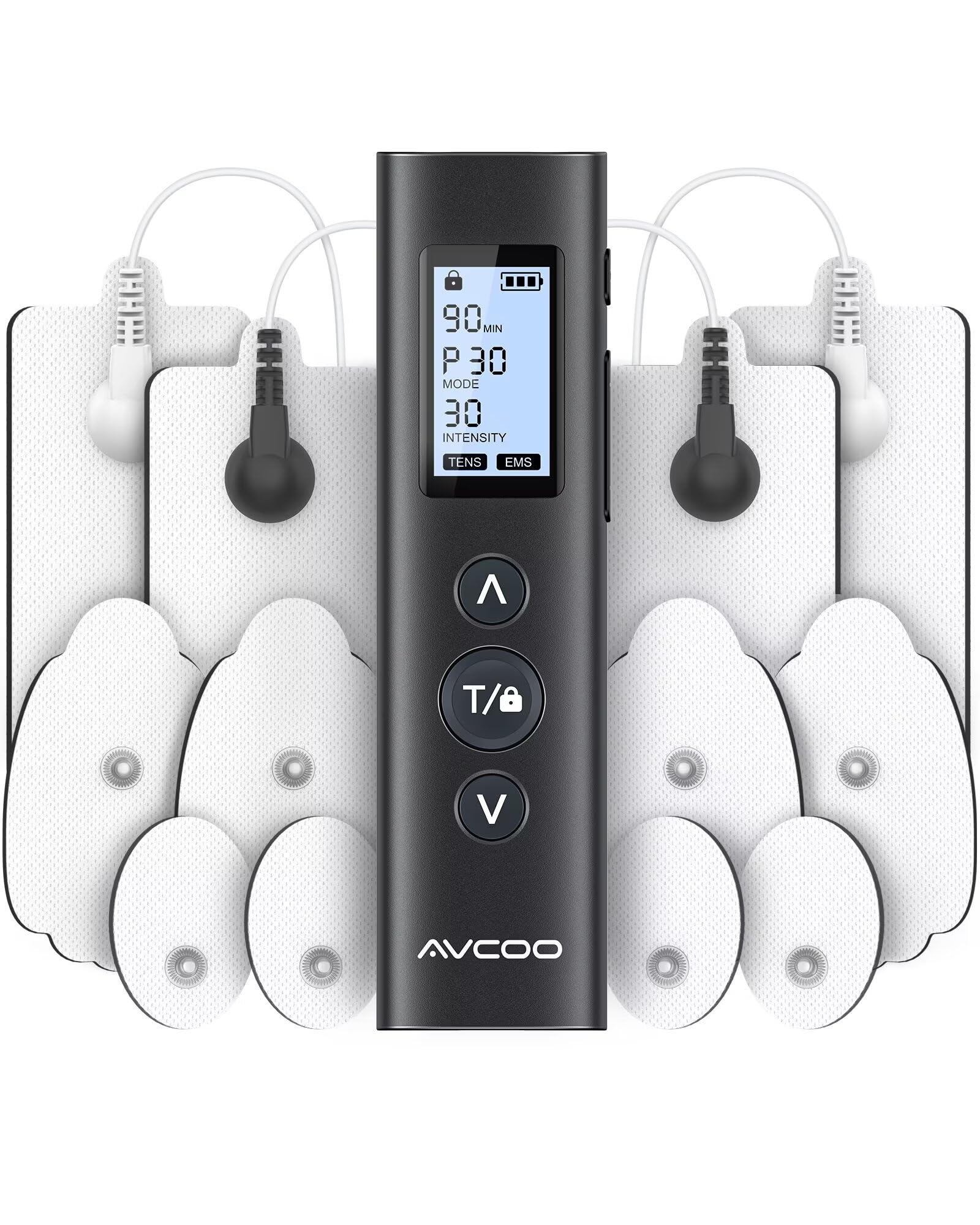
AVCOO 30-Mode

AVCOO 30-Mode

Extreme budget

Our Score 9.2/10
Check Price

Worth Noting

  • Adhesive pads may lose stickiness after a few uses, requiring replacement sooner than premium options.
  • Battery life can degrade over several months of regular use, shortening runtime.
Modes
30 modes, 30 intensity
Channels
2
Pad Count
12
Battery Type
Rechargeable
Read the full review

30 modes, 30 intensity levels, and a rechargeable battery at the lowest price in the market — that’s the core appeal of the AVCOO. It’s compact enough to slip into a pocket, making it a natural travel companion or backup unit. The variety of modes and intensity options gives you plenty of control over pain relief and muscle stimulation. Compared to the top pick, you sacrifice pad adhesion that can decline after a few uses and battery longevity that may wane over several months — trade-offs that matter less if you’re looking for an entry-level unit that won’t break the bank.

Best for thrifty shoppers who want a functional TENS/EMS combo at the lowest possible cost, or as a worry-free unit for travel and occasional use. If you plan to use it daily for months on end, the pad and battery limitations may become noticeable, but for sporadic use or as a starter device, this is a solid value.

Bottom line: If your priority is keeping costs low and you don’t mind replacing pads occasionally, the AVCOO delivers surprising functionality for under $20.

#3

CESLIFF Large Screen

CESLIFF Large Screen

Ease of use

Our Score 9.2/10
Check Price

Worth Noting

  • Included gel pads may lose stickiness after several sessions, requiring earlier replacement than some premium pads.
Modes
24 modes, 36 intensity
Channels
2
Pad Count
10
Battery Type
Rechargeable
Read the full review

Unlike menu-heavy TENS units that require paging through tiny text, this model puts mode selection and intensity levels on an oversized LCD that's visible across the room. The dual-channel independence lets you treat two areas simultaneously with different settings, and 24 modes cover TENS and EMS needs for most common pain patterns.

For users who prioritize visual clarity, the slightly larger build is a small price to pay. Occasional early failure occurs, but the warranty provides a safety net, and the large display makes this a sensible pick for home therapy sessions.

Tip: To get the most from the included pads, clean skin before application and store them sealed on the plastic film.

Bottom line: If a large, readable display matters more than portability, this CESLIFF model offers the most accessible interface among budget-friendly EMS units. Keep spare pads on hand, and the warranty covers the occasional dud.

#4

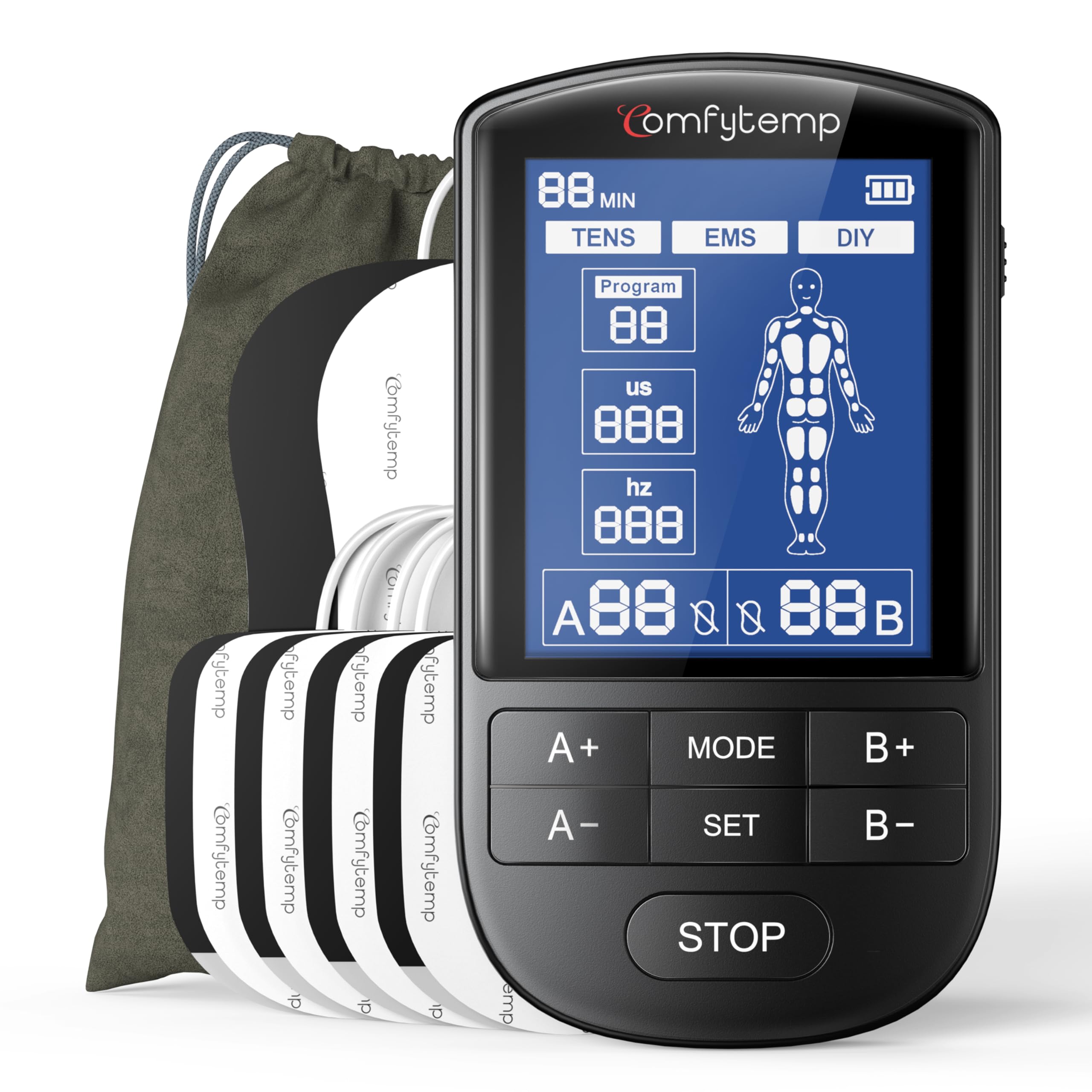
Comfytemp DIY

Comfytemp DIY

Custom therapy

Our Score 9.2/10
Check Price

Worth Noting

  • Pads lose stickiness relatively quickly, requiring periodic replacement
  • Interface can be confusing for some users due to many options
Modes
20 + DIY
Channels
2
Pad Count
10
Battery Type
Rechargeable
Read the full review

The Comfytemp TENS unit stands out with its DIY mode that lets you adjust frequency, pulse width, and on/off timing — a rare feature for budget-friendly muscle stimulators. This flexibility appeals to users who want to fine-tune therapy beyond preset programs. The large 3-inch screen aids visibility for elderly or visually impaired users, and the rechargeable battery holds charge well for multiple sessions. However, the menu-driven interface has a learning curve, and the included pads lose stickiness faster than some competitors, so replacement pads are worth factoring into your cost.

Tip: Stock up on replacement pads early — the included ones will need swapping after a few weeks of daily use.

Bottom line: Best suited for buyers who want a customizable therapy experience and don't mind occasional pad replacement or a learning curve.

#5

TENS 7000

TENS 7000

Budget TENS only

Our Score 9.2/10
Check Price

Worth Noting

  • Non-rechargeable 9V battery may need frequent replacement for daily use.
Modes
Channels
2
Pad Count
4
Battery Type
9V Replaceable
Read the full review

This classic clinical TENS unit delivers effective pain relief at a budget-friendly price, especially if you don't need EMS or rechargeability. However, it uses replaceable 9V batteries that may drain quickly with daily sessions, and some units may experience durability issues over time.

Bottom line: Best suited for occasional pain relief on a tight budget — not for daily heavy use or EMS needs.

#6

AUVON 24-Mode

AUVON 24-Mode

Travel & value

Our Score 9.2/10
Check Price

Worth Noting

  • Small 2-inch pads may not stick well on large areas like thighs or back, limiting use on bigger muscle groups.
Modes
24
Channels
2
Pad Count
8
Battery Type
Rechargeable
Read the full review

At a budget-friendly price, this pocket-sized unit delivers reliable TENS therapy for occasional use, with good battery life and quick Type-C charging. The 2-inch pads, however, may struggle to stay put on larger body areas like the back or thighs, making it best suited for targeted spot treatment rather than full-muscle coverage.

Bottom line: Grab this if you need a tiny, rechargeable TENS unit for occasional spot relief on smaller areas and don't expect full-back coverage.

#7

Belifu Dual Channel

Belifu Dual Channel

Pain relief & muscle

Our Score 9.0/10
Check Price

Worth Noting

  • In some cases the unit may not turn on or buttons stick after limited use
  • Electrode pads lose adhesion faster than some competitors, requiring earlier replacement
Modes
24
Channels
2
Pad Count
10
Battery Type
Rechargeable
Read the full review

The Belifu Dual Channel delivers independent A/B channel control, letting you adjust intensity and mode for two separate body areas at once. With 24 pre-programmed modes, it covers both TENS pain relief and EMS muscle stimulation, and the rechargeable lithium battery lasts through multiple sessions on a single charge. This combination of features at a budget-friendly price makes it a go-to unit for everyday pain management and muscle recovery.

In use, the unit is compact and feels solid enough for daily handling. The 10 included pads cover common sites like the lower back, shoulders, and neck, and the dual channel design means you can treat, say, a shoulder and a knee simultaneously with different settings. Battery life holds up well even with frequent use, and the drawstring storage bag keeps everything tidy. The main tradeoff: the electrode pads lose stickiness faster than some competitors — replacement pads are needed after a few weeks of daily use, which is an ongoing cost.

This unit is best for anyone wanting a reliable, feature-rich TENS/EMS combo without spending into the premium tier. It suits general pain relief, muscle relaxation, and recovery after exercise. If you need four channels for full-body coverage or higher intensity for deep muscle work, a 4-channel unit like the iSTIM would be a better fit. The pad adhesion tradeoff is manageable for most buyers who plan to use the device a few times a week — just budget for replacement pads every month or two.
Tip: Keep a spare set of replacement pads on hand; they last longer if stored on the plastic liner between sessions.

Bottom line: The best-balanced dual-channel TENS/EMS unit for general pain relief and muscle therapy — independent channels and 24 modes at a budget-friendly price, with the caveat that pad longevity is average.

#8

iSTIM EV-805

iSTIM EV-805

Multi-site chronic pain

Our Score 9.0/10
Check Price

Worth Noting

  • Premium price is hard to justify for users who only need one or two channels.
  • Navigating 24 programs takes time to learn.
Modes
24 programs
Channels
4
Pad Count
24
Battery Type
Rechargeable
Read the full review

The iSTIM EV-805 stands apart from dual-channel units by offering four independent channels for simultaneous treatment of up to eight body areas — a feature usually found in clinical settings. The Japanese gel pads maintain adhesion and comfort longer than standard pads, reducing replacement frequency. This unit suits chronic pain sufferers and physical therapists who need multi-site therapy, but the high price and learning curve of 24 programs make it overkill for occasional or single-site use. Durability reports from a minority of users suggest checking construction after extended heavy use.

Tip: Use the preset combo programs as starting points; customizing parameters can fine-tune relief for specific body areas.

Bottom line: For anyone managing multiple pain sites simultaneously, this is the most capable portable stimulator available — just be prepared for the upfront investment and initial learning.

#9

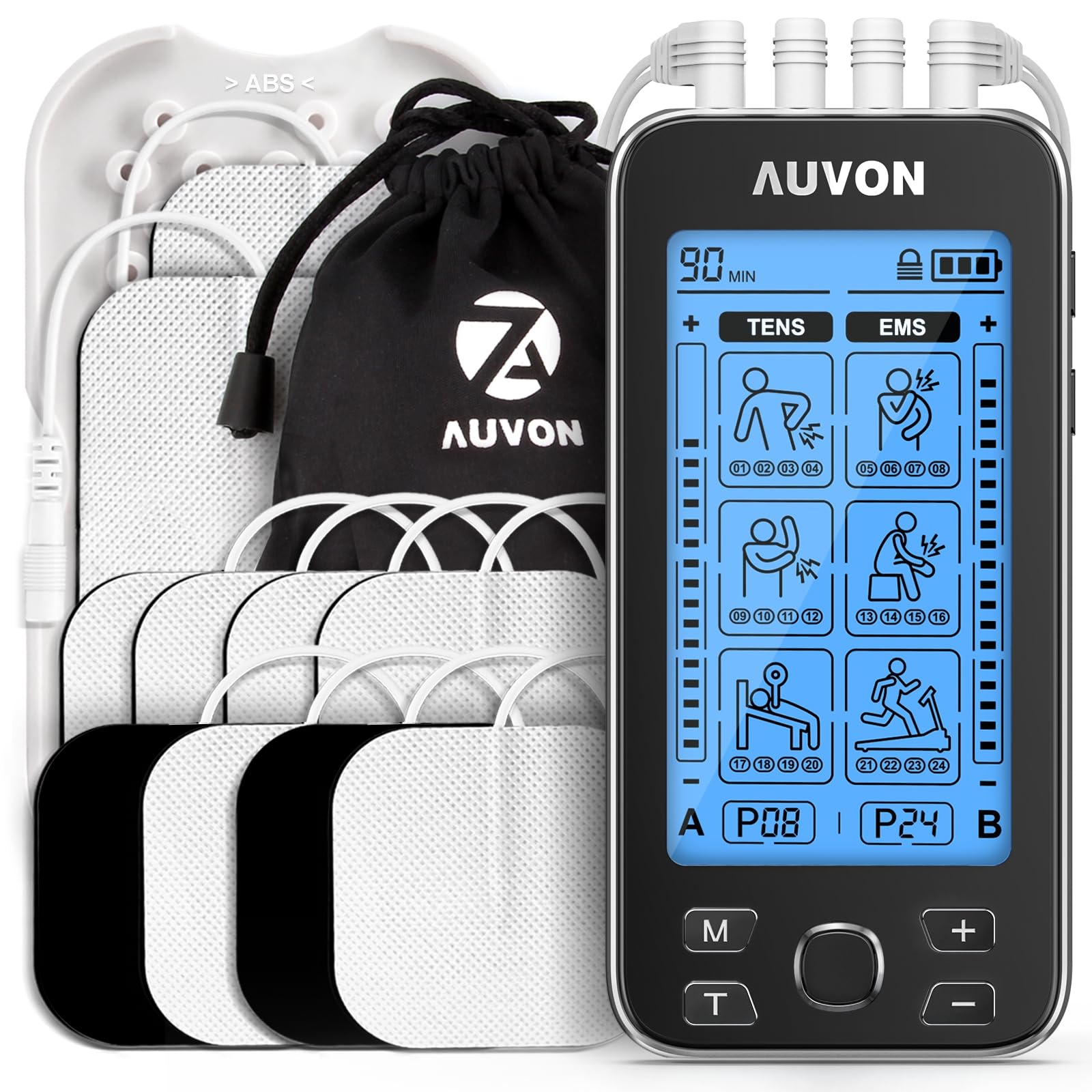
AUVON 4 Output

AUVON 4 Output

Full-body coverage

Our Score 9.0/10
Check Price

Worth Noting

  • For deep muscle stimulation, maximum intensity may feel lower than some users expect
  • On curved body areas like knees, pad stickiness may degrade faster than expected
Modes
24
Channels
4
Pad Count
10
Battery Type
Rechargeable
Read the full review

Four independent channels let you treat up to eight body areas with separate settings, making this a flexible option for chronic pain in both knees and lower back. The large backlit screen and good battery life support daily use. However, maximum intensity may not reach deep muscle levels, and pad adhesion on curved areas may require replacement pads. This suits users who prioritize multi-site coverage over raw power.

Tip: Replace pads regularly for best adhesion on curved joints.

Bottom line: Ideal for users with multiple pain sites who need simultaneous treatment and can work within moderate intensity levels.

#10

Belifu 4-Channel

Belifu 4-Channel

Multi-site budget

Our Score 9.0/10
Check Price

Worth Noting

  • Battery may stop charging after several months in some units.
Modes
24 modes, 30 intensity
Channels
4
Pad Count
10
Battery Type
Rechargeable
Read the full review

Treat up to four body areas simultaneously with separate settings thanks to true independent channel control, and the included belt clip makes it easy to move around during treatment. However, some units develop battery charging issues after a few months, and pad adhesion can be inconsistent depending on skin type.

Bottom line: Best for budget-conscious buyers who need four-channel coverage and are willing to accept the possibility of battery issues or replace pads more often.

How to Choose

Channels: 2 vs 4

Two independent channels cover most needs, allowing you to treat two areas (e.g., both knees or one shoulder and lower back) with separate intensities. Four channels let you connect up to eight pads for simultaneous full-body therapy, but they add complexity and cost.

Unless you have chronic pain in three or more distinct sites, a dual-channel unit is simpler and more affordable. The real value comes from independent control per channel, not raw channel count.

Battery Type

Rechargeable lithium-ion batteries are now standard and convenient for daily use, but their capacity degrades over 1–2 years. Replaceable 9V batteries (like the TENS 7000) never need charging, but they are bulkier and cost more in the long run if used heavily.

For moderate use (a few times per week), rechargeable is the better choice. Heavy daily users may prefer a unit with a replaceable battery to avoid downtime during charging.

Modes and Intensity Levels

More modes and intensity levels allow finer tuning to match your pain type and sensitivity. However, many preset modes are variations of basic TENS (pain relief) and EMS (muscle contraction). The core modes that matter are low-frequency TENS and pulsed EMS.

Avoid overpaying for 30+ gimmick modes. Look for at least 20 preset modes with separate intensity control (30+ levels) so you can gradually dial in the right sensation without jumping from too weak to too strong.

Pad Count and Quality

Electrode pads are consumables, not lifetime components. Almost every unit's pads lose stickiness after 15–30 uses due to skin oils and dirt. Replacement pads cost $8–$15 per set, so factor that into your total cost.

Units that include more pads (10–12) give you a head start. Higher-end pads (like the Japanese gel pads on the iSTIM) last longer, but even they need eventual replacement. Keep pads clean by storing them on the plastic sheet between uses.

Independent Channel Control

Independent dual-channel control lets you set different intensity and mode for each channel. This is essential when treating different body areas (e.g., a tight shoulder and a sore knee) because the same pulse strength rarely suits both.

Some budget units advertise 'dual channels' but share a single intensity knob, forcing you to balance both pads at the same level. Always verify that each channel has its own intensity adjustment, either via separate buttons or a menu.

Frequently Asked Questions