Home Gym

8 Best Home Gym Flooring Over Carpet 2026: Stable Without Tape

Find home gym flooring that grips carpet without sliding, protects your pile, and handles heavy use - from budget EVA to rubber-top tiles.

Setting up a home gym on carpet often leads to the same surprise: puzzle mats that shift, separate, and bunch up during burpees or deadlifts. The soft surface that cushions your feet also undermines the grip of standard foam tiles.

The real divide isn't thickness or brand - it's the material that touches the carpet. Smooth EVA foam slides; rubber-backed tiles grip. This guide cuts through the marketing to show you which flooring types actually stay put on carpet, how much protection you need, and where you can save money with tape.

Most popular EVA mats require double-sided tape to stay in place - a workaround that adds cost and hassle. Rubber-top tiles eliminate that need entirely, making them the smarter choice for any carpeted gym that sees regular use. The right base prevents frustration and protects your carpet from dents and wear - whether you choose rubber-top tiles or budget EVA with tape.

#1

GXMMAT 16x6' Roll Mat

Top Pick
GXMMAT 16x6' Roll Mat

Cardio & HIIT

Our Score 9.4/10
Check Price

Worth Noting

  • Thin 7mm foam provides limited joint cushioning and carpet protection.
  • Surface can become slick when wet from sweat, reducing traction during intense sessions.
Design
Roll
Material
PVC foam
Thickness
7 mm
Grip Texture
Non-slip
Read the full review

The GXMMAT roll mat delivers a massive, seamless surface that grips carpet securely during fast-paced movement. At 16x6 feet, it provides uninterrupted space for dynamic cardio routines without sections shifting apart. The high-density PVC foam holds up well to daily use, though the 7mm thickness trades cushioning for stability — it offers less padding for joints and less protection for carpet fibers than thicker tile options. This mat works best for users who value a stable, gap-free workout floor for bodyweight training, not heavy equipment or high-impact landings.

Tip: Use a sweat towel or mat fan to maintain grip during sweaty sessions.

Bottom line: A smart pick for cardio-focused home gyms on carpet where a seamless, stable floor matters more than thick cushioning.

#2

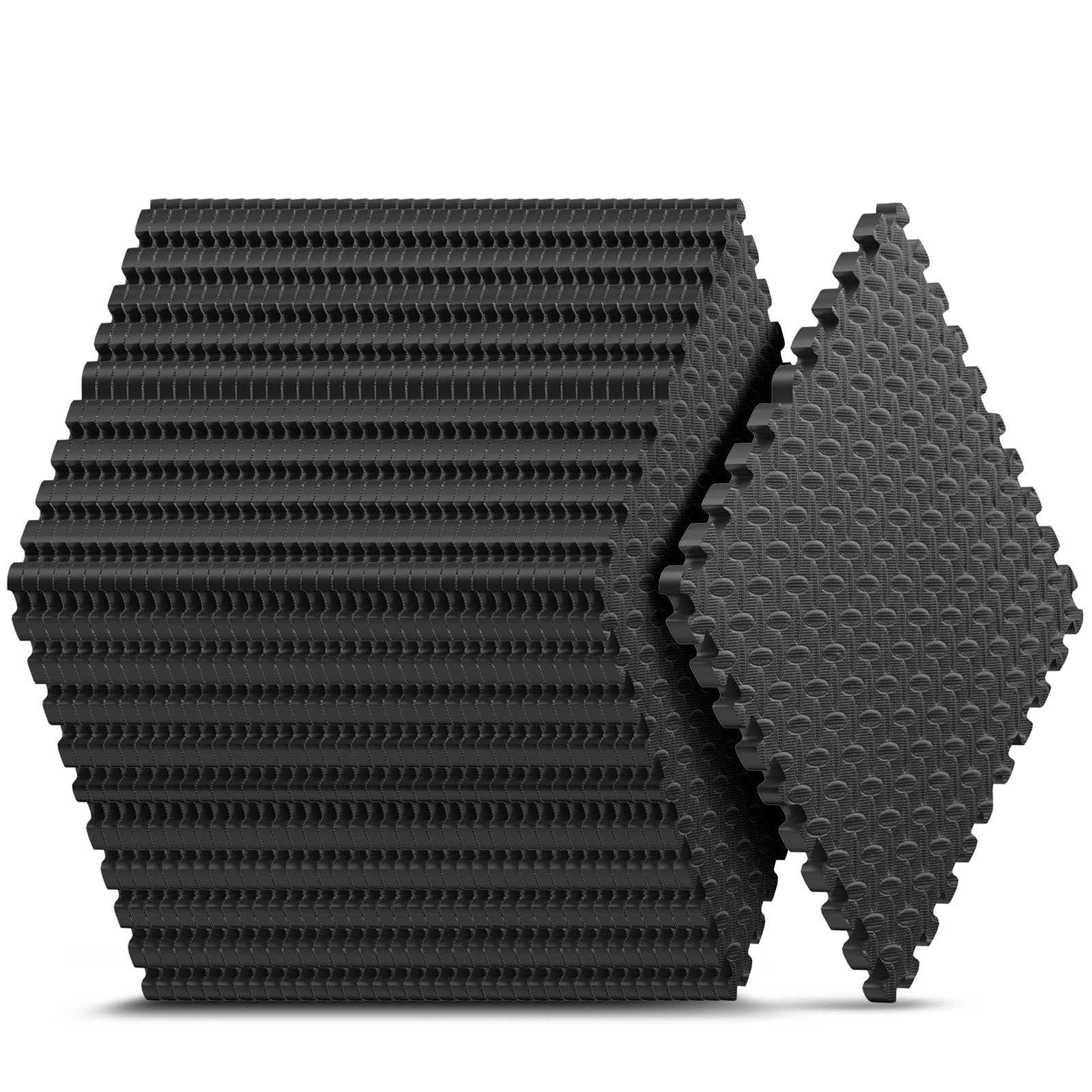
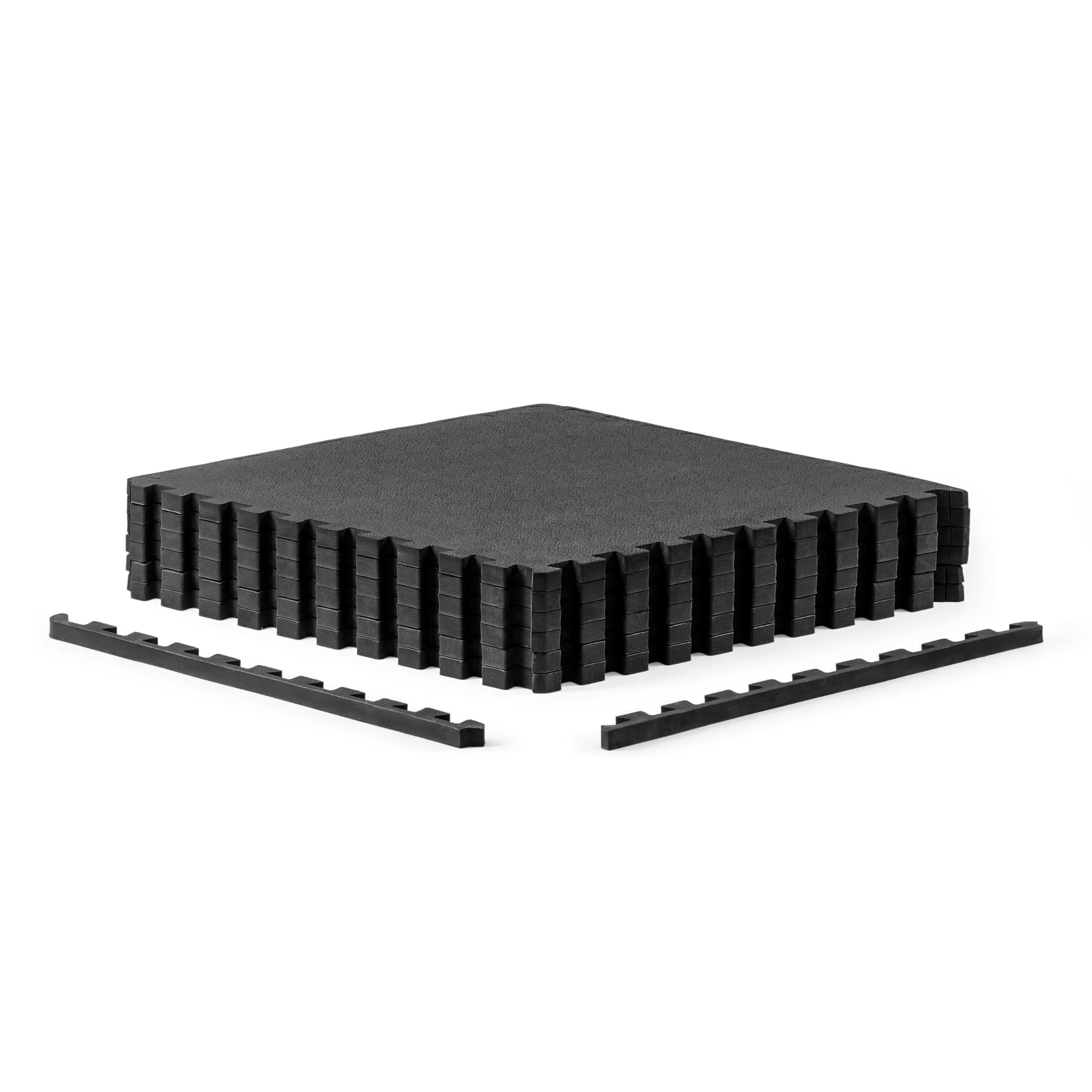
ProsourceFit 1" Extra Thick

ProsourceFit 1" Extra Thick

Hard floors

Our Score 9.4/10
Check Price

Worth Noting

  • Textured bottom does not prevent sliding on carpet, limiting stability to hard floors.
Design
Interlocking
Material
EVA foam
Thickness
1 in
Grip Texture
Non-skid
Read the full review

The 1-inch thickness provides superior padding for joint protection and absorbs impact from dropped weights. The interlocking tiles cover 24 sq ft and feel solid on hard floors. However, the textured surface does not grip carpet, so the mat shifts under lateral movement – this foam is best placed on concrete or wood where its cushioning stands out.

Bottom line: Best for home gyms with hard floors where extra padding matters – not the pick for carpet installations.

#3

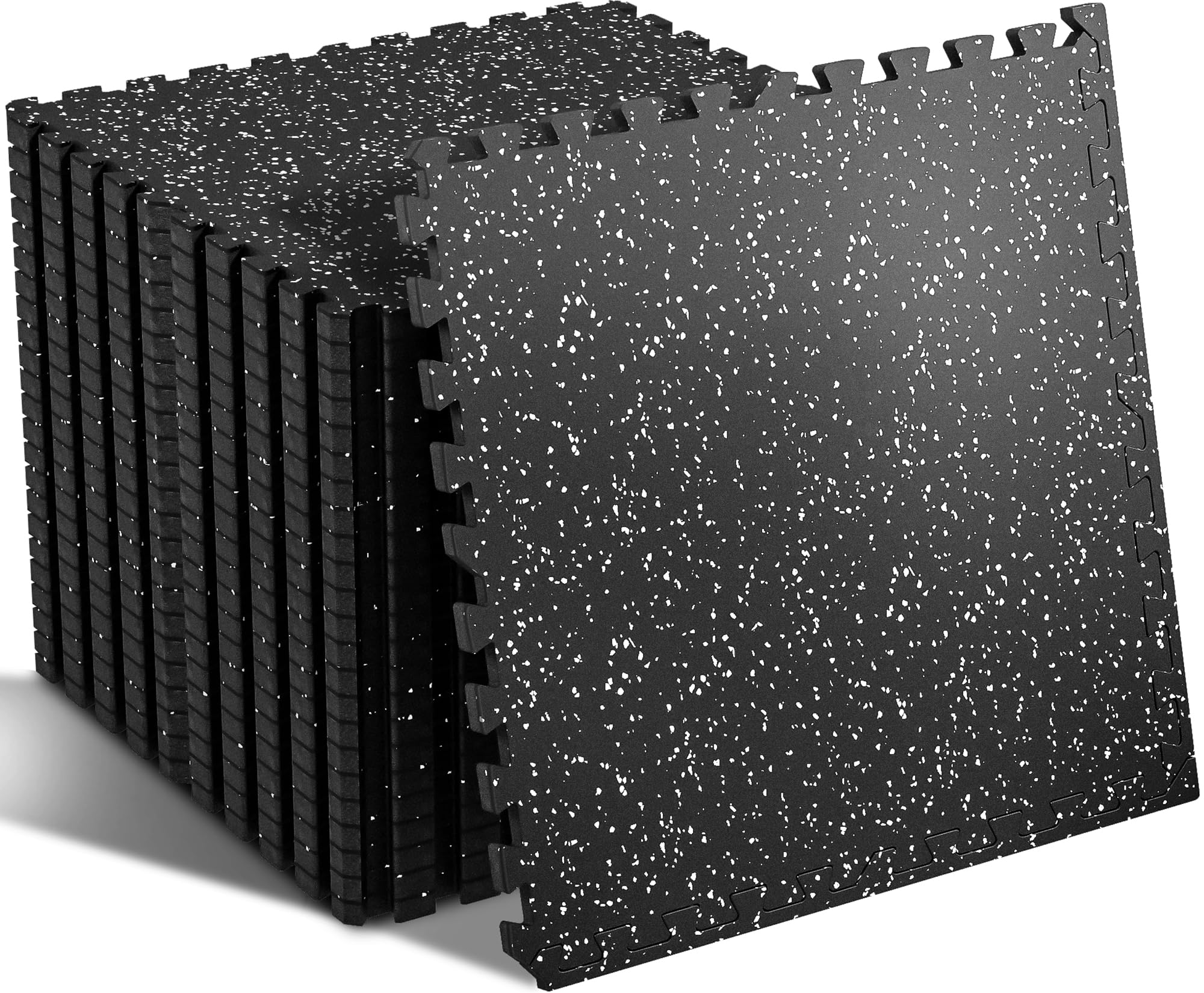
AIRHOP 0.56" Rubber Top

AIRHOP 0.56" Rubber Top

Carpeted home gym

Our Score 9.2/10
Check Price

Worth Noting

  • Per-square-foot cost is higher than basic EVA-only mats
  • Rubber odor may be noticeable for the first day or two, requiring airing out before use.
Design
Interlocking
Material
Rubber/EVA
Thickness
0.56 in
Grip Texture
Rubber
Read the full review

The rubber surface and interlocking design keep these tiles planted on carpet through weightlifting, cardio, and dynamic movements. User feedback confirms the tiles stay in place without tape or adhesive, while the 0.56-inch EVA base cushions impacts and protects the carpet underneath. This stability comes at a higher per-square-foot cost compared to basic EVA mats, and a brief rubber odor may require airing out.

This is a permanent, worry-free floor solution for home gyms on carpet. Buyers with heavy equipment, dropping weights, or high-impact cardio will benefit from the grip and thickness. Those wanting minimal coverage on a tight budget may prefer cheaper EVA options that slide, but for a stable base, this justifies the premium.

Tip: Let the tiles air out in a ventilated space for a day before installing to minimize initial rubber smell.

Bottom line: For home gyms on carpet, this is the most stable tile option without requiring tape — the higher cost buys genuine peace of mind during heavy lifts.

#4

BalanceFrom 1/2" 144 sq ft

BalanceFrom 1/2" 144 sq ft

Large carpet areas

Our Score 9.2/10
Check Price

Worth Noting

Design
Interlocking
Material
EVA foam
Thickness
0.5 in
Grip Texture
Non-slip
Read the full review

144 sq ft of cushioning for under $100 — unmatched coverage for large home gym spaces. The tiles snap together quickly and hold up well under weights and daily workouts. On concrete or hard floors, they stay firmly in place. On carpet, however, the mat can shift during dynamic movement unless secured with tape. Best for buyers with garage or basement gyms who want maximum square footage per dollar and are willing to add tape for carpet stability.

Tip: Use carpet-safe double-sided tape along the edges and seams to prevent shifting on carpet.

Bottom line: For large garage or basement gyms, this is the best value per square foot — just plan on taping it down if your floor is carpeted.

#5

Nazhura 1/2" 64 sq ft

Nazhura 1/2" 64 sq ft

Budget home gyms

Our Score 9.2/10
Check Price

Worth Noting

  • On carpet, the tiles can shift laterally and interlocking joints may separate over time.
Design
Interlocking
Material
EVA foam
Thickness
0.5 in
Grip Texture
Textured
Read the full review

The Nazhura 64 sq ft set delivers solid value for hard-floor playrooms or stretching zones where cost-per-square-foot matters. The interlocking tiles install quickly and clean up with a damp cloth. However, like other pure-foam tiles, this set slides on carpet without tape, and some users note that joints can loosen over time with lateral movement. The 0.5-inch thickness provides basic cushioning but does not protect carpet from heavy equipment. This is a capable budget option for light, static use on hard floors, not for carpeted gyms or high-intensity cardio.

Bottom line: Best for budget-conscious buyers covering a hard floor with light activity — stretching, yoga, or kids’ play. Not recommended for carpeted home gyms without tape or adhesive.

#6

CAP 1/2" Puzzle Mat

CAP 1/2" Puzzle Mat

Light stretching

Our Score 9.2/10
Check Price

Worth Noting

  • Tiles can separate on carpet without tape
Design
Interlocking
Material
EVA foam
Thickness
0.5 in
Grip Texture
Smooth EVA
Read the full review

Budget-friendly EVA puzzle tiles ideal for light stretching or yoga on carpet. Assembly is simple and the 0.5-inch foam provides adequate cushion for floor work. However, the thin tiles can separate during movement and offer limited protection for heavy equipment — best for temporary, low-impact use.

Bottom line: Fits temporary light stretching or yoga on carpet, but tape is needed to keep tiles from shifting.

#7

SUPERJARE 0.56" Rubber Top

SUPERJARE 0.56" Rubber Top

Carpeted home gym

Our Score 9.0/10
Check Price

Worth Noting

  • Mid-range price that some buyers consider high for the coverage provided.
Design
Interlocking
Material
Rubber/EVA
Thickness
0.56 in
Grip Texture
Rubber
Read the full review

The SUPERJARE tiles provide a rubber top that grips carpet effectively, creating a stable surface for weightlifting and cardio at a lower cost than the top pick. The 0.56-inch foam base cushions floor work and protects the carpet. However, the interlocking connections can separate during lateral movements like jumping jacks or shifting equipment — a tradeoff that suits buyers who are willing to reposition tiles occasionally. This set is best for carpeted home gyms where occasional shifting is not a dealbreaker.

Tip: If tiles shift during workouts, consider applying double-sided tape between tiles for added stability.

Bottom line: For cost-conscious buyers who can accept occasional tile shifting, the SUPERJARE rubber-top tiles offer solid grip on carpet at a lower price than top-tier alternatives.

#8

BeMaxx 0.4" 18 sq ft

BeMaxx 0.4" 18 sq ft

Temporary yoga

Our Score 8.8/10
Check Price

Worth Noting

  • Thin 0.4-inch foam may not protect carpet from pressure or frequent use
Design
Interlocking
Material
EVA foam
Thickness
0.4 in
Grip Texture
Anti-slip
Read the full review

At $27 for 18 square feet, this EVA foam set undercuts everything else in this roundup. The interlocking tiles assemble quickly and provide noticeable cushion over bare carpet. However, at 0.4 inches thick, it offers minimal protection for the carpet underneath and the tiles can separate after a few weeks of use. This works best as a secondary layer or for yoga-style floor work, not as a standalone gym surface.

Bottom line: Best for temporary stretching on carpet when a yoga mat is placed on top, not for gym activities.

How to Choose

Thickness: How Much Cushion for Carpet?

A mat that is too thin will compress under weights and allow carpet fibers to poke through, ruining the look and feel. For light stretching, 0.5 inches is the minimum; for heavy deadlifts or treadmill placement, 0.56 inches or more spreads pressure and prevents dents.

Thicker mats also better mask unevenness in the carpet below. However, they are heavier and more expensive. Match thickness to your heaviest activity, not just your budget.

Bottom Grip Texture: Rubber vs. Smooth Foam

Rubber-bottomed tiles conform to carpet fibers, creating friction that prevents sliding even during lateral movements. Smooth EVA foam glides on soft surfaces because it doesn't bite into the pile.

If you choose a smooth EVA mat, double-sided carpet tape is the only reliable fix. Rubber-top tiles require no extra adhesive and are the best choice for dynamic workouts.

Design: Interlocking Tiles vs. Roll Mats

Interlocking tiles are modular and easy to customize, but their edges are weak points on carpet. When you jump or pivot, tiles can separate and create gaps that catch feet or equipment.

Roll mats offer a seamless surface that can't come apart, but they are harder to store and typically thinner. For HIIT or jump rope, a large roll mat is more stable than a tile floor on carpet.

Material: Rubber, EVA, or PVC?

Rubber-top tiles combine a grippy surface with a cushioned EVA base, offering the best of both worlds for carpet use. Pure EVA is soft and cheap but slides and compresses. PVC mats are thin, durable on hard floors, but lack cushion on carpet.

Your choice should align with your workout: rubber for heavy lifting and cardio, EVA for yoga and stretching (with tape), PVC for equipment placement on concrete.

Frequently Asked Questions