Cardio Machines

12 Best Vertical Climber of 2026: Real Resistance, Not Just Springs

Find a vertical climber that delivers real adjustable resistance without noise or wobble – for effective home cardio and strength training.

Most vertical climbers under $200 promise a full-body workout, but the reality is often light springs that barely tax your legs. The machine you bring home may squeak from day one, wobble at higher speeds, or focus only on your lower body while leaving arms idle.

The real divide isn't price – it's whether a climber actually provides meaningful resistance you can progress with. Some use elastic cords or springs that fatigue quickly, while others rely on body weight alone. A few deliver true magnetic resistance but at a premium.

This guide cuts through the marketing to match you with a vertical climber that fits how you actually train: leg-focused stepper, full-body mover, or quiet magnetic machine. Pick the trade-off that matches your floor space, noise tolerance, and strength goals.

#1

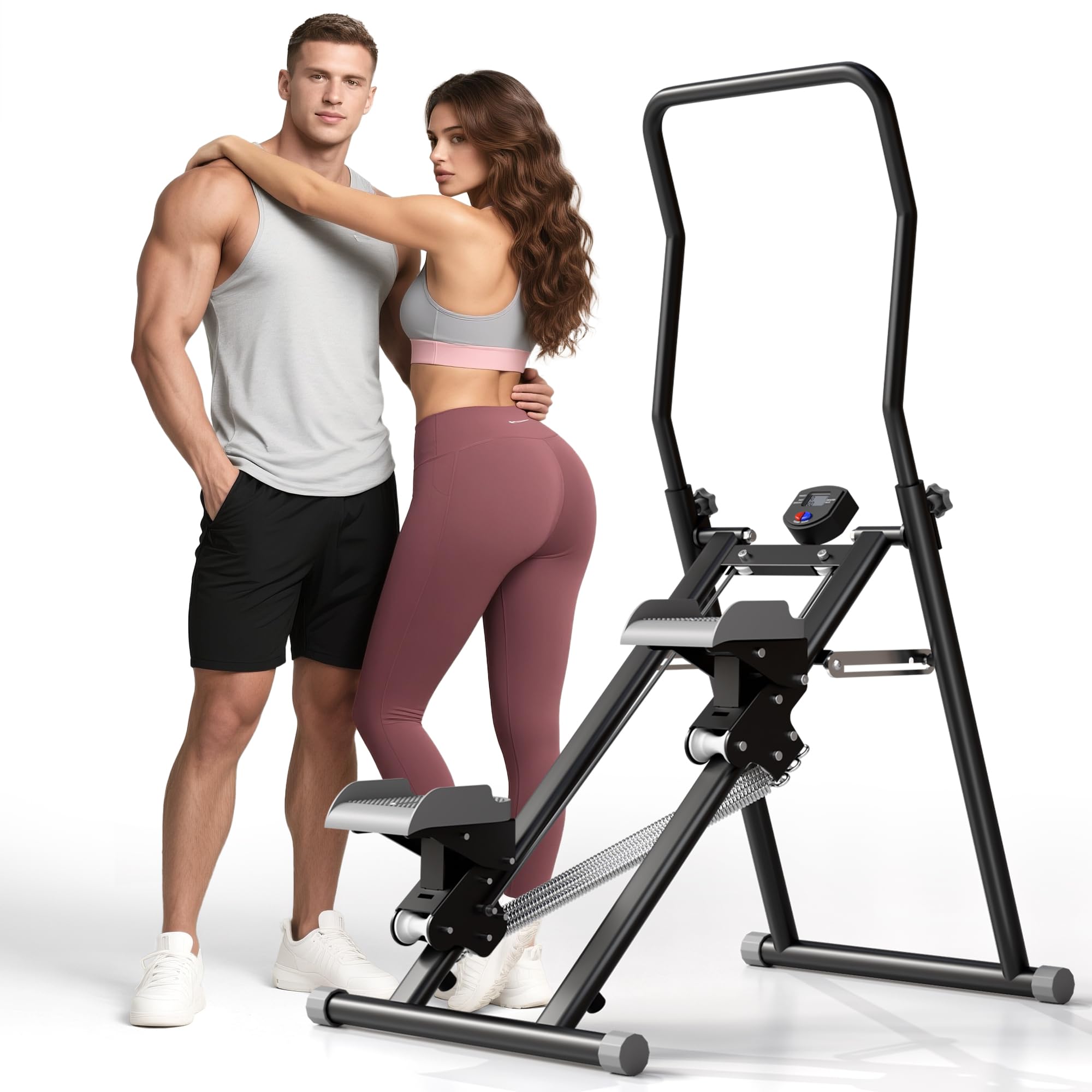
EPHESPORT 2.0 Stepper

Top Pick
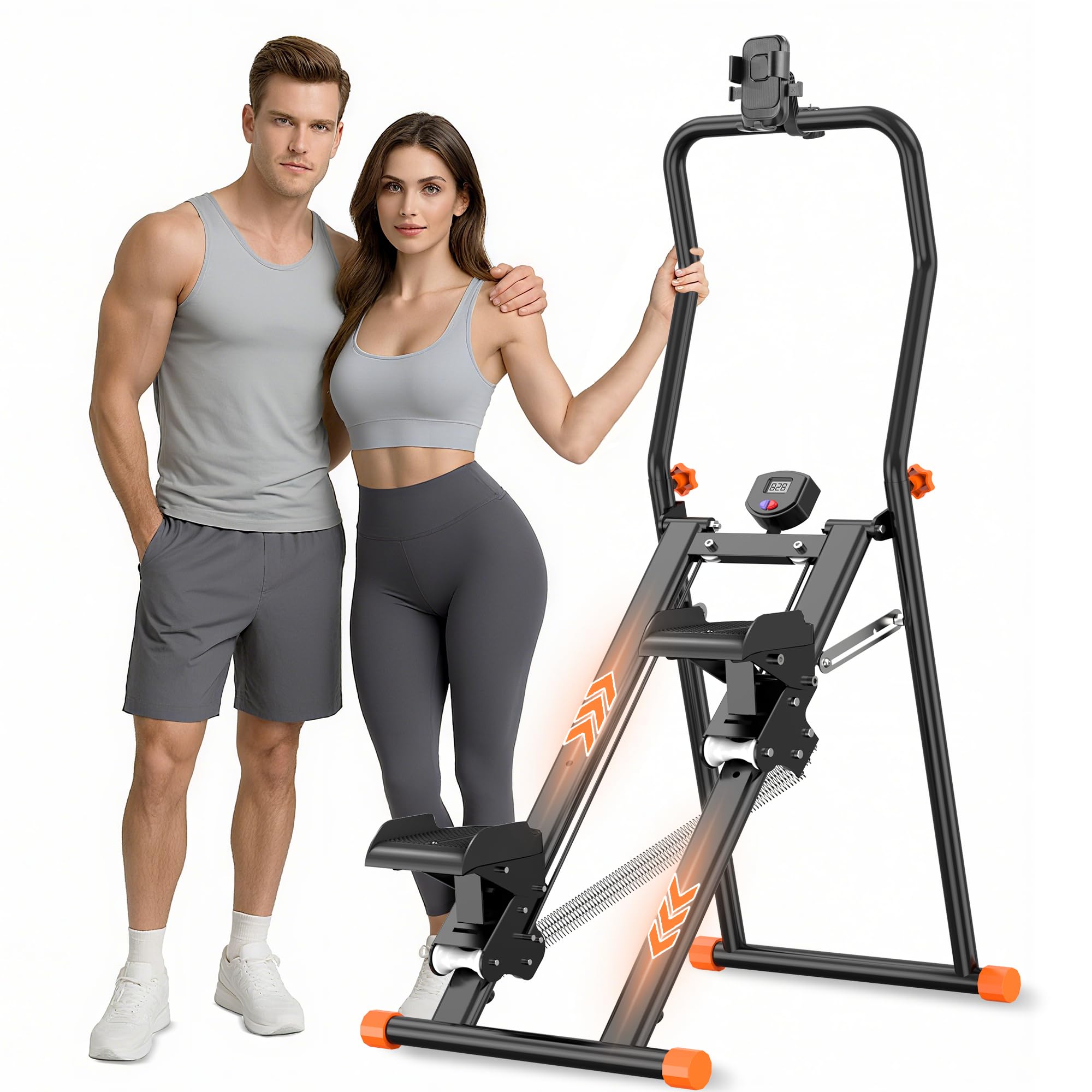
EPHESPORT 2.0 Stepper

Budget resistance seeker

Our Score 8.8/10
Check Price

Worth Noting

  • Spring mechanism can produce clicking or squeaking noise, noticeable in quiet rooms or shared spaces.
Noise Level
Noticeable (spring noise)
Fold/Storage
Yes, foldable
Stride/Pedal
3 pedal angles
Resistance Type
3-level spring
Read the full review

The EPHESPORT 2.0 stepper stands out among budget options by offering actual adjustable spring resistance — three levels that genuinely increase difficulty. Unlike the top pick in this category, which relies on body weight alone, this machine lets you dial up tension for progressive leg and glute work. The steel frame and wide pedals feel stable even during faster stepping, and the assembly is nearly complete out of the box.

This stepper suits budget buyers who want a compact, foldable machine for legs and glutes, and who value easy setup. However, if you need full-body cardio and arm engagement, the fixed handlebars limit upper body work — it is a lower-body tool. Additionally, the spring mechanism can produce occasional clicking or squeaking in quiet rooms, so it is less suited for shared silent spaces.

Tip: Place on a mat to dampen spring noise if using in shared spaces.

Bottom line: A cost-effective lower-body stepper with real resistance adjustability — best for those focused on leg and glute conditioning rather than full-body climbing.
#2

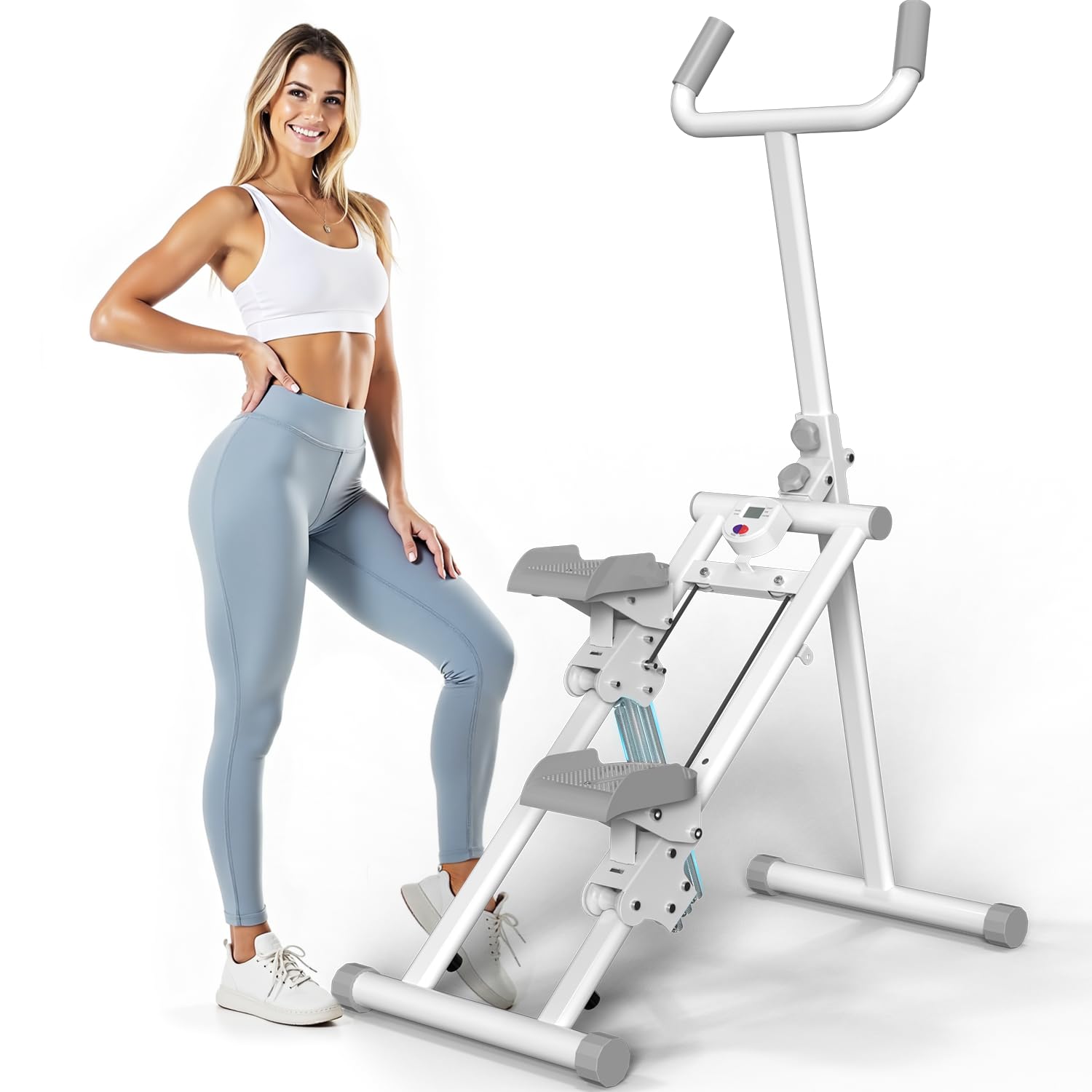
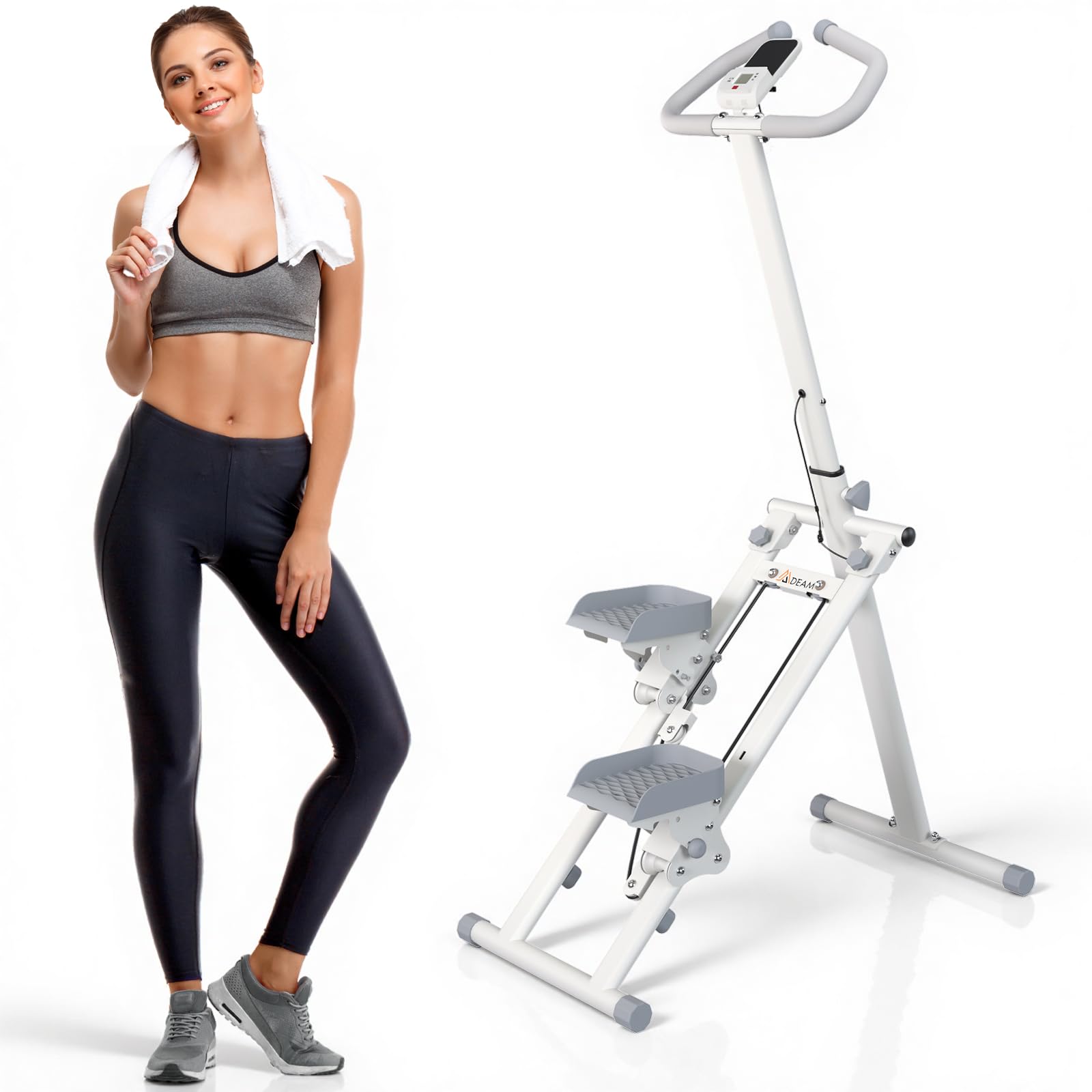
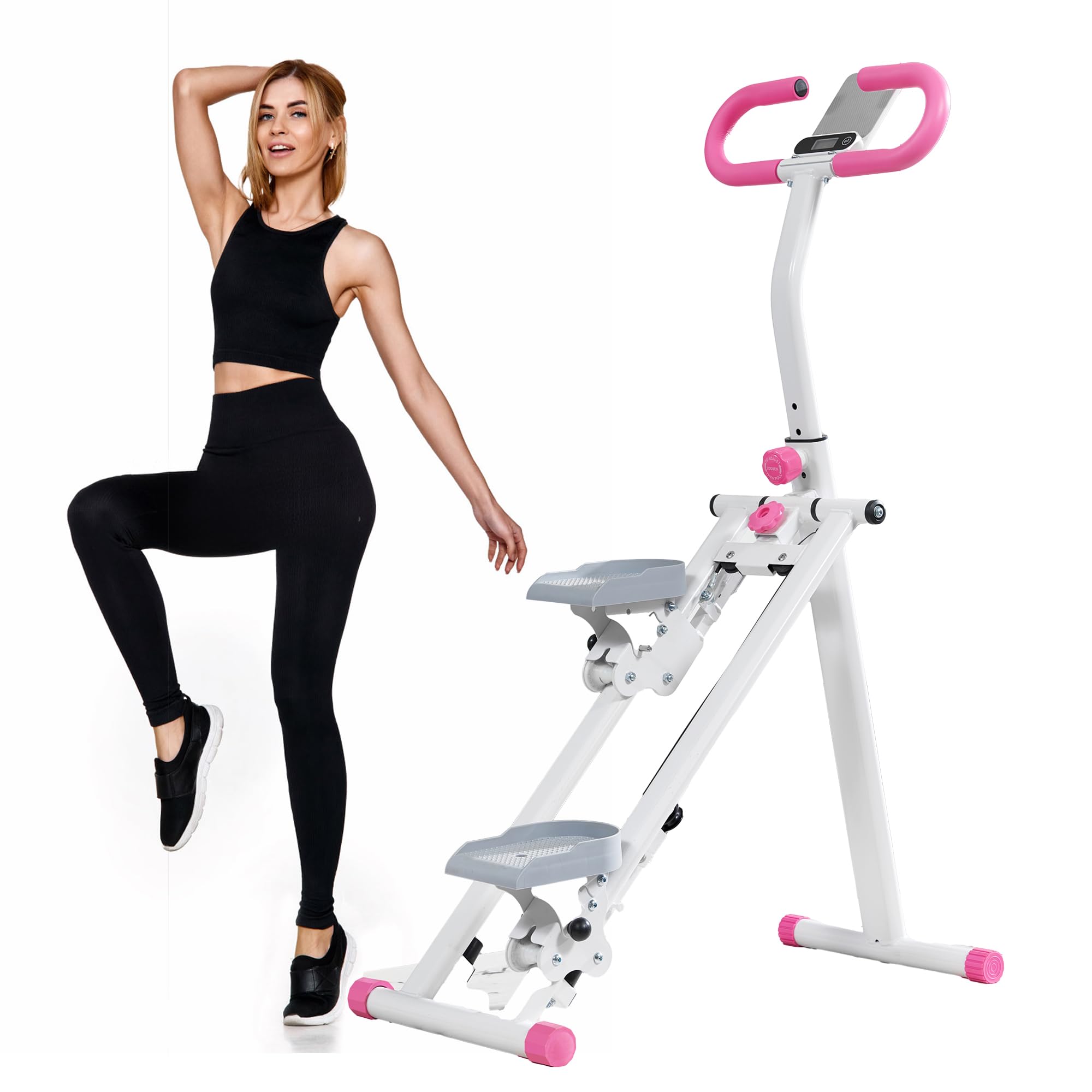
Mdeam Stair Stepper

Mdeam Stair Stepper

Heavy users budget

Our Score 8.8/10
Check Price

Worth Noting

  • No built-in resistance mechanism
  • Long-term durability under daily, heavy use is not yet established given the small number of units in the field.
Noise Level
Low (early reviews)
Fold/Storage
Yes, 30-second fold
Stride/Pedal
3 pedal angles
Resistance Type
Bodyweight + bands
Read the full review

With a 350-pound weight limit and a price that undercuts most competitors, the Mdeam Stair Stepper is built for larger users who need a stable stepping platform at home. The frame feels solid during use, and the adjustable handlebars and pedals allow a custom fit that is rare at this budget level.

This machine targets first-time buyers and heavier individuals (up to 350 lbs) who want a simple, low-impact cardio option they can fold away after each session. However, the limited number of units in circulation means long-term durability is still an open question — frequent or aggressive use may reveal issues that haven't surfaced yet.

Assembly takes about 30 seconds, and the folded footprint slides under a bed or into a closet with ease. The LCD display tracks basic metrics, and the built-in phone holder adds convenience during workouts. The pedals and handles adjust in seconds, making the machine adaptable for different body types.

Tip: Add your own resistance bands to the frame for additional upper-body engagement and progressive overload.

Bottom line: A smart buy for heavier users on a budget who value stability and storage over progressive resistance, as long as they accept that the machine's longevity is still unproven.

#3

Anwick Vertical Climber

Anwick Vertical Climber

Ultra-cheap tryout

Our Score 8.6/10
Check Price

Worth Noting

  • LCD screen can arrive dead, so don't rely on step counts or calories.
  • Frames feels flimsy with exposed wiring
Noise Level
Low
Fold/Storage
Yes, foldable
Stride/Pedal
Not adjustable
Resistance Type
Bodyweight only
Read the full review

This vertical climber hits the lowest price point in the category, making it a low-risk entry for anyone curious about stepping motion. Assembly is quick and the machine is lightweight enough to move around. However, the LCD display may arrive non-functional, and the overall build feels light and exposes wires. That makes it a gamble even at this budget — best for someone who simply wants a basic stepping action and doesn't care about tracking or long-term durability.

Bottom line: Pick this only if you want a no-frills stepping motion at the lowest possible cost and can accept that the display may not work and the frame won't endure regular use.

#4

Sunny Health Stepper

Sunny Health Stepper

Daily home cardio

Our Score 8.4/10
Check Price

Worth Noting

  • Some units develop an audible squeak or click during use, noticeable in quiet rooms.
Noise Level
Minimal, squeaks possible
Fold/Storage
Yes, compact
Stride/Pedal
Not adjustable
Resistance Type
Bodyweight only
Read the full review

The Sunny Health & Fitness Stair Stepper's welded steel frame carries a 330-pound capacity that holds up better over time than other budget vertical climbers. Where the classic full-body climber shows plastic roller and pedal failures, this unit's construction avoids those vulnerabilities entirely – no bands to fray, no springs to snap, just a simple mechanical step action that keeps working.

Stepping motion relies entirely on body weight, with no resistance bands or springs to adjust. This keeps the machine simple and quiet in most cases, though a small number of units develop an audible squeak or click after several weeks of use. The noise is comparable to a creaky floorboard – noticeable in a quiet bedroom but easily masked by music or television.

This stepper fits buyers who want a straightforward cardio machine for daily leg and glute work without assembly headaches or ongoing maintenance. It is not for someone seeking progressive overload through adjustable resistance – the workout intensity comes entirely from stepping speed and range of motion. The body-weight-only design means upper body engagement is limited compared to a climber with elastic cords, but for strengthening the lower body and getting the heart rate up, the Sunny delivers a satisfying burn that even fit users report feeling quickly.

Assembly takes about fifteen minutes (the frame comes pre-assembled), and the unit folds flat for storage under a bed or in a closet. At this price point, it competes directly with machines that either lack stability or show wear within months – the Sunny's track record of holding up without major issues makes it the most sensible choice for a home gym on a tight budget.

Tip: Placing the stepper on a rubber mat reduces vibration and may prevent squeaks from developing.

Bottom line: If you need a long-lasting stepper for home cardio and lower-body work without paying for features you won't use, this is the most sensible buy in the budget vertical-climber category.

#5

MaxiClimber 2.0 Vertical

MaxiClimber 2.0 Vertical

Full-body sweat

Our Score 8.4/10
Check Price

Worth Noting

  • Foot pedals and plastic rollers may crack after several months of regular use.
  • Knee or foot discomfort can occur for some users, especially with pre-existing joint conditions.
  • Frame may feel unstable at higher intensities, particularly for heavier users.
Noise Level
Moderate (cord friction)
Fold/Storage
Yes, foldable
Stride/Pedal
Fixed stride
Resistance Type
Elastic cord (ERS)
Read the full review

Unlike climbers that rely on body weight alone, the MaxiClimber’s elastic bands deliver progressive resistance through the arms and legs, making it a more complete strength trainer. The machine assembles with just four bolts and folds away for storage, suiting small home spaces.

The motion gives a satisfying sweat and muscle burn, but the stepping action can feel less smooth than hydraulic or magnetic alternatives. Some users find the pedals and rollers may crack after months of consistent use, and knee or foot discomfort can occur for those with joint sensitivities.

Ideal for home users who want a low-impact full-body workout without a large footprint and are willing to replace elastic bands or plastic parts over time. Not recommended for those expecting a machine that lasts years without maintenance or for heavier users who may find the frame less stable at high intensity.

Bottom line: A strong full-body workout machine for budget-conscious home users who accept that elastic resistance bands and plastic components may require periodic replacement.

#6

Stamina Cardio Climber

Stamina Cardio Climber

Quiet progressive training

Our Score 8.4/10
Check Price

Worth Noting

  • Premium price tag puts it above all other climbers in this comparison.
  • At nearly 70 inches tall and non-foldable, it needs permanent floor space.
  • A small number of owners found scratches or a bolt that needed tightening after extended use.
Noise Level
Very quiet
Fold/Storage
Wheels, not foldable
Stride/Pedal
Adjustable stride and handles
Resistance Type
Magnetic, 8 levels
Read the full review

The Stamina Cardio Climber uses a magnetic resistance system that stays nearly silent across all eight levels. Where most climbers rely on bungee cords or springs that creak over time, the magnetic design provides a fluid, consistent tension that doesn't disturb others in the room. The overbuilt steel frame and wide base keep the machine planted even during aggressive strides, a clear step up from the lightweight builds common at this price tier.

This machine suits tall users (up to 6'5') who want a full-body workout without noisy springs. The five-year frame warranty and 300-lb capacity signal long-term commitment, but the modest number of units in circulation means the full reliability picture is still emerging. The price is premium compared to every other climber in this comparison, and the non-foldable frame (with transport wheels) requires dedicated floor space — about 50 by 30 inches.

Owners consistently note the smooth stride and the ability to adjust both handlebar height and stride length, which engages the upper body in a way that spring-based climbers can't match. The LCD display covers the basics — time, speed, distance, count, and calories — without any app gimmicks. A few users have reported scratches on arrival or a bolt that loosened after 15 months, but those instances are isolated and covered by the five-year frame warranty.

Tip: Use the included transport wheels to move it when needed, but plan a permanent spot for daily use.

Bottom line: If silence and adjustable resistance matter more than upfront savings, the Stamina Cardio Climber delivers a refined full-body workout that no other climber in this roundup matches.

#7

MERACH Stair Stepper

MERACH Stair Stepper

Light cardio at home

Our Score 8.4/10
Check Price

Worth Noting

  • No adjustable resistance
  • Stability may be an issue at faster stepping paces, particularly on soft flooring.
Noise Level
Low to moderate
Fold/Storage
Yes, foldable
Stride/Pedal
4 pedal angles
Resistance Type
Bodyweight only
Read the full review

Over a thousand reviews confirm that assembly takes minutes and the folded footprint fits under a bed, making this the easiest stepper to set up and stash away. The stepping motion is fluid and low-impact, engaging legs and glutes without stressing joints—ideal for adding movement during a workday.

Unlike adjustable-resistance climbers that allow progressive overload, this machine relies entirely on your body weight. The resistance never increases, so the workout can’t get harder over time. Some units may wobble at faster paces, especially on carpet—steady, moderate use is where it feels most stable.

This stepper fits people who want a simple, no-fuss way to stay in motion while standing at a desk or watching TV. It is not a replacement for a vertical climber that builds upper-body strength or offers progressive resistance. If your goal is gentle cardio without ambition to increase intensity, this does the job.

Tip: Place on a hard, level surface to minimize wobble during faster stepping.

Bottom line: A straightforward stepping aid for low-intensity daily movement, not a substitute for a resistance-based climber.

#8

KINMAC Vertical Climber

KINMAC Vertical Climber

Occasional light cardio

Our Score 8.4/10
Check Price

Worth Noting

  • On uneven flooring, some units may wobble during use
  • Cord resistance can wear out within a few months with consistent use
Noise Level
Moderate (cord noise)
Fold/Storage
Yes, compact
Stride/Pedal
Not adjustable
Resistance Type
Cord/spring system
Read the full review

The KINMAC Vertical Climber gets you moving fast — assembly takes minutes and the leg burn is noticeable for the price. The lightweight, foldable design makes it easy to tuck away between uses. However, the cord-based resistance system can fray within months of regular use, and frame stability varies depending on floor surface. This machine delivers good initial value for short-term or seasonal workouts, but its durability limits its appeal for daily, year-round training.

Bottom line: Best suited for short-term or seasonal use, where easy setup and storage outweigh the cord's lifespan limitations.

#9

MOMODA Vertical Climber

MOMODA Vertical Climber

Tight storage space

Our Score 8.4/10
Check Price

Worth Noting

  • In a quiet apartment, the squeaking will be noticeable
  • After months of regular use, the sliding rollers may wear down, causing a scraping feel
Noise Level
Loud (squeaky)
Fold/Storage
Yes, 5-inch profile
Stride/Pedal
2 incline settings
Resistance Type
3-level spring
Read the full review

The MOMODA Vertical Climber folds to an ultra-thin five inches, slipping under a bed or into a closet with ten seconds of effort. Assembly takes under fifteen minutes, and the three resistance levels plus adjustable handle let you dial in basic intensity. However, the spring-driven mechanism produces noticeable squeaking that carries in quiet rooms, and the sliding rollers can wear after months of use, leading to a scraping feel. Compared to similarly priced competitors, the noise and durability trade-offs push this toward occasional users who prioritize space over long-term reliability – a decent entry point for someone unsure about vertical climbing, but not a machine built for consistent daily sessions.

Bottom line: Ideal for anyone who needs an ultra-compact climber that can hide away completely, as long as occasional noise and potential gear wear are acceptable trade-offs for the slim storage.

#10

YYJO Stair Stepper

YYJO Stair Stepper

Leg workout on budget

Our Score 8.2/10
Check Price

Worth Noting

  • Spring mechanism can produce metal grinding or squeaking noises during use.
  • Handlebar stability is limited; bar bending may occur during intense stepping.
Noise Level
Noticeable (metal grinding)
Fold/Storage
Yes, foldable
Stride/Pedal
3 pedal inclines
Resistance Type
3-level spring
Read the full review

The YYJO Stair Stepper offers three adjustable spring levels that create meaningful resistance for the lower body – a clear upgrade from bodyweight-only steppers. The pedals can be set to three inclines, and the unit folds for storage. However, the spring mechanism can produce a metal grinding or squeaking noise, and the handlebar may feel less solid than sturdier frames in this price segment, with bar bending noted in some cases. This machine suits buyers who prioritize adjustable leg resistance over silent operation and absolute stability. For those demanding a quieter, more robust build, other budget steppers with spring resistance provide a more stable experience.

Bottom line: Best for budget-focused buyers who want adjustable leg resistance and can tolerate some noise and less rigidity.

#11

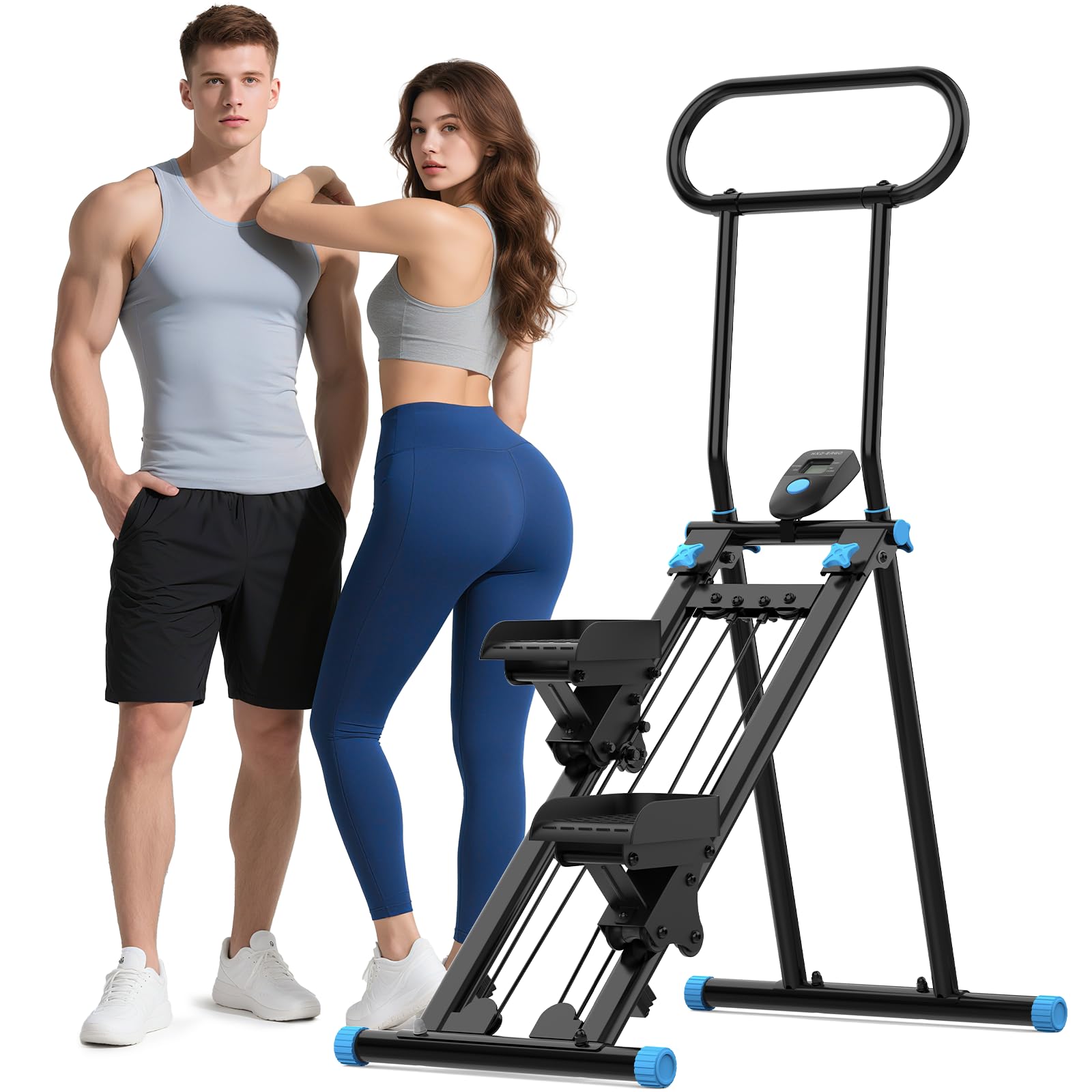
HXD-ERGO Stepper

HXD-ERGO Stepper

Absolute beginners

Our Score 8.2/10
Check Price

Worth Noting

  • For anyone looking to progressively increase resistance, the tension remains too light to challenge beyond the first few weeks.
  • The shallow steps and fixed stride may cause knee discomfort during longer sessions.
Noise Level
Moderate
Fold/Storage
Yes, foldable
Stride/Pedal
Shallow steps
Resistance Type
Claimed 6 levels, negligible
Read the full review

The HXD-ERGO Stair Stepper offers the lowest entry price for a vertical climber and sets up in minutes. It delivers a noticeable leg and glute burn during short sessions, making it a low-cost way to add movement to a daily routine. The resistance, however, is very weak — the tension never increases meaningfully, so this works as a stepping prop rather than a strength trainer. Some users also find the shallow steps cause knee discomfort, and a small number of units arrive with minor assembly defects. If you need actual adjustable resistance, the best budget option with three spring levels costs slightly more but provides real intensity control.

Bottom line: This stepper fits anyone on a tight budget who wants to introduce light movement into their day, but not those expecting a progressive strength or cardio workout.

#12

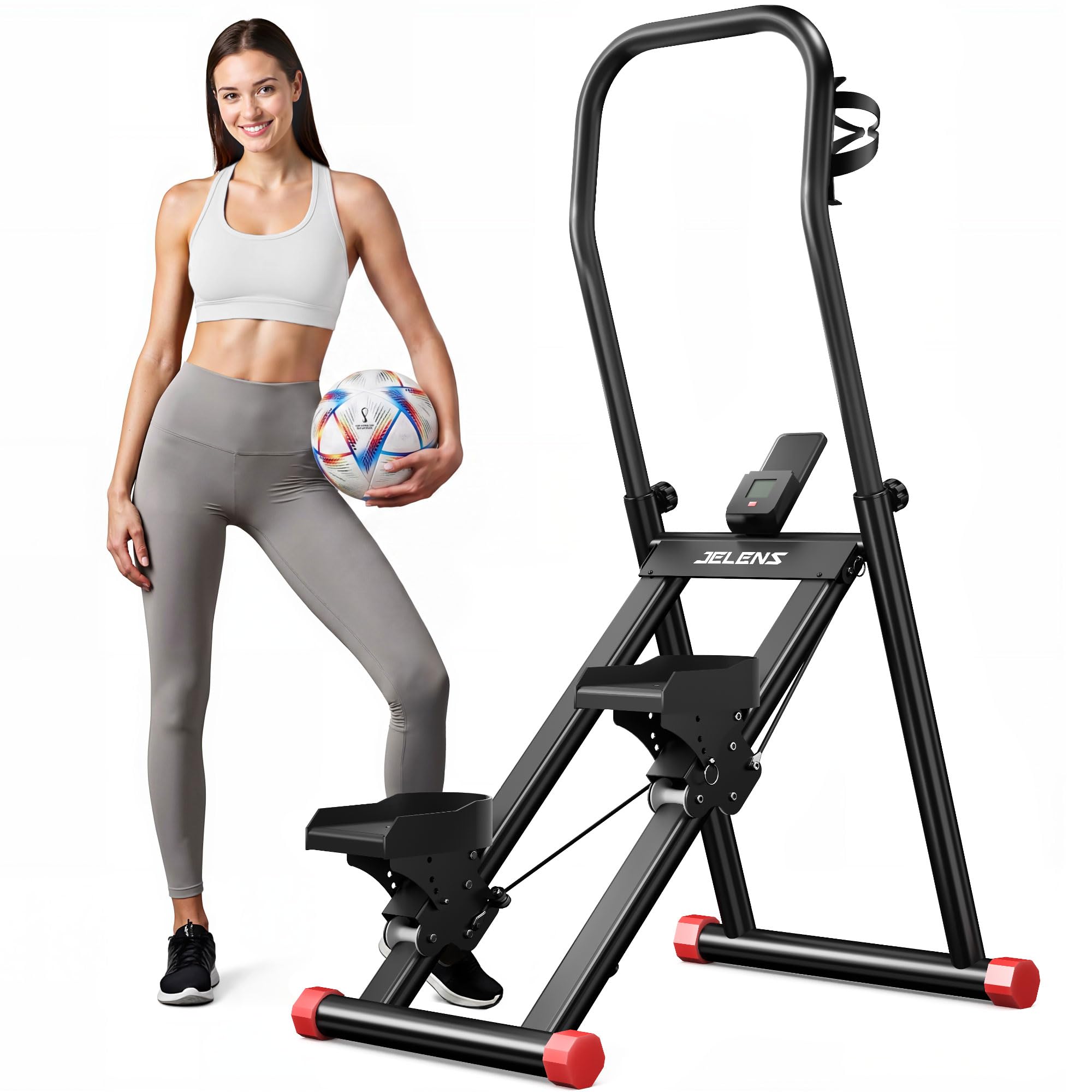
JELENS Stair Climber

JELENS Stair Climber

Heavy users foldable

Our Score 8.0/10
Check Price

Worth Noting

  • On carpet, the machine may wobble
  • Assembly instructions lack clarity, and the resistance mechanism can produce a jerky stepping motion.
Noise Level
Moderate (jerky)
Fold/Storage
Yes, flat fold
Stride/Pedal
4 pedal angles
Resistance Type
Guide rail / cable
Read the full review

The JELENS stair stepper offers solid build quality for the budget and folds completely flat — a design that fits under beds or in closets. It supports up to 330 lbs, making it one of the few budget climbers for heavier users. The non-adjustable resistance means you rely on your own body weight for intensity, limiting strength gains over time. The stepping motion can feel jerky rather than fluid, and some units may wobble on carpet. Assembly instructions are sparse, adding friction to setup. For shoppers who need a compact, high-capacity stepper for basic cardio and can accept these quirks, the JELENS fills the gap.

Bottom line: For heavier users on a tight budget who need a machine that stores flat, the JELENS is a workable choice if you can tolerate occasional wobble and a less fluid stride.

How to Choose

Resistance Type & Adjustability

Resistance is the single most important spec, and the most misleading. Bodyweight-only machines (common on budget steppers) rely on how fast you step – you can't increase the load. Spring-based models offer two to three levels, but those levels are often so close together that 'high' feels like 'low' after a week.

Elastic cords (like the MaxiClimber) provide real upper-body pull, but they lose tension over months. Magnetic resistance, found only in the Stamina Cardio Climber, delivers silent, precise levels that don't degrade. If you intend to build leg strength over time, avoid bodyweight-only models and look for spring or magnetic systems with a clear progression curve.

Weight Capacity & Frame Stability

Weight capacity numbers are static bench tests – they don't guarantee the frame won't wobble during dynamic movement. A 300-lb rated machine with narrow legs will feel shaky at 200 lbs if you step fast. Triangular base designs (wider at the front) generally track more stable than straight-rail frames.

Stability also suffers on carpet unless the base has wide rubber feet. For heavier users (over 250 lbs), the Sunny Health & Fitness and Mdeam models stand out for their reinforced steel frames and broad bases. Always read for feedback on 'wobble' or 'shake' – it's the real test.

Foldability & Storage Footprint

Folding climbers trade size for assembly joints – the hinge point is a potential wear spot. Most budget models fold to under 6 inches thick, but check the folded height: some require wall clearance because handles protrude. The MOMODA folds to 5 inches, ideal for sliding under a bed.

Non-folding climbers like the Stamina have transport wheels but take up a permanent floor footprint of roughly 2x3 feet. If you plan to store it in a closet daily, prioritize machines that fold flat and lock in place – open-frame designs (like Sunny) are easier to move than enclosed ones.

Noise Level During Use

Spring-based machines almost always produce noise – it's the metal coiling and rubbing. This ranges from a tolerable squeak to a loud grinding that echoes in apartments. The noise tends to worsen as the springs settle after a few months. Lubricating the contact points with silicone spray can reduce it, but not eliminate it.

Magnetic resistance is the only truly quiet option. The Stamina Cardio Climber operates near-silently because there's no physical friction. For shared living spaces or early-morning workouts, budget for a magnetic machine or accept that spring-based noise is a trade-off you'll live with.

Stride Length & Pedal Adjustment

Stride length determines how natural the climbing motion feels. Fixed-stride machines (most budget steppers) force a short, shallow step that can feel choppy for taller users. Adjustable pedals (angles or inclines) let you shift the load between quads and glutes, but they don't change the range of motion.

Full-body climbers like the MaxiClimber and Stamina allow handlebar height adjustments to fit different torso lengths. If you're over 6 feet, look for models with taller handlebar options (at least 50 inches) and a stride that doesn't bottom out. Lack of stride adjustment is the main reason tall users find budget steppers uncomfortable.

Frequently Asked Questions