Accessories

11 Best Knee Sleeves for Olympic Lifting 2026: The Ones That Last Past Your Training Cycle

Durability is the weak link in most 7mm knee sleeves. Find the ones that hold up to heavy Olympic lifting training without early seam failure.

Most knee sleeves for Olympic lifting feel supportive and snug right out of the box. But within a few months, many develop seam splits or lose their compression, forcing an early replacement. That pattern repeats across budget and mid-range options because the underlying support — 7mm neoprene compression — is similar across brands. The real differentiator is build quality: how the seams are constructed and how long the material holds up under repeated heavy loads.

For lifters who squat multiple times a week in preparation for a meet or a training cycle, a failed sleeve means disrupted sessions and unexpected cost. This guide cuts through the look-alike specs to highlight which sleeves actually survive a full year of heavy Olympic lifting. The best choice pairs competition-grade approval with reinforced construction — something only a few models deliver consistently.

#1

Stoic 7mm Knee Sleeves

Top Pick
Stoic 7mm Knee Sleeves

Competitive lifters

Our Score 9.4/10
Check Price

Worth Noting

  • Premium pricing may be a barrier for those on a tight budget
  • Snug sizing can be problematic for users between sizes
Thickness
7mm
Build Quality
Double-stitched seams
Sizing Guidance
Snug, size up if between
Competition Approval
IPF/USAPL/USPA
Read the full review

The Stoic knee sleeves feature double-stitched seams that resist fraying and separation through repeated heavy squat sessions and Olympic lifts. Owners consistently note the 7mm neoprene maintains its compression and support after months of training, providing secure proprioceptive feedback during the clean and jerk and snatch. This build quality explains why Stoic sleeves appear in world-level competitions.

These sleeves suit powerlifters and Olympic lifters who train heavy multiple times per week and require IPF, USAPL, or USPA approval. The snug fit delivers high compression for maximal effort lifts but may feel too tight for those between sizes or seeking a looser sleeve. The premium price reflects the construction — not a budget option for casual use, but a long-term investment for consistent training.

Cheaper sleeves can lose their shape or suffer seam separation within months, while the Stoic’s construction holds up over the long term.

Tip: If you are between sizes, order one size up to avoid excessive tightness during long training sessions.

Bottom line: For lifters who prioritize longevity and competition legality above all, the Stoic sleeves deliver — no other IPF-approved option matches their reported durability.

#2

ProFitness 7mm Knee Sleeves

ProFitness 7mm Knee Sleeves

Budget-conscious lifters

Our Score 9.2/10
Check Price

Worth Noting

  • Seams may split after a few months of heavy use
Thickness
7mm
Build Quality
Standard
Sizing Guidance
True to size recommended
Competition Approval
Read the full review

These 7mm sleeves deliver immediate knee support and compression that matches pricier models — a strong pick for budget-focused lifters who need reliable stability during squats and Olympic lifts. The catch is build quality: seams may split within a year of frequent heavy training, making this pair a cost-effective entry point rather than a long-term investment.

Tip: Hand-wash and air-dry to reduce stress on the seams and potentially extend lifespan.

Bottom line: Right for lifters who prioritize immediate support on a budget and are okay replacing sleeves roughly every year.

#3

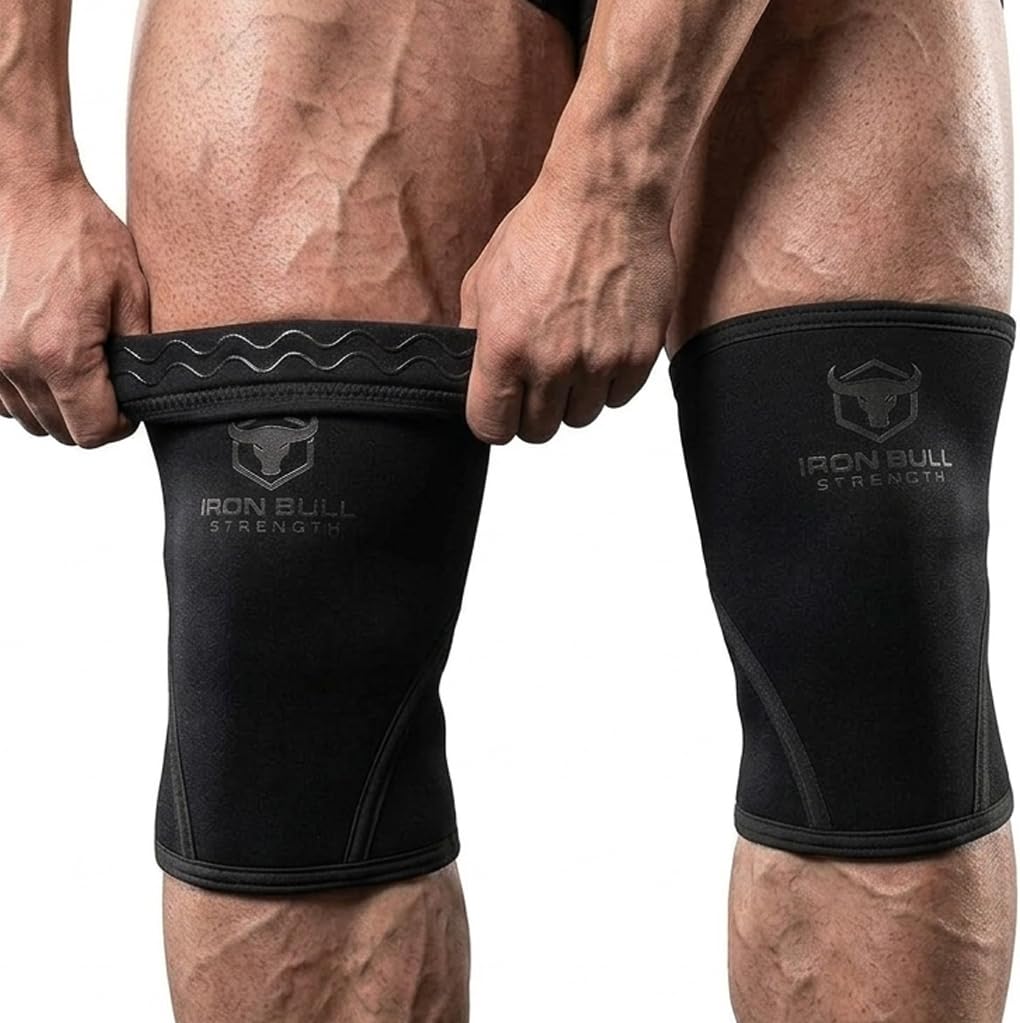
Iron Bull 7mm Knee Sleeves

Iron Bull 7mm Knee Sleeves

Secure fit seekers

Our Score 9.2/10
Check Price

Worth Noting

  • Seam splitting may occur after repeated heavy use
Thickness
7mm
Build Quality
Standard
Sizing Guidance
True to size, silicone grip
Competition Approval
Read the full review

These sleeves deliver consistent compression and stay put during deep squats and deadlifts, with silicone grip top and bottom keeping them from sliding. The tradeoff is that seam splitting may occur after a limited number of heavy sessions, making this a better fit for lifters who prioritize immediate support and a snug fit over long-term durability.

Tip: Inspect seams regularly and consider this a performance sleeve for heavy training blocks rather than a long-term investment.

Bottom line: If your priority is a sleeve that won't slide down during squats, the Iron Bull delivers — just be aware that durability is a secondary consideration.

#4

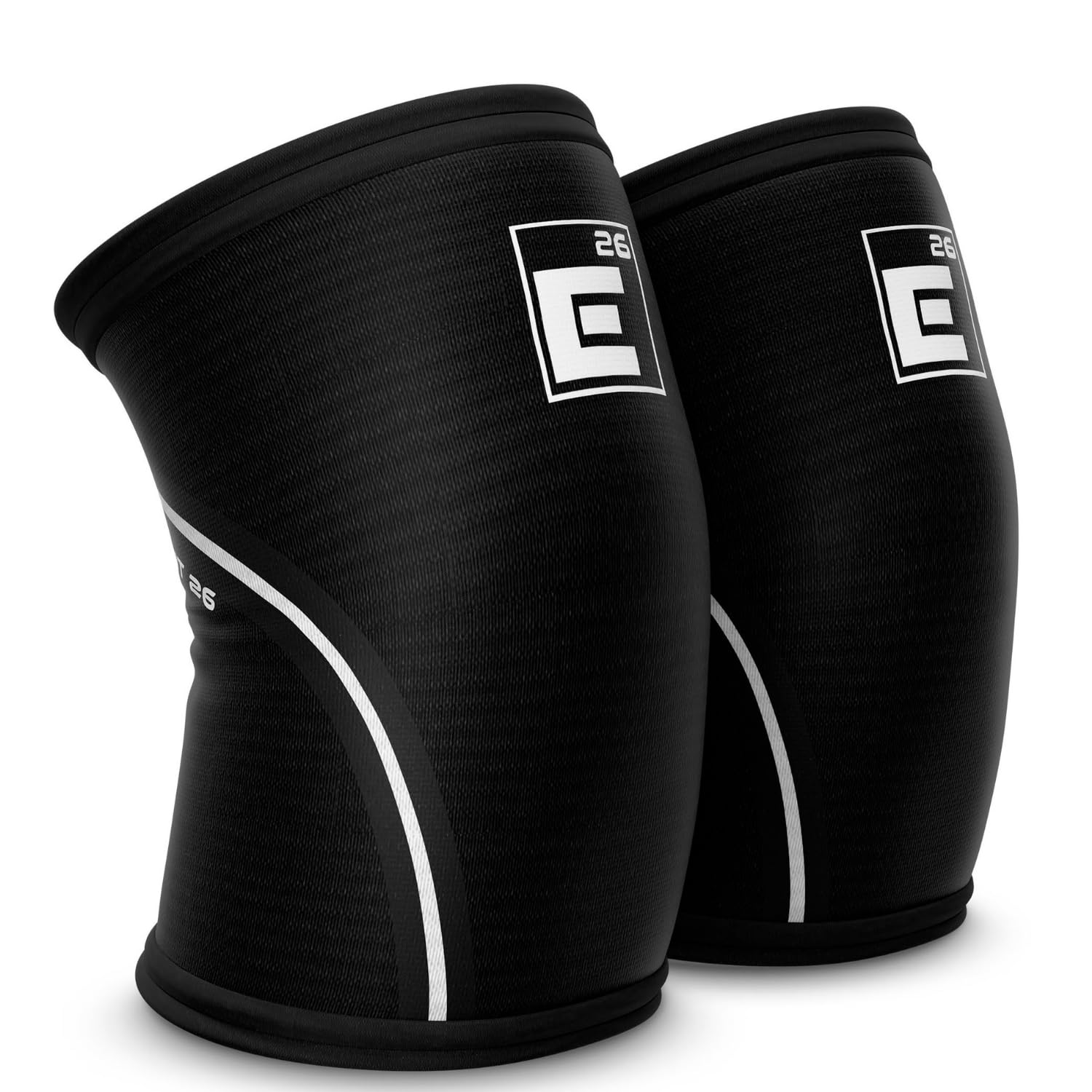
Element 26 6mm Sleeves

Element 26 6mm Sleeves

Dynamic mobility

Our Score 9.2/10
Check Price

Worth Noting

  • For squats over 400 lbs, the 6mm sleeve provides less compressive rebound than 7mm alternatives.
  • Lifters with larger calves may find the fit snug; careful measurement is needed.
Thickness
6mm
Build Quality
Reinforced seams
Sizing Guidance
Runs tight, measure carefully
Competition Approval
Read the full review

The Element 26's contoured shape reduces bunching during deep knee flexion, making it a practical choice for clean and jerk and snatch where unrestricted movement matters. For lifters who prioritize mobility over maximum compression, this 6mm sleeve offers a balanced feel without sacrificing support. Those expecting the rebound of a 7mm sleeve for heavy squats will find it less stiff — it's better suited to moderate loads and dynamic training.

Bottom line: A solid option for Olympic lifters who need full knee flexion, as long as you are not chasing max squat numbers.

#5

Gymreapers 7mm Knee Sleeves

Gymreapers 7mm Knee Sleeves

Heavy lifts

Our Score 9.2/10
Check Price

Worth Noting

  • Seams can split under heavy training over time
Thickness
7mm
Build Quality
Standard
Sizing Guidance
True to size
Competition Approval
IPF
Read the full review

Gymreapers' 7mm sleeves deliver the consistent compression and IPF approval that many lifters want, backed by positive feedback on support and comfort. They provide effective knee pain relief for heavy squat sessions and Olympic lifts without restricting movement. However, seam splitting has been noted under heavy use over time, making these sleeves better suited for lifters who prioritize immediate support and competition eligibility over multi-year durability.

Lifters who train with moderate frequency and want competition-grade approval will find good value here. Those who need sleeves to survive daily heavy training should consider the top pick with double-stitched seams.

Tip: Washing in cold water and air drying may help extend seam life.

Bottom line: For lifters who want IPF approval and strong compression at a mid-range price, these sleeves deliver — as long as you accept possible seam wear over time.

#6

Rehband 5mm Knee Sleeves

Rehband 5mm Knee Sleeves

Rehab & light training

Our Score 9.2/10
Check Price

Worth Noting

  • For maximal Olympic lifts, 5mm thickness provides less compression than 7mm alternatives.
Thickness
5mm
Build Quality
4-panel anatomical
Sizing Guidance
Runs small, consult chart
Competition Approval
Read the full review

European 4-panel neoprene sleeve that conforms well and stays in place. Build quality is strong for the mid-range price. 5mm thickness limits compression for max Olympic lifts — better suited for rehab, light training, or crossfit-style WODs where mobility matters more than rigidity.

Bottom line: Best for crossfit athletes or lifters in rehab who prioritize mobility and comfort over max compression.

#7

Bear KompleX 5mm

Bear KompleX 5mm

Style-focused crossfitters

Our Score 9.0/10
Check Price

Worth Noting

  • Neoprene may tear and seams separate with regular heavy use
Thickness
5mm
Build Quality
Standard
Sizing Guidance
True to size
Competition Approval
Read the full review

These sleeves offer appealing patterns and comfortable compression for dynamic workouts. However, the 5mm thickness provides less support for heavy Olympic lifts. They suit occasional training where aesthetics matter more.

Bottom line: Best for crossfit athletes who prioritize style over longevity and do not require maximum support for Olympic lifts.

#8

Nordic Lifting 7mm

Nordic Lifting 7mm

Budget competition

Our Score 8.8/10
Check Price

Worth Noting

  • Seam stitching may split under repeated heavy use
  • Sizing runs tight, especially for those with larger quads
Thickness
7mm
Build Quality
Standard
Sizing Guidance
Runs small for large legs
Competition Approval
USPA
Read the full review

The Nordic Lifting 7mm sleeves offer USPA approval at roughly half the cost of premium options, delivering the warmth and compression needed for legal competition lifting. Durability is the tradeoff — seam splitting can occur under heavy use, and sizing runs tight for larger legs. These are best for competitive powerlifters on a budget who prioritize competition entry over long-term build quality.

Tip: Measure calf and knee circumference carefully; if between sizes, size up to avoid an overly tight fit.

Bottom line: For lifters who need USPA approval on a budget, these sleeves deliver competition-ready support. Just be prepared for a shorter lifespan than premium alternatives.

#9

Mava Sports 7mm

Mava Sports 7mm

Beginners

Our Score 8.8/10
Check Price

Worth Noting

  • Sizing can be inconsistent, with some pairs running very small
Thickness
7mm
Build Quality
Standard
Sizing Guidance
Runs very small, size up
Competition Approval
Read the full review

The Mava Sports 7mm knee sleeves deliver the compression and warmth you want from neoprene at a price that undercuts most alternatives. They help with pain relief during squats and provide a solid feel in the hole. The catch is that sizing consistency is off enough to make ordering a guessing game, and seam integrity may give way after a couple dozen sessions. These work best as an entry-level test pair or a backup for someone not relying on them daily.

Bottom line: Fine for a first try or occasional spare, but not a reliable partner for regular training.

#10

Jupiter 7mm Knee Sleeves

Jupiter 7mm Knee Sleeves

Occasional use

Our Score 8.8/10
Check Price

Worth Noting

  • Stitching and neoprene may deteriorate with regular use
Thickness
7mm
Build Quality
Standard
Sizing Guidance
Inconsistent sizing
Competition Approval
Read the full review

At a budget-friendly price, these sleeves deliver decent initial compression and comfort for very light or occasional lifting — the support is noticeable for the cost. However, material and stitching can wear quickly under regular training, making them a poor fit for consistent heavy work or Olympic lifting sessions. They’re best kept as a backup pair for when your main sleeves are in the wash or as a low-cost way to try 7mm compression without commitment.

Bottom line: Reach for these only when you need a low-cost backup or a one-off session — they’re not built to withstand regular training.

#11

AEOLOS 7mm Knee Sleeves

AEOLOS 7mm Knee Sleeves

Casual gym-goers

Our Score 8.8/10
Check Price

Worth Noting

  • Stitching may come undone after a few uses
Thickness
7mm
Build Quality
Standard
Sizing Guidance
Runs small
Competition Approval
Read the full review

AEOLOS knee sleeves offer decent compression and support for lighter lifting sessions at an entry-level price. However, stitching can come undone after a few uses, and sizing may run small — this makes them more appropriate as an emergency backup or for very light training than for regular heavy lifting.

Bottom line: Best for casual gym-goers who need an inexpensive backup pair or are trying knee sleeves for the first time.

How to Choose

Thickness: 5mm vs 7mm

Thicker sleeves (7mm) provide more compression and rebound, which helps you feel 'loaded' at the bottom of a squat and can add a slight boost out of the hole. This comes at the cost of reduced flexibility — 7mm sleeves limit knee flexion more than 5mm, making them less ideal for deep front squats or snatches where ankle mobility is already a constraint.

5mm sleeves are better for dynamic movements and high-rep work, but they offer less joint stability under maximal loads. If your primary lifts are heavy back squats, cleans, and jerks, stick with 7mm. If you do a lot of CrossFit-style metcons or have knee pain that needs lighter compression, 5mm is the practical choice.

Competition Approval

IPF and USPA approval means the sleeve meets strict dimensional and construction standards required for raw powerlifting meets. This also ensures consistent thickness and seam quality across batches, which often translates to better overall build compared to non-approved sleeves at similar prices.

For non-competitive lifters, approval adds cost without a functional benefit — the sleeve itself doesn't compress harder or last longer just because it has a stamp. If you compete, pay for approval. If you only train at the gym, spend that money on reinforced seams instead.

Material Quality and Seam Construction

The neoprene itself is mostly the same across brands at the same thickness — the real difference is how the seams are finished. Single-stitched seams pull apart under the repeated tension of heavy squats, especially when the sleeve is stretched tight around the knee during the descent. Double-stitched or reinforced seams distribute stress and prevent the layers from separating.

Look for sleeves that explicitly mention double stitching or reinforced zonal stitching. If the product page only says 'durable neoprene,' assume basic single-stitching. That sleeve will likely start showing wear at the seam within three to six months of frequent heavy training.

Anti-Slip Features

Silicone grip strips or non-slip bands at the top and bottom of the sleeve prevent it from sliding down during squats and deadlifts. Without them, the sleeve can bunch behind the knee, reducing compression and creating uncomfortable pressure points.

Anti-slip is most valuable for lifters with wider calves or who wear shorts (sweat reduces friction). If you always train in long tights, a standard pull-on sleeve without grip strips will stay in place just fine. Try on your current gear — if you constantly adjust your sleeves mid-set, anti-slip features are worth prioritizing.

Sizing Accuracy

Knee sleeves fit differently across brands because each uses a different neoprene blend and cut. A size large from Gymreapers may fit like a medium from Mava Sports. Sizing charts are a starting point, but user reports consistently show that some brands run small while others run true.

Measure your knee circumference (mid-patella) and thigh circumference just above the knee, then compare to the brand's chart. When between sizes, consider going up for comfort or down for maximum compression. Be aware that sleeves stretch slightly with use, so an initially snug fit will loosen, not tighten.

Frequently Asked Questions